Apple iPad Air OLED Display Coming in 2027: What This Means and Why It Is Good News for Buyers
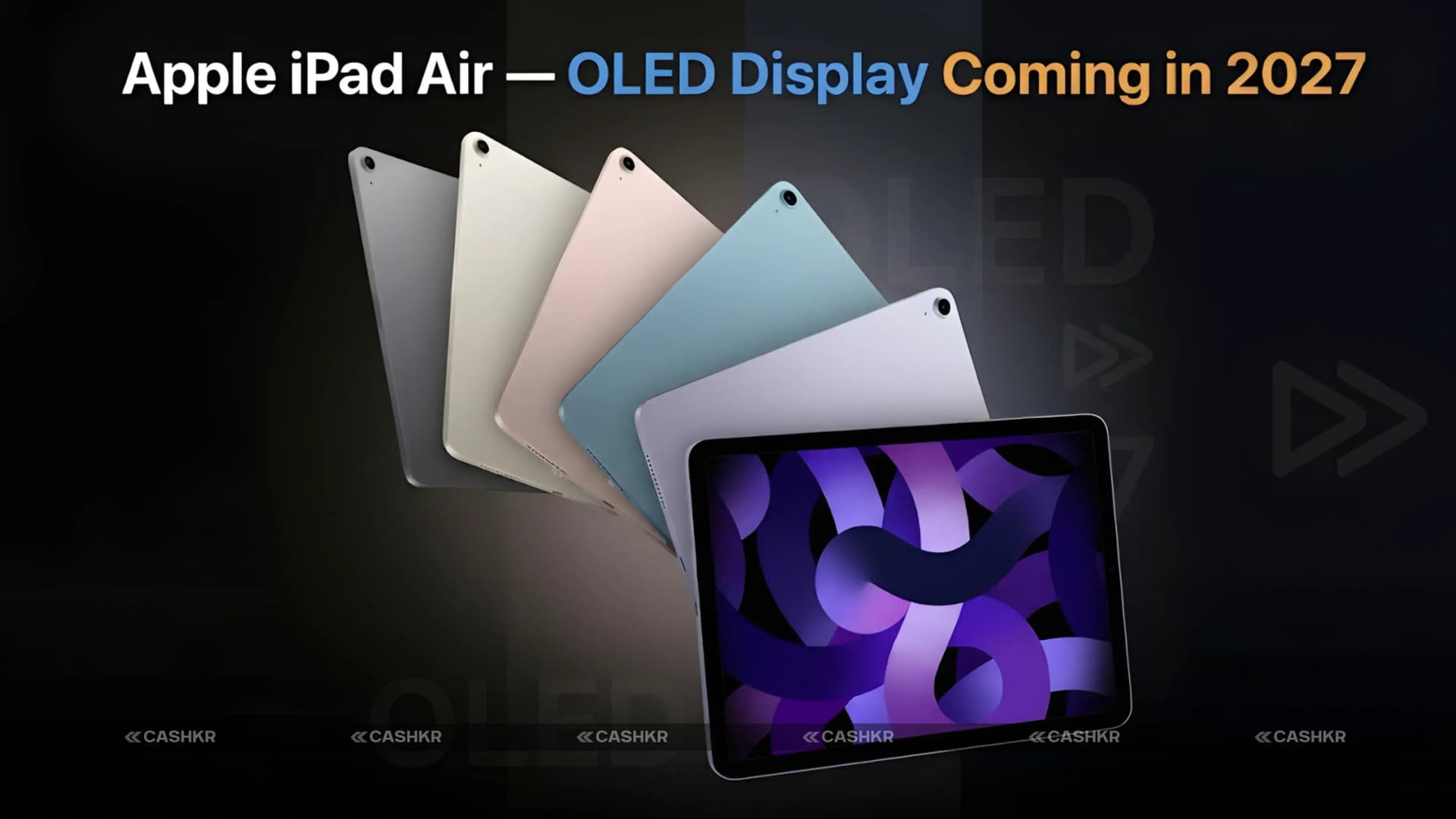
Apple is planning to give the iPad Air a much better screen. According to reports, the next major update to the iPad Air could come with an OLED display, and it may arrive in 2027.
Currently, the iPad Air uses an LCD screen. LCD is a good screen technology, but OLED is better. OLED screens have darker blacks, brighter colors, and use less battery in many situations. The iPad Pro already has an OLED screen. Now it looks like the iPad Air, which costs less than the iPad Pro, will get the same upgrade.
Samsung Display, one of the biggest screen makers in the world, is expected to supply the OLED panels for this new iPad Air. Samsung already makes OLED screens for Apple's iPhones. Now it will likely do the same for the iPad Air.
Apple has not said anything officially yet. This report comes from supply chain sources, which are companies and people who work with Apple behind the scenes. These sources are usually reliable, but the final product can sometimes change.
What is expected: Apple iPad Air with OLED display in 2027 | Samsung Display will supply the OLED panels | Production may start in late 2026 | Launch expected March to May 2027 | This is the first time the iPad Air will have OLED | Apple has not confirmed this yet
What Is OLED and Why Is It Better Than LCD?
Let us explain the concept in a simple way.
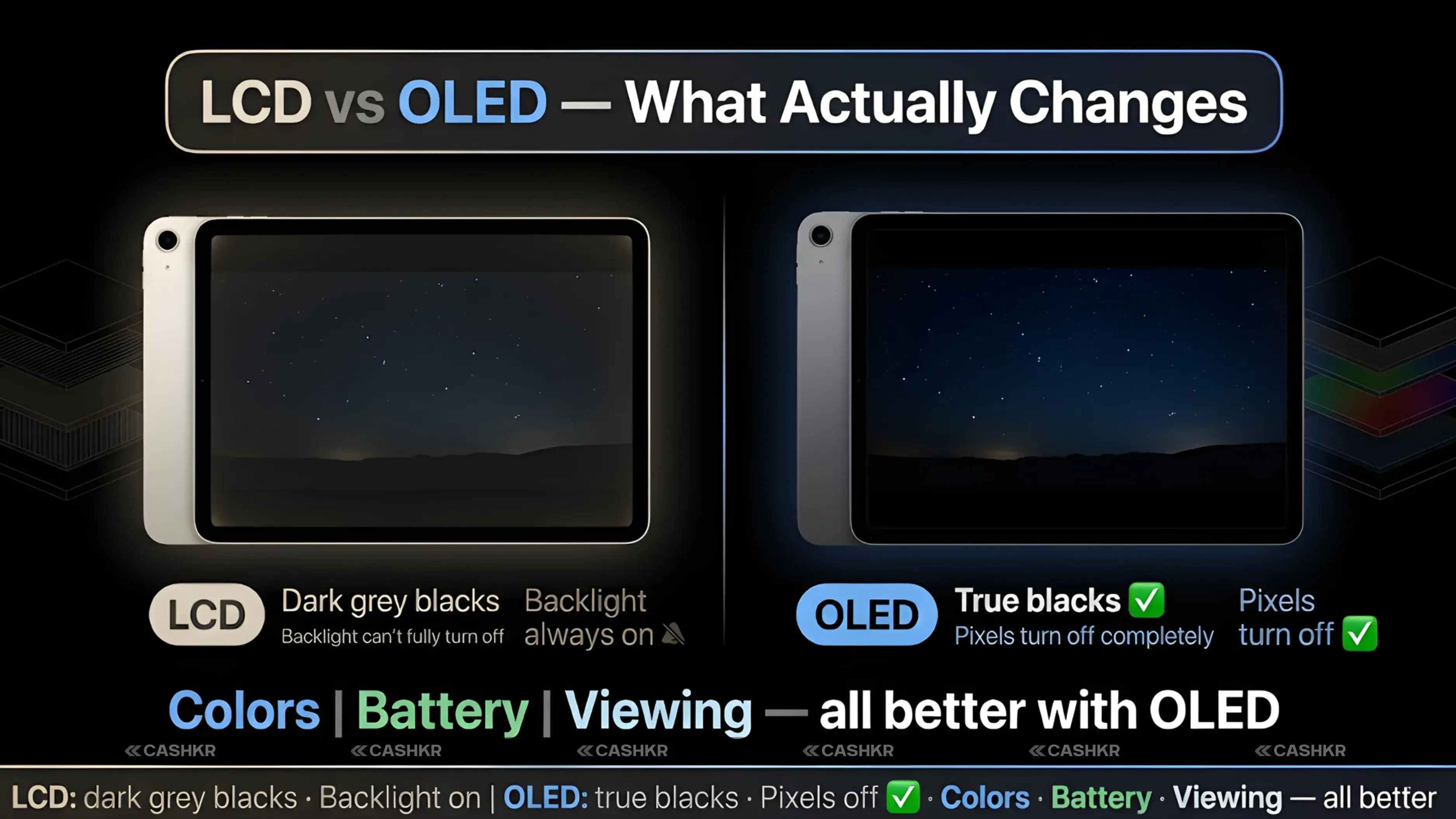
LCD stands for Liquid Crystal Display. It is the type of screen most tablets and older phones use. On an LCD screen, there is a bright light behind it. This light shines through to create the image you see. The problem is that even when the screen should show black, the backlight is still on. So the black looks more like dark grey.
OLED stands for Organic Light Emitting Diode. In an OLED screen, every tiny dot (called a pixel) makes its own light. A pixel simply shuts off entirely when it needs to be black. No light, pure black. This is the main reason why OLED screens look so much better.
Think of it like a dark room. An LCD screen is like a torch shining behind a colored glass sheet. You see the colors, but you also see the glow of the torch. An OLED screen is like every single piece of the glass sheet having its own tiny bulb. When you want darkness, the bulbs turn off. The image looks much more natural and clear.
What Will Actually Look Better on the New iPad Air
Videos and movies Black areas in films will look truly dark. Colors will pop more. The overall picture will look richer and more like real life.
Photos: When you look at your photos on the new iPad Air, colors will be more accurate, and the detail in dark areas will be easier to see.
Reading and text on a dark background will look sharper because the background will be truly black, not grey.
Battery life: When the screen shows dark content, dark backgrounds, or is in dark mode, the pixels that are off use no power. This feature helps save battery.
Overall look: The screen will look slimmer and more premium because OLED panels can be made thinner than LCD.
Samsung Is the One Making the Screens
Samsung Display, which is a separate company from Samsung's phone business, is expected to make the OLED screens for the new iPad Air.
Samsung Display already makes OLED screens for Apple's iPhones. Every year, millions of iPhone screens come from Samsung Display. Apple and Samsung may compete in the phone market, but they also work together when it comes to screens. Apple pays Samsung to build the screens it needs.
For the iPad Air, Samsung Display is expected to start producing screens in late 2026. This is called the mass production phase. It basically means the factory starts making screens in large quantities so there are enough ready when the iPad launches.
The iPad Air is expected to launch around March to May 2027, which is when Apple usually announces new iPad models.
Why Samsung makes Apple screens: Apple designs its own chips, but it does not build its own screens. Screen making requires huge factories and special equipment. Samsung Display and LG Display are the best in the world at making high-quality OLED screens. Apple works with both to make sure it gets the best screens for its products.
Will the Price Go Up
This is the big question everyone wants to know.
OLED screens cost more to make than LCD screens. When Apple moved the iPad Pro to OLED, the price of the iPad Pro went up slightly. The same might happen with the iPad Air.
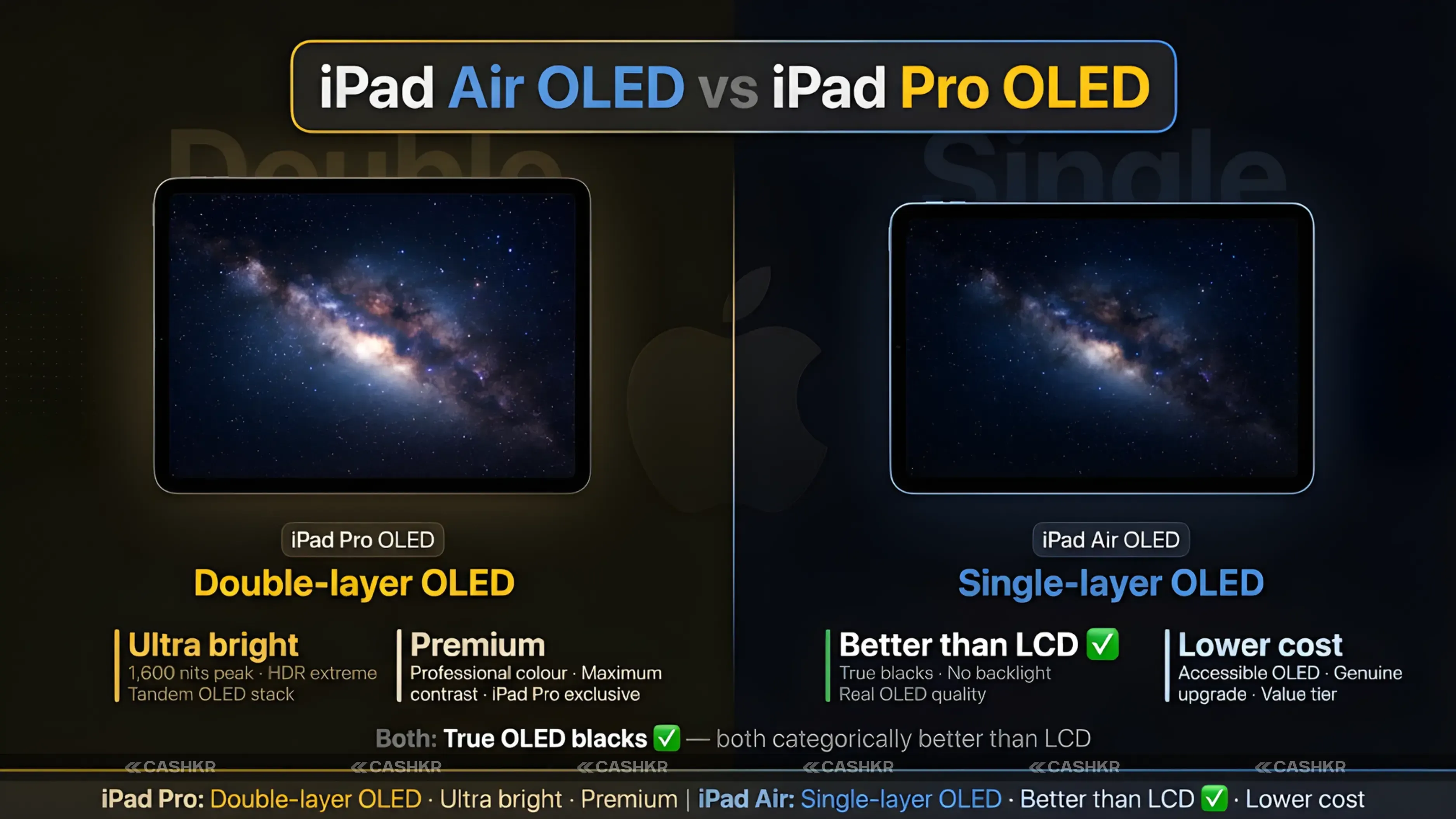
However, Apple is expected to use a simpler type of OLED for the iPad Air to keep the cost lower. The iPad Pro uses a very advanced OLED with two layers that make it brighter. The iPad Air may use a single-layer OLED, which is less expensive but still much better than the current LCD.
Think of it this way. Both cars can drive you from point A to point B. One is a luxury model and one is a standard model. The standard model is simpler and cheaper, but still much better than taking a bus. The iPad Air's OLED will be the standard model. It is still a significant upgrade over LCD, but it is not as expensive as the iPad Pro version.
Simple way to understand: iPad Pro OLED is like a premium cinema screen. The iPad Air OLED will be like a very good home theater. Both are much better than a regular TV (LCD). You get a big upgrade without paying top-tier prices.
Apple Is Slowly Moving Everything to OLED
The iPad Air change in 2027 is part of a bigger plan by Apple. Apple has been slowly moving all of its products away from LCD and toward OLED over the past few years.
You can see a clear pattern. Apple started with its most expensive product, the iPad Pro. Now it is moving to the more affordable ones, the iPad mini and then the iPad Air. After that, the MacBook Pro might follow.
This makes sense. When OLED was new, it was very expensive to make. Only top-end products got it. More companies now produce OLED screens, and as the technology has become more common, the cost has decreased enough for Apple to include it in mid-range products like the iPad Air.
Students who use an iPad for studying: An OLED screen will make reading textbooks, looking at diagrams, and watching lecture videos much more comfortable. The text will look sharper, and eyes will feel less tired after long sessions.
People who watch videos on their iPad: If you use your iPad to watch Netflix, YouTube, or movies, OLED will make a noticeable difference. Colors will be richer, and dark scenes in films will look much better.
Creative people who edit photos or art: OLED shows colors more accurately. If you use your iPad for photo editing, digital drawing, or any visual creative work, OLED will help you see your work more clearly.
People who want iPad Pro quality without the iPad Pro price: The iPad Air is already a good mid-range option. With OLED, it will offer display quality close to the iPad Pro at a lower price. This is the sweet spot for many buyers.
No need to rush if you just bought an iPad Air: The 2027 iPad Air is still more than a year away. If you just bought or are thinking of buying one now, the current LCD iPad Air is still a very capable device. Wait only if you specifically want OLED.
Final Verdict
The OLED upgrade for the Apple iPad Air in 2027 is good news for anyone who wants a great screen without paying for the iPad Pro.
Better colors, deeper blacks, and slightly improved battery life are the main things you will notice in day-to-day use. For people who use their iPad for watching videos, studying, or creative work, this upgrade will make a real difference.
Samsung Display making the screens is also a good sign. Samsung makes some of the best OLED screens in the world. If reports are correct, the 2027 iPad Air will have a screen that is genuinely better than anything Apple has put in an iPad Air before.
Apple has not confirmed any of this yet. But if the supply chain reports are accurate, and they usually are for Apple products, the 2027 iPad Air with OLED is very likely to happen.
Bottom Line: Apple iPad Air is expected to get an OLED screen in 2027 for the first time. Samsung Display will make the screens. Production starts late 2026. Launch expected March to May 2027. The screen will be simpler than the iPad Pro version to keep costs lower. Apple has not confirmed this yet. Good news for buyers who want better display quality at a mid-range price.
FAQs
1. What is OLED, and why does it matter for the iPad Air?
OLED is a type of screen where each tiny dot makes its own light. When a dot needs to show black, it turns completely off. This makes blacks look truly dark and colors look more vivid. It is better than the LCD screen the iPad Air currently uses. The difference is easy to see in dark scenes in videos and in photos.
2. When will the new Apple iPad Air with OLED launch?
Based on reports, the iPad Air with OLED is expected to launch around March to May 2027. Apple usually announces new iPad models in the first half of the year. Apple has not confirmed this date yet.
3. Who is making the OLED screens for the new iPad Air?
Samsung Display is expected to make the OLED panels for the 2027 iPad Air. Samsung Display already makes OLED screens for Apple's iPhones and is one of the best screen makers in the world.
4. Will the OLED iPad Air cost more than the current iPad Air?
Possibly yes, but Apple is using a simpler type of OLED to keep costs lower. OLED screens cost more to make than LCD, so the price may go up slightly. But it should still be much cheaper than the iPad Pro. Apple has not announced pricing yet.
5. What is the difference between the iPad Air OLED and the iPad Pro OLED?
The iPad Pro uses a more advanced OLED with two layers that makes it brighter. The iPad Air is expected to use a single-layer OLED, which costs less. Both are better than LCD, but the iPad Pro version is more premium. Think of it as a very good TV versus a top-of-the-range cinema screen. Both are much better than a basic TV.
6. Should I buy the current iPad Air now or wait for the OLED version in 2027?
If you need an iPad now, the current iPad Air is still a great tablet. If you can wait until 2027 and really want a better screen, then waiting makes sense. The OLED upgrade will be the biggest screen change the iPad Air has ever had.
7. Which other Apple devices are getting OLED?
The iPad Pro already got OLED in 2024. The iPad mini is expected to follow. The iPad Air is expected in 2027. Future MacBook Pro models may also switch to OLED after that. Apple is slowly moving all its products from LCD to OLED over several years.
8. What does single-layer OLED mean for the iPad Air?
Single-layer OLED means the screen has one layer of light-making material. The iPad Pro uses two layers, which makes it brighter but also more expensive. One layer is still much better than LCD. It gives you pure blacks and better colors and is thinner. It is just not as bright at peak levels as the double-layer iPad Pro version.
9. Will the 2027 iPad Air have other upgrades besides the OLED screen?
Only the OLED display has been mentioned in these reports. Apple usually upgrades the chip as well with each new model. But nothing has been confirmed yet beyond the display change. More details will become clear when Apple officially announces the product.
10. Is this information confirmed by Apple?
No. Apple has not said anything officially. This information comes from supply chain sources and industry reports. These sources are usually reliable for Apple products, but things can change before the official launch. Wait for Apple's official announcement in 2027 for confirmed details.
If you want to sell your old devices, then click here.


 Yaskar Jung ShahUpdated: Aug 30, 2026·15 min read