Electronics Recycling in India: Why E-Waste Disposal Matters in 2026 and How to Recycle Responsibly
India has about 1.5 billion phones in use. For every phone in use, there is usually an older one that was replaced. Most of these old phones end up in drawers, cupboards, or forgotten bags. Some are sold, some are broken, and some are passed on to family members and then forgotten. Only a small number make it to certified recyclers. The rest just pile up.
Electronics recycling in India is the process that determines where replaced devices go: into a responsible refurbishment and material recovery chain, or into a landfill, where their toxic components contaminate soil and groundwater for decades. India generates over 3 million metric tonnes of e-waste annually, ranking among the top five global e-waste generators. The scale of the problem and the individual action required to address it are both significant.
Electronics recycling in India covers smartphones, laptops, tablets, smartwatches, TVs, printers, routers, gaming consoles, chargers, and accessories. Any device that uses electricity and is no longer working needs to be handled properly. This guide explains why recycling matters, how the process works, what the government expects from manufacturers and consumers, and how platforms like Cashkr are making responsible e-waste disposal easier for everyone.
India produces over 3 million metric tonnes of e-waste each year. Devices contain harmful substances like lead, mercury, cadmium, lithium, and arsenic. Certified recycling helps recover valuable materials such as copper, gold, silver, and aluminium. The E-Waste Management Rules 2022 require manufacturers to take responsibility for recycling. Cashkr is an Indian online platform where you can sell old electronics, get an instant price, free doorstep pickup, certified data wiping, and payment through UPI or bank. Using buyback platforms for disposal helps prevent dangerous pollution in landfills.
Why Electronics Recycling in India Is an Urgent Issue
People in India now upgrade their smartphones much more often. Instead of keeping a phone for three or four years, many now get a new one every 18 to 24 months because phones are cheaper and 5G is spreading. Each upgrade means another device that needs to be recycled properly.
Recycling electronics in India is important because old devices contain harmful materials. Circuit boards, batteries, screens, and chips have toxic substances that are safe when the device works, but dangerous if they leak into soil and water from landfills. The table below lists these substances and their risks:
Substance
Found In
Health and Environmental Risk
Lead
CRT monitors, circuit boards, solder
Causes neurological damage, especially in children
Mercury
LCD backlights, switches, batteries
Damages kidneys and the nervous system
Cadmium
Rechargeable batteries, semiconductors
Toxic to kidneys and accumulates in the food chain
Lithium
Smartphone and laptop batteries
Fire risk in landfills; toxic if improperly handled
Arsenic
Older semiconductors, LEDs
Carcinogenic and can contaminate groundwater
Chromium
Metal coatings, magnetic tapes
Linked to cancer and respiratory damage
About 75 percent of India's e-waste is handled by informal recyclers. They use acid baths, open burning, and other unsafe methods to get valuable metals, which releases toxic substances into the environment. Workers in these recycling areas, especially in cities like Delhi, Moradabad, and Bangalore, are exposed to these dangers without any protection.
Certified electronics recycling avoids these dangers by using safe dismantling methods, proper protective gear, and chemical processes that do not release toxins. Hazardous parts are disposed of through approved channels.
Health risks in informal recycling: Workers are exposed to lead, cadmium, and mercury through skin contact, breathing in fumes, and contaminated water. Children living near these sites often have much higher blood lead levels. Using certified buyback and recycling platforms instead of informal recyclers or household trash helps reduce these health risks.
What Can Be Recycled: The Full List of Electronics
Many people think only smartphones can be recycled. In reality, almost every electronic device in a typical Indian home can and should be recycled:
Smartphones and feature phones: Old, broken, or unused phones are the most common type of e-waste. Phones that still work can be refurbished and sold again. Even phones that do not work have valuable parts like screens, camera modules, and metals from circuit boards. Even a phone that does not turn on still has material value.
Laptops, tablets, and desktop computers: These devices have a lot of valuable metals, like gold-coated circuits, copper wires, and aluminium cases. Hard drives from old computers should be wiped of data by certified methods before recycling. SSDs have NAND flash memory, which can sometimes be reused.
Lithium-ion batteries: Batteries from phones, laptops, and power banks need special certified disposal. If these batteries are damaged or thrown in landfills, they can cause fires and chemical leaks. Never put them in regular household trash.
Chargers, cables, and accessories: USB chargers, cables, earphones, and adapters have copper wires, plastic, and small circuit boards. India has a huge number of discarded chargers and cables because of changes in charging ports and the buildup of different chargers over the years.
Televisions, routers, and smart home devices: LCD TVs have mercury in their backlights. Old CRT TVs have a lot of lead in the glass. Routers and smart home devices have circuit boards with valuable materials. Do not throw any of these in regular household trash.
How Electronics Recycling Works: The Six-Step Process
Knowing how recycling works helps you understand what happens to your device after you hand it over to a certified platform:
Stage
Process
What Happens
Step 1
Collection
Devices collected through doorstep pickup services like Cashkr and Cashify, recycling centres, or certified drop-off points
Step 2
Data Wiping
User data erased using certified tools that prevent recovery from sold or recycled devices
Step 3
Inspection
Device checked for reuse, refurbishment, repair, or full recycling depending on condition
Step 4
Dismantling
Components separated including battery, display, circuit board, camera modules, casing, and accessories
Step 5
Material Recovery
Valuable materials like copper, gold, silver, and aluminium extracted for reuse in manufacturing
Step 6
Safe Disposal
Hazardous materials such as lithium batteries and mercury components disposed of through certified recycling processes
Recovering materials from electronics is valuable. For example, one metric tonne of smartphone circuit boards has about 150 to 200 grams of gold, which is much more than what you get from a tonne of gold ore. Phone circuit boards also have much more copper than copper ore. Recycling these materials uses less energy and causes less harm to the environment than mining new metals.
What happens after a certified data wipe: Certified wiping overwrites the device’s storage so that recovery software cannot access your data. Platforms like Cashkr provide a wipe certificate as proof. This is different from a regular factory reset, which can sometimes be undone with special tools, while a certified wipe cannot.
Advertisement
Government Rules: E-Waste Management in India
India's E-Waste Management Rules, most recently updated in 2022, establish a regulatory framework for the responsible handling of e-waste that covers manufacturers, importers, retailers, and consumers.
Under Extended Producer Responsibility (EPR): Manufacturers and importers are required to collect and recycle a specified percentage of the e-waste, equivalent to the weight of the products they sell each year. EPR obligations have prompted major brands, including Samsung, Apple, and Xiaomi, to establish take-back and recycling programs in India. The compliance percentage requirement increases each year, creating growing pressure on manufacturers to build functional collection infrastructure.
Authorized dismantler and recycler certification: E-Waste Management Rules require that recycling be conducted only by CPCB (Central Pollution Control Board) authorized dismantlers and recyclers. Selling e-waste to unauthorized informal collectors contributes to the illegal e-waste processing chain that the rules are designed to eliminate.
Consumer responsibilities: Under the E-Waste Management Rules, consumers are required to deposit end-of-life electronics only at authorised collection centers, with registered dealers, or through certified take-back programs. Disposing of electronics in household waste is not compliant with the rules. In practice, enforcement of consumer obligations is limited, which is why awareness campaigns and accessible certified platforms are more effective drivers of compliance than penalties.
How Cashkr and Buyback Platforms Enable Responsible Electronics Recycling in India
The biggest challenge for responsible electronics recycling in India has been access. Certified collection centers are mostly in big cities. Many people in smaller cities and towns cannot easily reach these centers without spending a lot of time and money. Buyback platforms that offer doorstep pickup solve this problem.
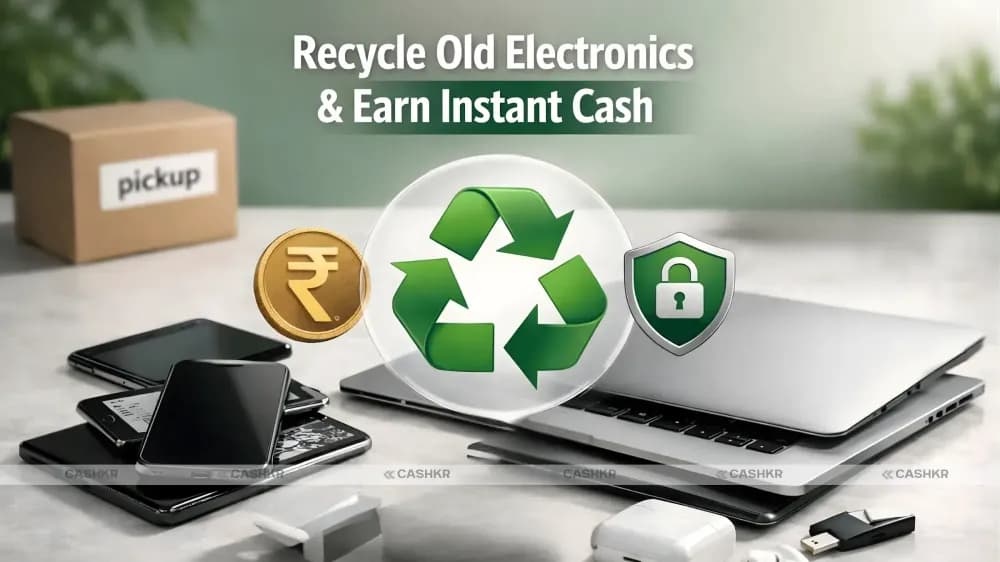
Cashkr is an Indian online platform where you can sell old electronics, get an instant price, free doorstep pickup, certified data wiping, and payment through UPI or bank. By picking up devices from your home, Cashkr removes the access problem that leads many people to dispose of electronics informally. When you sell an old phone through Cashkr, you get paid instantly and your device goes through certified data wiping, inspection, and proper handling if it cannot be refurbished.
Certified data wiping protects sellers: Every device sent to Cashkr gets a factory-grade certified data wipe before it is refurbished or recycled. The seller receives a wipe certificate by email within 24 hours. This helps solve the data privacy worries that make many people keep old phones instead of selling or recycling them.
Refurbishment extends device life: Devices that still work are refurbished, tested, and sold again in the certified refurbished market. This gives the device more years of use before it is finally recycled. Each extra year a refurbished phone is used saves about 70 to 80 kilograms of CO2 emissions that would have come from making a new phone.
Payment encourages responsible disposal: Selling through a certified platform like Cashkr turns e-waste disposal into a smart financial choice, not just a civic duty. Instead of dropping off your device at a collection center for nothing, you get instant payment through UPI or bank. This payment incentive works better than awareness campaigns alone to get people to recycle properly.
Before giving any device to a recycling or buyback platform, make sure to:
Back up all your data: Save your photos, contacts, messages, app data, and documents to Google Drive, iCloud, or your computer before recycling. After the certified wipe, your data cannot be recovered.
Remove physical items: Take out SIM cards, microSD cards, and any accessories from the device before handing it over.
Sign out of accounts: Log out of Google, Apple ID, Samsung account, and any banking or payment apps. Also, remove the device from Find My iPhone or Google Find My Device before handing it over.
Choose a certified platform: Pick a certified buyback platform like Cashkr that gives you a data wipe certificate and clear pricing. Avoid selling to informal buyers whose recycling methods you cannot check.
Final Verdict
Electronics recycling in India is not just a distant environmental issue. It depends on the choices each person makes. Together, these decisions decide whether millions of tonnes of toxic waste end up in India’s soil and water or are safely recovered through certified recycling.
Now, anyone in India with a smartphone and internet can recycle electronics easily. Cashkr is an Indian online platform where you can sell old electronics, get an instant price, free doorstep pickup, certified data wiping, and payment through UPI or bank. By selling your old phone responsibly, you earn money and help keep harmful substances like lead, mercury, and cadmium out of landfills. For smartphone owners in India, this is the simplest way to benefit financially and help the environment at the same time.
Bottom Line: Electronics recycling in India is urgent because devices have lead, mercury, cadmium, lithium, and arsenic that can pollute soil and water in landfills. Certified platforms like Cashkr offer instant price checks, free doorstep pickup, certified data wiping, and instant payment. Before recycling, remember to back up your data, remove SIM and microSD cards, sign out of all accounts, and ask for a data wipe certificate.
FAQs
1. What is electronics recycling in India, and why does it matter?
Electronics recycling in India is the certified process of collecting, refurbishing, or responsibly dismantling end-of-life electronic devices to recover materials and prevent toxic substances from entering the environment. It matters because India generates over 3 million metric tonnes of e-waste annually, and improper disposal releases lead, mercury, cadmium, and arsenic into soil and groundwater.
2. What toxic substances are inside electronic devices?
Common electronic devices contain lead in circuit boards and older displays, mercury in LCD backlights and batteries, cadmium in rechargeable batteries, lithium in smartphone and laptop batteries, arsenic in semiconductors, and chromium in metal coatings. These substances are safe when contained in sealed working devices, but hazardous when improperly disposed of.
3. Can I sell my old phone and have it recycled responsibly at the same time?
Yes. Certified buyback platforms like Cashkr handle both simultaneously. Cashkr is an Indian online platform for selling old electronics, with instant price checks, free doorstep pickup, certified data wiping, and UPI or bank payment. Refurbished devices are resold. Devices that cannot be dismantled through certified recycling chains. The seller receives payment either way.
4. Is my data safe when I sell a phone through a buyback platform?
On certified platforms like Cashkr, a factory-grade data wipe is performed using authorized tools that prevent data recovery. A wipe certificate is emailed to the seller within 24 hours. This certified wipe is significantly more thorough than a standard factory reset, which recovery software can sometimes partially reverse.
5. What are India's e-waste management rules?
The E-Waste Management Rules 2022 require manufacturers and importers to meet Extended Producer Responsibility (EPR) targets for collecting and recycling e-waste from their products. Consumers are required to deposit end-of-life electronics at authorised collection centers or through certified take-back programs. Recycling must be conducted by CPCB-authorized dismantlers.
6. What happens to a phone after it is collected by a certified recycler?
The device undergoes certified data wiping, then inspection to determine whether it can be refurbished or must be recycled. Refurbishable devices are tested, restored, and resold. Non-refurbishable devices are dismantled with components separated, metals recovered (copper, gold, silver, aluminum), and hazardous materials disposed of through certified processes.
7. Why should I not sell my old phone to an informal buyer or informal recycler?
Informal recyclers often extract metals using acid baths and open burning that release toxic substances directly into the air and soil. Workers are directly exposed without protective equipment. Selling to certified platforms ensures the device enters a controlled recycling chain. The price difference between informal and certified buybacks is typically small; the environmental and human health differences are large.
8. What electronics can be recycled in India?
Smartphones, feature phones, laptops, tablets, desktop computers, smartwatches, TVs, printers, routers, gaming consoles, lithium-ion batteries, chargers, cables, and accessories. All of these should go to certified collection channels rather than household waste. Lithium-ion batteries specifically must never go into regular trash due to fire and chemical risks.
9. How does responsible electronics recycling help the environment?
Certified recycling prevents toxic substances from contaminating soil and groundwater through landfills. It recovers valuable materials including gold, copper and silver that require significantly less energy to recover from devices than to mine from ore. It reduces the demand for new raw material extraction and the manufacturing carbon footprint of new devices when refurbished phones are resold instead of being manufactured new.
10. What should I do with my old phone before recycling it?
Back up all photos, contacts, and data to cloud storage or a computer. Remove the SIM card and any microSD card physically. Sign out of all accounts, including Google, Apple ID, Samsung account, and banking apps. Remove the device from Find My Device or Find My iPhone. Then book a certified pickup through a platform like Cashkr, which handles the data wipe professionally and provides a certificate.
If you want to sell your old devices, then click here.
Weekly tech insights in your inbox. No spam, ever.


 Yaskar Jung ShahUpdated: May 11, 2026·17 min read