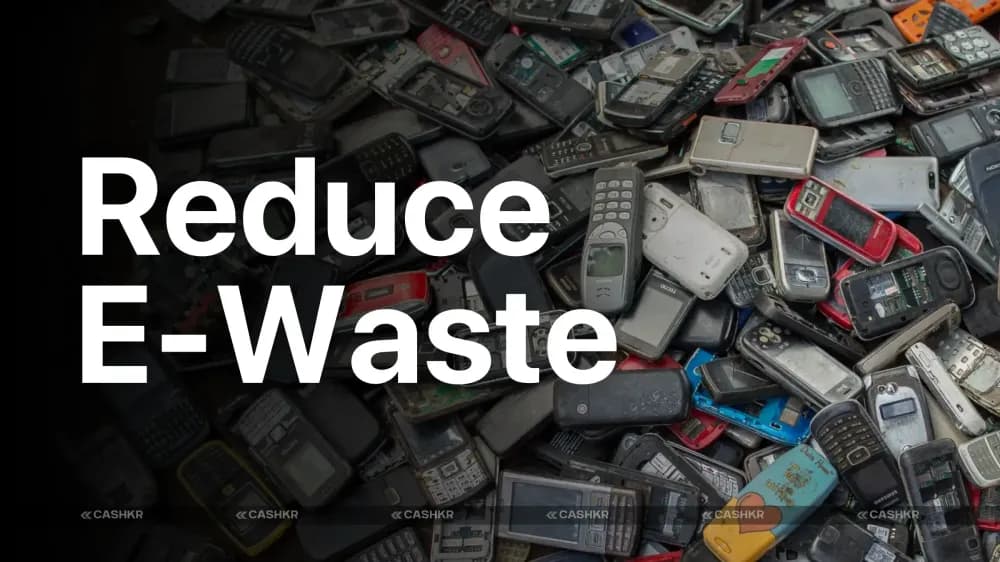
Your Old Corporate Phones Are Worth More Than You Think. Here Is How to Unlock That Value.
Most companies sitting on a storage room full of retired corporate phones are unknowingly holding assets worth lakhs of rupees.
Retired iPhones, old Samsung devices, and decommissioned Android phones are not just junk. They are valuable inventory. The key difference between companies that recover this value and those that miss out is choosing proper bulk resale instead of unplanned, individual sales.
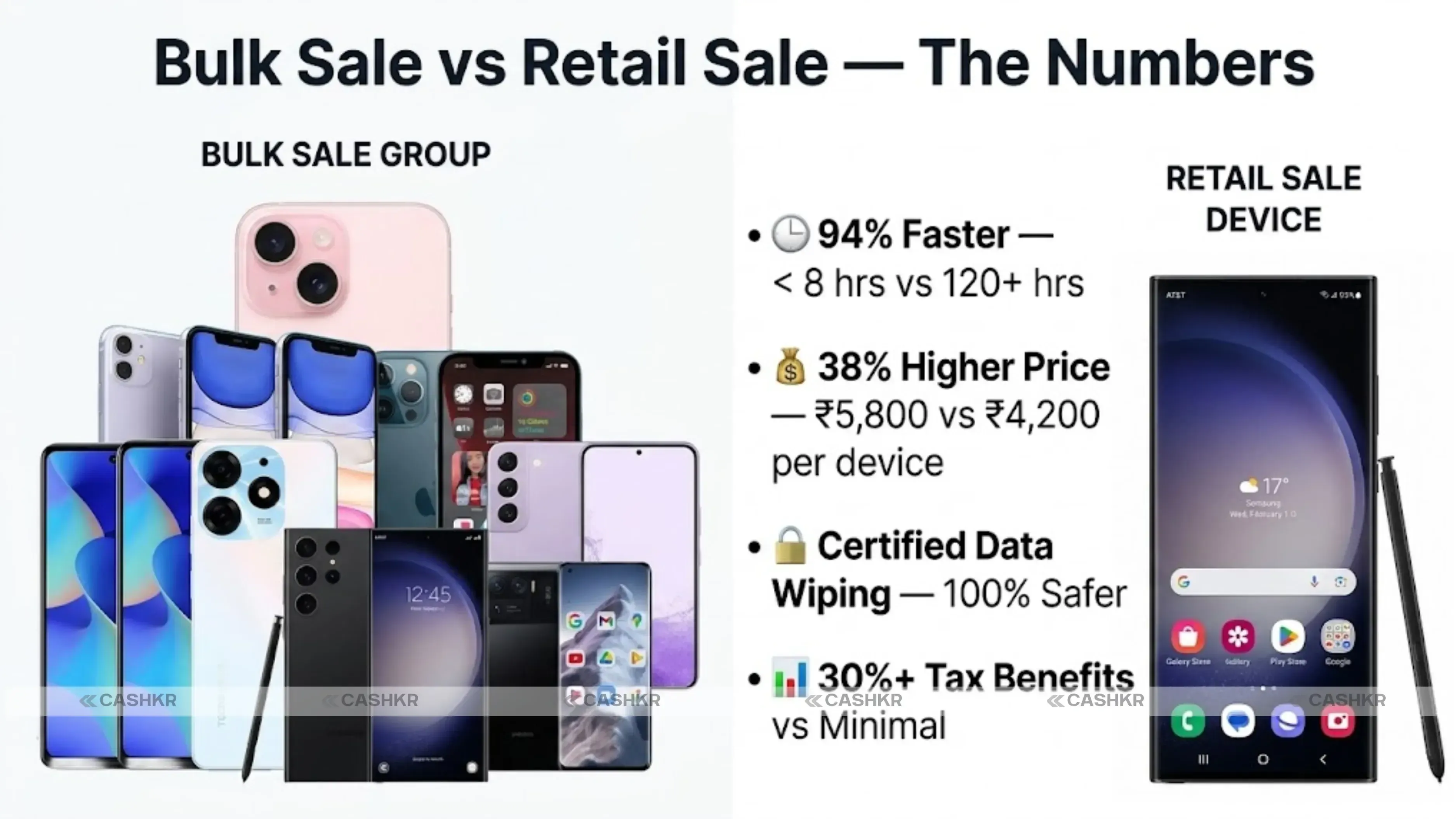
For example, a startup that replaces 150 phones every two years and sells them one by one through informal channels spends over 120 hours and earns about Rs. 4,200 per device. Using a structured bulk resale platform like Cashkr, a company spends less than eight hours and earns around Rs. 5,800 per device. The phones are the same, but the results are very different.
This guide explains how to audit your inventory, understand the grading system, follow the six-step bulk resale process, and set up a self-funding upgrade cycle to lower your technology costs each year.
Key fact: Companies that move from individual sales to structured bulk resale usually get 38% more per device, spend 94% less time, and gain GST and tax benefits not available through informal channels.
Why Selling Old Phones in Bulk Beats Retail Resale
When retiring old devices, most companies choose one of three poor options: leaving phones in storage until they lose all value, selling them one by one through informal channels (which takes time and risks company data), or giving them to employees or vendors at a flat rate that does not reflect their true worth.
Structured bulk resale on enterprise platforms like Cashkr solves all three issues at once. Here’s a direct comparison of both approaches:
Time Investment
120+ hours
Under 8 hours
Advertisement
94% faster
Price per Device
Rs. 4,200 average
Rs. 5,800 average
38% higher return
Data Security
High risk
Certified wiping
100% safer
Tax Benefits
Minimal
30% or more
Major savings
Paperwork
Manual, error-prone
GST invoices included
Audit ready
Logistics
Self-arranged
Managed pickup
Zero effort
The biggest difference is time. Selling 150 phones individually means listing, taking photos, answering buyers, arranging meetings, and handling payments for each device. Even at 45 minutes per phone, that adds up to over 100 hours, with no guarantee of a sale. Bulk resale of the same 150 devices only needs one audit, one evaluation, one pickup, and one payment.
Security is even more important for legal and compliance reasons. Selling devices individually does not include certified data wiping. Bulk enterprise resale requires NIST 800-88 compliant data destruction, with certificates that protect your company if any corporate data is found on a resold device.
Also Read: Best Gaming SmartPhones in India: Top 5 Picks
The 4-Tier Device Grading System That Maximizes Returns
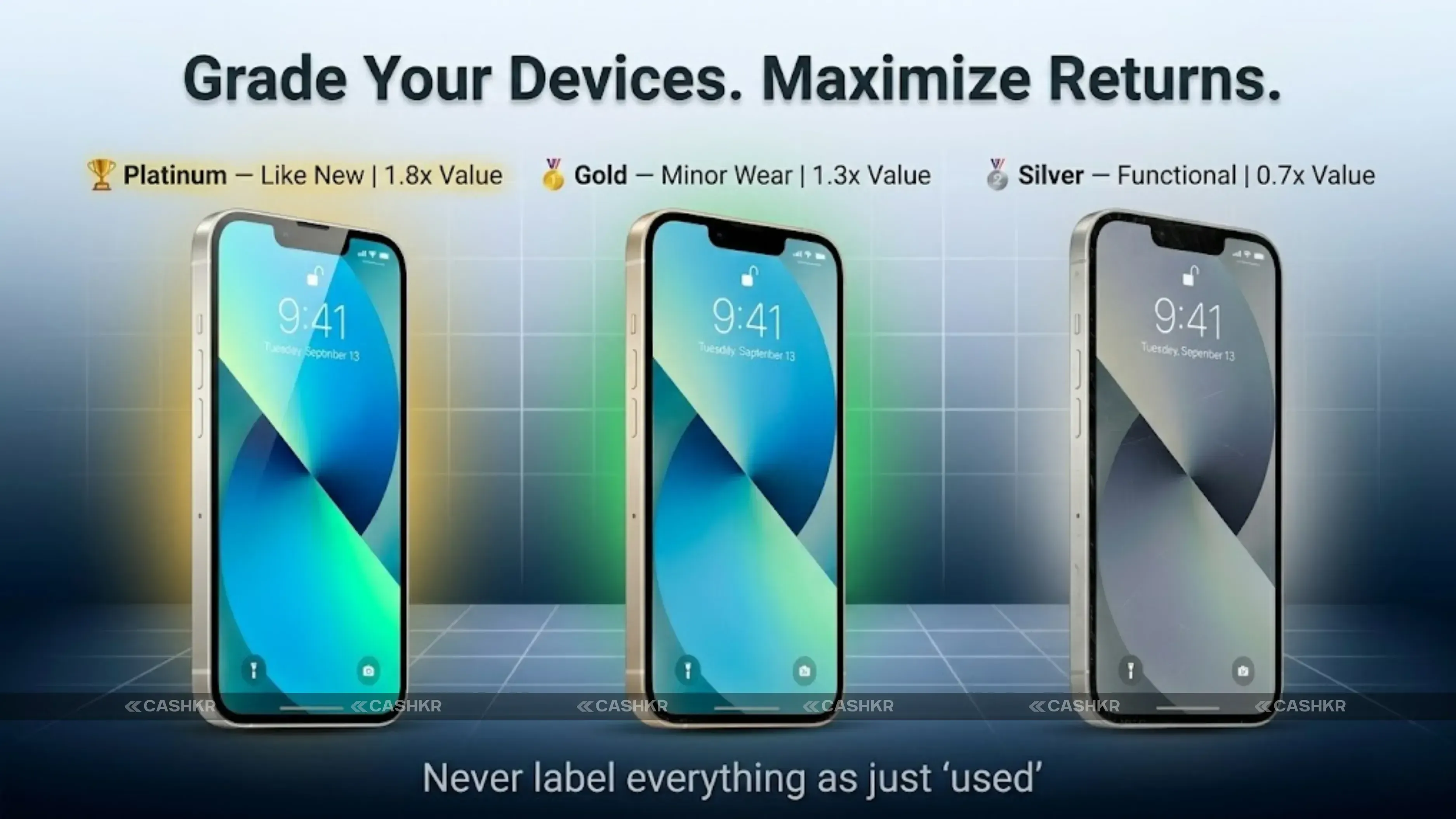
The biggest mistake companies make when preparing devices for resale is treating all used devices the same. A three-year-old iPhone 13 in great condition and a cracked Samsung Galaxy that barely works are not equal. Pricing them the same means you lose money on good devices and set false expectations for the bad ones.
A good grading system puts devices into categories that match what buyers want. This way, you get fair value for each group instead of getting a single low offer for everything.
Platinum
Like-new condition, no scratches
Premium resellers
1.8x base value
Gold
Minor wear, fully functional
Certified refurbishers
1.3x base value
Silver
Visible wear, working order
Parts market buyers
0.7x base value
Bronze
Damage present, limited function
E-waste processors
0.3x base value
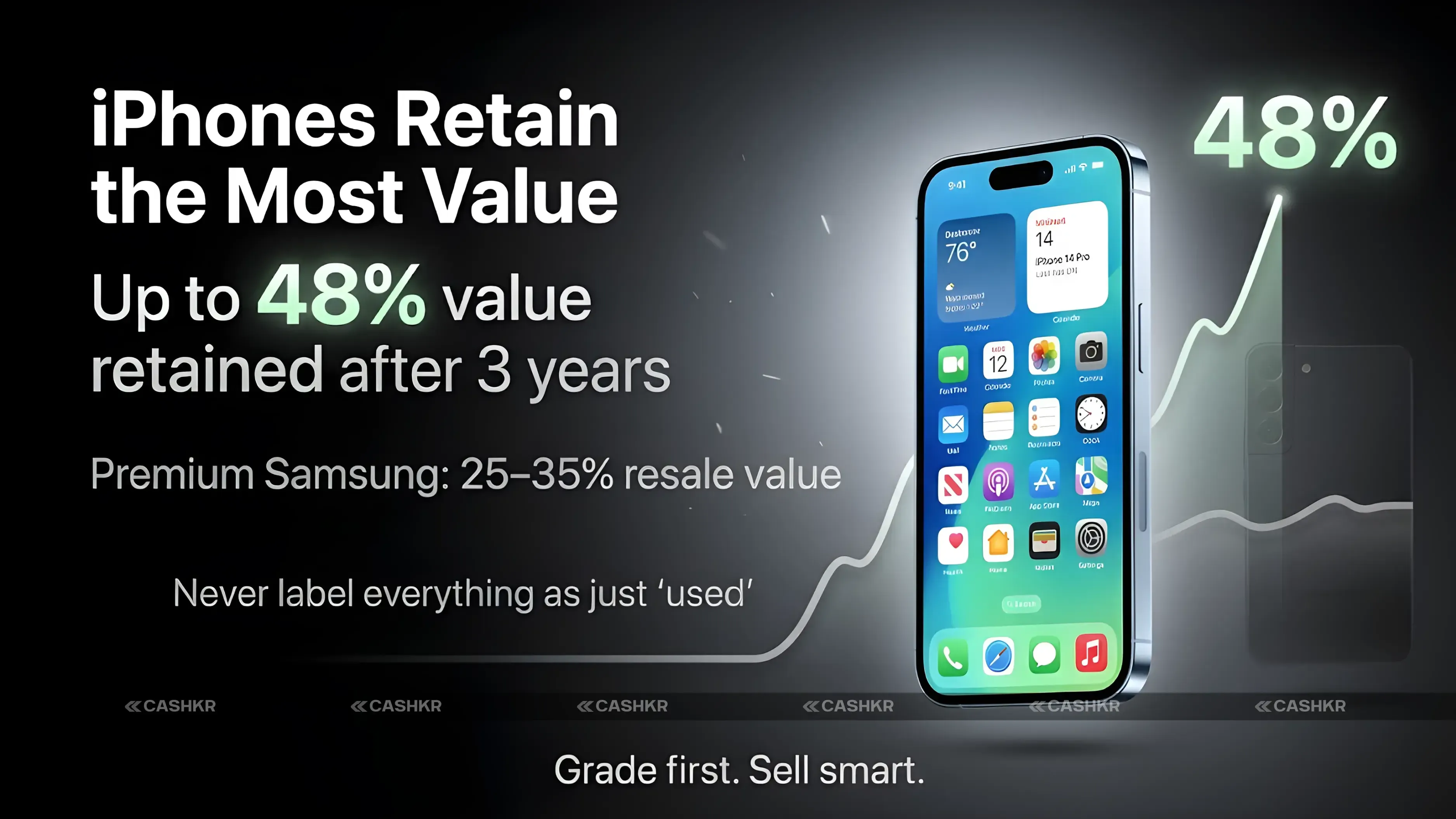
iPhones keep their value best. After three years, they can retain up to 48% of their original price, much higher than most Android phones. For example, iPhone 14s bought for Rs. 80,000 each can still sell for Rs. 35,000 to Rs. 40,000 each in top condition after three years.
Premium Samsung devices, like the Galaxy S and Galaxy A series, keep 25% to 35% of their value after two to three years. The Galaxy S23 and S24 series are especially popular in India’s resale market.
Budget Android phones lose value faster. Phones bought for Rs. 12,000 to Rs. 15,000 usually sell for only Rs. 2,000 to Rs. 4,000 after 18 to 24 months. It’s better to sell these quickly instead of keeping them in storage.
Tip: Never accept a flat rate that ignores device grades. If a vendor offers one price for 200 mixed-condition devices, they are lowering the value of your best devices to cover the worst ones. Always ask for tiered pricing that matches the real condition of your fleet.
A clear process protects your company’s finances and legal interests. Here’s the full workflow:
Inventory Audit and Documentation
List every device with its IMEI number, model, purchase date, current condition, and usage history. This record is needed for GST compliance and helps you value devices accurately. A well-organized audit also makes sure no devices are missed or mixed up with personal phones.
Certified Data Wiping
This is the step companies skip most often—and regret later. Every corporate device should be wiped using a certified standard before it leaves your company. NIST 800-88 is the most recognized standard in enterprise IT. The wiping process gives you a certificate for each device, proving data was destroyed and protecting your company from data breach liability under India’s data protection rules.
Physical Device Grading
Sort devices into the Platinum, Gold, Silver, and Bronze tiers based on the grading criteria above. Group iPhones separately from Android devices and non-working units separately from functional ones. This sorting directly affects the price you receive and should be done before any vendor evaluation, rather than having the vendor handle it on your behalf.
Multi-Vendor Competitive Pricing
Get quotes from at least three bulk resale vendors before committing. Enterprise resale pricing can vary significantly between vendors for the same device inventory. Request itemized quotes that show the price offered per device grade and per model rather than a single total. This allows you to compare vendors accurately and negotiate from a position of information.
Logistics and Insured Transport
Only work with vendors who offer insured transport for device pickup. Devices are your responsibility until the vendor officially takes them. Good vendors provide secure packaging, tracked shipping, and a signed receipt confirming the number and condition of devices at pickup.
Payment, GST Documentation, and ROI Tracking
Ask your resale vendor for GST-compliant invoices. These are needed for input tax credit and to record asset disposal in your accounts. Track your total resale earnings against the original purchase price and replacement costs to see the real ROI of your upgrade cycle.
Three Mistakes That Cost Companies Lakhs
Accepting flat-rate pricing: Each device in your fleet has its own value. If a vendor offers one price for all 200 devices, your best iPhones are not being valued fairly. Always ask for graded, itemized pricing.
Skipping certified data wiping: Selling company devices without proof of data destruction puts you at legal risk under India’s Information Technology Act. The cost of a data breach is much higher than the cost of proper wiping certification.
Choosing vendors without e-waste certification: India's E-Waste Management Rules require proper recycling of electronic components that cannot be resold. Vendors without valid e-waste certification create compliance risk for the companies they work with. Always verify e-waste certification before signing a resale agreement.
What to Look for in a Bulk Resale Partner
Not all enterprise resale vendors are equal. Here’s what makes a reliable partner stand out:
Graded, itemized pricing: The vendor must price each grade and model separately, not offer a single blended rate for mixed inventory.
NIST 800-88-certified wiping: Ask for the specific data wiping standard they use, and require a certificate per device, not just a vendor declaration.
Valid e-waste certification: Verify their registration under the E-Waste Management Rules of India before proceeding.
Insured pickup: Devices in transit have value. The vendor should provide insured transport with a verified handover process.
GST-compliant invoicing: Required for input tax credit claims and clean accounting. Any vendor unwilling to provide this is a compliance risk.
Transparent payment timeline: Know exactly when payment is made and how it is calculated before you hand over a single device.
Non-negotiable requirement
Graded itemised pricing (not flat rate)
Data security
NIST 800-88 certified wiping with per-device certificate
Environmental compliance
Valid e-waste registration under India E-Waste Rules
Transport
Insured pickup with signed device count handover
Accounting
GST-compliant invoice for every transaction
Payment
Documented timeline agreed before device handover
Resale Value Reference: What Common Corporate Devices Fetch
Prices are rough market averages and can change based on storage, condition, and timing. Always get a formal quote before making any resale decision.
Why Cashkr Is the Right Platform for Corporate Bulk Device Resale
Cashkr is an Indian online platform designed for selling old electronic devices like smartphones, laptops, and tablets, and getting instant cash in return.
For corporate buyers managing bulk device retirement, Cashkr removes the friction that makes informal resale impractical at scale. Instead of coordinating with multiple individual buyers, managing unsafe data handovers, or spending dozens of hours on logistics, Cashkr handles the entire process from price quote to payment in a single managed workflow.
Here’s what Cashkr offers corporate clients: instant price checks for any device and condition, free pickup from your office or warehouse, secure certified data wiping before resale, payment by cash, UPI, or bank transfer after verification, and bulk evaluation for device fleets.
Here is how the Cashkr process works for a corporate bulk resale:
Select each device model and its condition on the Cashkr platform.
Receive an instant price quote for the full fleet with no obligation.
Book a single bulk pickup from your office location at a time that suits you.
Cashkr collects the devices, verifies their condition, and securely wipes their data.
Payment is transferred to your company account via UPI or bank transfer.
Three things make Cashkr specifically valuable for corporate bulk resale rather than consumer one-off sales.
No need to coordinate with individual buyers: Cashkr is a direct buyback service. Your company does not have to negotiate, arrange multiple meetings, or handle payments from many people. One transaction covers your whole fleet.
Data security is built in: Company devices often have sensitive data. Cashkr’s data wiping is part of the standard process, not just an extra. Every device is securely wiped before leaving Cashkr, protecting your company from data breach risks.
E-waste handled responsibly: Devices that cannot be resold are channeled through proper e-waste recycling rather than informal disposal. For companies with CSR commitments or regulatory compliance requirements around electronic waste, this provides documented responsible disposal.
For IT managers and procurement teams: Cashkr’s bulk evaluation works for mixed fleets—iPhones, Samsung, Redmi, and other Android brands—at the same time. You do not need to sort devices by brand before sending them for evaluation.
Final Verdict
Bulk corporate device resale is not just a side task. It’s a procurement strategy that can directly lower your technology costs when done right.
The difference between companies that recover 38 percent more per device and those that do not is process and timing. Audit your inventory properly. Grade devices accurately. Require certified data wiping. Get competitive quotes. Use insured logistics. Demand GST-compliant documentation.
A 300-device fleet resold through a structured bulk process rather than ad hoc retail channels can generate Rs. 5 lakh to Rs. 8 lakh more in resale proceeds from the same physical inventory. Over a four-year upgrade cycle with multiple resale events, this compounds into a meaningful reduction in your total technology procurement cost.
The devices sitting in your storage room have a ticking depreciation clock. The right time to start a structured resale process is before they lose more value, not after.
Action steps: Audit your device inventory this week. Check the model, IMEI, and condition for each retired device. Get three competitive quotes from enterprise resale vendors with graded pricing. Calculate the resale proceeds and use them for your next upgrade budget. The numbers will make your decision clear.
FAQs
1. How much can I get for selling old corporate phones in bulk?
It depends on the device models, ages, and conditions in your fleet. iPhones in good condition after two to three years fetch Rs. 18,000 to Rs. 35,000 each. Flagship Samsung devices in similar condition fetch Rs. 9,000 to Rs. 28,000. Budget Android phones typically return Rs. 2,500 to Rs. 5,000. A professional evaluation with graded pricing gives you an accurate fleet-level total.
2. Is bulk resale really faster than selling devices individually?
Yes, significantly. Selling 150 phones individually through informal channels typically takes over 120 hours of staff time across listing, communication, meetups, and payment handling. A structured bulk resale of the same 150 devices through platforms like Cashkr can be completed in under 8 hours, including audit, evaluation, pickup coordination, and payment receipt.
3. How do I ensure corporate data is securely removed before resale?
Use a vendor that provides NIST 800-88-compliant data wiping with a per-device certificate. Do not accept a vendor that only provides a general wiping declaration without device-level documentation. The certificates protect your company legally if corporate data issues arise after the sale.
4. What is the best time to sell corporate phones for maximum resale value?
The 24 to 30 month mark after purchase captures most remaining resale value before the second major depreciation curve. Devices depreciate fastest in the first 12 months, flatten between months 12 and 30, then depreciate steeply again after 36 months. Selling at the 24- to 30-month window consistently returns more than waiting.
5. Do I need GST invoices for the resale of corporate devices?
Yes, if you want to claim input tax credit and maintain clean asset disposal records in your company accounts. Require a GST-compliant invoice from your resale vendor for every transaction. Vendors who cannot provide this create accounting and compliance problems.
6. Should I sell iPhones and Android devices separately?
Yes. iPhones have a different buyer market and consistently higher resale values than Android devices at comparable ages and conditions. Mixing them in a single lot risks having your iPhone values averaged down. Grade and price them separately to maximize returns in both pools.
7. How many vendors should I get quotes from before selling?
At least three. Enterprise resale pricing varies meaningfully between vendors for the same device inventory. Itemized quotes from three vendors let you compare per-device pricing by model and grade, identify the best overall offer, and leverage competing quotes in negotiations.
8. What e-waste certifications should a resale vendor have?
Verify that the vendor is registered under India's E-Waste Management Rules, which require authorized dismantling, recycling, and responsible disposal of components that cannot be resold. Vendors without this certification create environmental compliance risk for the companies they serve.
9. Can the proceeds from bulk resale actually fund a new device upgrade?
Yes. A 300-device fleet sold through structured bulk resale at an average Rs. 5,800 per device generates Rs. 17.4 lakh. Applied to a 300-device replacement purchase at Rs. 22,000 per device, the resale proceeds cover approximately 26 percent of the procurement cost. Over a four-year cycle with multiple resale events, this adds up to a meaningful procurement offset.
10. What happens to devices that are too damaged to resell?
Bronze-grade devices that are too damaged for direct resale go to e-waste processors who extract value from components and materials. Your resale vendor should handle this through certified e-waste channels rather than landfill disposal. Require documentation of how non-resalable devices are disposed of to maintain your company's environmental compliance record.
If you want to sell your old devices, then click here.
Stay in the loop
Weekly tech insights in your inbox. No spam, ever.


 Yaskar Jung ShahUpdated: Sep 26, 2026·17 min read