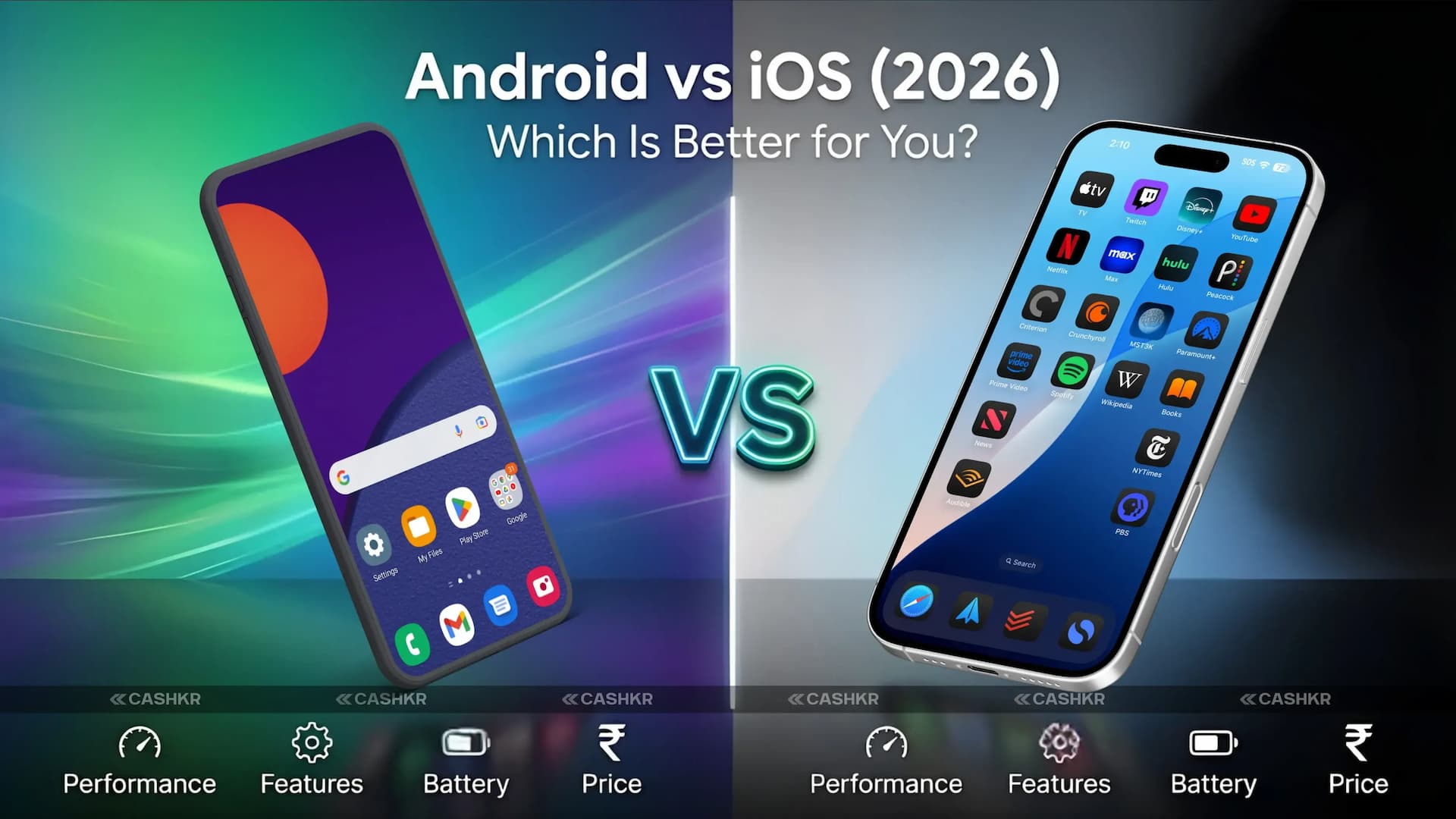
People have argued about Android and iOS for years. By 2026, the difference between them is smaller than ever. Each platform has improved in areas where the other once had a clear lead.
That does not mean your choice is unimportant. It still matters, but now the best option depends more on your personal needs than before.
Do you like customizing every part of your phone? Do you already use Apple products, such as a MacBook or iPad? Are you looking for something affordable? Is privacy important to you? Or do you just want a phone that works without any hassle?
This guide covers the main categories to help you decide which platform best suits your life in 2026.
Short on time? Android wins for customization, pricing variety, and charging speed. iOS wins for performance consistency, privacy, software longevity, and ecosystem. Scroll to the full comparison table for the quick version.
This is usually the first thing people want to know. The real answer is that it depends on what you compare it to.
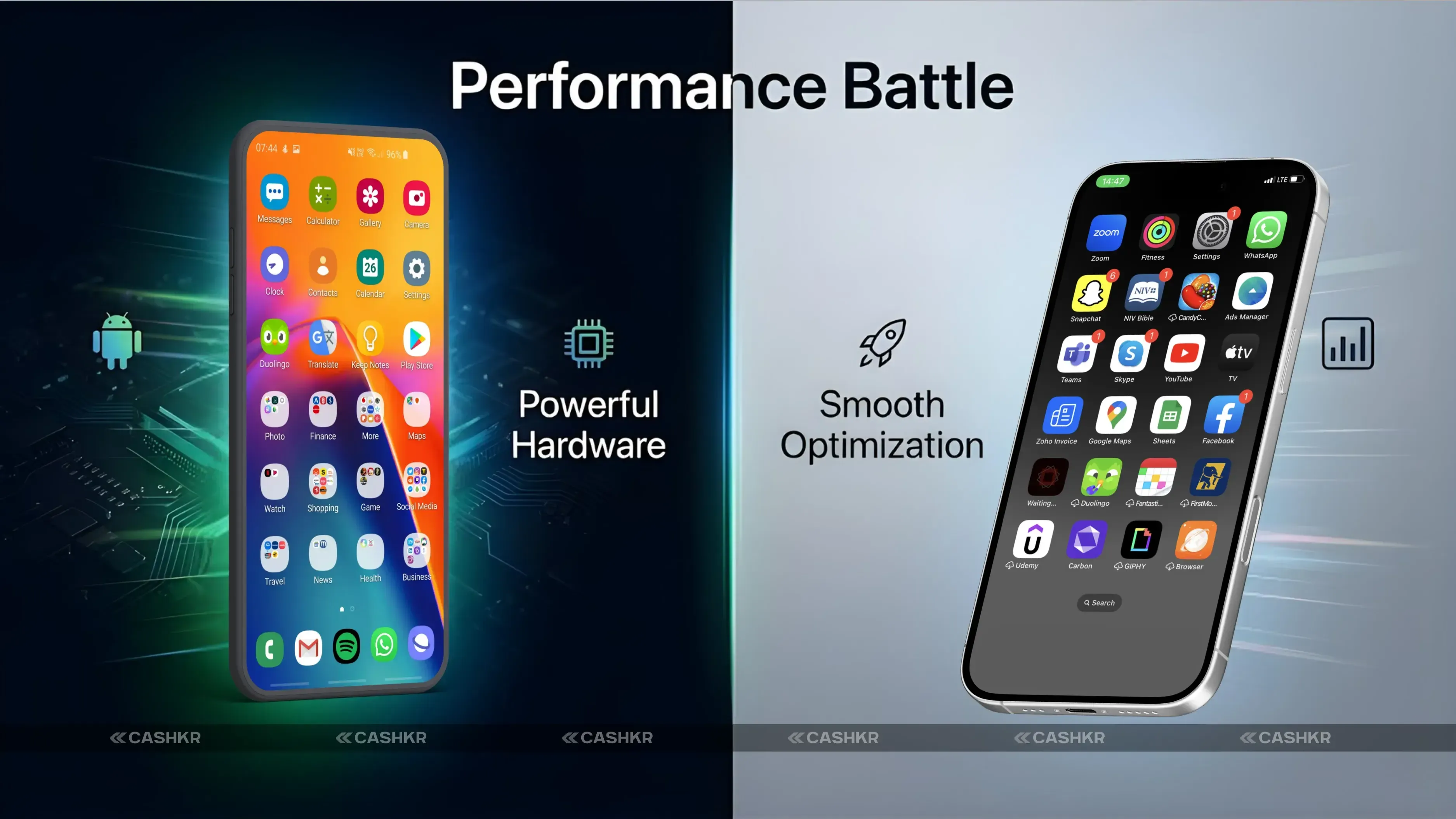
Apple makes both the hardware and software for iPhones. The A-series chips are made just for iOS. This close integration lets iOS get the most out of the hardware, which Android devices rarely match. Animations are smooth, apps open quickly, and the phone stays fast even after a few years.
The top Android phones in 2026 are excellent. Devices with Snapdragon 8 Elite Gen 5 chips perform as well as Apple’s chips in tests. In daily use, a high-end Android and a new iPhone feel equally fast.
The main difference is in the mid-range and budget phones. There is no Rs. 20,000 iPhone, but you can get a smooth-running Android at that price. However, some budget Android phones feel slower than expected because their software is not as well optimized.
When comparing top models in 2026, performance is basically equal. For lower-priced phones, iOS is more consistent since Apple only makes high-end devices.
Camera: Both Are Excellent, for Different Reasons
Comparing cameras on Android and iOS in 2026 is tough because both are strong. The real question is what kind of photos you want to take.
iPhones are known for producing natural, accurate colours and best-in-class video quality. Apple's video processing is still ahead of most Android competitors. If you shoot a lot of video, particularly for social media or content creation, the iPhone has a measurable advantage. Cinematic mode, ProRes recording, and consistent colour science across clips are things Android has not fully replicated.
Android flagships, particularly from Samsung, Google, and Xiaomi, often feature higher-resolution sensors, more versatile zoom systems, and AI photography features that can produce stunning results under specific conditions. The 200MP sensors available on some Android flagships let you crop and zoom in post-processing in ways a 48MP iPhone cannot.
For everyday photos, both iOS and Android take great pictures that most people will like. If you need pro video or extreme zoom, your platform choice becomes more important.
Winner: Tied (use case dependent) iOS leads in video, Android leads in camera hardware variety
Customisation: Night and Day Difference
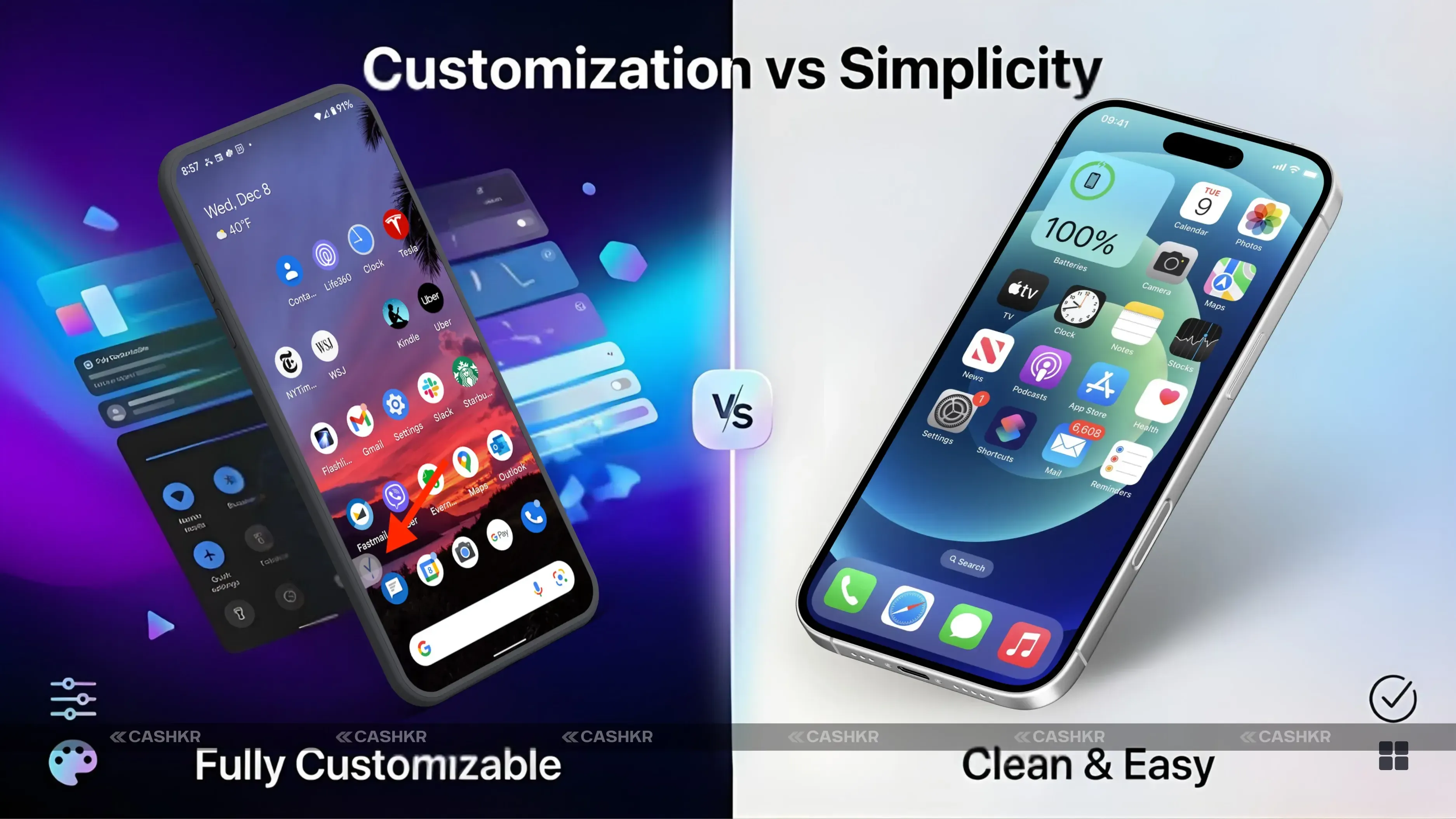
If you want to fully customize your phone’s look and feel, Android is the clear winner. There is no real competition in this area.
With Android, you can change your home screen, use custom launchers, pick different keyboards, try third-party app stores, set default apps, and even install apps not found in the Play Store. You have full control over how your phone works.
iOS now lets you change app icons, set up custom home screens, and use widgets more easily. Still, it does not offer as much freedom as Android. Some things that are normal on Android are not possible on iOS.
If you enjoy personalizing your phone, Android is the better choice. If you prefer a phone that works well right away without setup, iOS is more appealing.
Winner: Android More freedom to personalise every aspect of the device
Advertisement
Camera: Both Are Excellent, for Different Reasons
Comparing cameras on Android and iOS in 2026 is tough because both are strong. The real question is what kind of photos you want to take.
iPhones are known for producing natural, accurate colours and best-in-class video quality. Apple's video processing is still ahead of most Android competitors. If you shoot a lot of video, particularly for social media or content creation, the iPhone has a measurable advantage. Cinematic mode, ProRes recording, and consistent colour science across clips are things Android has not fully replicated.
Android flagships, particularly from Samsung, Google, and Xiaomi, often feature higher-resolution sensors, more versatile zoom systems, and AI photography features that can produce stunning results under specific conditions. The 200MP sensors available on some Android flagships let you crop and zoom in post-processing in ways a 48MP iPhone cannot.
For everyday photos, both iOS and Android take great pictures that most people will like. If you need pro video or extreme zoom, your platform choice becomes more important.
Winner: Tied (use case dependent) iOS leads in video, Android leads in camera hardware variety
Battery Life and Charging: Android Pulls Ahead
Android clearly wins when it comes to battery and charging. The difference is obvious.
In 2026, Android phones regularly ship with batteries ranging from 5,000 mAh to 7,600 mAh. Fast charging at 80W to 120W means many Android devices go from nearly empty to full in under 45 minutes. Some flagships support 50W or faster wireless charging. Reverse wireless charging is common.
iPhones have smaller batteries and slower charging compared to top Android phones. They last a full day thanks to Apple’s efficiency, but if you are used to fast charging, the slower speed is noticeable.
If you often need to charge quickly, travel a lot, or want the biggest battery, Android is the better pick.
Winner: Android Larger batteries and significantly faster charging across the lineup
Security and Privacy: Apple Has the Edge
Apple has always been ahead in privacy, and that is still true in 2026.
Apple controls the entire iOS ecosystem. Every app on the App Store goes through a strict review. App tracking is opt-in by default, meaning apps cannot follow your activity across other apps unless you explicitly allow it. Apple does not make money from advertising based on your personal data, so it has no financial incentive to collect it.
Android’s open design is both its biggest advantage and its main security challenge. The Play Store offers more apps than Apple’s App Store. Installing apps from outside the Play Store adds risk. Security also depends on the brand, since some update their phones more often than others.
Google has improved Android security in 2026. Still, if privacy is your top concern, iOS is the more trusted choice.
Winner: iOS Stricter app policies, opt-in tracking, no ad-based data collection
Software Updates: iOS Wins by a Clear Margin
This is one of the biggest practical differences between Android and iOS, and it really affects how long your device stays useful.
Apple usually provides software updates for iPhones for at least 6 years. If you buy an iPhone now, you will likely get updates until 2031 or 2032. This long support keeps your phone secure and up to date for years.
Android update support varies by brand. Google Pixel and Samsung Galaxy S phones now offer 7 years of updates, matching or beating Apple. But many mid-range and budget Android phones only get 2 or 3 years of updates. This inconsistency is a real issue for Android.
If you want to keep your phone for 4 years or more, an iOS, a Pixel, or a Samsung flagship will give you the best long-term updates.
Winner: iOS (mostly) Consistent 6-plus-year support across all iPhones, not just flagships
Ecosystem: Apple Plays Better With Itself
If you already have a MacBook, iPad, or Apple Watch, getting an iPhone is an easy choice. AirDrop lets you share files instantly between Apple devices. You can answer calls on your Mac and copy and paste between your iPhone and iPad. Features like Universal Clipboard, Handoff, and Continuity Camera make using multiple Apple devices feel seamless.
Android is more open, so your phone connects easily to Windows PCs, Chromebooks, smart TVs, and many other brands. Google services like Drive, Photos, and Meet work everywhere. Still, the integration is not as smooth as with Apple devices.
If you use only Apple devices, iOS is the clear choice. If you mix brands and operating systems, Android’s openness is a real benefit.
Winner: iOS (for Apple users) Seamless multi-device experience within the Apple ecosystem
Pricing: Android Wins on Value Range
Android phones come in every price range. From under Rs. 10,000 to Rs. 1,50,000, there is an Android for every budget. If you are shopping below Rs. 50,000, Android is really your only option.
In India, iPhones start at Rs. 64,900 with the iPhone 17e. There is no budget iPhone to match the value of mid-range Androids. The higher price covers Apple’s build quality, chip efficiency, and long software support, but it is still too expensive for many people.
In the long run, iPhones can be a better value because they get updates longer and have higher resale prices. A four-year-old iPhone is worth more than a similar Android. Still, the upfront price difference is significant.
Winner: Android. Available at every budget level, it offers better short-term value for mid-range buyers.
Android vs iOS 2026: Full Comparison at a Glance
Category
Android
iOS
Performance
Excellent on flagships, varies on budget
Consistent across all models
Customisation
Full control, launchers, sideloading
Limited but polished
Camera
Higher resolution, better zoom hardware
Best-in-class video quality
Battery Size
5,000 to 7,600mAh on most flagships
Smaller but efficient
Charging Speed
Up to 120W fast charging
Slower, up to 30W
Security
Improved but varies by brand
Strict, privacy-first
Software Updates
2 to 7 years depending on brand
6 or more years, all models
Ecosystem
Open, works across brands
Seamless within Apple devices
Starting Price (India)
Under Rs. 10,000
Rs. 64,900 (iPhone 17e)
AI Features
Google Gemini, brand-specific tools
Apple Intelligence, Siri
App Store
Google Play, more permissive
App Store, stricter review
Resale Value
Drops faster
Better long-term resale
So Which One Should You Choose?
There is no wrong choice here. Both platforms are great in 2026. The best option depends on your needs.
Pick Android if you want full control over your phone, are on a budget, need fast charging, or mostly use Google services and non-Apple devices.
Choose iOS if you already have Apple devices and want them to work together, value long-term updates and privacy, make video content, or want a phone that stays reliable for years without extra effort.
Go with Android if you love trying new hardware, tweaking settings, and exploring different brands and price ranges.
Pick iOS if you care more about simplicity and reliability than flexibility. iPhones are made to work smoothly without getting in your way.
Final Verdict
In 2026, both Android and iOS will be excellent. The old debates about one being much better than the other no longer apply.
Android is best for flexibility, price choices, bigger batteries, and fast charging. iOS stands out for consistent performance, privacy, seamless ecosystem, and long software support.
The best phone is the one that matches your daily life. Consider what you do on your phone and what you don't like about your current one. Once you think about it this way, your choice will likely be clear.
Bottom line: Choose Android for flexibility and value, or iOS for consistency and long-term use. In 2026, you cannot go wrong with either. Pick the one that fits your daily needs.
FAQs
1. Is Android or iOS better in 2026?
Neither is universally better. Android is better for customization, pricing variety, and fast charging. iOS is better for performance consistency, privacy, software updates, and ecosystem integration. The best choice depends on your individual needs and usage habits.
2. Which is safer, Android or iOS?
iOS is generally considered more secure and privacy-focused. Apple has strict App Store policies, opt-in tracking by default, and does not use personal data for advertising. Android has significantly improved security, but it varies by manufacturer, and its open platform exposes it to greater potential risks.
3. Which platform will have better camera quality in 2026?
Both platforms have excellent cameras. iOS leads in video quality and color consistency. Android flagships often offer higher-megapixel sensors, greater zoom versatility, and advanced AI camera features. For photography, the choice depends on whether you prioritize video or hardware flexibility.
4. Does Android or iOS have better battery life?
Android phones generally have larger batteries, ranging from 5,000 mAh to 7,600 mAh, and support much faster charging, up to 120W on some models. iPhones use smaller batteries but optimise power efficiency well. For outright battery capacity and charging speed, Android leads clearly.
5. How long do Android phones receive software updates?
It varies by brand. Google Pixel phones offer 7 years of updates. Samsung's flagship Galaxy S series also offers 7 years of support. Mid-range and budget Android phones from other brands may receive only 2 to 3 years of updates. Always check the brand's update policy before buying.
6. How long does Apple support iPhones with updates?
Apple typically supports iPhones with software and security updates for 6 or more years. This applies to all iPhone models, not just flagships, which gives iOS a consistent long-term support advantage over most of the Android market.
7. Is Android or iOS better for gaming?
Both platforms support high-performance mobile gaming. iOS benefits from Apple's chip efficiency and Metal graphics API, which ensures consistent frame rates. Android flagship phones with Snapdragon 8 Elite Gen 5 offer comparable performance and often include gaming-specific features like higher refresh rates and advanced cooling systems.
8. Can I use Android apps on iOS or vice versa?
No. Android apps and iOS apps are built separately and are not cross-compatible. Some popular apps are available on both platforms, but platform-exclusive apps exist on both sides. Before switching, check whether the apps you rely on daily are available on the platform you are moving to.
9. Is iOS worth the higher price compared to Android?
For users who value long software support, strong privacy, seamless Apple ecosystem integration, and consistent performance over 4 or more years, the premium is justified. For users who want the best specs at a lower price or prefer flexibility and customization, Android offers better value.
10. Which platform is better for first-time smartphone buyers?
iOS is often recommended for first-time smartphone buyers because of its simple interface, reliable performance, and straightforward setup. Android at mid-range price points also works well for first-time buyers who want more features at a lower cost. The Google Pixel series offers a clean Android experience similar in simplicity to iOS.
Advertisement
Stay in the loop
Weekly tech insights in your inbox. No spam, ever.

 Yaskar Jung ShahUpdated: Sep 9, 2026·12 min read