Motorola Razr 2026 Series Launched: Price, Specifications and Full Three-Model Comparison
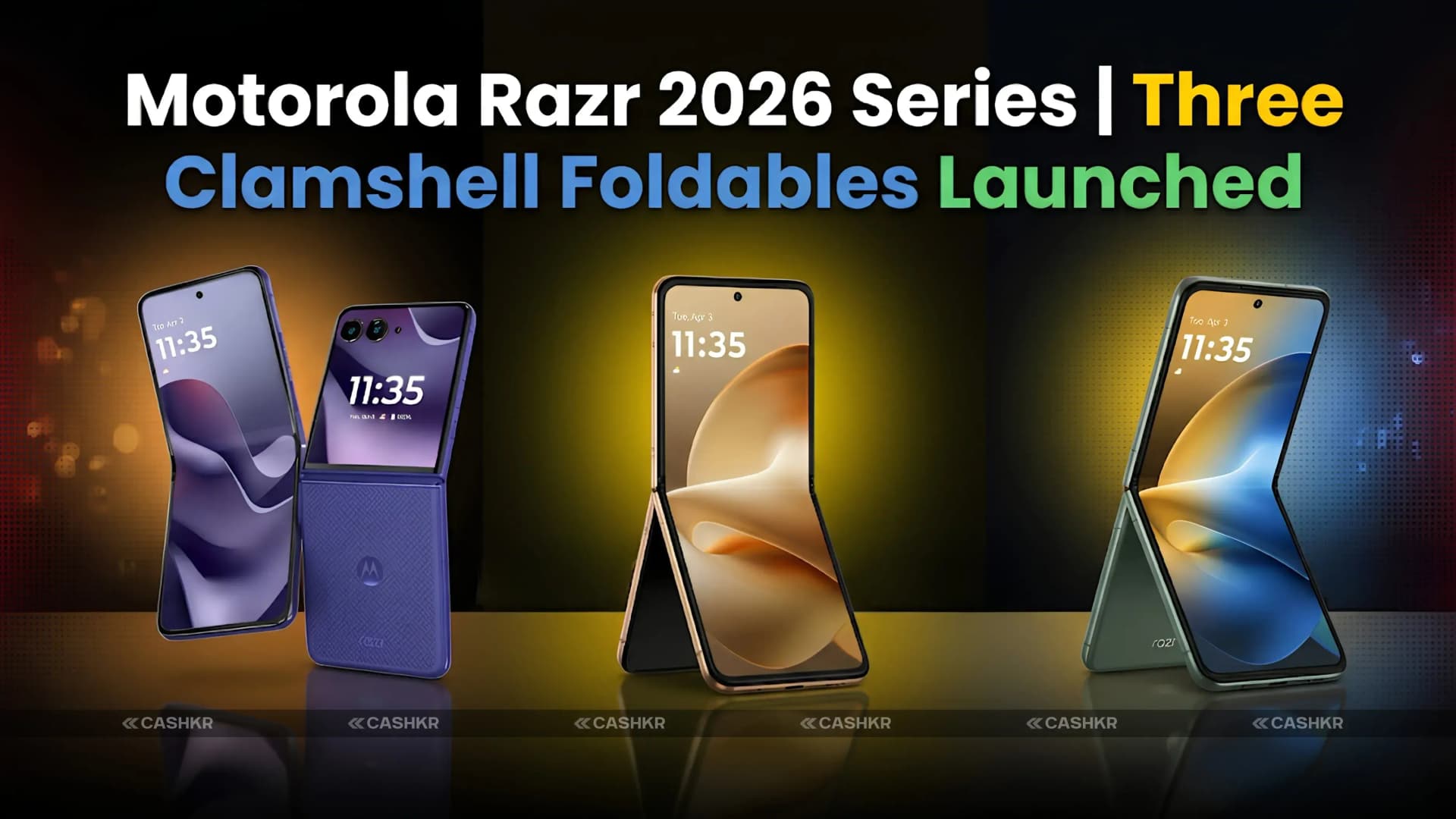
Motorola has released all three models of its 2026 Razr lineup at the same time: the Razr Ultra 2026, Razr Plus 2026, and the standard Razr 2026. Each is a clamshell foldable phone that folds vertically, with the screen protected inside. When opened, you get a tall inner display, and when closed, the phone becomes compact enough to fit easily in your pocket.
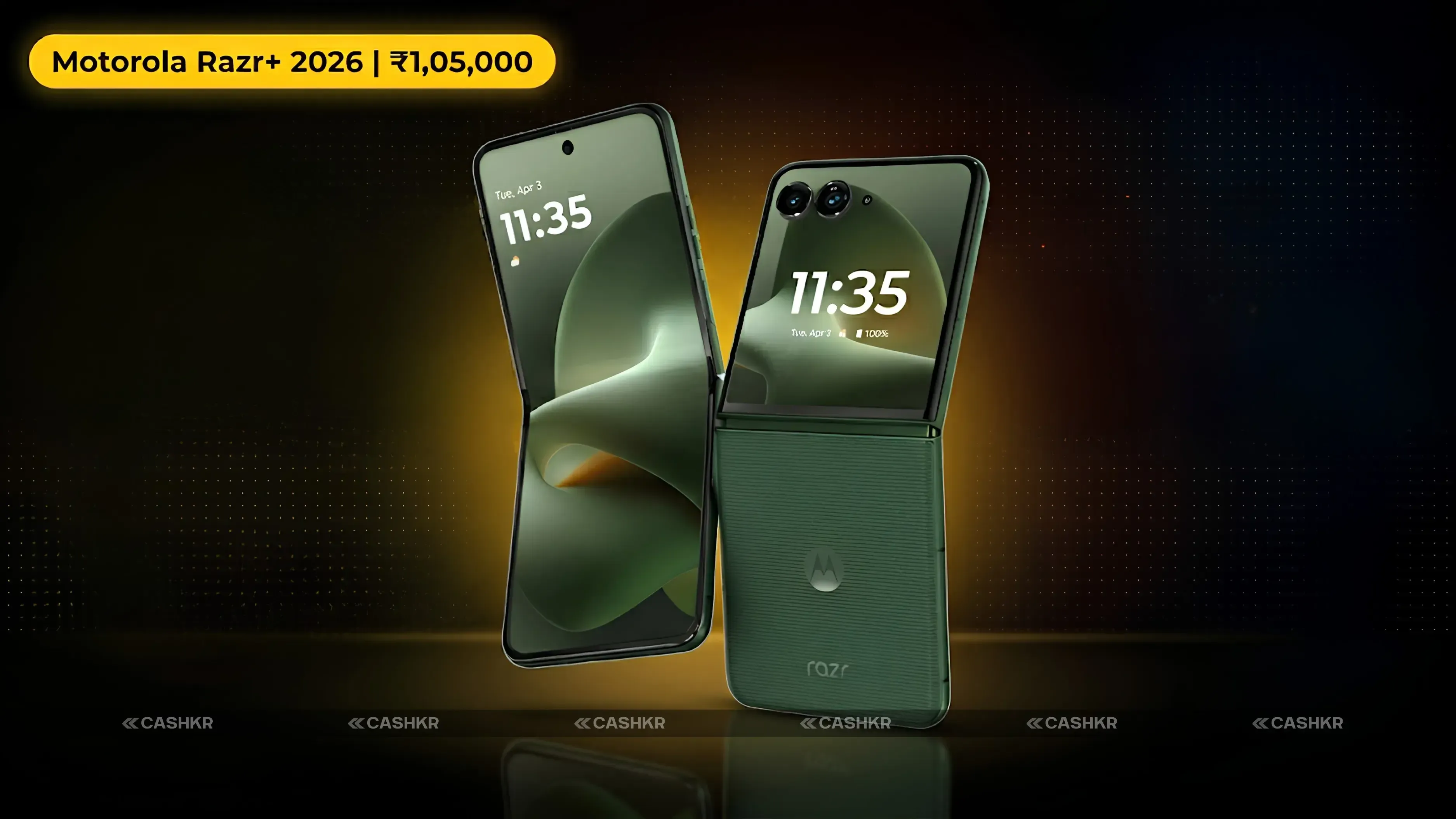
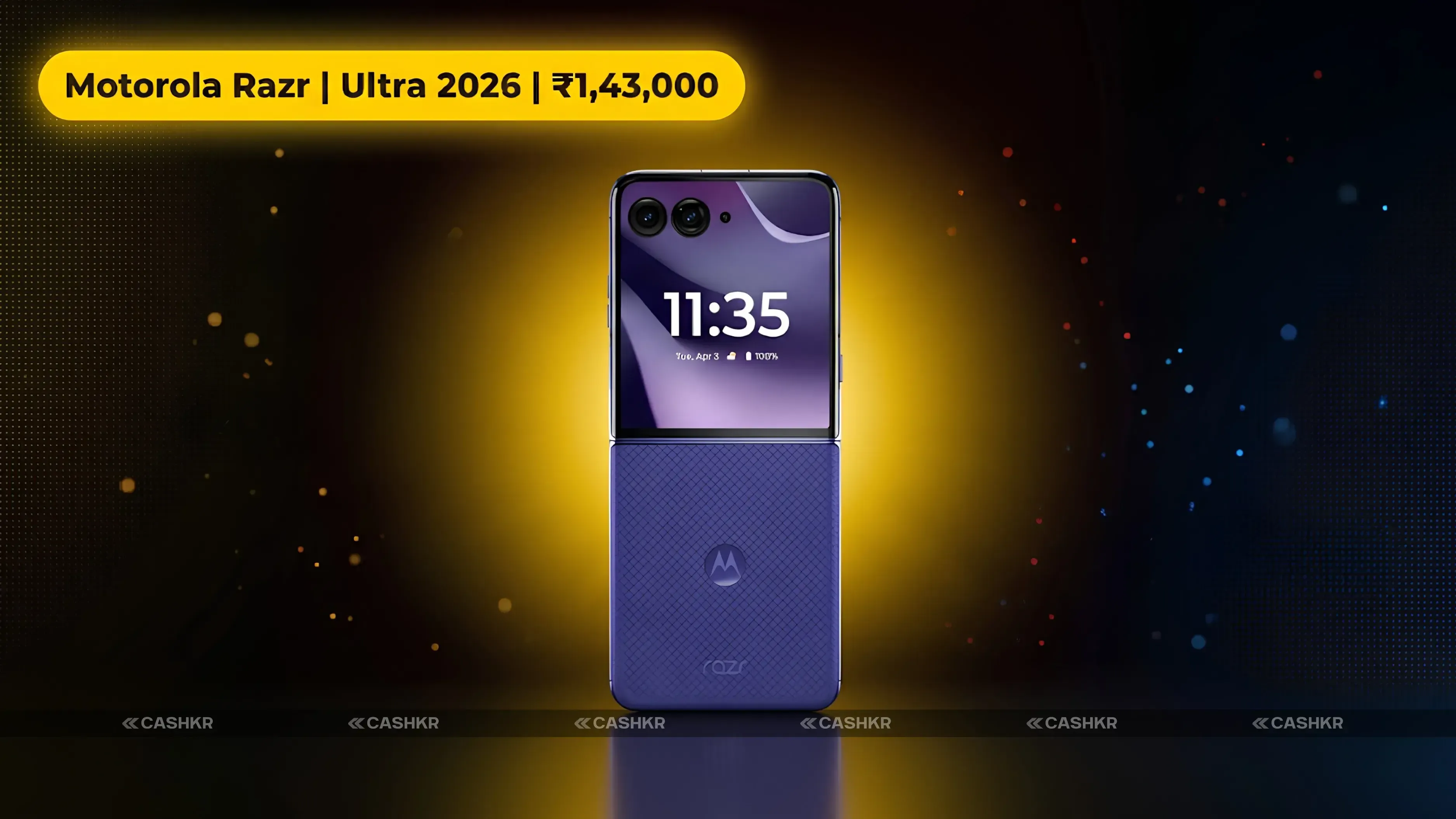
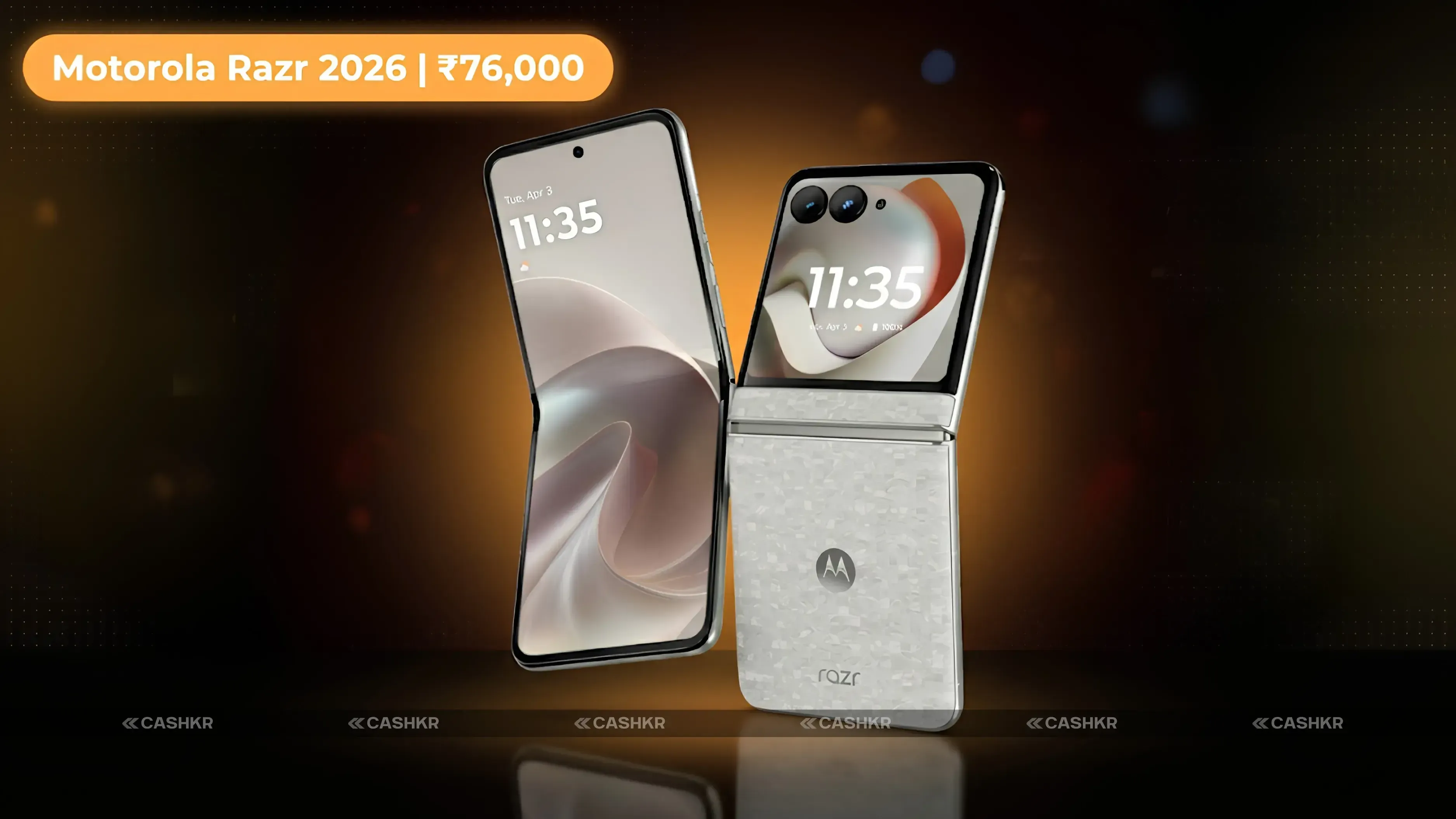
The Motorola Razr 2026 series comes in three price tiers: USD 1,499.99 (about Rs. 1,43,000) for the Ultra, USD 1,099.99 (about Rs. 1,05,000) for the Razr Plus 2026, and USD 799.99 (about Rs. 76,000) for the standard Razr 2026. Pre-orders start on May 14, with availability in Europe, the Middle East, Africa, Asia-Pacific, and Latin America. There is no confirmation yet for an India launch.
The standout feature of the Motorola Razr 2026 lineup is the cover display. Both the Ultra and Plus have a 4-inch outer screen with a 165Hz refresh rate and 3,000 nits brightness, making them among the largest and brightest cover displays on clamshell foldables in 2026. All three models run Android 16 with Hello UI and will get five years of security updates.
Below is a detailed breakdown of each model, what the specifications mean in everyday use, and which model is best suited for different buyers.
Motorola Razr 2026 Series Price and Pre-Order Details
Pre-orders for all three models begin on May 14. Here’s a full comparison of the main specifications for each model:
Feature
Motorola Razr Ultra
Motorola Razr Plus
Motorola Razr
Price
USD 1,499 (₹1,43,000)
USD 1,099 (₹1,05,000)
USD 799 (₹76,000)
Chipset
Snapdragon 8 Elite (3nm)
Snapdragon 8s Gen 3
Dimensity 7450X
RAM
16GB
12GB
8GB
Storage
512GB
512GB
256GB
Cover Display
4-inch, 165Hz, 3,000 nits
4-inch, 165Hz, 3,000 nits
3.6-inch
Inner Display
7-inch LTPO, 165Hz, 5,000 nits
6.9-inch LTPO, 165Hz
6.9-inch LTPO, 120Hz
Main Camera
50MP
50MP
50MP
Ultrawide
50MP
50MP
50MP
Selfie (Inner)
50MP
32MP
32MP
Battery
5,000mAh
4,500mAh
4,800mAh
Wired Charging
68W
45W
30W
Wireless Charging
30W
15W
15W
OS
Android 16
Android 16
Android 16
Security Updates
5 years
5 years
5 years
The standard Motorola Razr 2026, priced at USD 799 (about Rs. 76,000), is the most affordable way to get into the Razr clamshell foldable series. The Razr Plus 2026, for USD 300 more, offers a 4-inch cover display, a much faster Snapdragon 8s Gen 3 chip, extra RAM, quicker charging, and a bigger battery. The Razr Ultra 2026, at USD 1,499, goes even further with a Snapdragon 8 Elite chip, 16GB RAM, the brightest inner display at 5,000 nits, 68W charging, and a 50MP inner selfie camera, compared to the 32MP cameras on the other two models.
Motorola India has not yet announced pricing or launch dates for these models. Looking at past Razr launches in India, prices are likely to be higher than the direct USD to INR conversion due to import duties and local adjustments. Keep an eye on Motorola India’s official channels and Flipkart for updates.
India launch not confirmed: All INR figures are USD-to-INR conversions at current exchange rates. Motorola India has not announced official pricing or launch dates for the Motorola Razr 2026 series in India.
Cover Display: The 4-Inch Outer Screen That Changes How You Use a Foldable
The 4-inch cover display on the Razr Ultra 2026 and Razr Plus 2026 is the main feature that sets this generation apart from earlier Razr models and other clamshell foldables.
On a clamshell foldable, the cover display is the screen you see when the phone is closed. The bigger it is, the more you can do without opening the phone. With a 4-inch size, 165Hz refresh rate, and 3,000 nits brightness, the Ultra and Plus cover screens are big enough to use like a regular phone display.
With a 4-inch cover screen, you can easily read notifications, reply to WhatsApp messages, check Google Maps, view photos, use a timer, control music, and answer calls—all without opening the phone. A bigger, brighter cover display means you don’t have to open the phone as often, which also helps reduce wear on the hinge over time.
The standard Razr 2026 comes with a 3.6-inch cover display, which is bigger than what many other clamshell foldables offer, but not as large as the 4-inch screen on the Ultra and Plus. At 3.6 inches, you can read text and do basic tasks, but the extra 0.4 inches on the Ultra and Plus makes a noticeable difference in how much you can see at once.
Cover display size is especially important on clamshell foldables compared to book-style foldables like the Samsung Galaxy Z Fold, which always shows a large inner screen. Clamshell foldables are usually closed, so the cover display is what you use most. That’s why having a bigger, faster, and brighter cover display makes a bigger difference in daily use on a clamshell than on other types of phones.
Inner Foldable Display: LTPO AMOLED Across the Lineup
Each Razr 2026 model features an LTPO AMOLED inner display.
LTPO (Low Temperature Polycrystalline Oxide) is a display technology that lets the screen’s refresh rate change automatically, from as low as 1Hz up to 165Hz on the Ultra and Plus, depending on what’s happening on screen. When the phone is idle or showing a still image, the refresh rate drops to save battery. When you scroll, play games, or watch videos, it speeds up. This helps keep the high refresh rate without draining the battery too quickly.
The Razr Ultra 2026 has the biggest inner screen at 7 inches, which is large for a clamshell foldable. When open, its 7-inch AMOLED display runs at 165Hz and reaches 5,000 nits brightness—a standout even compared to top non-foldable phones. This level of brightness keeps the screen easy to see, even in direct sunlight.
Both the Razr Plus 2026 and the standard Razr 2026 have 6.9-inch inner displays. The Plus model offers a 165Hz refresh rate, while the standard Razr runs at 120Hz. The higher refresh rate on the Plus means smoother scrolling and gaming, but even 120Hz is much smoother than the 60Hz found on most regular phones.
Performance: Snapdragon 8 Elite, Snapdragon 8s Gen 3 and Dimensity 7450X
Each model in the lineup uses a different chipset, offering three clear levels of performance.
The Razr Ultra 2026 uses the Snapdragon 8 Elite, Qualcomm’s top mobile chip built on a 3nm process. This is the same chip found in the Samsung Galaxy S25 and OnePlus 13. It handles gaming, video editing, AI tasks, and multitasking with ease. Paired with 16GB of LPDDR5X RAM and 512GB of UFS 4.1 storage, the Ultra offers top-tier performance without compromise.
The Razr Plus 2026 features the Snapdragon 8s Gen 3, which is just below flagship level but still delivers strong performance with lower power use than the 8 Elite. It handles daily tasks and demanding games smoothly. For long, heavy workloads, it’s a bit behind the 8 Elite, but most users won’t notice much difference in everyday use.
The standard Razr 2026 comes with the MediaTek Dimensity 7450X, a solid mid-range chip. It handles everyday tasks like calls, WhatsApp, Instagram, YouTube, navigation, and casual gaming without issues. For heavy gaming at the highest settings, you may notice some limits. This model is designed for reliable daily use, not for top-level gaming performance.
The battery and charging specifications in the Motorola Razr 2026 lineup present some notable differences.
The standard Razr 2026 includes a 4,800mAh battery, larger than the 4,500mAh battery in the Razr Plus 2026. This inversion suggests Motorola prioritized a thinner or lighter design for the Plus or adjusted for the Snapdragon 8s Gen 3’s power requirements.
The Razr Ultra 2026 offers a 5,000mAh battery, notable for a clamshell foldable. It supports 68W wired charging, reaching full capacity in about 50 to 60 minutes, and 30W wireless charging, among the fastest for foldable phones.
The Razr Plus 2026 at 4,500mAh with 45W wired and 15W wireless charging, and the standard Razr 2026 at 4,800mAh with 30W wired and 15W wireless, both deliver reasonable daily endurance for moderate use.
The standard Razr 2026 offers a larger battery (4,800mAh) compared to the Razr Plus 2026 (4,500mAh), though the Plus provides faster charging. Buyers prioritizing battery capacity may prefer the standard model.
Camera: Dual 50MP Across All Three Models
All three Motorola Razr 2026 models feature dual 50MP rear cameras, consisting of a primary and an ultrawide lens. The main camera hardware is consistent across the lineup, with the selfie camera serving as the key differentiator.
The Razr Ultra 2026 includes a 50MP inner selfie camera, matching the rear camera resolution. This provides superior detail for video calls, selfies, and use of the inner screen as a viewfinder compared to competitors with lower-resolution cameras.
The Razr Plus 2026 and standard Razr 2026 are equipped with 32MP inner selfie cameras, which is a strong specification and exceeds many non-foldable phones in this price range.
Video recording on all three models goes up to 1080p. 4K video is not confirmed in the launch specifications. Buyers who specifically want 4K video recording should confirm this before purchasing.
Software: Android 16, Hello UI and Five Years of Security Updates
All Razr 2026 models launch with Android 16 and Motorola's Hello UI, which maintains a near-stock Android experience while adding features such as Moto Secure for privacy, Smart Connect for device integration, and Google Gemini AI assistant.
Motorola’s five-year security update commitment is a key long-term value, exceeding the typical two to three years offered by most Android phones. Each model also receives three years of Android OS updates, ensuring support through three major version upgrades.
For buyers intending to keep their device for three to five years, the five-year security support provides assurance of ongoing protection against security vulnerabilities throughout ownership.
Which Motorola Razr 2026 Model Should You Choose
The Motorola Razr 2026 lineup ranges from USD 799 to USD 1,499. The following guidance can help buyers select the most appropriate model:
Choose the Razr Ultra 2026 at USD 1,499 (Rs. 1,43,000) if you seek a flagship clamshell foldable with no compromises. It offers the Snapdragon 8 Elite, 16GB RAM, a 7-inch 5,000-nit inner display, a 50MP inner selfie camera, a 5,000mAh battery, and 68W charging. For those prioritizing long-term investment and top-tier performance, the Ultra is the optimal choice.
Choose the Razr Plus 2026 at USD 1,099 (Rs. 1,05,000) if you want the 4-inch cover display and strong performance at a lower price. It matches the Ultra in cover display size and brightness, includes the Snapdragon 8s Gen 3, and supports 45W fast charging. For those prioritizing the cover display over maximum GPU performance, the Plus offers strong value.
Choose the standard Razr 2026 at USD 799 (Rs. 76,000) if you want to experience a clamshell foldable without paying flagship prices. The standard Razr 2026 has a 6.9-inch LTPO AMOLED inner screen at 120Hz, a 3.6-inch cover display, dual 50MP cameras, and a 4,800mAh battery. The Dimensity 7450X handles everyday tasks well. For buyers entering the foldable category for the first time and not requiring the highest performance tier, the standard Razr 2026 is a meaningful value entry point.
Final Verdict
Motorola’s 2026 Razr lineup is its most advanced to date. The 4-inch, 165Hz cover display on the Ultra and Plus directly addresses previous concerns about small outer screens, significantly improving daily usability by reducing the need to open the phone.
The Motorola Razr 2026 series competes with the Samsung Galaxy Z Flip 7 and Oppo Find N5 Mini in the global clamshell foldable market. Its five-year security updates, 5,000-nit Ultra display, and consistent dual 50MP cameras provide notable competitive advantages, making it a strong option for prospective buyers.
Bottom Line: Motorola Razr 2026 series: Ultra at USD 1,499 (Rs. 1,43,000), Razr+ at USD 1,099 (Rs. 1,05,000), Razr at USD 799 (Rs. 76,000). Pre-orders May 14. Ultra: Snapdragon 8 Elite, 16GB, 7-inch 165Hz 5,000 nits, 50MP inner camera, 5,000mAh, 68W+30W. Razr+: Snapdragon 8s Gen 3, 12GB, 6.9-inch 165Hz, 32MP inner, 4,500mAh, 45W+15W. Razr: Dimensity 7450X, 8GB, 6.9-inch 120Hz, 4,800mAh, 30W+15W. All: dual 50MP rear, Android 16, 5 years security, 3 years OS. India TBC.
FAQs
1. What are the prices of the Motorola Razr 2026 series?
The Razr Ultra 2026 is USD 1,499.99 (approximately Rs. 1,43,000). The Razr Plus 2026 is USD 1,099.99 (approximately Rs. 1,05,000). The standard Razr 2026 is USD 799.99 (approximately Rs. 76,000). All three go on pre-order from May 14. India pricing has not been confirmed.
2. What cover display does the Motorola Razr 2026 have?
The Razr Ultra 2026 and Razr Plus 2026 both have a 4-inch cover display at 165Hz with 3,000 nits brightness. The standard Razr 2026 has a 3.6-inch cover display. The 4-inch cover screen on the Ultra and Plus is one of the largest available on any clamshell foldable in 2026.
3. What chipsets are in the Motorola Razr 2026 models?
The Razr Ultra 2026 has the Snapdragon 8 Elite on 3nm, the Razr Plus 2026 has the Snapdragon 8s Gen 3, and the standard Razr 2026 has the MediaTek Dimensity 7450X. Each represents a different performance tier: from flagship to upper mid to capable everyday.
4. Why does the standard Razr 2026 have a larger battery than the Razr Plus 2026?
The standard Razr 2026 has 4,800mAh while the Razr Plus 2026 has 4,500mAh. This is an unusual inversion between models. The Razr Plus may have a smaller battery due to physical constraints imposed by the Snapdragon 8s Gen 3 chip or other internal component arrangements. Motorola has not specifically explained this specification difference.
5. How long does Motorola provide software support for the Razr 2026 series?
All three models receive three years of Android OS updates and five years of security patches. The five-year security support extends meaningfully beyond the two to three years typical of most Android phones and makes the Razr 2026 lineup a better long-term investment.
6. What cameras do the Motorola Razr 2026 models have?
All three models have dual 50MP rear cameras: a 50MP primary and a 50MP ultrawide. The Razr Ultra 2026 has a 50MP inner selfie camera. The Razr Plus 2026 and standard Razr 2026 have 32MP inner selfie cameras. Video recording goes up to 1080p on all models.
7. When will the Motorola Razr 2026 launch in India?
Motorola India has not confirmed a launch date for any of the three Razr 2026 models in India. Pre-orders open globally on May 14. Watch the official Motorola India channels and Flipkart for India-specific launch announcements.
8. What is LTPO AMOLED on the Motorola Razr 2026?
LTPO (Low Temperature Polycrystalline Oxide) is a display technology that dynamically adjusts the refresh rate from as low as 1Hz to 165Hz based on screen content. During static or idle moments, it drops to save battery. While scrolling and playing a video, it reaches the maximum refresh rate. This makes high-refresh-rate displays more battery-efficient than fixed-refresh-rate alternatives.
9. What is the difference between the Razr Ultra 2026 and the Razr Plus 2026?
Key differences: Razr Ultra has a Snapdragon 8 Elite, while the Plus has a Snapdragon 8s Gen 3. Ultra has 16GB RAM versus 12GB. Ultra has a 7-inch inner display at 5,000 nits versus a 6.9-inch one on Plus. Ultra has a 50MP selfie camera on the inside, versus 32MP on Plus. Ultra has 5,000mAh battery versus 4,500mAh. Ultra has 68W wired charging versus 45W. The price difference is USD 400 (approximately Rs. 38,000).
10. How does the Motorola Razr 2026 compare to the Samsung Galaxy Z Flip 7?
The Samsung Galaxy Z Flip 7 is the primary direct competitor. Both are clamshell foldables launching in 2026. The Razr Ultra 2026 matches or exceeds the Z Flip 7 on most specifications, including cover display size and inner display brightness. The standard Razr 2026 is positioned as a more accessible clamshell alternative. Samsung's stronger India brand presence and established service network give the Z Flip 7 a practical advantage in India until Motorola confirms its own India launch and service support.
If you want to sell your old devices, then click here.
 Yaskar Jung ShahUpdated: Jul 30, 2026·18 min read