Motorola Razr 70 Ultra Leaks: AI Button and Display Size
 Yaskar Jung ShahUpdated: Aug 11, 2026·16 min read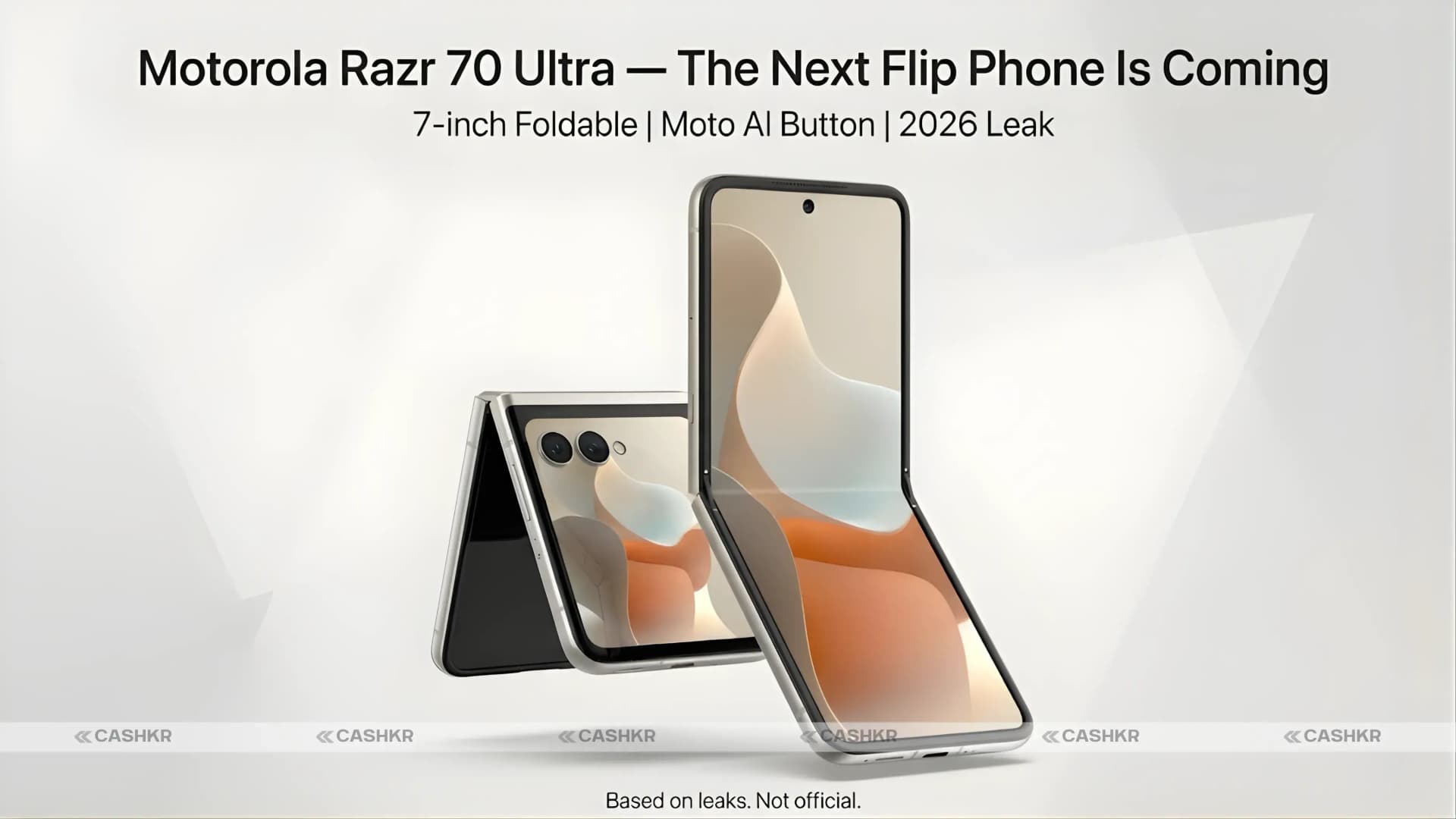
Motorola Razr 70 Ultra leaks, display, AI button and launch date.

Get the Cashkr app for faster payouts

Motorola is preparing the next generation of its Razr Ultra flip phone, and the first design and feature details have leaked.
The Motorola Razr 70 Ultra will keep the clamshell foldable style that made the Razr 60 Ultra a hit, but it adds something new: a dedicated Moto AI button. This physical shortcut for AI features is getting the most attention in recent leaks and puts the Razr 70 Ultra right in step with 2026’s focus on AI-driven smartphones.
Alongside the Ultra, a standard Motorola Razr 70 is also expected to launch. Both devices are expected to debut in China first, followed by a global rollout.
Here is everything the leaks reveal about the Razr 70 Ultra right now.
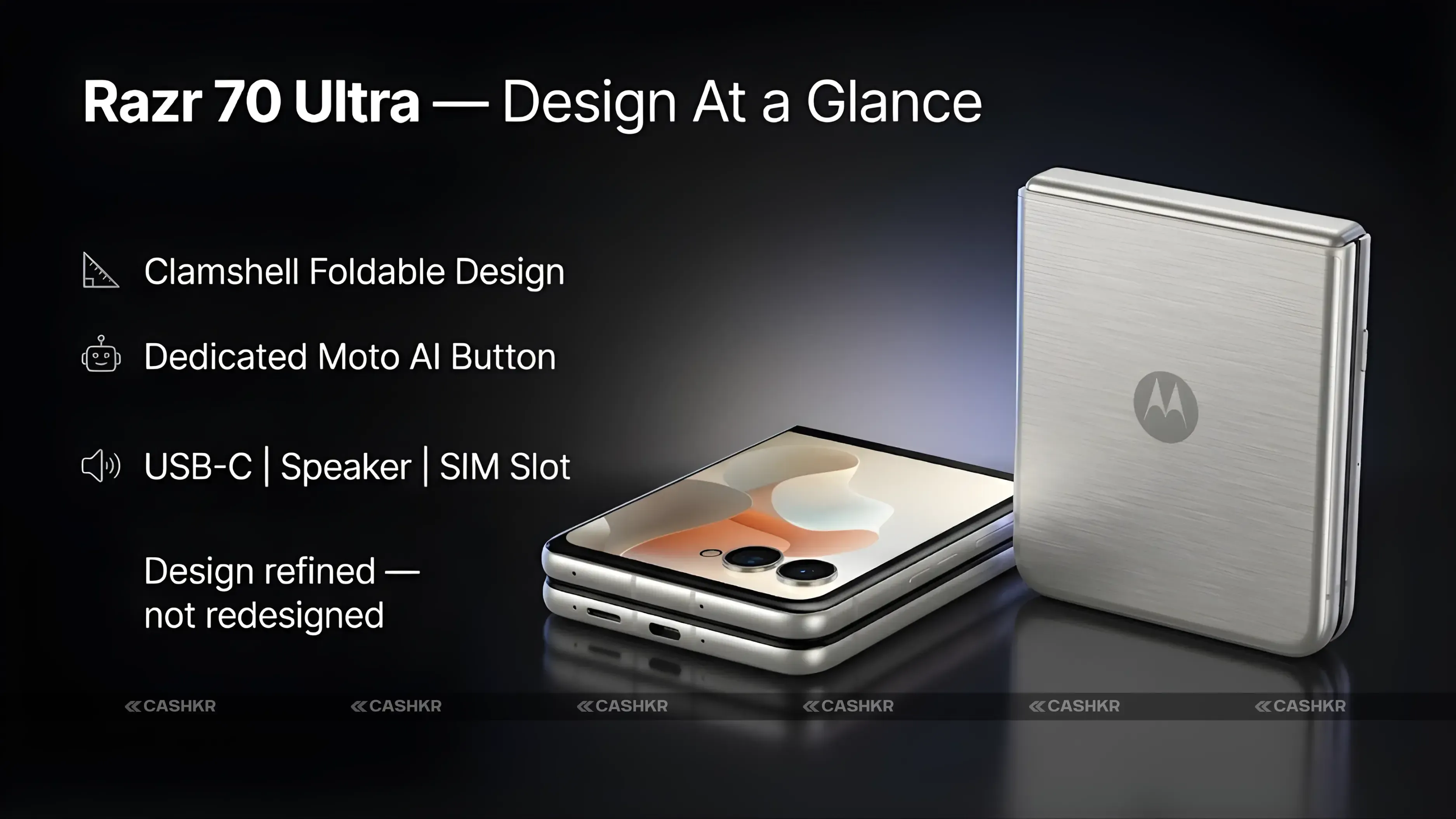
The most important thing to know about the Razr 70 Ultra design is that Motorola has chosen refinement over reinvention.
Leaked images and certification documents reveal a clamshell foldable design that will look immediately familiar to anyone who has seen or owned a Razr 60 Ultra. The overall silhouette, the camera module layout, and the general proportions are consistent with the previous generation. Motorola is not trying to surprise anyone with a radical new form factor here.
This approach makes sense for foldable phones. The hinge, shape, and size of a clamshell flip phone are limited by how the device needs to fold and fit in your pocket. Most changes from one generation to the next are in build quality, hinge strength, display performance, and internal hardware.
The physical layout of the Razr 70 Ultra is clearly detailed in the leaks. The bottom edge carries the speaker grille, USB-C charging port, SIM card slot, and primary microphone. The top edge has a secondary microphone for call quality during folded use. The right side features the new dedicated Moto AI button, the most visually distinctive change from the previous generation.
Also Read: iQOO Z11 Specs and Price: Best Gaming Phone Under Rs. 35K
Form Factor | Clamshell foldable (flip phone) |
Design Style | Refined over previous generation |
Bottom Edge | Speaker, USB-C, SIM slot, primary mic |
Top Edge | Secondary microphone |
New Physical Feature | Dedicated Moto AI button |
Status | Leaked images confirmed |
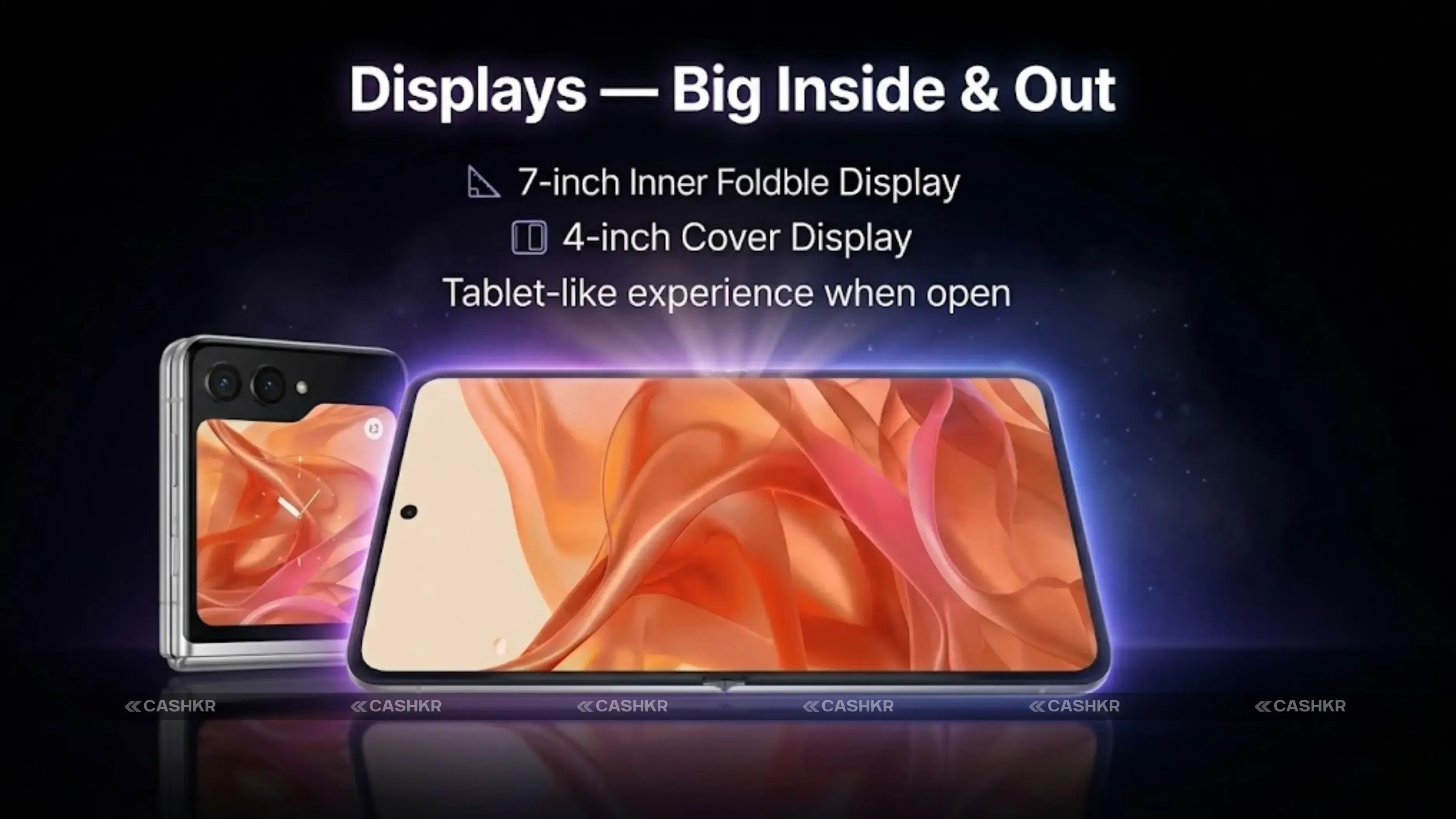
The Motorola Razr 70 Ultra’s display setup sticks to the usual premium flip phone formula: a big inner foldable screen for full use and a large cover display for quick tasks without opening the phone.
The inner foldable display is expected to be 7 inches. At this size, unfolding the Razr 70 Ultra gives you a tablet-adjacent screen experience in a device that folds down to fit in a jeans pocket. For reading, watching videos, browsing, and using apps, a 7-inch display provides the kind of comfortable screen real estate that standard bar phones cannot offer.
The 4-inch cover display is the more notable number here. The Razr 60 Ultra had a 3.6-inch outer screen, which was already large enough to use independently for messaging, calls, music controls, and quick app interactions. At 4 inches, the Razr 70 Ultra's cover display pushes further toward the point where many users can complete routine tasks without ever opening the phone.
A bigger cover display isn’t just about better specs. It changes how you use the phone every day. You can reply to messages, check directions, control music, and see notifications without opening the phone, which helps the hinge last longer and makes daily use quicker and easier.
Full display specifications, including resolution, refresh rate, and panel technology, have not been detailed in current leaks. These will be confirmed at the official launch.
Also Read: Vivo X300 Camera Settings: 8 Changes That Actually Work
Inner Display | 7 inches (foldable, expected) |
Cover Display | 4 inches (expected) |
Previous Cover | 3.6 inches (Razr 60 Ultra for reference) |
Cover Use Cases | Messages, calls, media control, notifications |
Full Specs | Resolution and refresh rate TBC at launch |
The leaked dimensions show how the Razr 70 Ultra will feel in your hand and pocket.
Unfolded, the phone measures 171.3 by 74.1mm with a thickness of 7.8mm. This is a standard tall-and-narrow smartphone profile when open. At 7.8mm thin when unfolded, it is comparable to current flagship bar phones.
When folded, the phone measures 88.0 by 74.1 by 15.8mm, and about 17.63mm at the camera bump. This is a bit thicker than the Razr 60 Ultra. Motorola probably made this small change to fit a bigger battery, better camera hardware, or both.
A folded thickness of about 16 to 17mm is normal for premium flip phones in 2026. Samsung’s Galaxy Z Flip 7 is expected to be about the same. Flip phones can’t get much thinner because of the hinge and the need for a good-sized battery.
Unfolded Height | 171.3mm |
Unfolded Width | 74.1mm |
Unfolded Thickness | 7.8mm |
Folded Height | 88.0mm |
Folded Width | 74.1mm |
Folded Thickness | 15.8mm (17.63mm with camera bump) |
A dedicated Moto AI button is the single most significant design addition in the Razr 70 Ultra compared to its predecessor.
Physical AI buttons have been appearing across flagship smartphones in 2026. Apple introduced the Camera Control button on iPhones in 2024. Samsung's Galaxy AI features have become central to its marketing. Google's Pixel phones have a dedicated Google Assistant shortcut. Motorola is joining this trend with the Moto AI button on the Razr 70 Ultra.
The exact functionality has not been confirmed in leaks. Based on Motorola's existing Moto AI features and the direction the industry is moving, the most likely uses are: one-press access to AI assistant features, AI-enhanced camera shortcuts for scene analysis and photography suggestions, productivity shortcuts like AI-powered summarisation and translation, and contextual AI actions based on what is on screen.
Having a physical button is easier than opening an app or using a gesture. By adding this button, Motorola is showing that AI features are important enough to deserve their own spot on the phone, which means we can expect a strong set of features at launch.
For foldable phone users specifically, a one-touch AI shortcut is practical both when the phone is open and when it is folded, letting you access a quick AI function without fully opening the device.
| Features | Razr 70 Ultra | Razr 60 Ultra |
Inner Display | 7-inch foldable (expected) | 6.9-inch foldable |
Cover Display | 4-inch (expected) | 3.6-inch |
Moto AI Button | Yes (new) | No |
Thickness (fold) | ~15.8mm (17.63mm w/bump) | Slimmer |
Dimensions | 171.3 x 74.1 x 7.8mm | Similar |
Design Style |
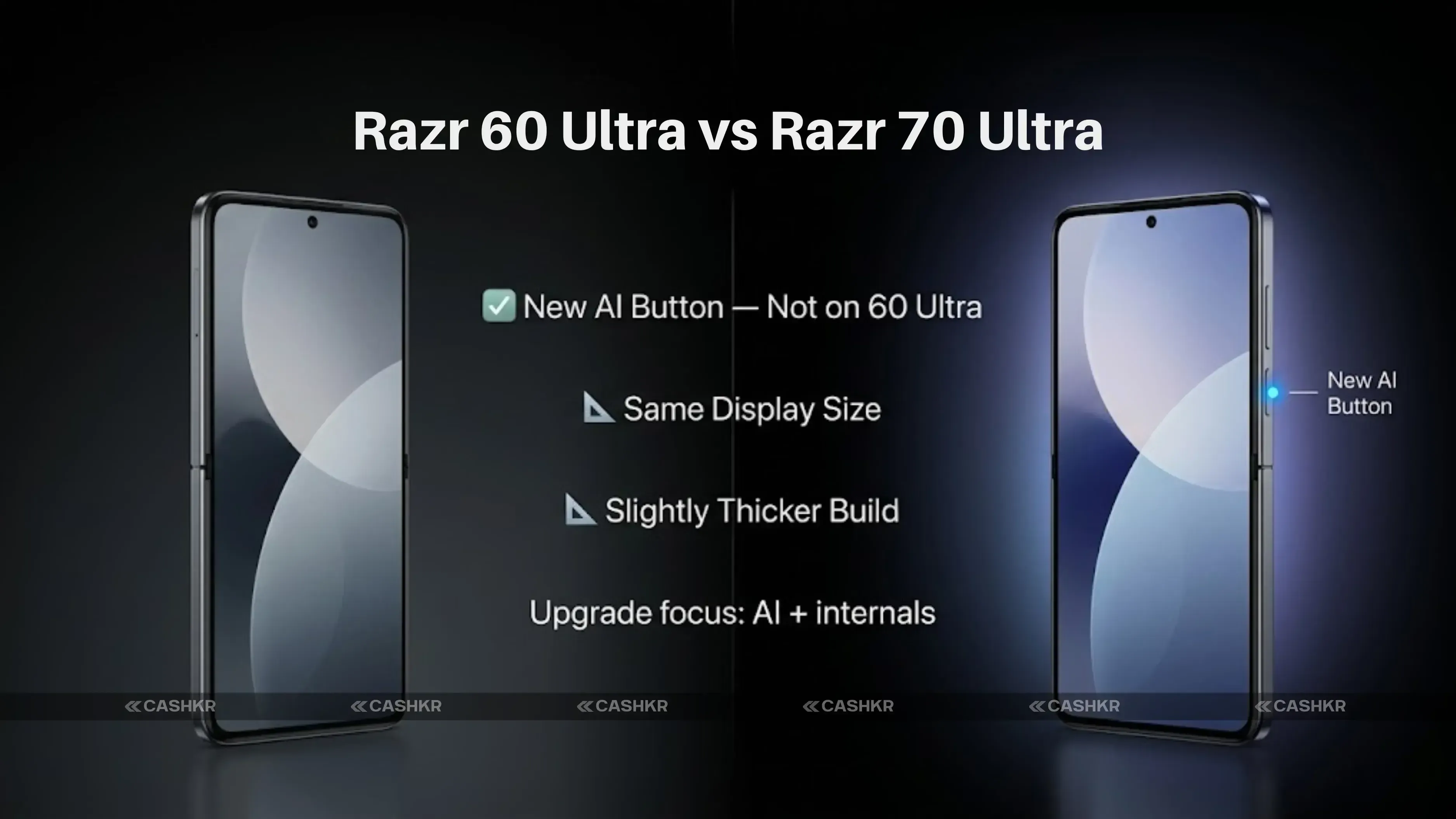
The Moto AI button and bigger cover display are the main upgrades we know about so far. The inner screen is still 7 inches, and the overall design looks familiar. The small increase in thickness likely means there are some internal improvements, but details haven’t leaked yet.
If you already have a Razr 60 Ultra, whether you upgrade will depend on how much the new AI button and bigger cover display matter to you, and if the chipset and camera upgrades at launch are worth it. For new foldable buyers, the Razr 70 Ultra will be the newest and most advanced option in Motorola’s premium flip phone range.
Specific hardware details for the chipset, camera system, and battery have not surfaced in current leaks.
Based on Motorola's previous Razr Ultra positioning, the chipset is expected to be a flagship or near-flagship Snapdragon processor. The Razr 60 Ultra used the Snapdragon 8s Gen 3. The 70 Ultra would logically step up to the Snapdragon 8 Elite or Snapdragon 8s Gen 4 tier.
The camera system on the Razr 60 Ultra was a dual-rear setup with a 50MP primary and a 13MP telephoto. An upgrade here is expected but not confirmed. The slightly thicker folded profile compared to the previous generation is a reasonable indicator that camera hardware improvements are part of the change.
Battery size hasn’t been mentioned in leaks yet. The Razr 70 Ultra is a bit thicker than the 60 Ultra, which could mean Motorola is adding a bigger battery. Many Razr owners wanted better battery life, since the last model didn’t last as long as regular smartphones.
The Motorola Razr 70 Ultra is expected to launch first in China, followed by a global rollout. In the US market, it may be branded as the Motorola Razr Ultra 2026. No official launch date has been confirmed.
The Razr 70 Ultra’s main rivals in the premium flip phone market are Samsung’s Galaxy Z Flip 7 and Z Fold 7. Samsung sells the most foldables worldwide, but Motorola usually prices the Razr series more competitively, making it a good choice for people who want a high-end flip phone without paying Samsung’s higher prices.
For Indian buyers, both the Razr 60 Ultra and previous Razr models were officially launched. The 70 Ultra is expected to follow the same path, though no India-specific launch timeline is available yet.
China Launch | Expected first (date unconfirmed) |
Global Launch | Shortly after China debut |
US Branding | Likely Motorola Razr Ultra 2026 |
India Launch | Expected, timeline unconfirmed |
Main Competitor | Samsung Galaxy Z Flip 7 |
Launch Status | Leak based, no official date |
Wait, if you are in the market for a premium flip phone and want the latest generation. The Moto AI button, larger cover display, and expected internal upgrades make it worth holding out for over the current Razr 60 Ultra.
Wait, if AI features are important to your daily smartphone use. The dedicated Moto AI button suggests meaningful AI integration beyond what the Razr 60 Ultra offers.
If you need a flip phone right now and can’t wait, the Razr 60 Ultra is still a solid choice. It will probably get cheaper once the 70 Ultra comes out.
Compare with Samsung if you are undecided between Motorola and Samsung in the flip category. The Galaxy Z Flip 7 will launch around the same time, and a direct comparison at official pricing is worth it.
Don’t rush your decision. The key specs like chipset, battery, and full display details aren’t confirmed yet. Wait for the official launch to see the full picture before you decide.
The Motorola Razr 70 Ultra looks to be just what you’d expect from Motorola’s design approach: a refined, polished update instead of a major overhaul.
The 7-inch inner screen and 4-inch cover display keep the premium foldable feel Razr Ultra fans expect. The Moto AI button is a real new feature that could change how you use the phone, depending on what it can do at launch. The familiar design means current Razr users won’t feel left out, and the internal upgrades give a good reason to consider upgrading.
We still don’t know the details about the chipset, camera, and battery, and these will decide if the Razr 70 Ultra is a must-have or something to wait on. We’ll get those answers at the official launch.
1. When will the Motorola Razr 70 Ultra launch?
The exact launch date has not been confirmed. The Razr 70 Ultra is expected to launch first in China, followed by a global rollout. Based on previous Razr Ultra launch patterns, a mid-2026 timeframe is likely.
2. What is the display size of the Motorola Razr 70 Ultra?
The Razr 70 Ultra is expected to have a 7-inch inner foldable display and a 4-inch cover display. The cover display is larger than the 3.6-inch outer screen on the Razr 60 Ultra.
3. What is the Moto AI button on the Razr 70 Ultra?
The Moto AI button is a new dedicated physical button on the Razr 70 Ultra designed for quick access to AI features. Exact functionality has not been confirmed, but is expected to include AI assistant shortcuts, camera AI tools, and productivity features.
4. How thick is the Motorola Razr 70 Ultra when folded?
The Razr 70 Ultra folds to 15.8mm thick, or approximately 17.63mm at the camera bump. This is slightly thicker than the Razr 60 Ultra, likely due to improvements in the battery or camera.
5. What are the dimensions of the Motorola Razr 70 Ultra?
Unfolded: 171.3 by 74.1 by 7.8mm. Folded: 88.0 by 74.1 by 15.8mm. The camera bump adds approximately 1.83mm to the folded thickness.
6. How does the Razr 70 Ultra differ from the Razr 60 Ultra?
The main confirmed differences are a larger 4-inch cover display instead of a 3.6-inch one, a new dedicated Moto AI button, and slightly different dimensions. Design language remains similar. Chipset, camera, and battery upgrades are expected but not yet confirmed.
7. Will the Motorola Razr 70 Ultra launch in India?
An India launch is expected, given Motorola's history with the Razr Ultra series in India. No official India launch date or pricing has been confirmed yet.
8. What chipset does the Motorola Razr 70 Ultra use?
The chipset has not been confirmed in leaks. Based on the Razr 60 Ultra using the Snapdragon 8s Gen 3, the Razr 70 Ultra is expected to use an updated Snapdragon chipset, likely the 8 Elite or 8s Gen 4 tier.
9. Is the Motorola Razr 70 Ultra worth buying over the Razr 60 Ultra?
For new foldable buyers, yes. The Razr 70 Ultra will be the freshest Motorola flip phone at launch with the latest AI features and display improvements. For current Razr 60 Ultra owners, the decision depends on the full hardware specifications at the official launch, particularly the chipset and battery upgrades.
10. How does the Razr 70 Ultra compare to the Samsung Galaxy Z Flip 7?
Both phones are premium flip-folddables expected to launch in a similar timeframe in 2026. A direct comparison of specifications and pricing will only be possible once both phones are officially announced. Historically, Motorola Razr Ultra models have been priced competitively against Samsung's Z Flip series.
Sell with Cashkr
Cashkr buys used devices at a fair price with free doorstep pickup and same-day payment across 2,000+ pincodes. Get an upfront quote in seconds.
Sell Old Phone OnlineCheck your phone's value in seconds
Written by
Honor 600 Pro and Honor 600 price in India along with full details.
Infinix GT 50 Pro price in India triggers and 6500mAh at Rs. 35K.
| Refined, familiar |
| Same clamshell |
AI Features | Expanded via AI button | Standard Moto AI |
Launch Status | Expected global soon | Already launched |