Android 17 Beta 3: Priority Charging and Camera Extensions
 Yaskar Jung ShahUpdated: Aug 9, 2026·15 min read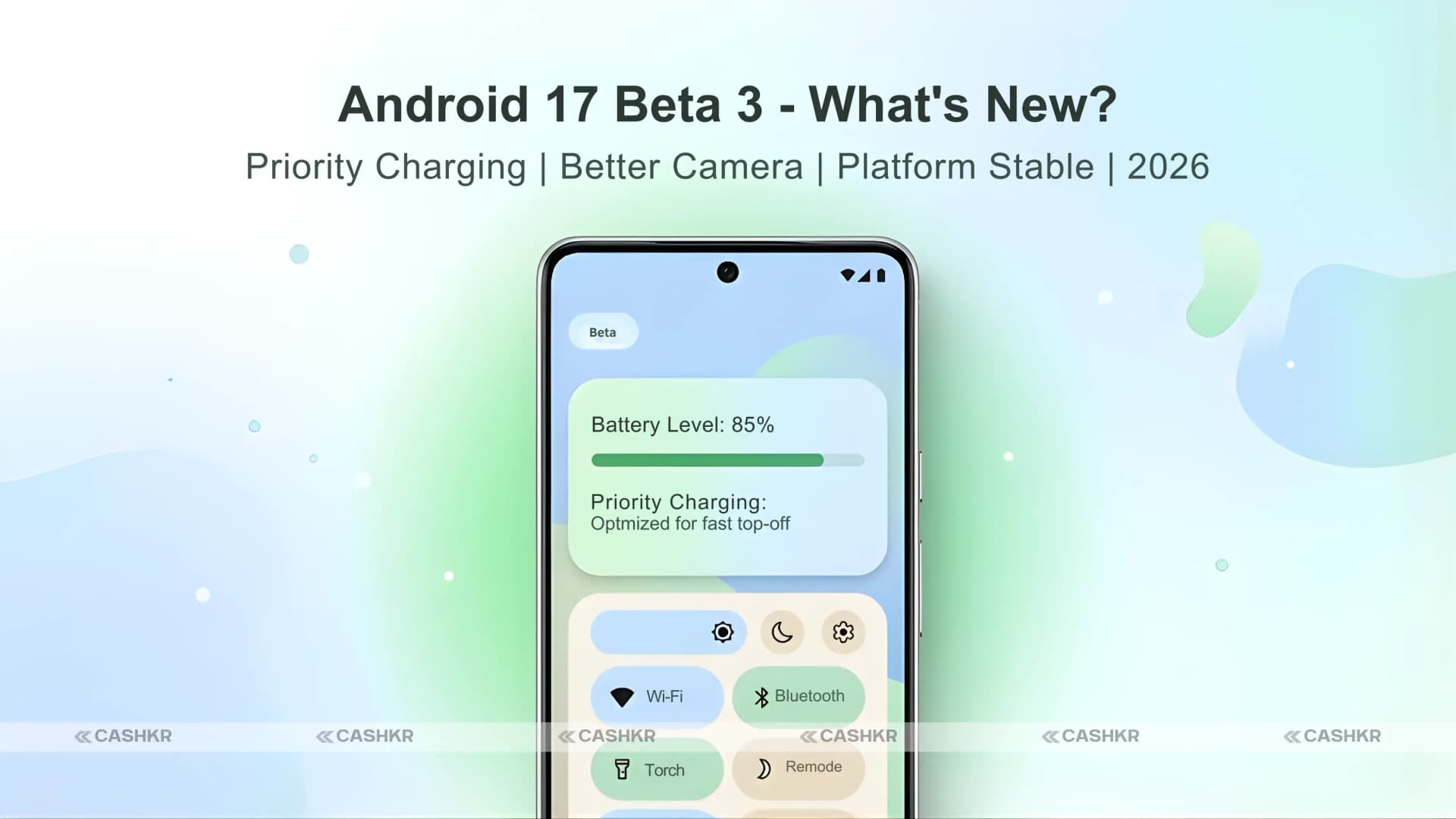
Android 17 Beta 3, Priority Charging and camera features.

Get the Cashkr app for faster payouts

Google has released Android 17 Beta 3 and announced that the platform is now stable. This means the APIs are set, and the final public release is expected later in 2026.
Most news about Android 17 has highlighted visual updates and AI features. However, Beta 3 quietly adds two features that may be even more useful: Priority Charging and new camera extensions for third-party apps.
These features are not flashy, so you will not see them in screenshots or ads. But if they work as promised, they could solve two everyday problems: slow charging when you are in a rush, and poor photo quality in non-default camera apps.
Here is a simple explanation of these features, what platform stability means, and what you can expect from the final Android 17 release.
Before diving into the features, it is important to explain platform stability, since it affects when these updates will reach your device.
When Google says an Android beta is platform stable, it means the APIs—how apps talk to the system—are now final. They will not change before the public release. This lets app developers start building support for Android 17 features without worrying about changes.
For users, this means Android 17 now has a set release timeline. Manufacturers like Samsung, OnePlus, and Xiaomi can start testing and adapting the update. App developers can begin adding Priority Charging and camera extension features to their apps.
The public release is expected later in 2026. When it comes out, most new Android flagship and many mid-range phones will get the update through the usual over-the-air process.
Priority Charging is a new Android 17 feature that helps your phone charge faster by changing what it focuses on while plugged in.
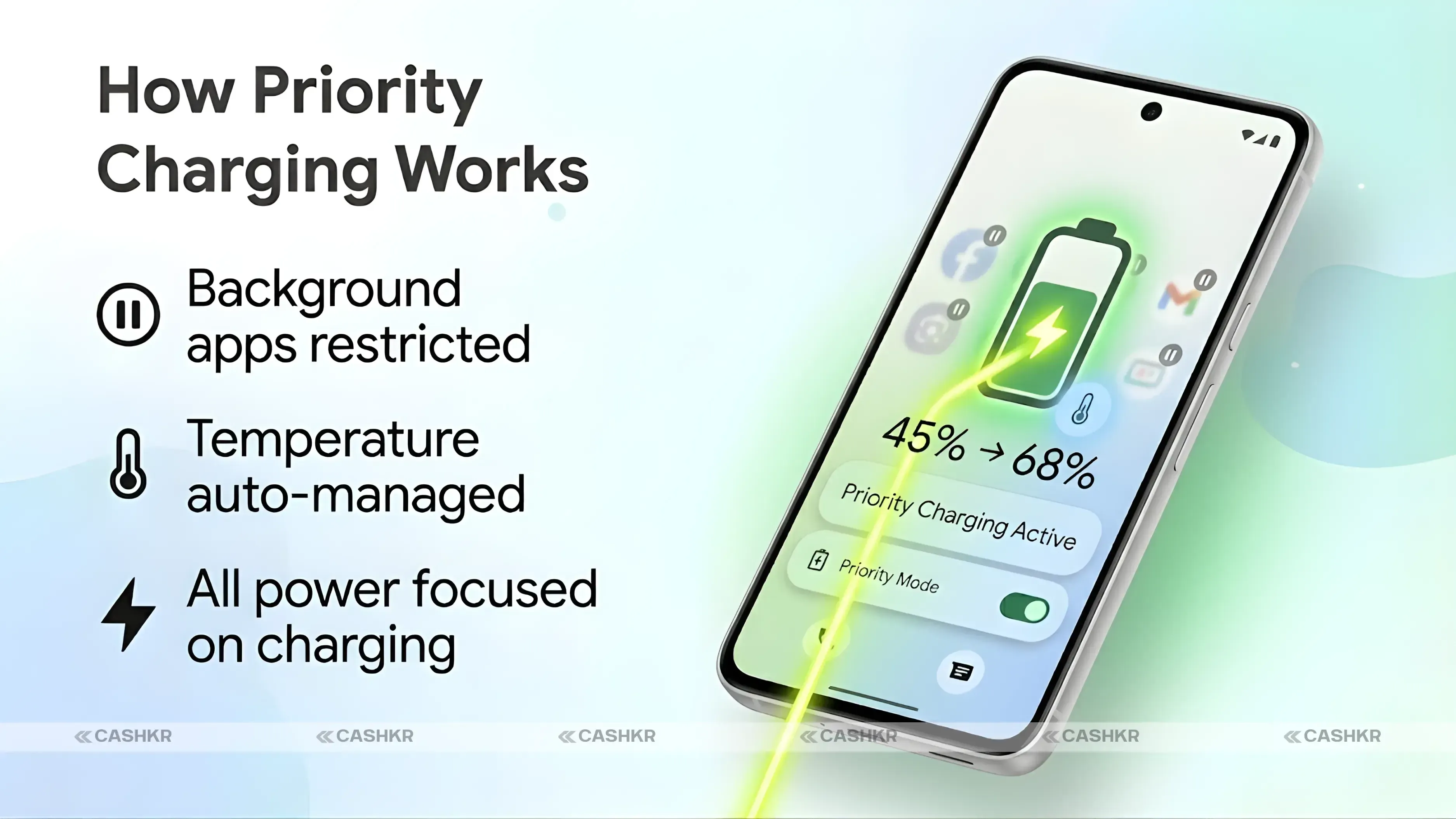
Normally, when you plug in your phone, the battery charges but the processor keeps running background tasks. Apps update, contacts and calendars sync, Gmail checks for messages, streaming apps load content, and social media refreshes feeds. All of this uses power that could go to charging.
Priority Charging fixes this by pausing or slowing down these background activities while your phone charges. The power saved goes straight to the battery, so it charges faster. Essential things like calls, messages, and notifications still work. Your phone just stops doing the extra background work.
Google also added automatic temperature control to Priority Charging. Fast charging creates heat, so the system watches the temperature and adjusts charging speed to keep the battery from overheating. This helps your battery last longer.
In practice, this means your phone reaches a usable charge level faster. Google suggests using Priority Charging with a 30W or faster charger for the best results, which most mid-range and flagship phones now support.
Also Read: Xiaomi 17T Pro Global Launch: Specs, Battery and Price
Feature Name | Priority Charging |
What It Pauses | App updates, sync processes, background refresh |
What Still Works | Calls, messages, notifications |
Temperature | Automatic thermal management included |
Best With | 30W or faster charger for maximum benefit |
When to Use It | When time is short and you need a fast top-up |
Where to Find It | Battery settings in Android 17 (exact location TBC) |
The second big feature in Android 17 Beta 3 is less obvious but could be even more important for people who take photos with apps other than the default camera.
Here is the problem this feature addresses: When you use your phone's default camera app, you get all the benefits of your phone's camera hardware and processing. Night Mode, AI HDR, and Super Resolution all work, using the advanced technology from brands like Vivo, Samsung, Xiaomi, and Google.
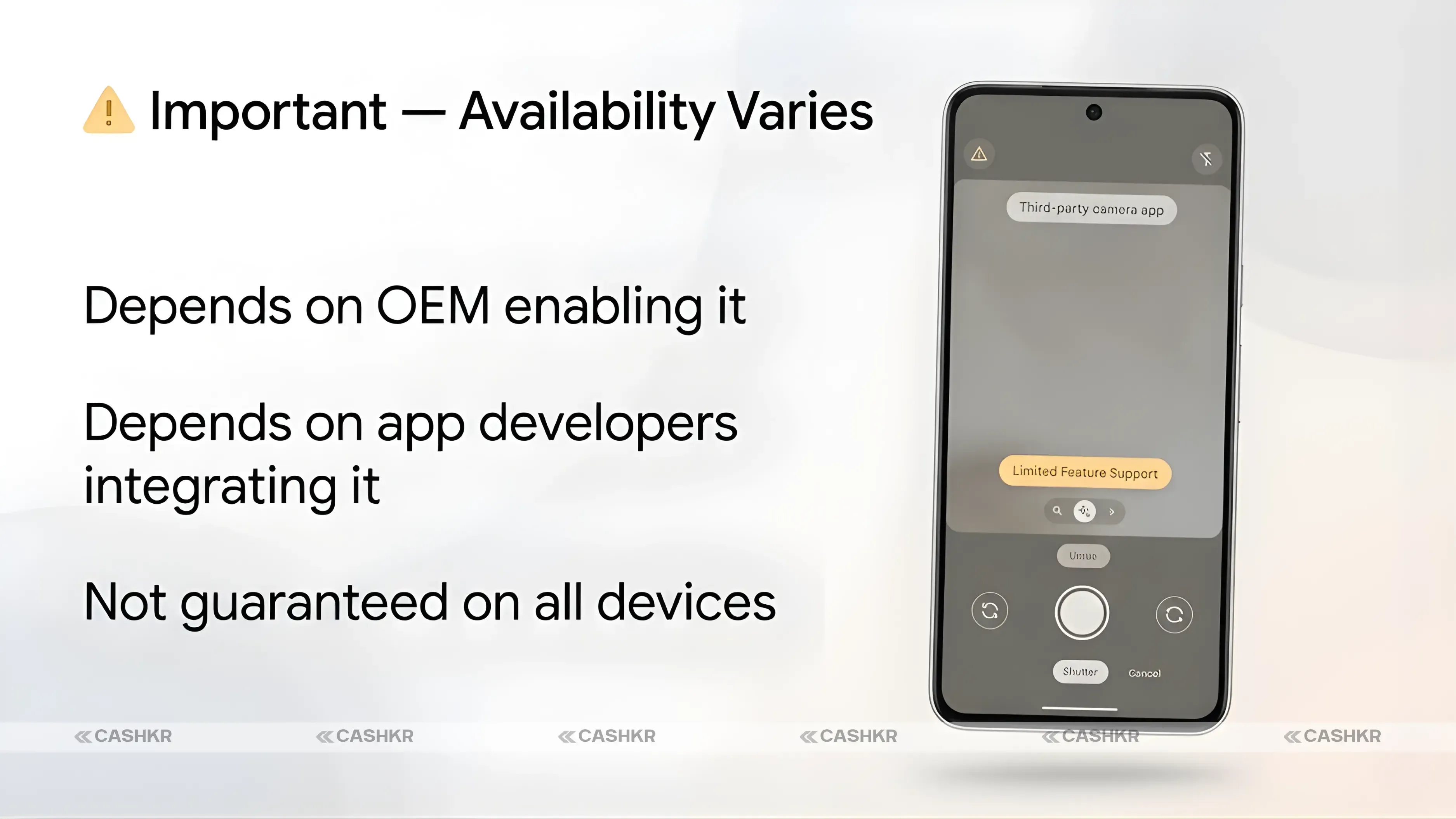
But if you open Instagram, WhatsApp, Snapchat, or any other third-party camera app, the photo quality is usually worse. That is because these apps could only use a basic camera feed before. They could not access the advanced processing like Night Mode, AI scene optimization, or HDR that the default camera app uses.
Android 17 changes this with new camera extensions from manufacturers. Now, phone makers can let third-party apps use their advanced camera processing. For example, Instagram could use your phone's real Night Mode instead of its own version, and WhatsApp could use your phone's AI HDR. Any camera app could tap into your phone's full camera power.
Before Android 17 | Third-party apps only access basic camera capture |
After Android 17 | Manufacturers can expose AI and processing to third-party apps |
Examples | Night Mode, AI HDR, Super Resolution, portrait processing |
Apps That Benefit | Instagram, WhatsApp, Snapchat, Google Meet, video apps |
Who Controls This | Manufacturers must enable, developers must integrate |
Vendor camera extensions are impressive, but it will take time and patience for them to show up in real-world use.
Manufacturers like Samsung, Vivo, Google, and Xiaomi each have their own camera processing systems. To make these work with Android 17's new extensions, each company needs to update their software. Some will do this quickly, while others may take longer or may not share all their special features.
App developers like Instagram, WhatsApp, and Snapchat also need to update their apps to use these new camera features. They must make sure their apps still work on devices that do not have the extensions yet. This makes development more complex, so you will not see these changes right away after Android 17 launches.
Realistically, you will start to see better camera quality in third-party apps about six to eighteen months after Android 17 is released, as both phone makers and app developers adopt the new system.
For Google Pixel phones, the rollout may be faster because Google controls both the hardware and the camera software. For other brands, it depends on how quickly their teams add the feature.
Also Read: How to Remove Personal Data From a Laptop Before Selling
Priority Charging and camera extensions are the main new features, but Beta 3 also brings other useful improvements.
Better thermal and battery management: Android 17 also improves how your phone handles heat and battery use. These changes work in the background to give you a bit more battery life and keep your phone cooler during long use.
API finalization for developers: Now that platform stability is confirmed, all Android 17 APIs are set. App developers can build new features with confidence, helping the whole Android ecosystem get ready for the public release.
System stability improvements: Beta 3 includes the usual bug fixes and stability updates before the final release. Devices running Beta 3 now feel much closer to the final public version.
Android 17's public release is expected in the second half of 2026. As usual, Google's Pixel phones will get it first.
For other brands, the timing depends on the manufacturer. Samsung usually updates its Galaxy S and A series a few months after Pixel phones. OnePlus, Xiaomi, Vivo, and Realme follow with their own updates on different schedules.
Mid-range and budget phones usually get major Android updates six months to over a year after flagship models, depending on the manufacturer's policy.
If you want to try Android 17 features early, Beta 3 is available for developers and enthusiasts with supported Pixel devices who are comfortable using pre-release software.
Beta 3 Status | Platform stable (APIs finalised) |
Public Release | Expected later in 2026 |
First to Get It | Google Pixel phones |
Samsung Rollout | Typically a few months after Pixel |
Other Brands | Varies by manufacturer and model |
How to Get Beta | Developer preview on supported Pixel devices |
Install Beta 3 if you are a developer building apps that use the new Priority Charging or camera extension features. Platform stability means now is a good time to start working with them.
Install it if you have a spare Pixel device and like testing pre-release software. Beta 3 is stable enough for daily use on a secondary phone.
Do not install Beta 3 on your main phone if you need it for work, payments, or daily communication. Even stable beta software can have unexpected problems with some apps or features.
Wait for the public release if you want Priority Charging and camera extensions to work reliably. The final release will be a polished version of what is in Beta 3 now.
Android 17 Beta 3 is not flashy, but it is very useful.
Priority Charging solves a common problem: not getting enough battery from a quick charge. By pausing background work and focusing on charging, fast chargers work better. For people who often have low battery, this is a real improvement.
Vendor camera extensions tackle another issue: the quality gap between the default camera app and other apps. It will take time for manufacturers and developers to adopt the new system, but the foundation is now in place.
Together, these two features show that Google is focused on making everyday smartphone use better, not just adding flashy features for presentations. When Android 17 comes to your device, these are the changes to watch for.
1. What is Priority Charging in Android 17?
Priority Charging is a new Android 17 feature that temporarily pauses background tasks, such as app updates, sync processes, and background refresh, while your phone is charging. This directs more power to the battery for faster charging. Calls, messages, and notifications continue to work normally.
2. Does Priority Charging actually charge the phone faster?
Yes, in situations where background activity is consuming meaningful power. By stopping background tasks from using system resources, more of the power from your charger goes directly into the battery. Google recommends a 30W or faster charger for the best results.
3. What are vendor camera extensions in Android 17?
Vendor camera extensions enable phone manufacturers to expose advanced camera processing features, such as AI HDR, Night Mode, and Super Resolution, to third-party apps. Before Android 17, these features were only available in the default camera app. With Android 17, apps like Instagram or WhatsApp can potentially access the same processing.
4. Will Instagram take better photos after Android 17?
Potentially yes, but not immediately. Both the manufacturer and Instagram must enable the camera extensions for their device, and Instagram must update its app to use them. This process will happen gradually over the months after Android 17 launches publicly.
5. What does platform stability mean for Android 17?
Platform stability means Google has finalised the Android 17 APIs. App developers can now safely build features for Android 17 without worrying about the underlying code changing. It also signals that the public release is coming on a fixed timeline later in 2026.
6. When will Android 17 be released publicly?
The public release of Android 17 is expected in the second half of 2026. Google Pixel phones will receive it first, followed by other manufacturers on their own timelines.
7. Which phones will get Android 17?
Android 17 will be available on eligible phones, subject to manufacturer support policies. Google Pixel phones get it first. Samsung Galaxy S and A series, OnePlus, Xiaomi, Vivo, Realme, and other brands typically follow within a few months to a year, depending on the device model.
8. Should I install Android 17 Beta 3 on my phone?
Only if you are comfortable with pre-release software and have a supported Pixel device. Beta 3 is platform-stable but still a pre-release. For daily driver phones used for work and payments, wait for the official public release.
9. Does Priority Charging damage the battery?
No. Android 17's Priority Charging includes automatic temperature management that prevents the battery from overheating during accelerated charging. Google has designed the feature with battery longevity in mind, alongside faster charging.
10. Will vendor camera extensions work on all Android phones?
No. This feature requires both the phone manufacturer to implement and enable the extensions and the app developer to integrate them. Each manufacturer and app will adopt this at different speeds. Pixel phones may see it faster since Google controls both sides of that equation.
Sell with Cashkr
Cashkr buys used devices at a fair price with free doorstep pickup and same-day payment across 2,000+ pincodes. Get an upfront quote in seconds.
Sell Old Phone OnlineCheck your phone's value in seconds
Written by

Best gaming phones 2026 for every budget — top 3 picks.
Best mobile phones of 2026 with specs, features and prices.
HyperOS 4 is launching in August 2026 with major improvements in stability.