Vivo Y31s 5G Price & Launch: Snapdragon 4 Gen 2 and Complete Specifications
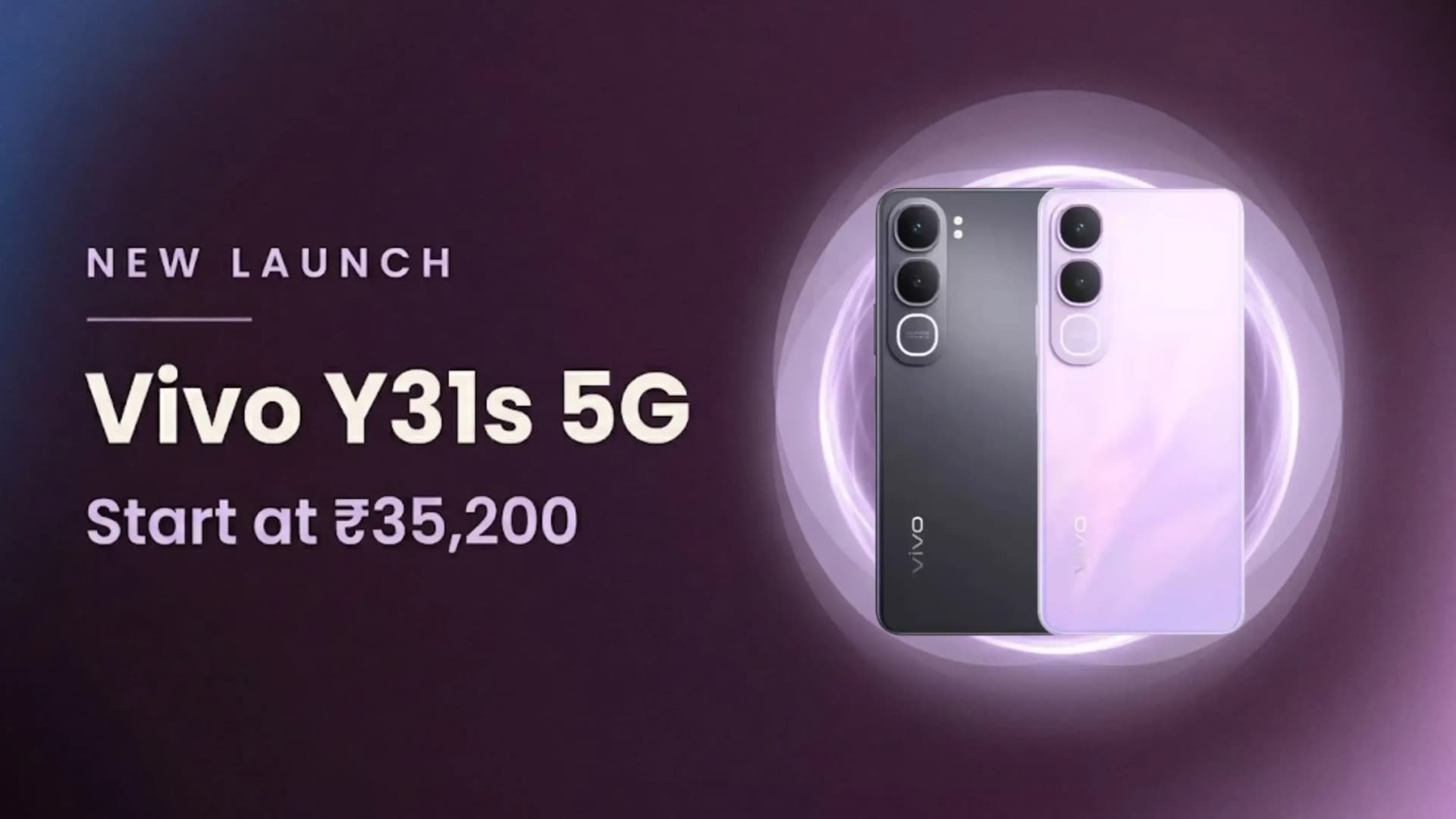
Vivo has launched the Vivo Y31s 5G in Malaysia with a specification set built around two standout features: a 6,500mAh BlueVolt battery with 44W FlashCharge and a triple IP rating of IP68, IP69, and IP69K+, making it the most water-resistant mid-range phone in its category. The Qualcomm Snapdragon 4 Gen 2 handles everyday performance and 5G connectivity, the display is a 6.74-inch Full HD Sunlight Display at 1,050 nits and the cameras are a 50MP primary, 2MP bokeh sensor and 32MP selfie.
The Vivo Y31s 5G price in Malaysia is RM 1,499, which converts to approximately Rs. 35,200 at current exchange rates. This is not a confirmed India price — Vivo India has not announced the Y31s 5G for the Indian market. The phone is available in Black and Purple through Vivo Malaysia's official website and authorized dealers. Here is every specification explained in full.
The triple IP certification is the Vivo Y31s 5G's feature that most distinguishes it from competing mid-range phones and warrants the most detailed explanation. Most mid-range phones carry an IP64 or IP65 rating. IP68, IP69, and IP69K+ are certification combinations that appear almost exclusively on rugged and industrial devices. Here is what each rating means and why it matters.
The Vivo Y31s 5G is sold in Malaysia at RM 1,499 for the single 8GB plus 256GB variant. At current exchange rates, this converts to approximately Rs. 35,200, though India pricing would differ from this conversion due to import duties, GST and local market positioning. Vivo India has not announced the Y31s 5G, and there is no confirmed launch date for India. Black and purple color options are available through Vivo Malaysia's official website and authorized retail partners across Malaysia.
The Triple IP Rating: IP68, IP69 and IP69K+ Explained
Most smartphones, including premium flagships, carry either IP67 or IP68 certification. IP68 is the standard for flagship water resistance. The Vivo Y31s 5G carries three simultaneous IP certifications — IP68, IP69 and IP69K+, which is an unusual combination for a consumer smartphone at any price and is almost never seen in mid-range devices.
Having all three simultaneously means the Vivo Y31s 5G passes water resistance tests across three distinct standards: submersion at depth (IP68), high-pressure water jets at standard temperature (IP69) and high-pressure jets at elevated temperature (IP69K+). A phone that only passes IP68 could still be damaged by high-pressure hosing or steam, scenarios that the IP68 standard does not specifically test. The Vivo Y31s 5G's triple certification addresses all three.
For everyday practical use, the IP68 certification is the most relevant for most buyers it covers accidental submersion in pools, sinks, and toilets, which are realistic water-damage scenarios for consumer smartphones. The IP69 and IP69K+ certifications are more relevant for users who work in environments involving cleaning hoses, kitchen steam or outdoor settings where the phone may be exposed to more forceful water contact than a rain shower or accidental splash.
IP69K+: The automotive-grade standard, IP69K+, was originally developed to protect industrial and automotive equipment, such as vehicle components, that must withstand pressure washing in manufacturing environments. A consumer smartphone certified to IP69K+ has passed tests involving water jets at 80 degrees Celsius and 100 bar pressure at a distance of 10 to 15 centimeters. This is significantly more demanding than the water resistance tests used for IP68. The K in IP69K is a German standards suffix indicating conformity with the DIN 40050-9 automotive component protection standard.
Why triple IP certification matters in a mid-range phone: Most mid-range phones at prices comparable to the Vivo Y31s 5G carry IP64 (splash-only, no submersion) or IP65 (water jets, no submersion). Neither protects against dropping the phone in water. The Y31s 5G's IP68 alone would be above mid-range standard. IP68, IP69, and IP69K+ together position the Vivo Y31s 5G's durability at a level typically reserved for rugged phones that cost significantly more or for flagship-tier devices from Samsung and Apple.
IP rating comparison across price tiers: The Samsung Galaxy S25 Ultra has an IP68 rating. Apple iPhone 17 carries IP68. Vivo Y31s 5G carries IP68+IP69+IP69K. The mid-range phone in this comparison is certified to a higher combined water resistance standard than the most expensive flagship smartphones. This does not mean the Y31s 5G is better overall — the S25 Ultra and iPhone 17 have vastly superior chips, cameras and displays but on the specific dimension of water resistance certification, the Y31s 5G's triple certification is unusual.
Vivo Y31s 5G Processor: Snapdragon 4 Gen 2 and Performance
The Vivo Y31s 5G is powered by the Qualcomm Snapdragon 4 Gen 2, Qualcomm's entry-level 5G chipset positioned for budget-to-entry mid-range devices. The Snapdragon 4 Gen 2 is built on a 4nm process and handles everyday tasks social media, streaming, WhatsApp, casual gaming and navigation — smoothly without the thermal issues that older 6nm and 8nm budget chips exhibited under load. It includes an integrated 5G modem supporting sub-6GHz 5G bands relevant to Indian carriers Jio and Airtel.
The 8GB LPDDR4X RAM and 256GB UFS 2.2 storage configuration is generous for the Snapdragon 4 Gen 2's tier. At 8GB RAM the phone handles multiple apps simultaneously without forced background kills, and 256GB provides ample room for apps, photos, videos and offline content without immediate need for expansion. The Snapdragon 4 Gen 2 is not a gaming chip; demanding 3D games at high settings will encounter frame rate drops, but for casual gaming in popular titles like BGMI on medium settings it performs adequately.
The 6,500mAh battery combined with the Snapdragon 4 Gen 2's 4nm efficiency means battery endurance is one of the Vivo Y31s 5G's practical strengths. A more efficient chip draws less power per task, translating the large battery's capacity into more hours of actual screen time than an older less efficient chip would produce from the same cell.
Display: 6.74-Inch Sunlight Display at 1,050 Nits
The Vivo Y31s 5G features a 6.74-inch Full HD display with up to 1,050 nits peak brightness. Vivo markets this as a Sunlight Display, reflecting its 1,050-nit brightness, which keeps the screen readable in direct outdoor sunlight. The display type is not explicitly specified in Vivo's Malaysia launch materials as AMOLED or LCD, though the Full HD resolution and brightness specifications are consistent with either a high-quality LCD panel or a standard AMOLED. The comparison table below includes this as an unconfirmed point.
At 1,050 nits the display is comfortably readable in bright outdoor conditions. The refresh rate has not been specified in the Malaysia launch materials — a gap in the official information worth noting. For a phone at this price tier a 120Hz or 90Hz refresh rate would be standard; if the panel is 60Hz it would be a notable limitation relative to competing phones in this price range that have moved to 120Hz as standard.
Display refresh rate not confirmed: The Vivo Y31s 5G Malaysia launch materials do not specify the display refresh rate. This is an important specification to verify at India launch if Vivo India announces the phone. At RM 1,499 (approximately Rs. 35,200) a 60Hz display would be a significant limitation compared to competing phones with 120Hz AMOLED displays at lower prices.
Advertisement
Cameras: 50MP Primary, 2MP Bokeh and 32MP Selfie
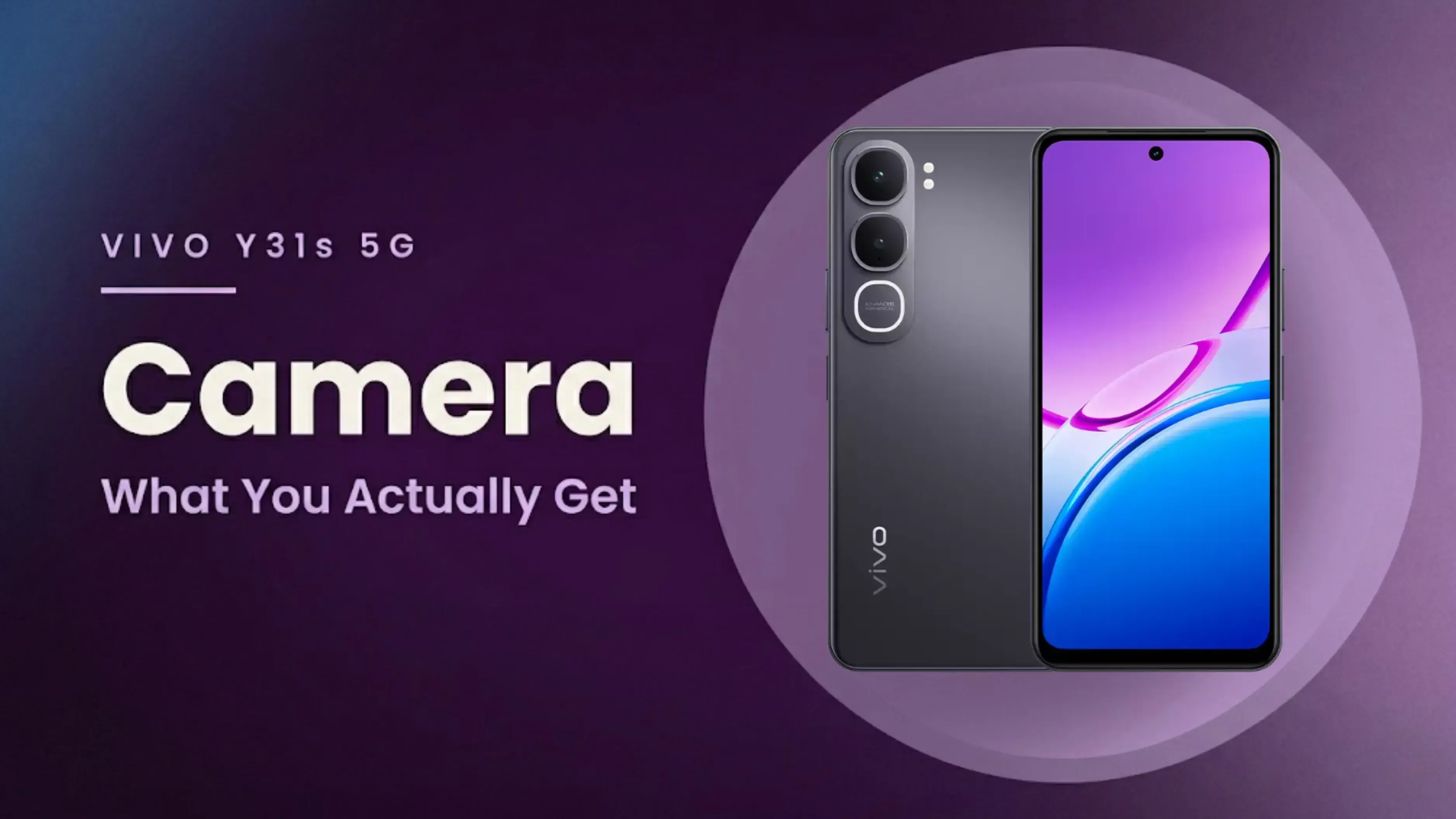
The Vivo Y31s 5G camera system is a dual-rear setup: a 50MP primary camera and a 2MP bokeh sensor. It is important to clarify what the 2MP bokeh sensor does: it is a depth sensor that measures the distance from the camera to the subject, helping the software create the portrait mode background blur effect. It does not serve as a second camera for photography, it captures no usable photographs on its own. Buyers who want a real ultrawide or telephoto second camera should look at competing phones in this comparison that carry 8MP ultrawide sensors.
The 50MP primary camera is the rear camera's meaningful photography component. At 50MP with standard mid-range optics the camera captures detailed daylight photos and manages moderate indoor lighting adequately. Portrait mode uses the 2MP depth sensor data to improve the software background blur, producing portrait shots with cleaner subject isolation than pure software blur without depth sensor assistance. The 32MP front camera is competitive for selfies at this price tier, providing enough resolution for reframing and cropping without significant quality loss.
2MP bokeh sensor context: Across the Android mid-range market, 2MP depth or macro sensors are often listed alongside the main camera to indicate multiple lenses, but their functional contribution to photography is minimal. A 2MP sensor captures approximately 0.16 megapixels of usable detail — it is an AI assistance sensor, not a camera. The Vivo Y31s 5G has one meaningful rear camera (50MP primary) assisted by a 2MP depth sensor for portrait mode. Buyers comparing camera setups should focus on primary sensor quality and any true ultrawide or telephoto lenses, rather than counting camera modules.
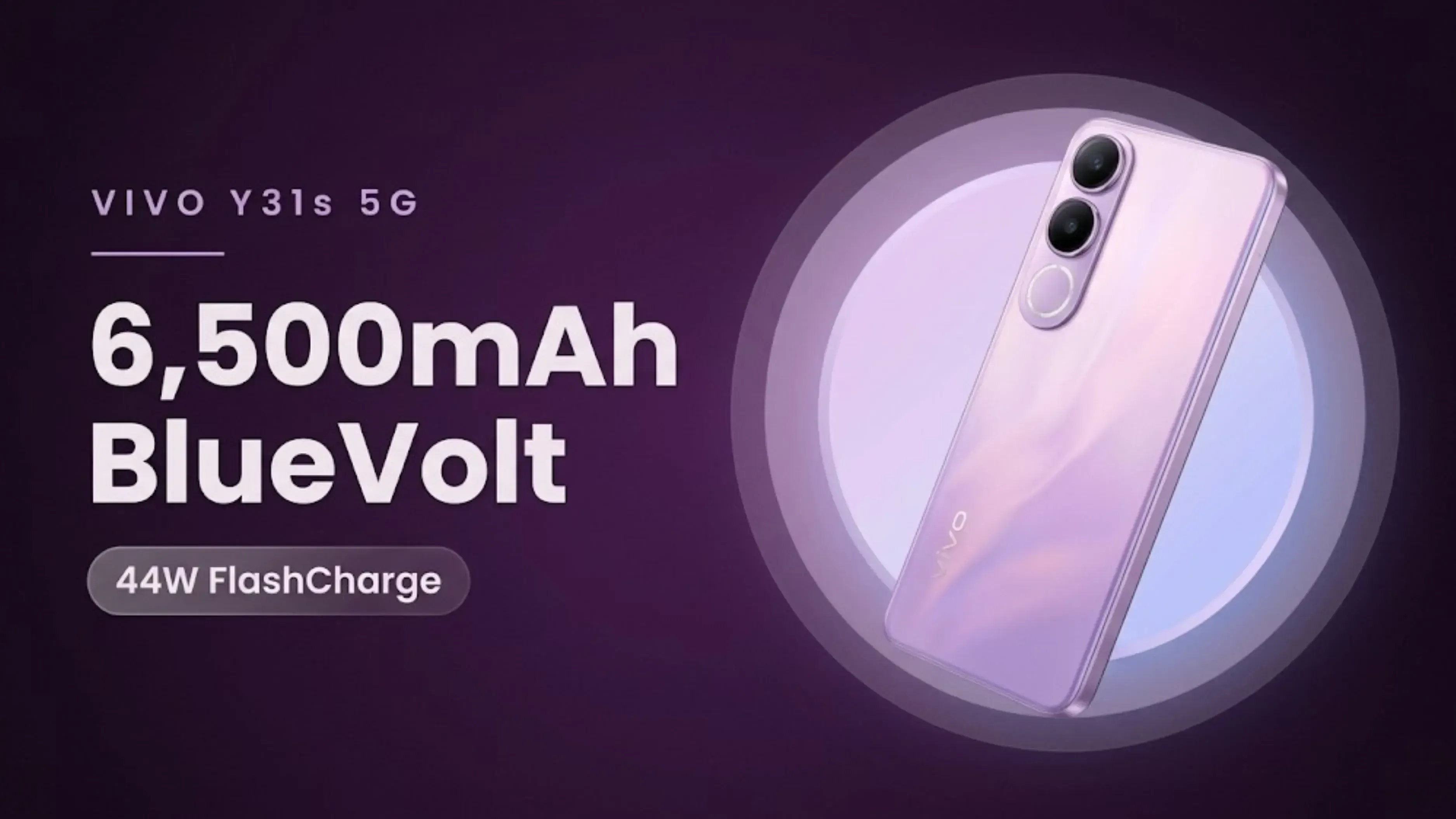
The 6,500mAh BlueVolt battery with 44W FlashCharge is the Vivo Y31s 5G's other headline specification alongside the triple IP rating. BlueVolt is Vivo's battery technology designation for cells engineered for longevity and energy density. At 6,500mAh the phone provides two full days of moderate use and a comfortable single day of heavy use. The 44W FlashCharge fills the 6,500mAh from empty in approximately 90 to 100 minutes. A 20-minute charge at 44W provides approximately 4 to 5 hours of additional endurance.
The combination of IP68 certification for water protection and a large 6,500mAh battery is particularly useful for buyers who use their phone in outdoor and active environments — construction sites, sports, hiking, outdoor work where both the risk of water exposure and the inability to charge frequently are daily realities. The Vivo Y31s 5G's durability and battery combination is specifically designed to serve this user profile alongside the standard consumer mid-range buyer.
At the Vivo Y31s 5G price equivalent in India, here is the honest comparison against competing mid-range options:
Feature
Vivo Y31s 5G
Oppo Reno 13F 5G
OnePlus Nord CE 5
Price
~₹35,200 (converted)
₹32,990
₹24,999
Chipset
Snapdragon 4 Gen 2
Snapdragon 6 Gen 1
Dimensity 8350 Apex
Display
6.74-inch LCD
6.67-inch AMOLED 120Hz
6.77-inch AMOLED 120Hz
Main Camera
50MP
50MP
50MP
Ultrawide
No
8MP
8MP
Selfie Camera
32MP
32MP
16MP
Battery
6,500mAh
5,800mAh
7,100mAh
Charging
44W
45W
80W
IP Rating
IP68 / IP69 / IP69K+
IP69
IP65
OS
Android 16
Android 15
Android 15
However, the competing phones offer several advantages. Both the Oppo Reno 13F 5G and OnePlus Nord CE 5 feature AMOLED displays with high refresh rates, delivering deeper blacks, better contrast, and a more premium viewing experience than the Vivo's LCD panel. They also include 8MP ultrawide cameras, providing greater photography versatility than the Vivo's 2MP depth sensor.
Performance-wise, the OnePlus Nord CE 5 takes a clear lead with its MediaTek Dimensity 8350 Apex chipset, making it the strongest gaming and multitasking device in this comparison. The Oppo Reno 13F 5G's Snapdragon 6 Gen 1 also offers competitive performance, though it is closer to the Vivo's Snapdragon 4 Gen 2 than flagship-tier processors.
Battery capacity is no longer a decisive win for Vivo. While the Y31s 5G offers a 6,500mAh battery, the OnePlus Nord CE 5 surpasses it with a massive 7,100mAh battery and significantly faster 80W charging. The Oppo Reno 13F 5G provides a respectable 5,800mAh battery with 45W charging.
Choose the Vivo Y31s 5G if durability is your top priority. Its IP68, IP69, and IP69K certifications are among the strongest protection ratings available on a smartphone, making it well-suited for outdoor use, demanding work environments, and users concerned about water or dust damage.
Choose the Oppo Reno 13F 5G if you want a balanced package with an AMOLED display, an ultrawide camera, good battery life, and a premium design, all while retaining strong water and dust resistance with its IP69 rating.
Choose the OnePlus Nord CE 5 if you want the best overall value. It offers the strongest performance, a 120Hz AMOLED display, a large 7,100mAh battery, 80W fast charging, and an ultrawide camera, making it the most well-rounded option for most buyers.
Full Specifications
Specification
Details
Colours
Black, Purple
Display
6.74-inch Full HD Sunlight Display
Peak Brightness
1,050 nits
Display Type
Not specified (LCD or AMOLED unconfirmed)
Refresh Rate
Not confirmed
Chipset
Qualcomm Snapdragon 4 Gen 2 (4nm)
RAM
8GB LPDDR4X
Storage
256GB
Software
Android 16, OriginOS 6
Primary Camera
50MP
Secondary Camera
2MP Bokeh Depth Sensor
Front Camera
32MP
Battery
6,500mAh BlueVolt Battery
Charging
44W FlashCharge
IP Rating
IP68 + IP69 + IP69K+
5G
Yes
NFC
Yes
USB
USB Type-C
Hi-Fi Audio
No
Call Recording
Supported
Audio Recording
Supported
Final Verdict
The Vivo Y31s 5G is a phone with one genuinely unique specification in its price tier: the triple IP68, IP69, and IP69K+ water and dust resistance certifications. This is not a gimmick — these are three distinct international certification standards that the phone has passed individually, representing a durability commitment that most flagship smartphones and virtually no mid-range phones at this price carry. For buyers who specifically need this level of protection, the Vivo Y31s 5G is the mid-range phone that provides it.
The Vivo Y31s 5G's honest limitations at its RM 1,499 (approximately Rs. 35,200) price point are the Snapdragon 4 Gen 2 chip (entry-level 5G tier), the 2MP depth sensor that does not function as a real second camera, and the unconfirmed display refresh rate. Buyers who do not specifically need the triple IP certification will find better display quality, camera versatility, and chipset performance in AMOLED-equipped alternatives at lower prices in the Indian market. Watch Vivo India's official channels for the India launch announcement, where the India price will determine exactly how competitive the Y31s 5G is in the Indian market.
Bottom Line: Vivo Y31s 5G at RM 1,499 (~Rs. 35,200) in Malaysia. India TBC. Unique feature: IP68+IP69+IP69K+ — triple water and dust resistance certification almost never seen in mid-range phones. Snapdragon 4 Gen 2 + 8GB RAM + 256GB. 6.74-inch FHD 1,050 nits Sunlight Display (type TBC). 50MP primary + 2MP bokeh (depth only, not a camera) + 32MP selfie. 6,500mAh BlueVolt + 44W FlashCharge. NFC. Android 16. Black and Purple.
FAQs
1. What is the Vivo Y31s 5G price in India?
Vivo India has not announced the Y31s 5G for India. The Malaysia price is RM 1,499, which converts to approximately Rs. 35,200 at current exchange rates. India pricing will differ from this conversion due to local taxes and market positioning.
2. What is the IP rating of the Vivo Y31s 5G?
IP68, IP69 and IP69K+ simultaneously. IP68 covers submersion in water up to 1.5 metres for 30 minutes. IP69 covers high-pressure water jets at standard temperature. IP69K+ covers high-pressure, high-temperature water jets, originally an automotive industrial standard. This triple certification is extremely rare in consumer smartphones at any price.
3. What does IP69K+ mean on a smartphone?
IP69K+ is an international protection standard originally developed for industrial and automotive components that must withstand high-pressure steam cleaning and pressure washing at elevated temperatures (up to 80 degrees Celsius at 100 bar). A smartphone certified to IP69K+ has passed this demanding test in addition to standard smartphone IP ratings. The K is a German standards suffix from DIN 40050-9.
4. What processor does the Vivo Y31s 5G have?
Qualcomm Snapdragon 4 Gen 2, an entry-level 5G chip built on 4nm process, paired with 8GB LPDDR4X RAM and 256GB storage. It handles everyday tasks smoothly and includes an integrated 5G modem. It is not a gaming-class processor demanding 3D games at high settings will show performance limitations.
5. Does the Vivo Y31s 5G have an ultrawide camera?
No. The Vivo Y31s 5G has a 50MP primary camera and a 2MP bokeh depth sensor. The 2MP sensor is a depth sensor that assists portrait mode software, not a functional ultrawide or telephoto camera. Buyers who want an ultrawide camera should consider competing phones with 8MP ultrawide lenses.
6. What is the battery and charging speed of the Vivo Y31s 5G?
6,500mAh BlueVolt battery with 44W FlashCharge wired fast charging. At 44W the battery fills from empty in approximately 90 to 100 minutes. The large capacity provides two days of moderate use.
7. Does the Vivo Y31s 5G have NFC?
Yes. NFC for contactless payments is included.
8. Is the Vivo Y31s 5G waterproof?
Yes. With IP68, IP69 and IP69K+ certification, it is more water-resistant than most flagship smartphones on the market. IP68 covers submersion to 1.5 meters for 30 minutes. IP69 covers high-pressure water jets. IP69K+ covers high-pressure, high-temperature jets. Freshwater protection only — saltwater, pool chemicals, and other liquids may affect the seals over time.
9. What display does the Vivo Y31s 5G have?
A 6.74-inch Full HD Sunlight Display with up to 1,050-nit peak brightness. The display type (LCD or AMOLED) and refresh rate have not been confirmed in the Malaysia launch materials. These details should be verified at the India launch if Vivo India announces the phone.
10. How does the Vivo Y31s 5G compare to the Oppo Reno 13F 5G?
The Vivo Y31s 5G has significantly higher IP certification (IP68+IP69+IP69K+ vs IP64 on the Oppo), a larger battery (6,500mAh vs 5,500mAh) and runs Android 16 at launch. The Oppo Reno 13F 5G has an AMOLED display, an 8MP ultrawide camera (vs the Vivo's 2MP depth sensor only), a stronger Dimensity 7350 Pro chip for gaming, and costs approximately Rs. 10,000 less at Rs. 24,999 vs the Vivo's approximate Rs. 35,200. The decision between them is whether the triple IP rating is worth the Rs. 10,000 premium.
If you want to sell your old devices, then click here.
 Yaskar Jung ShahUpdated: Jul 24, 2026·18 min read