Eight Myths About Selling a Used Phone, and What Is Actually True
A lot of what people think about selling a used phone is outdated or just plain wrong. Some of these beliefs can even cost you money.
Here are eight common myths we hear all the time, along with what’s really true.
Myth 1: You Should Repair a Cracked Screen Before Selling
That’s not true, and this mistake can be costly.
Advertisement
Getting an authorized screen repair usually costs more than the value it adds. Going for a cheaper third-party repair is even riskier, since a non-genuine part will trigger an "Unknown Part" warning in Settings that you can’t remove.
When buyers see a cracked screen, they know what’s wrong. But if they see a parts warning, they don’t know what was replaced or if anything else was tampered with. That kind of uncertainty usually lowers the price more than visible damage does.
The truth is, it’s better to sell your phone with the crack and be upfront about it. Damaged phones still sell well, since refurbishers can fix them for less than you could.
The only exception is if the battery is swelling. If the screen is lifting or the phone won’t lie flat, get it fixed no matter what. That’s a safety concern.
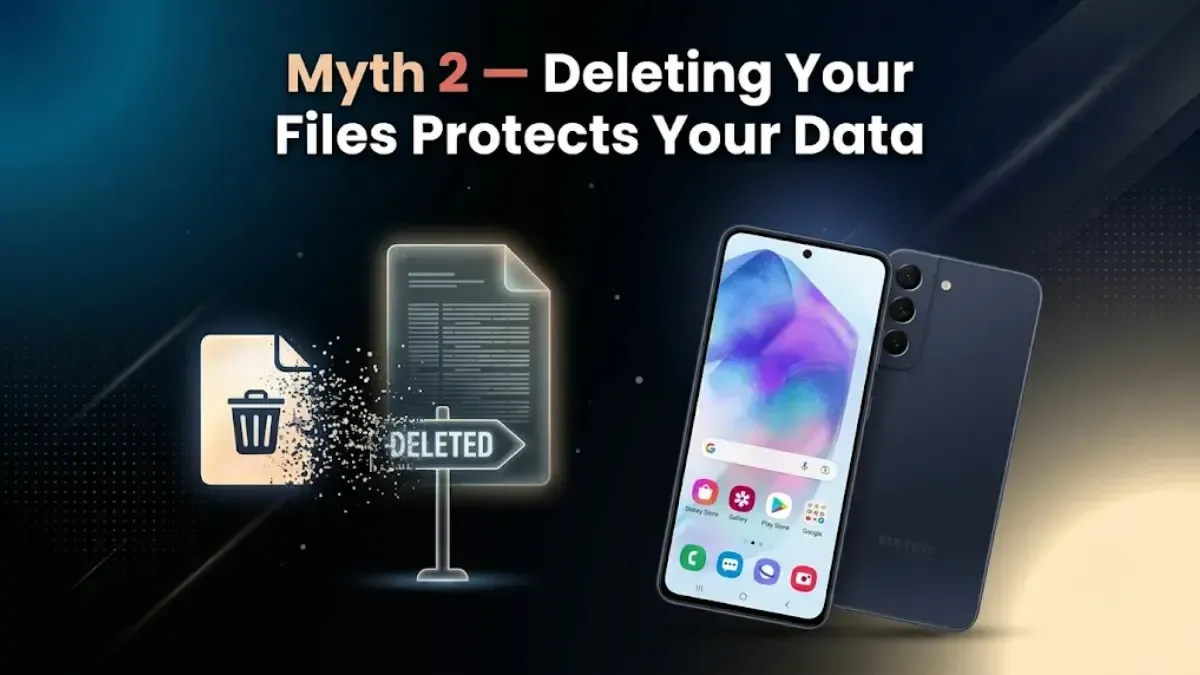
That’s not true. Deleting files just removes the shortcut, not the actual data.
What really works is a factory reset. Modern phones encrypt your data, and the reset deletes the encryption key. Without that key, any leftover data can’t be read.
So, the reset is what matters. Deleting your photos before that doesn’t help.
Myth 3: You Need Special Data-Wiping Software
That’s not true for most phones, and you should be wary of anyone trying to sell you special software.
Android phones have had encrypted storage by default since Android 6, and it’s required from Android 10 onward. iPhones have had this even longer. The factory reset deletes the encryption key.
Multi-pass overwriting is a method used for hard drives. Phone storage works differently, moving data around to prevent wear, so repeated overwrites don’t always reach the same spots.
The real thing to focus on is Myth 4.
Myth 4: A Factory Reset Is All You Need
This is the mistake that often prevents a sale.
If you reset your phone while still signed in to your Google or Apple account, it will lock itself to that account. This is called Factory Reset Protection on Android and Activation Lock on iPhone. The next owner won’t be able to set it up.
The key is to sign out before you reset. First, back up your data, move your authenticator app, sign out of your accounts, remove the SIM and eSIM, and then do the reset.
This is the main reason doorstep pickups can’t be completed, even when the phone itself is in perfect condition.
Myth 5: Keeping It as a Spare Preserves Its Value
That’s not true. A phone sitting in a drawer loses value almost as quickly as one you use every day.
Lithium batteries get older with time, not just with use. New phone launches keep lowering prices, and software support ends on schedule, no matter how much you use the phone.
The truth is, most spare phones never get used. When the main phone breaks, people often find the spare has a dead battery and outdated software, so they end up going to a shop anyway.
If you really want a backup phone, you need to charge it to about half every few months and keep it updated. If you’re not willing to do that, it’s not really a backup.
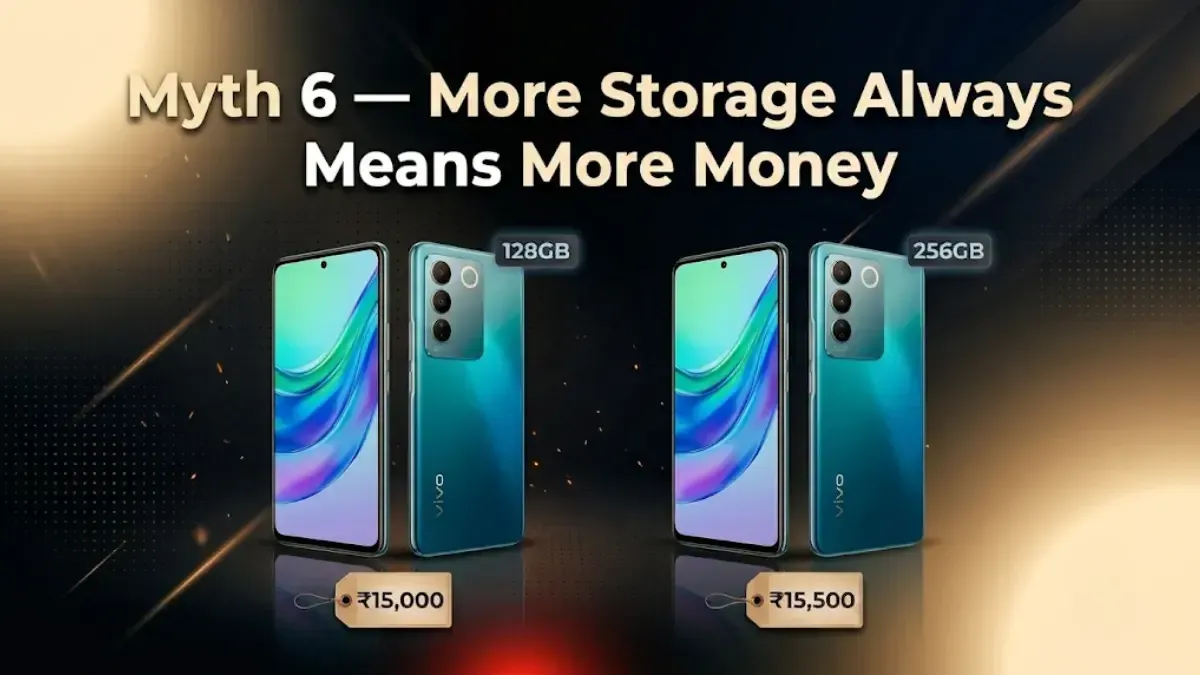
Myth 6: More Storage Always Means More Money Used
Not always, and we’ve checked the numbers.
Looking at live marketplace listings this month, we found some 256GB iPhones listed for less than some 128GB versions of the same model. For the iPhone 13, the real price difference was about Rs. 1,000 to Rs. 2,000, not the Rs. 5,000 to Rs. 8,000 people often claim.
The truth is, for older phones, the condition matters more than the storage size. Things like battery health, screen quality, repair history, and how eager the seller is have a bigger impact on price than storage capacity.
Myth 7: Charging Overnight Ruins Your Battery
This idea is about ten years out of date.
Modern phones stop charging once they reach 100 percent. Both iOS and Android now keep the battery near 80 percent and finish charging just before you usually wake up.
What really wears out a battery is heat. Playing games while fast charging, leaving your phone on a car dashboard, or charging it under a pillow can all cause damage. In Indian summers, this is even more important to watch out for.
Myth 8: Exchange Offers Always Pay Less Than Cash
That’s not always true during a bonus window, which often surprises people.
Samsung has run documented offers this year adding up to Rs. 8,000 on the Galaxy S26 and up to Rs. 12,000 on the S26 Ultra, on top of the normal exchange value. A cash buyback has no equivalent.
The truth is, if you’re already planning to buy that phone and there’s a bonus window, exchange offers can be better. Outside of those times, cash usually wins. Always check the offer page before deciding.
It’s important to be honest about these points, since pretending otherwise doesn’t help anyone.
Selling your phone privately really does take time. You have to make a listing, take photos, answer questions, deal with no-shows, and meet buyers. This isn’t a myth made up to push you toward buyback services - it’s just the reality. For some people, the extra money is worth the effort.
There’s also real payment risk when selling privately. Scams like fake payment screenshots, UPI collect requests that take your money, overpayment refund tricks, and handover swaps are common. Our guide to avoiding scams covers nine of these, and they all happen regularly in India.
The honest truth is that these risks are real. Selling privately pays more but takes more time and comes with risks. A buyback pays less but removes those hassles. Which option is better depends on what matters most to you.
What We Actually Offer
We offer an online quote, free doorstep pickup, and an inspection to check your phone’s condition. Once you accept, we pay you by UPI or bank transfer.
We buy your phone directly, so there’s no need for a listing, negotiation, or meeting strangers. We do pay less than you might get from a private sale, but in return, you get certainty and convenience.
Usually no. An authorized repair rarely costs less than it adds, and a cheap third-party repair triggers a parts warning that can leave the phone worth less than it was damaged. Fix a swelling battery regardless, because that is a safety issue.
2. Is deleting my photos enough before selling?
No. Deleting removes the signpost, not the file. The factory reset is what does the work, because the phone encrypts its storage and the reset destroys the key.
3. Do I need to buy data-wiping software?
Not for an ordinary phone. The built-in reset is sufficient on any device from the last decade. Signing out of your accounts first is the step that actually matters.
4. Is a factory reset all I need to do?
No, and this is the one that stops sales. Sign out of your Google or Apple account before you reset, or the phone locks itself to your account and nobody else can set it up.
5. Does keeping a phone unused protect its value?
No. Batteries age by the calendar, launches step prices down regardless, and software support runs out on schedule. A stored phone loses value at close to the rate of a used one.
6. Is a 256GB phone always worth more than a 128GB?
Not reliably on an older phone. In live listings we checked this month, some 256GB units sat below 128GB ones of the same model. Condition matters more than capacity.
7. Is overnight charging bad for the battery?
Not on a modern phone. It stops at 100 percent and holds near 80 until shortly before you wake. Heat is what wears a battery out.
8. Do exchange offers always pay less than selling for cash?
No. Samsung has added up to Rs. 8,000 on the S26 and Rs. 12,000 on the S26 Ultra during bonus windows this year. If you were buying that phone anyway and a window is running, exchange can win.
9. Is selling privately actually risky?
Yes, genuinely. Payment fraud in private sales is common and well documented. It pays more than a buyback for exactly that reason.
10. Do old phones have any value at all?
Almost always something, because the parts have value even when the phone does not work. Whether it is worth the effort to you is a separate question.
Advertisement
Stay in the loop
Weekly tech insights in your inbox. No spam, ever.


 Yaskar Jung ShahPublished at: Jun 24, 2025·10 min read