What Affects Your Phone's Resale Value Most, and What Barely Matters
Imagine two people buy the same phone on the same day. Two years later, one gets an offer that's twice as much as the other. That’s not just luck.
Seven factors determine your phone’s value, but they don’t all matter the same. The first is decided before you even open the box. The rest depend on you.
Just so you know, Cashkr is our own device buyback service. We buy used phones, so we do benefit when people sell to us. Below, we explain where we can’t give you a number, and why.
Advertisement
The Short Answer
In order of how much they move the price:
Which phone you bought
How much software support it has left
Physical condition, and whether it has been repaired
Yaskar Jung Shah leads content at Cashkr, an Indian device buyback service. He writes about resale value, data safety and what actually happens to a device after it is sold. He checks every figure against a dated, named source, and says so when a number cannot be verified.
Advertisement
Advertisement
The box, the charger and the bill
Storage size
There’s one more thing not on this list. It doesn’t just lower your phone’s value; it can wipe it out completely. We’ll cover that at the end.
Why We Will Not Give You Rupee Figures
You will find guides saying a cracked back glass costs Rs. 5,000, or that a 256GB phone is worth Rs. 8,000 more than a 128GB one.
Don’t pay attention to those numbers. We used to share them too, but we stopped.
A rupee deduction means nothing without knowing which phone it is for. Taking Rs. 3,000 off a Rs. 90,000 flagship barely registers. The same Rs. 3,000 off an Rs. 11,000 budget phone is a third of its value. One number cannot describe both.
So, this page gives you two things: the order of the factors, and real numbers only when they’re available. If there’s no reliable figure, we’ll let you know.
1. Which Phone You Bought
This is the most important factor, and it’s already set.
SellCell tracks used prices and publishes how much value each model loses. Over the first twelve months:
Device Model
Resale Value (%)
iPhone 11
43.8%
iPhone 12
43.8%
iPhone 13
46.2%
iPhone 14
47.7%
iPhone 15
48.2%
Samsung Galaxy S23
61.1%
Samsung Galaxy S22
66.7%
This is United States data. The exact percentages will not match India. The ranking and the size of the gap do. An iPhone and a Galaxy S of the same age are not in the same category.
Most guides miss two things in that table.
iPhones are depreciating faster than they used to. Read the iPhone column downwards: 43.8, 43.8, 46.2, 47.7, 48.2. Each generation holds a little less than the one before.
Samsung is improving at the same time. SellCell measured the gap between the iPhone 16 and the Galaxy S25 at 11.2 points at five months, which is far narrower than it once was. The iPhone advantage is real and it is shrinking.
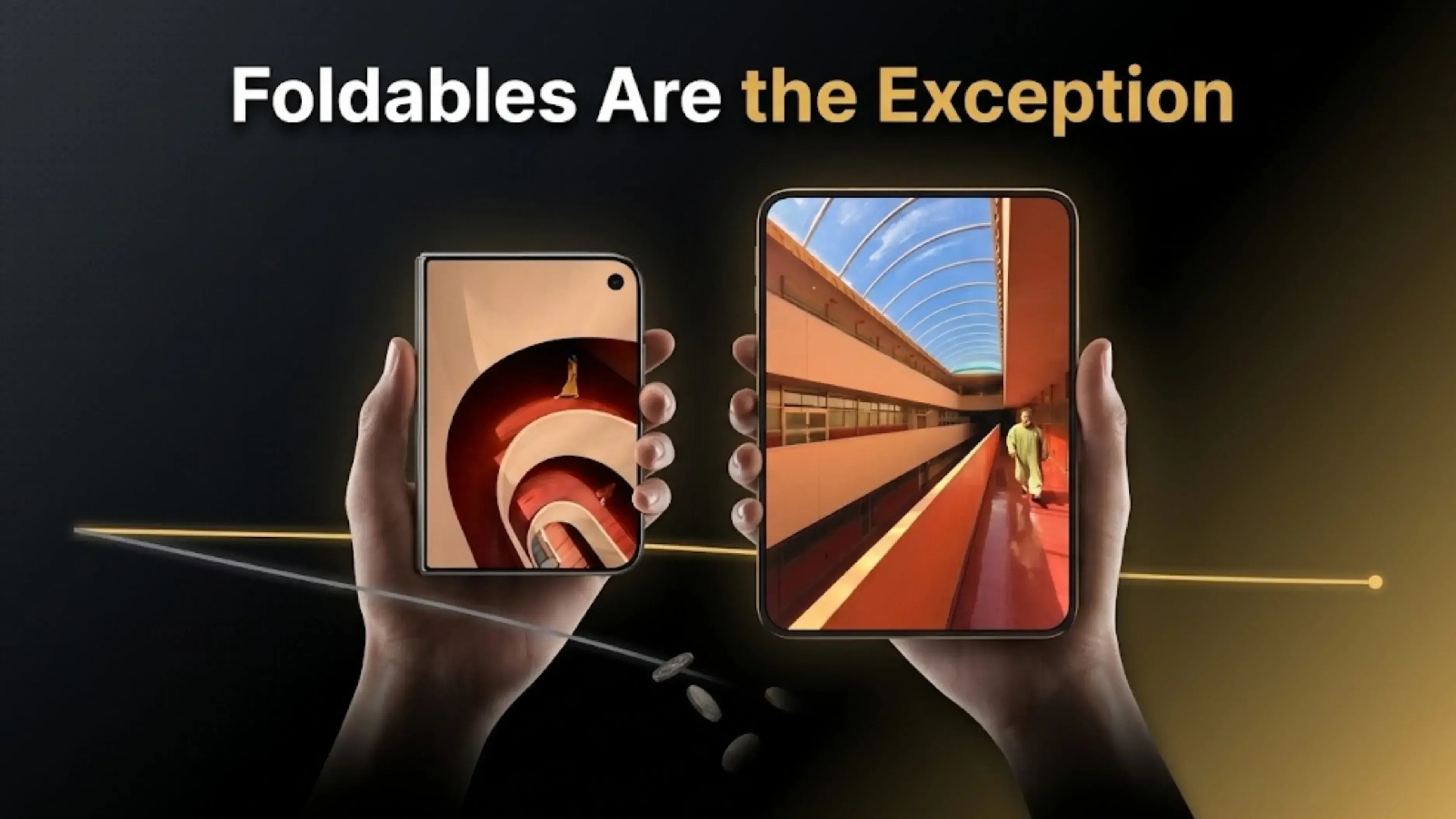
Foldables are a big exception to this rule.
Many guides group the Galaxy S and Z series together as good for resale. We did that too in an earlier version of this page, but that was a mistake.
Device Category
Value 1
Value 2
Foldables (All Brands)
62.3%
71.1%
Standard Flagships
49.8%
60.7%
Inside Samsung's own range, the Z Fold and Z Flip had lost 63.7% where the Galaxy S series had lost 48.3%. That is a fifteen point gap within one brand.
If you want a foldable, buy it for the experience, not for resale value. It costs more and you’ll get less back later.
2. How Much Software Support Is Left
This factor should come second, but most guides put it much lower on the list.
It deserves a high spot because it’s the only factor with published numbers. Buyers can check exactly how many years of updates your phone has left, and more people are doing this now.
Device Model
OS Update Support
Security Update Support
Google Pixel 8 and later
7 years
7 years
Samsung Galaxy S24 and S25
7 years
7 years
Samsung Galaxy A26, A36, A56
6 years
6 years
Nothing Phone 3
5 years
7 years
OnePlus 13
4 years
6 years
Samsung Galaxy S23
4 years
5 years
Apple iPhone
Not specified
At least 5 years
That last row surprises people. Apple's published commitment is at least five years. Samsung and Google both promise seven.
So, the common belief that iPhones hold value because Apple supports them the longest isn’t backed up by the official promises. On paper, Apple actually offers less than its two main rivals.
Used iPhones keep their prices high because of demand, not just support length. There are more buyers, and they know what they want. A Galaxy with seven years of updates can still sell for less than an iPhone with five.
Here’s how to use this: a phone with five years of updates left is worth more than the same phone with just one year left, and buyers are checking this more often.
3. Physical Condition and Repairs
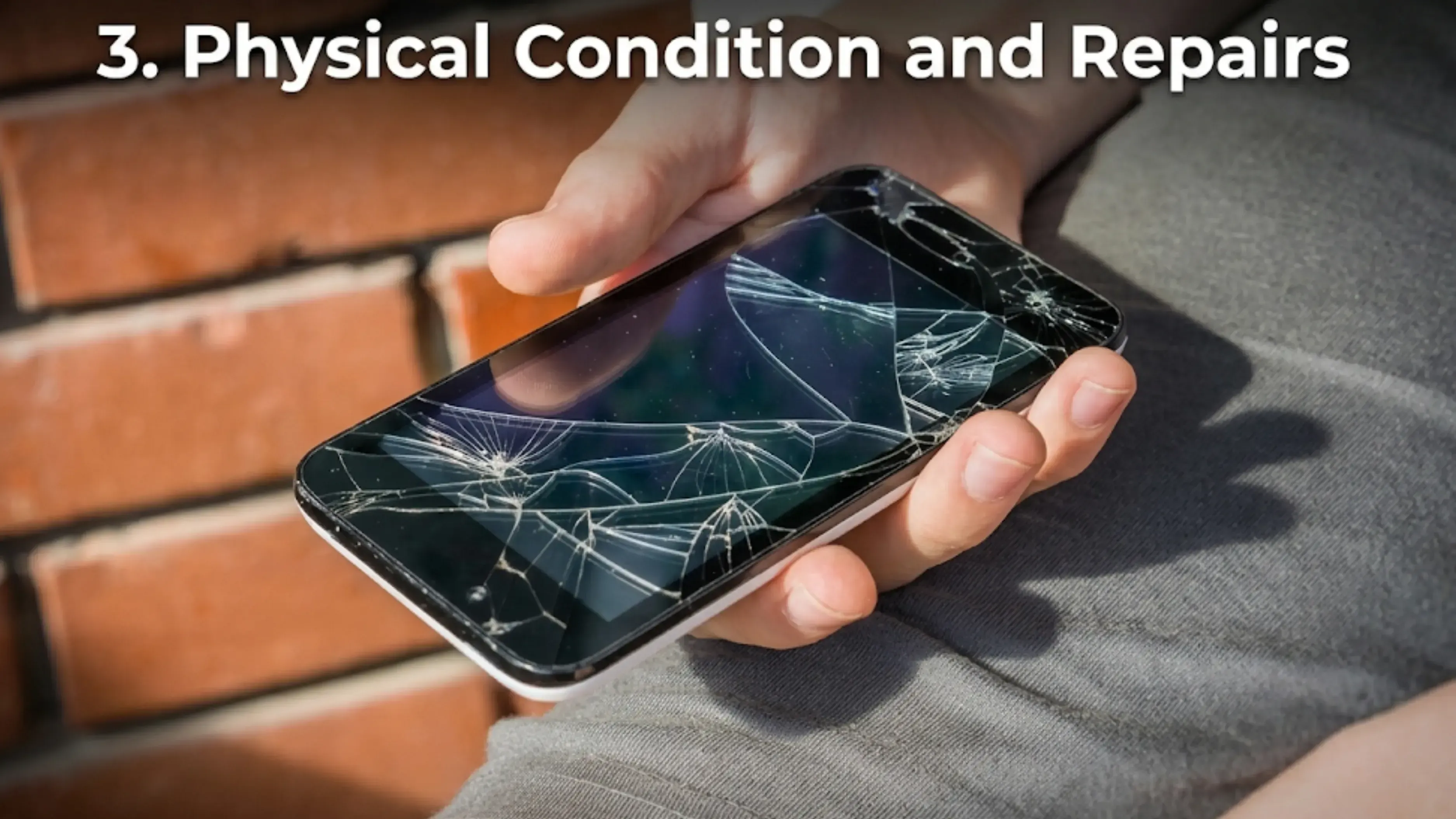
The screen matters most, by far. It’s the most expensive part and the first thing inspectors check. A cracked display drops your phone down a whole grade.
Next are the frame and corners. Damage to the corners matters more than scratches on the back, because it suggests the phone was dropped hard enough to cause internal damage.
After that comes the back glass. It does affect value, but usually not as much as a cracked front.
A quick warning about repairs: using non-original parts can lower your phone’s value instead of restoring it. Buyers and inspectors can usually spot this. A cheap screen replacement before selling can end up costing you twice.
4. Battery Health
Battery health is usually checked early in an inspection, but it’s often a number the owner has never looked at.
On an iPhone, Settings, then Battery, then Battery Health. On a Samsung running One UI 7 or later, Settings, then Battery, then Battery information. On a Pixel 8a or later, Settings, then Battery, then Battery health.
Several brands, including OnePlus, Oppo and Vivo, give you no built in reading at all.
If your battery health is below 80 percent, expect a deduction.
5. When You Sell
Your phone’s value doesn’t drop smoothly; it falls in predictable steps.
The biggest drop comes when a successor is announced, not when it ships, because buyers start waiting the moment they hear about it. Manufacturers announce well in advance, so this is something you can plan around.
Here’s a simple rule: a phone sitting unused in a drawer loses value every month, and the battery ages whether you use it or not.
6. The Box, the Charger and the Bill
These are worth more than most people expect, but they’re worth nothing if you throw them away.
The bill is most important because it has the IMEI, which lets buyers confirm the phone is really yours. An IMEI check takes a buyer just a minute, and sellers who share the number up front get fewer questions.
7. Storage Size
Finally, storage size matters less than most people think.
Check live listings for the same model in 128GB and 256GB. The gap is usually around Rs. 1,000 to Rs. 2,000, and sometimes the larger one is listed cheaper.
That’s much less than what you paid for the upgrade when the phone was new. Buy the storage you need, but don’t expect to get that money back later.
RAM hardly affects the price, and iPhone buyers usually don’t even check this specification.
The One That Wipes the Value Out
Everything above just reduces your phone’s value. This one can wipe it out completely.
If the phone is still signed in to a Google or Apple account when it is reset, it locks itself to that account. Factory Reset Protection on Android, Activation Lock on iPhone. Nobody else can set it up. Not a buyer, not a shop, not a buyback service.
A locked phone, even in perfect condition, is worth only a fraction of what an unlocked phone in poor condition would get.
So, always sign out before you reset your phone. Our guide on selling your phone safely explains the full process and what steps to take first.
FAQs
1. What affects a phone's resale value the most?
The most important factors are which phone you bought and how much software support it has left. These are decided before condition matters. After that, condition, battery health, and timing are next, while storage size matters much less than most people think.
2. Do iPhones really hold their value better than Android phones?
According to published data, yes, but the difference is smaller than most people think, and it’s getting smaller each year. SellCell found the iPhone 15 lost 48.2 percent in twelve months, while the Galaxy S23 lost 61.1 percent. That’s a real gap, but it’s closing.
3. Is it worth repairing a cracked screen before selling?
Usually, it’s not worth it. Compare three things: your phone’s current value, its value if repaired, and the repair cost. Repair costs stay about the same, but your phone keeps losing value, so the older it is, the less sense it makes to repair before selling.
4. How much does extra storage add to resale value?
Very little. On live listings, the difference between a 128GB and a 256GB version of the same phone is usually just Rs. 1,000 to Rs. 2,000, which is much less than the original upgrade cost.
5. Does a foldable hold its value?
Foldables hold their value much worse than regular flagships. SellCell found foldables lost 62.3 percent in six months and 71.1 percent in eighteen, compared to 49.8 and 60.7 percent for standard flagships.
6. Why does signing out matter so much?
Because resetting a phone while signed in triggers Factory Reset Protection (FRP) or Activation Lock, and the phone permanently locks to your account. No one else can activate it, regardless of its condition. It is the single most expensive mistake a seller can make.
Sources
Apple product security declaration, for the minimum five year security update commitment
Google and Samsung published update commitments for the Pixel 8 series and Galaxy S24 series, both seven years
Samsung update commitment for the Galaxy A26, A36 and A56, six years of OS and security updates
Nothing published update commitment for the Phone 3, five years of OS updates and seven of security
Weekly tech insights in your inbox. No spam, ever.


 Yaskar Jung ShahPublished at: Oct 27, 2026·10 min read