Sell Your Old Electronics, or Keep Storing Them? What the Numbers Say
If you open a drawer in most Indian homes, you will probably find a phone inside. There might also be a laptop, or a tablet that has not been charged for months.
Most people hold on to these devices for a simple reason: just in case. This guide explains what that choice really costs, using real numbers instead of guesses, and points out the one situation where keeping a device actually makes sense.
Every number below has a source named at the end.
Advertisement
The Thing Nobody Mentions: The Used Market Is Now One Phone in Five
Before we talk about costs, here is some background that might change how you see your old device.
Second hand phones now account for roughly 20 percent of smartphone sales in India, up from about 12 percent in 2021. That is according to Grest, which operates in the sector. The refurbished electronics market is put at around 6 billion dollars, growing about 12 percent a year, with organised recommerce covering only 15 to 20 percent of it.
So the device in your drawer is not just junk waiting to be given away. It is now part of a market where one out of every five buyers is looking for used phones. This is a recent shift, and it is why selling is a much better option than it was five years ago.
What Storing Actually Costs You
This is where our advice differs from most other articles on this topic, including what we wrote before.
You might have heard that electronics lose 15 to 20 percent of their value each year. We have shared that number ourselves, but we should not have. There is no real source for it, and the actual pattern is not a steady yearly drop.
Depreciation is front loaded and it comes in steps. SellCell, which tracks used prices, published these twelve month figures:
Smartphone Model
Resale Value (%)
iPhone 11
43.8%
iPhone 12
43.8%
iPhone 13
46.2%
iPhone 14
47.7%
iPhone 15
48.2%
Samsung Galaxy S23
61.1%
Samsung Galaxy S22
66.7%
These numbers are from the United States, so the exact percentages do not apply to India, but the trend is similar. Almosthalf the value of an iPhone, and nearly two thirds of a Galaxy S, is lost in the first year. It is not just 15 to 20 percent.
And the steepest part is right at the start. The iPhone 16 had lost 41.2 percent of its value within two weeks of launch.
So what does this mean for your drawer? If your device has been sitting there for a year, most of the value loss has already happened. If it has only been there a month, it is losing value quickly right now. Using a steady yearly number is misleading and can make people think they have more time than they really do.
The Part That Is Real About Storage Damage
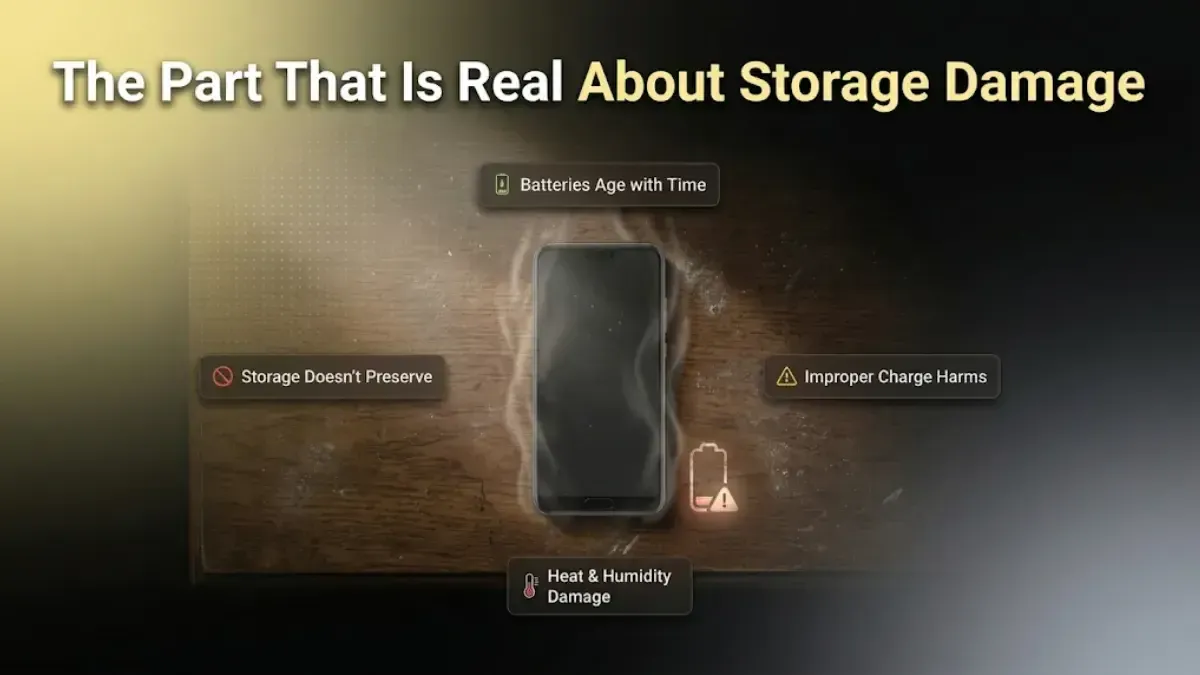
There are two real things that happen to a device when you store it, and they are important to know.
Lithium batteries get older with time, not just with use. Even if a phone sits unused for three years, its battery will still age because the chemistry breaks down over time. Keeping it fully charged or completely empty makes things worse. If you plan to keep a device, charge it to about half every few months.
Heat and humidity damage electronics more than regular use does. Storing a device in a closed cupboard during an Indian summer is worse for it than leaving it on a desk.
So the idea that storing a device "preserves" it is actually the opposite of what happens. The device is just losing value while no one is using it.
What Happens to Software Support While You Wait
This is the cost that most people completely overlook, and it is the main reason a device can become impossible to sell, not just less valuable.
Every phone has a published number of years of security updates. When that runs out, the pool of people willing to buy it shrinks sharply.
Apple has formally committed to a minimum of five years of security updates from a phone's first supply date. Samsung and Google both promise seven years on their recent flagships, and some mid range Galaxy A models get six.
A phone that still has four years of software support is something people want to buy. Once it runs out of support, it is only useful for parts. Storing your phone is what turns it from a product into spare parts.
When Storing Is Actually the Right Call
Since we are a buyback company, keep that in mind, but there is one situation where holding on to a device is a good idea.
The only real reason to keep an old device is as a backup that you will actually look after. If you have a working phone ready for when your main one breaks or needs repair, that is valuable. But it only helps if you treat it like equipment, not just a keepsake: charge it to roughly half every two or three months
Keep the operating system updated
Make sure you know the account password on it
Check it still has software support left
If you do not do those four things, your old device is not really a backup. Usually, when the main phone breaks, people find the spare has a dead battery, outdated software, and a forgotten password. In the end, they just repair their main phone, which is what they would have done anyway.
Here is a simple test: Is this device part of your plan, or is it just sitting in a drawer? If it is part of your plan, keep it. If not, it is better to let it go.
The Timing Advice That Contradicts Itself
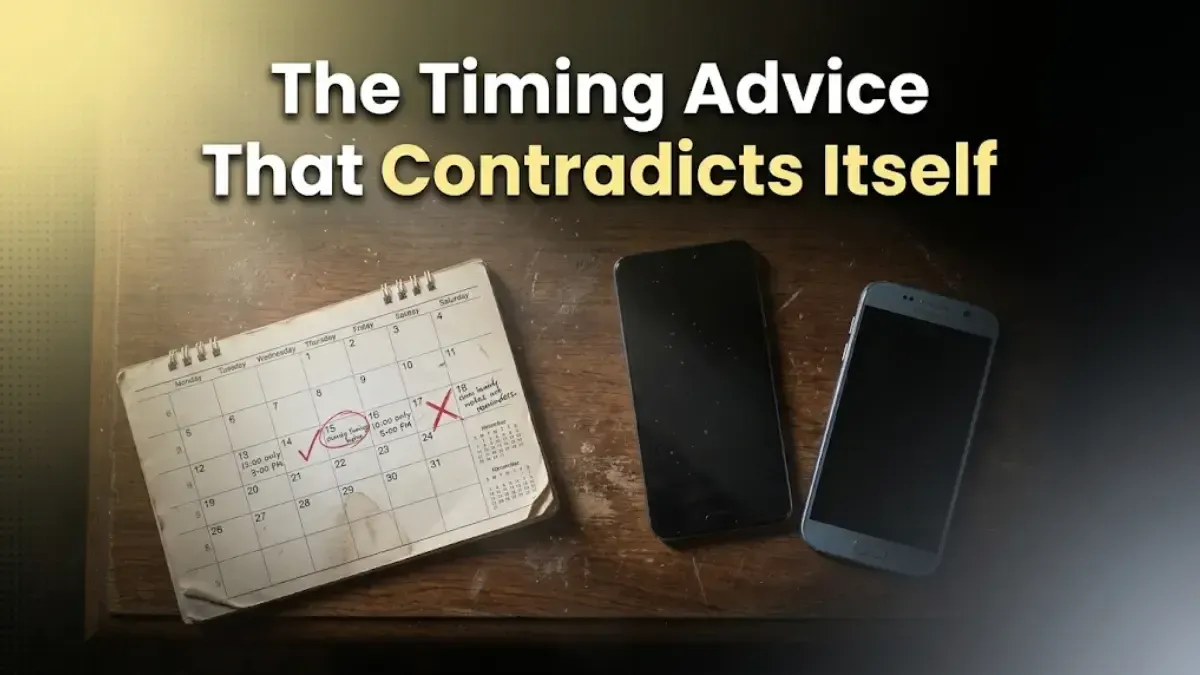
Plenty of guides, this one included in its last version, give two timing rules that cannot both be followed.
Rule one: sell before the new model is announced. This is correct. The steepest drop happens at launch.
Rule two says to sell during the festive season for a better price. But this does not work, because in India, the big launches and festive sales happen at the same time. You cannot sell before the launches and also during the festive season.
And on the evidence, rule two is the wrong one. Counterpoint expects India's festive season smartphone volumes to fall about 12 percent year on year in 2026. Market value is expected up around 5 percent, on higher prices. Memory costs have left brands little room for deep discounts, so they are leaning on financing and trade-ins instead. Counterpoint's own forecast is that the second hand market grows as older phones re-enter the trade-in channel.
Trade-in promotions bring in more supply. When more people trade in their phones at the same time, more used devices enter the market, and this extra supply does not push prices up.
So the best advice is simple: sell your device before the rush, not during it.
The Data Question, Answered Properly
Old devices do hold passwords, banking apps, photos and messages. That is a real reason not to leave one lying in a drawer for years, and a real reason to be careful when you sell.
But it is your job, not the buyer's, to make sure your data is safe. Follow these steps before you hand over your device:
Back up your data, and open the backup to check it worked.
Move your authenticator app to your new device.
Sign out of your Google or Apple account.
Remove the SIM, memory card and any eSIM.
Factory reset.
Why signing out comes before the reset. Reset while still signed in and the device locks itself to your account. Factory Reset Protection on Android, Activation Lock on iPhone or Mac. Nobody else can set it up, and a locked device is worth a fraction of an unlocked one.
Here is why a factory reset is enough. Modern phones use encryption, so when you reset the device, it destroys the encryption key and makes the data unreadable. You do not need to delete your photos first or buy special wiping software. If someone says a reset is not enough for a phone from the last ten years, they are trying to sell you something.
The Environmental Case, With the Real Numbers
It is important to get this number right, because the one you often hear is more than twice as high as the real figure.
India generated 14,14,645 tonnes of e-waste in 2025-26, and 9,79,080 tonnes were recycled. That is CPCB data. It was given by the Minister of State for Environment in a written reply to the Lok Sabha in March 2026.
You will see "over 3 million tonnes" quoted, including on our own pages previously. It is not the figure.
Globally, the UN Global E-waste Monitor 2024 puts generation at 62 million tonnes in 2022, with only 22.3 percent documented as properly collected and recycled, and 82 million tonnes projected for 2030. The metals inside are worth about 91 billion dollars, including roughly 19 billion in copper and 15 billion in gold.
So where does selling fit in? Reusing a device is always better than recycling it. If a device keeps working, it means a new one does not need to be made, which recycling cannot achieve. If a device cannot be fixed, its parts can be used for repairs. Only what is left after that should be recycled for materials.
If a device truly cannot be used anymore, it should be sent to a registered recycler, not thrown in the trash or given to a roadside scrap dealer. Lithium batteries in household waste can cause fires. Our guide on recycling old devices in India shows how to find a registered recycler and explains why it is important.
One Thing to Do Before You Buy Second Hand
While we are here, the other side of this market is people buying your old device.
Dial *#06# on any handset to get its 15 digit IMEI, then send an SMS reading KYM followed by that number to 14422, or use the IMEI verification page on the government's Sanchar Saathi portal at ceir.sancharsaathi.gov.in. It returns the make, model and status. If it comes back blacklisted, duplicate or already in use, do not buy the phone.
This check only takes a minute, but very few people actually do it.
Selling It to Us
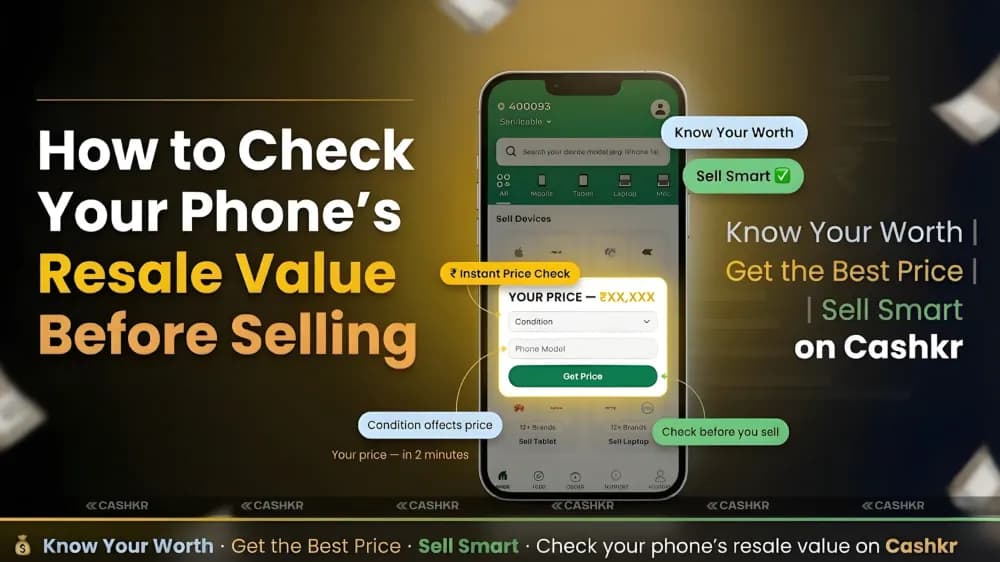
Just answer a few questions about your device, get a price, and book a free doorstep pickup. We will check the device to make sure it matches your description, and once you agree, we send payment by UPI or bank transfer.
We accept phones, laptops, tablets, smartwatches, and wearables in any condition, even if they will not turn on. Be sure to describe any faults when you request a quote, because an accurate description helps keep the price the same when we pick it up.
1. Is it better to sell old electronics or store them?
Sell, in almost every case. Published tracking shows close to half an iPhone's value, and nearly two thirds of a Galaxy S flagship's, going in the first twelve months. Software support windows also run down whether the device is used or not. The one exception is a genuine backup you will keep charged and updated.
2. Do electronics really lose 15 to 20 percent of their value a year?
No, and that figure has no source behind it, including on pages where we have used it ourselves. Depreciation is front loaded and comes in steps at launches. The iPhone 16 lost 41.2 percent within two weeks of its launch, and recent iPhones have lost 44 to 48 percent across a full year.
3. Does storing a phone keep it in good condition?
No. Lithium batteries age by the calendar rather than by use, so a phone untouched for three years still has an aged battery, and storing it at full charge or fully flat makes that worse. Heat and humidity in a closed cupboard are harder on it than daily use would be.
4. Should I keep an old phone as a backup?
Only if you will charge it to about half every two or three months, keep it updated, and know its account password. Otherwise it will have a flat battery and outdated software when you finally need it, and you will repair or replace your main phone instead.
5. When is the best time to sell an old device?
Ahead of the new model launches, not during them. The festive season advice you often see is unreliable for a seller. Brands with no room for discounts push trade-in offers instead, and that brings a wave of used handsets into the market at once.
6. Are my old electronics even worth anything?
Usually something. Second hand phones now make up roughly 20 percent of smartphone sales in India, up from about 12 percent in 2021, and devices that cannot be repaired still have working parts. A quote costs nothing and takes a couple of minutes.
7. Is it safe to sell a device that had my data on it?
Yes, if you do it in order: back up, move your authenticator app, sign out of your Google or Apple account, remove the SIM and eSIM, then factory reset. Signing out before the reset is the step people miss. Missing it locks the device to your account.
8. Do I need special software to wipe a device before selling?
No. Modern phones encrypt their storage and the factory reset destroys the encryption key, so what remains cannot be read. Multi-pass wiping is a hard drive technique that does not transfer to phone storage.
9. How much e-waste does India generate?
India generated 14,14,645 tonnes in 2025-26, of which 9,79,080 tonnes were recycled, according to CPCB data given to the Lok Sabha in March 2026. The figure of over 3 million tonnes that circulates widely, including on some of our own older pages, is not correct.
10. Is selling better for the environment than recycling?
Yes, if the device still works, because keeping it in use avoids manufacturing a replacement altogether. Recycling recovers materials, which is worth doing, but it is the last step rather than the first. Reuse, then parts, then materials.
11. Can I sell a broken device?
Yes. Cracked screens, failing batteries and devices that will not switch on all have value, because the working parts go into repairing others. Say clearly what is wrong when you get the quote so the figure reflects it from the start.
Stay in the loop
Weekly tech insights in your inbox. No spam, ever.