Honor MagicOS 11: System-Wide Glass Design on Android 17
 Yaskar Jung ShahUpdated: Aug 3, 2026·13 min read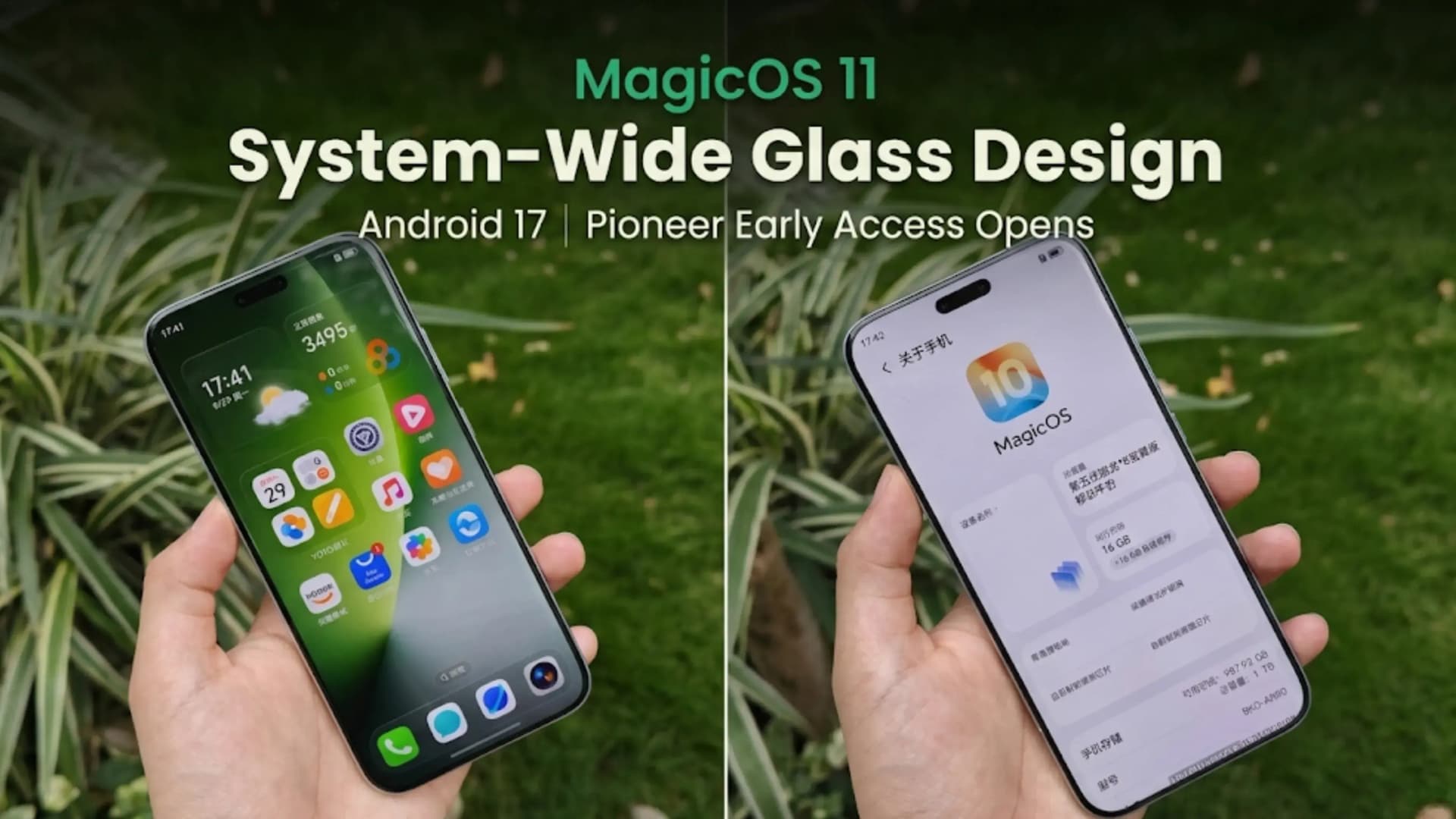
Honor MagicOS 11: system-wide glass design on Android 17, Magic 8 first.

Get the Cashkr app for faster payouts

MagicOS 11 in brief: : Android 17 base | System-wide glass design: translucent panels, layered animations, dynamic lighting, light refraction, floating user interface | Pioneer Early Access: June 16–18 registration, June 22–23 review | Eligible devices: Honor Magic 8, 8 Pro, 8 Pro Air, 8 RSR Porsche Design | China only | Stable date not confirmed | India availability not announced
| Design Element | What It Is | What It Changes in Daily Use |
|---|---|---|
| Translucent Panels | Interface layers show content behind them instead of using fully opaque backgrounds | Reduces visual clutter and makes the interface feel more open |
| Layered Animations | UI elements move at different depths and speeds rather than using simple flat transitions | Creates a more immersive and three-dimensional feel when navigating apps and menus |
| Dynamic Lighting | Glass-like surfaces react to content and lighting conditions beneath them | Makes the interface feel more alive and responsive |
| Light Refraction | Transparent edges bend and redirect light from underlying content | Adds realism and enhances the glass-inspired design language |
| Floating UI Components | Navigation bars, controls, and menus appear suspended above content | Keeps content more visible while maintaining access to controls |
| Reflective Surfaces | Panels simulate reflections and subtle mirror-like effects | Gives system elements a premium material appearance rather than a flat look |
| Date | What Happens |
|---|---|
| June 16–18 | Registration window opens in the My Honor App for Pioneer Edition Early Access |
| June 22–23 | Applications are reviewed, and selected Pioneer users are notified and granted access |
| After June 23 | Testing phase begins, with user feedback collected for bug fixes, optimization, and stability improvements |
| TBC | Expansion of the program to additional Honor devices beyond the Magic 8 series |
| TBC | Stable public release of MagicOS 11 (official date not yet announced) |
| TBC | India and global rollout of MagicOS 11 (not yet announced by Honor) |
Should you join the Pioneer Early Access? Honor clearly warns about potential performance issues, app problems, battery drain, higher temperatures, and risks to system stability. These are real concerns with early software, not just standard warnings. If you use your phone for important tasks like banking, photos, or calls, an unstable build could be a big hassle. Early access is best for people with a backup device or those who want to test software and give feedback.
| Device | Why It Is in the First Phase |
|---|---|
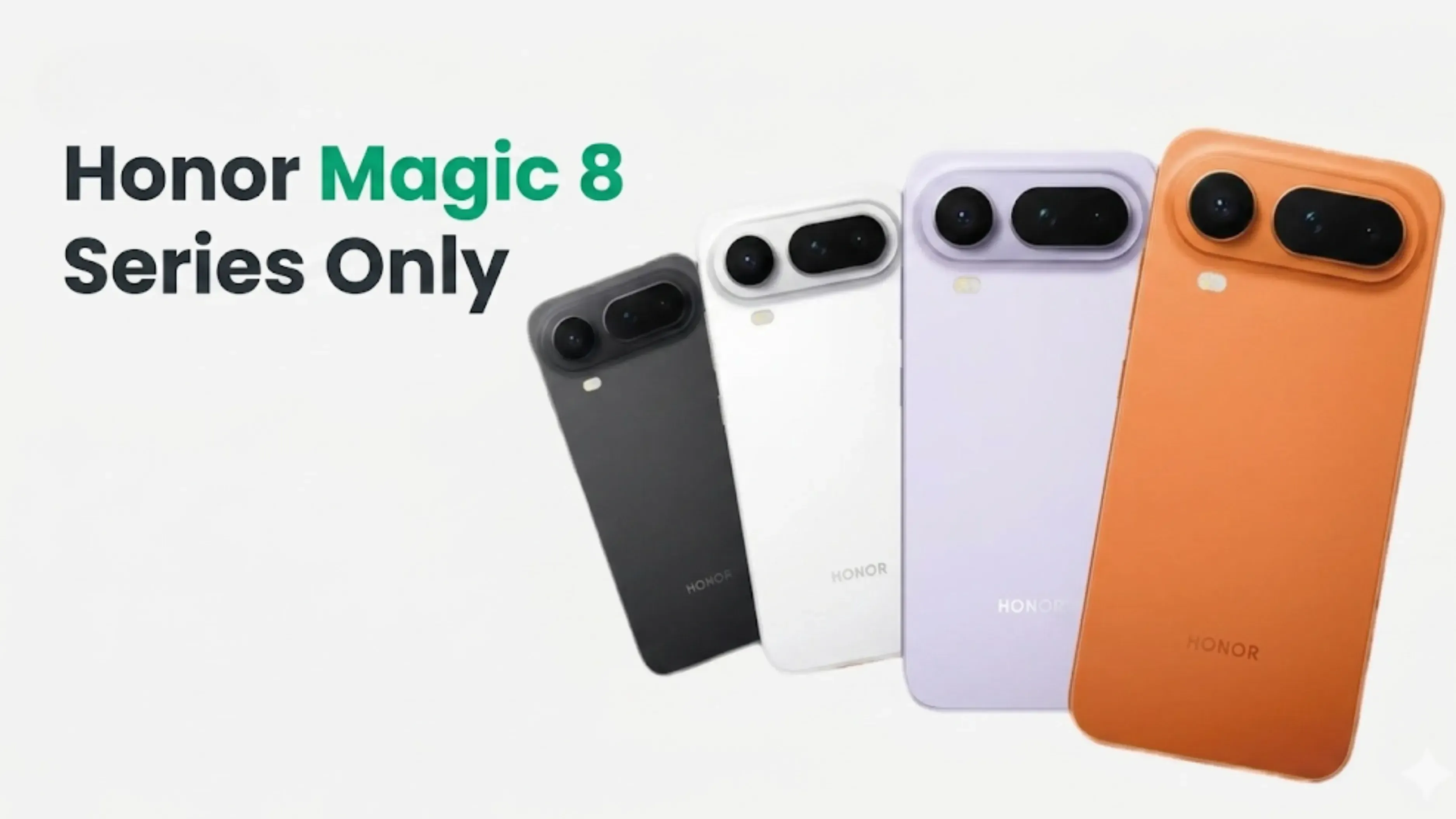
| Honor Magic 8 | Base flagship of the Magic 8 generation and likely the most widely owned model among early adopters |
| Honor Magic 8 Pro | Premium flagship variant that typically serves as a primary development and testing platform |
| Honor Magic 8 Pro Air | Slim flagship model used to validate MagicOS 11 performance, battery life, and thermals on a thinner design |
| Honor Magic 8 RSR Porsche Design | Highest-end co-branded flagship that helps ensure premium features and software parity across the lineup |
Bottom Line: Official teaser is out on Weibo. It’s based on Android 17 and features a system-wide glass design, as shown in the videos. Pioneer Early Access registration runs from June 16 to 18, with reviews on June 22 to 23, for the Magic 8 series in China only. There’s no stable launch date or availability in India yet. Early builds may have performance, compatibility, and stability issues.
1. What is MagicOS 11?
MagicOS 11 is Honor's next major operating system built on Android 17. It features a system-wide glass-inspired visual design with translucent panels, layered animations, dynamic lighting, light refraction and floating UI components across the entire operating system.
2. When is MagicOS 11 releasing?
There is still no firm start date. In China, people can sign up for the Pioneer Edition Early Access Program for the Honor Magic 8 series from June 16th to 18th, with reviews on June 22nd and 23rd. After testing, the stable rollout timeline begins.
3. Which devices will receive MagicOS 11?
The first Early Access phase is limited to the Honor Magic 8, Magic 8 Pro, Magic 8 Pro Air and Magic 8 RSR Porsche Design. Expansion to additional Honor devices is expected in later phases. The full list of supported devices has not been announced.
4. How is MagicOS 11 different from Apple's Liquid Glass?
Both use glass-inspired transparency and depth effects. Apple's Liquid Glass in iOS 27 applies these effects selectively to specific interface surfaces. MagicOS 11's teaser videos show system-wide application across all UI layers. System-wide glass is more comprehensive but computationally more demanding.
5. What does the glass design in MagicOS 11 actually look like?
Translucent interface panels that show content beneath them, menus with a glass-like reflective quality, animations where elements move at different depths simultaneously, dynamic lighting that shifts based on what is behind the UI layer and floating navigation components that appear suspended above content.
6. Can I join the MagicOS 11 Early Access in India?
No. The Pioneer Edition Early Access is currently limited to China and requires the My Honor App on a device running MagicOS 10.0.0.160 or later. India's availability for either early access or the stable MagicOS 11 has not been announced.
7. Is it safe to install MagicOS 11 early access?
Honor warns of performance issues, app compatibility problems, battery drain, higher temperatures, unexpected bugs, and concerns about system stability in early builds. It is advisable to use early access only on a secondary device or only if you are comfortable with potential disruptions to daily phone functions.
8. What Android version is under MagicOS 11?
Android 17. MagicOS 11 adds Honor's glass design language and Honor-specific features on top of Android 17's underlying improvements in AI, privacy and performance.
9. Why does the MagicOS 11 early access start with only Magic 8 devices?
New system-wide glass rendering is computationally demanding. The Magic 8 series has the latest hardware and the highest GPU performance in Honor's lineup, making it the appropriate first test device range before the software is optimized for broader device compatibility.
10. Where can I follow MagicOS 11 updates for India?
Honor India's official website at hihonor.com/in, Honor India's social media accounts and Honor's global Weibo and YouTube channels are the recommended sources for MagicOS 11 stable release announcements.
If you want to sell your old devices, then click here.
Sell with Cashkr
Cashkr buys used devices at a fair price with free doorstep pickup and same-day payment across 2,000+ pincodes. Get an upfront quote in seconds.
Sell Old Phone OnlineCheck your phone's value in seconds
Written by
Best gaming phones 2026 for every budget — top 3 picks.
Best mobile phones of 2026 with specs, features and prices.
HyperOS 4 is launching in August 2026 with major improvements in stability.