Selling a Broken Phone or Repairing It First: What Is Actually Worth It?
A cracked screen, worn-out battery, or broken charging port does not mean your phone is done for. If you are planning to upgrade, you need to decide whether to fix it first or just sell it as it is.
The math seems simple: repair your phone if the cost is less than the value it adds. This is the usual advice, and most articles stop there.
What they leave out is what decides it in practice. A repair can make a phone worth less than it was before it broke. Understanding why is what turns this from a guess into a decision.
Advertisement
The Part Nobody Tells You About
When you repair a phone with a non-original part, the phone can usually tell.
On an iPhone, a screen or battery not fitted by Apple or an authorised provider triggers an "Unknown Part" or service message in Settings. It cannot be cleared. The next owner sees it, and so does any inspection.
Android phones are starting to do the same thing, with more brands now showing warnings for non-original screens and batteries in the system info.
This affects the price. When a buyer sees a cracked screen, they know what is wrong and how much it costs to fix. But if they see a parts warning, they do not know what was replaced, who did it, or if anything else was changed. Buyers usually pay less for uncertainty than for visible damage.
So, a cheap screen repair can put you in the worst spot: you pay for the repair, but your phone is still valued the same as if it were cracked, or sometimes even less.
The takeaway is simple: only repair your phone at an authorised centre, or do not repair it at all. Trying to save money with a cheaper repair often ends up lowering your phone’s value.
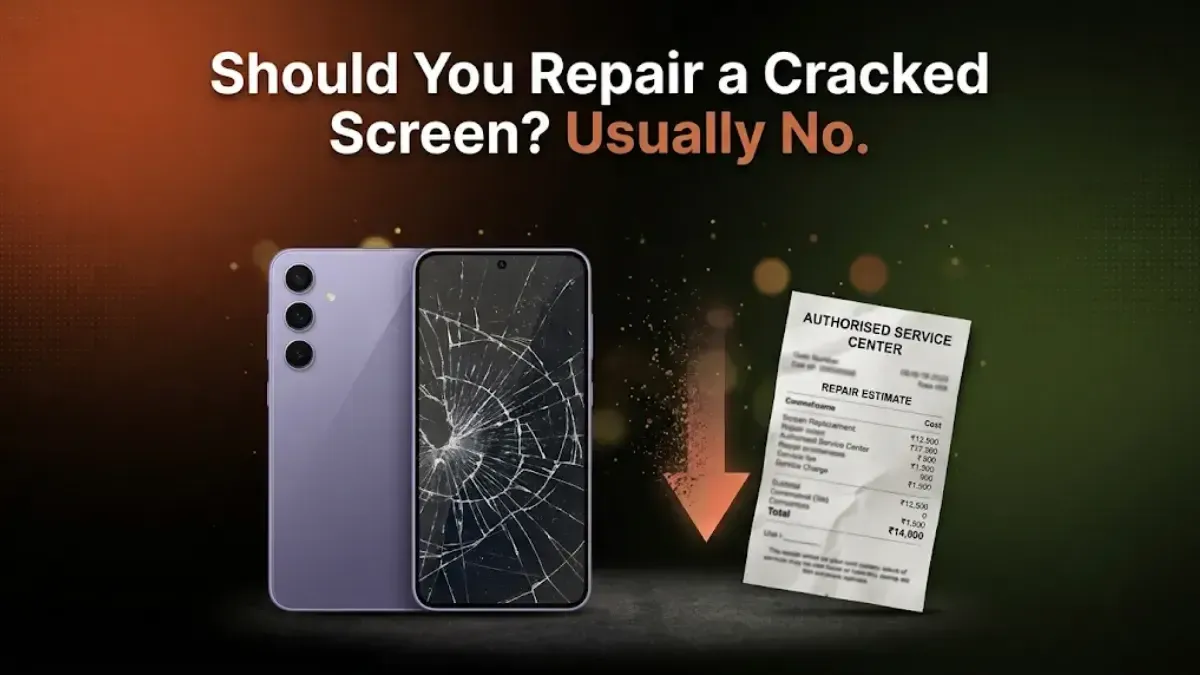
So Should You Repair a Cracked Screen?
Usually no, and this is where we disagree with most advice on the subject.
Getting an authorised screen replacement is expensive. For a recent flagship, it is one of the most costly repairs, and the increase in value from 'cracked' to 'good' rarely makes up for the cost. For mid-range or older phones, it is not even close.
A third-party screen replacement costs less, but it causes the parts-warning issue mentioned earlier.
So, the best default is to sell your phone as cracked and be upfront about it. Damaged phones still sell well because the parts are valuable, and refurbishers can repair them more cheaply than you can.
The main exception is if you have a very recent flagship phone that is still under warranty or AppleCare, and the authorised repair is subsidised. In that case, the numbers might work out. Always get the authorised quote in writing before you decide.
The Repair That Usually Does Pay
A battery replacement done by an authorised centre.
Battery health is the first thing any inspection checks and the number most buyers look at before anything else. A phone that cannot last a day is hard to sell at any price, and the repair is comparatively cheap.
The same rule applies: only use an authorised centre. A third-party battery will trigger the same warning and cancel out any benefit.
Charging port repair is another option to consider. It is usually cheap, and a phone that does not charge properly is almost impossible to sell to a private buyer. Fixing it can help you get the full value for your phone.
Repairs That Almost Never Pay
Motherboard replacement
Water damage restoration
Any two major repairs at once, such as display and board
Foldable display replacement on an older device
Water damage is a special case. Even if you repair it successfully, corrosion can show up months later, and the liquid contact indicators inside the phone stay triggered. Buyers and inspectors will still treat it as water-damaged, no matter what the repair receipt says. Selling it as-is is usually the better choice.
The One Repair That Is Not About Money
A swelling battery. If the screen is lifting away from the frame, or the phone will not sit flat on a table, deal with it now whatever you decide about selling.
This is a safety issue, not a question of price. Do not mail it, do not leave it in a drawer, and do not keep using it.
How to Actually Decide
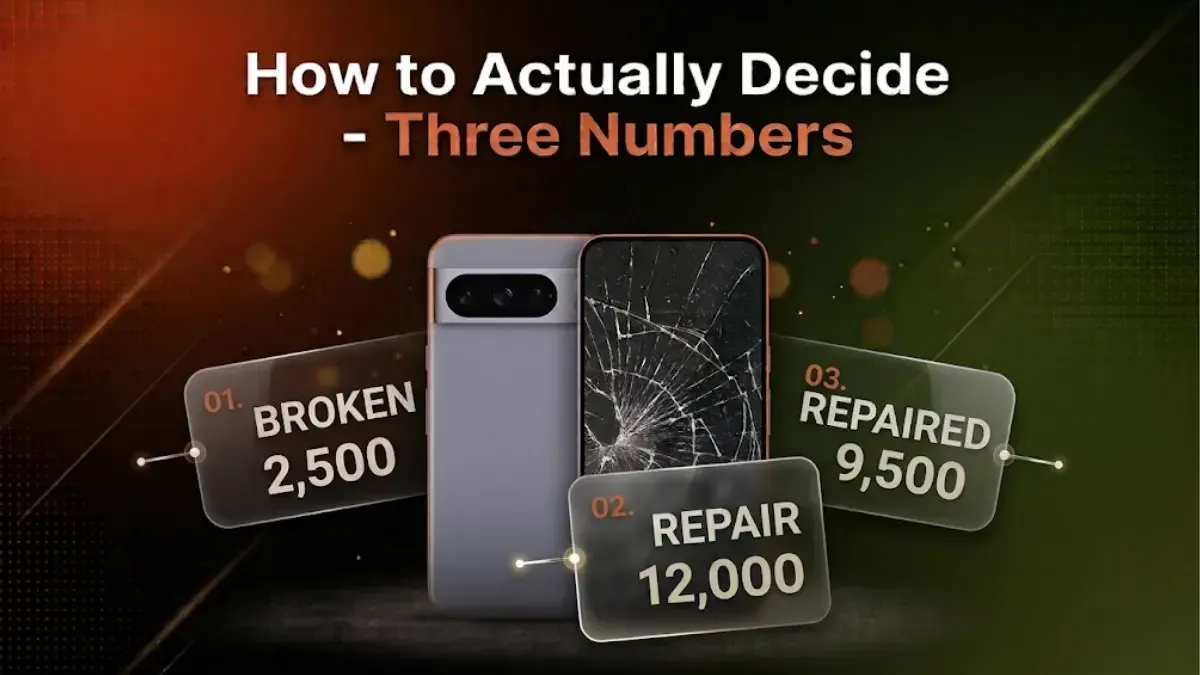
You need three numbers before you spend any money.
1. The authorised repair quote. Not the price from a local shop, but the official one, since only authorised repairs protect your phone’s value.
2. The current value of your phone in its damaged state. Get a quote that honestly describes the damage.
3. The value of your phone if it were repaired. Get a second quote describing the phone as fully working.
If the difference between the second and third numbers is bigger than the repair cost, then the repair is worth it. If not, it is not.
Most of the time, for most phones, the repair is not worth it. But that is not a bad thing. You can skip the repair, avoid waiting, and sell your phone right away.
Yes, because the answer depends on how much value your phone still has.
iPhones hold value better than Android phones at comparable ages. SellCell's tracking of twelve-month depreciation showed the iPhone 15 down 48.2 percent against the Galaxy S23 down 61.1 percent, and the iPhone 13 down 46.2 percent against the Galaxy S22 down 66.7 percent. That is United States data, so the exact percentages do not transfer to India, but the ranking does.
What follows. The higher a phone's value in good condition, the more room there is for a repair to pay for itself. A recent iPhone or a Galaxy S or Z flagship has that room. A two year old budget Android does not, and on those the answer is nearly always to sell as-is.
Describe the damage accurately. This matters more on a broken phone than a working one. A hidden fault found at inspection changes the number at your door, after you have committed. An honest description is what keeps the quote you were given.
Sign out before you reset your phone. Go to Settings, Accounts, and remove your Google account, or on iPhone, sign out of your Apple ID and turn off Find My. If you reset while still signed in, the phone will lock to your account, and a locked phone is worth much less than even a damaged one.
If you cannot use the screen, remove the device from your account online: go to myaccount.google.com under Security and Your devices, or appleid.apple.com under Devices. This will clear the lock even if you cannot use the phone directly.
Remove the SIM card, memory card, and any eSIM from your phone.
If your phone will not turn on at all, mention this when you book the sale. It still has value for parts, and your quote should reflect that from the beginning.
We buy phones in any condition, including those with cracked screens, bad batteries, water damage, or phones that will not turn on. The parts are still valuable, even if the phone does not work.
Be clear about what is wrong when you ask for a quote. We will check the phone when we pick it up, so an accurate description helps keep your offer the same.
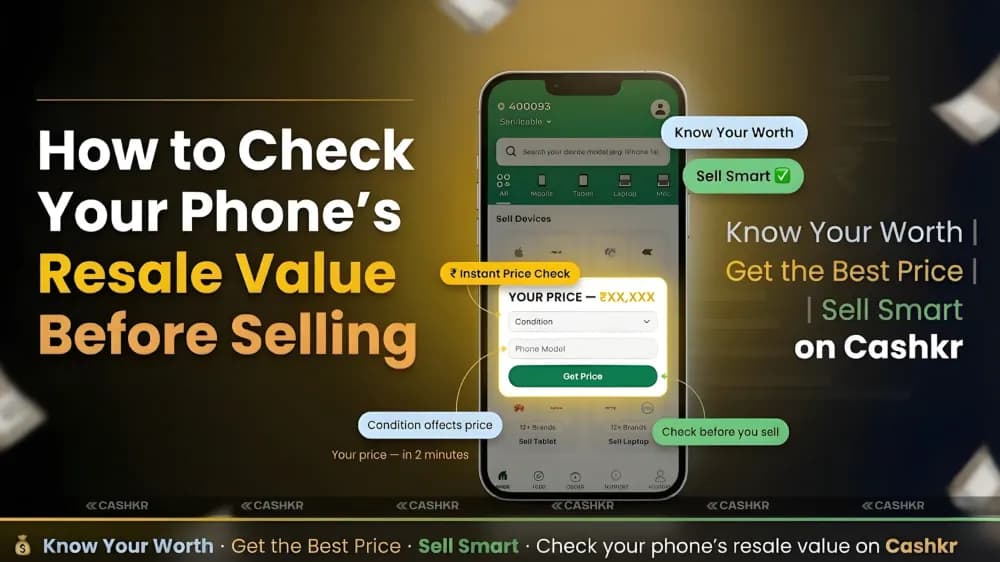
If you are unsure, get a quote first. It is free, and it gives you the second of the three numbers you need before spending money on a repair.
FAQs
1. Should I repair my broken phone before selling it?
Usually not. A repair only pays if the authorised repair cost is less than the extra resale value, and on most phones it is not. A battery replaced at an authorised centre is the repair most likely to pay for itself.
2. Is it worth repairing a cracked screen before selling?
Usually no, which is the opposite of what most guides say. An authorised screen repair rarely costs less than it adds, and a cheaper third-party repair triggers a parts warning the next owner can see, which can leave the phone worth less than it was cracked.
3. Why would a repair reduce my phone's value?
Because a non-genuine screen or battery shows as an "Unknown Part" or service message in Settings and cannot be cleared. A buyer can see something was replaced but not what else was done inside, and that uncertainty is priced worse than visible damage.
4. Does replacing the battery increase resale value?
Often yes, if it is done by an authorised centre. Battery health is the first thing an inspection checks. A third-party battery triggers the same warning as a third-party screen and undoes the benefit.
5. Should I repair water damage before selling?
No. The repair is expensive, corrosion can return months later, and the liquid contact indicators inside stay tripped, so buyers will treat it as water damaged regardless. Sell it as-is and say so.
6. Which repairs are never worth it before selling?
Motherboard replacement, water damage restoration, two major repairs at once, and foldable display replacement on an older device.
7. Can I sell a phone with a damaged motherboard?
Yes. Buyback services take phones with hardware faults because the working parts still have value. The offer is lower, but usually higher than what you would have left after paying for the repair.
8. What if the battery is swelling?
Deal with it immediately, regardless of whether you plan to sell. If the screen is lifting or the phone will not lie flat, that is a safety issue, not a pricing question.
9. How do I work out whether a repair is worth it?
Get three numbers: the authorised repair quote, a buyback quote describing the phone as damaged, and a second quote describing it as working. If the difference between the last two is bigger than the first, repair. Otherwise sell as-is.
10. What should I do before selling a broken phone?
Sign out of your Google or Apple account before resetting, remove the SIM, memory card and eSIM, and describe the damage honestly. If the screen is unusable, remove the device from your account online instead.