Smartphone Price Hike 2026: How to Buy Well When Prices Are Rising
Phones in India cost meaningfully more than they did a year ago, and the reason is not what most people assume. It is not tariffs, and it is not manufacturers getting greedy. It is memory.
The practical consequences are large, and one of them is that the phone already in your pocket is worth paying attention to.
Disclosure: Cashkr is our own device buyback platform. We buy used phones, so the conclusion "your existing phone is worth more than you think" happens to suit us. The figures below are from independent research firms, not from us, and every one is sourced.
Advertisement
How this guide was made: The market figures come from IDC, Counterpoint Research and analyst commentary as reported by Digit in their 2026 industry review, linked at the end. We have not published figures about our own transactions, and the worked example below is labelled arithmetic rather than a claim about specific phones.
Average selling prices hit a record. IDC put the average selling price of a smartphone in India at $302 in Q1 2026, a 10.4 percent year-on-year increase. Counterpoint measured the average price rise across the market at roughly 15 percent by the end of Q2 2026.
The cause is memory, almost entirely. Manufacturers are paying five to seven times more for mobile DRAM and NAND flash storage than they were a year earlier. Memory prices have risen roughly fourfold since September 2025. One analyst attributed more than 90 percent of the overall price increase to memory costs alone.
This hits cheap phones hardest, which is counter-intuitive until you see why: memory accounts for over 60 percent of the bill of materials in a budget smartphone. When memory quadruples in price, a budget phone's economics break before a flagship's do.
The Part That Matters Most: Budget Phones Are Disappearing
This is the consequence nobody planned for.
The sub-₹10,000 segment collapsed 59 percent year-on-year in Q1 2026, and its share of the market nearly halved, from 18 percent to 8 percent. The sub-₹15,000 segment fell 45 percent year-on-year in April to June.
Those phones are not selling badly. They are increasingly not being made, because at current memory prices they cannot be built to hit those price points.
If your budget was ₹12,000 and you are wondering why there is so much less to choose from than last year, that is why.
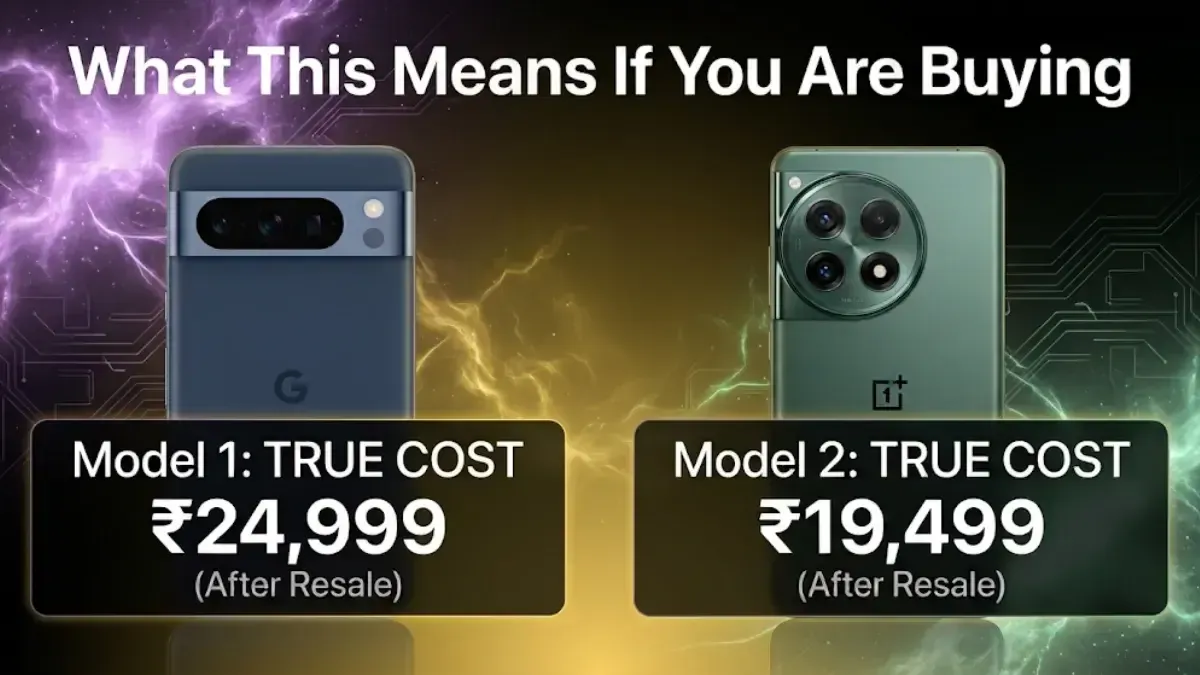
What This Means If You Are Buying
Work out the real cost, not the sticker price.
The number that matters is what the phone costs you over the time you own it:
Real cost = purchase price − what you get back when you sell it
To show the arithmetic — and these are illustrative figures, not a claim about any specific handset:
A phone bought at ₹60,000 and sold two years later for ₹30,000 has cost you ₹30,000.
A phone bought at ₹45,000 and sold two years later for ₹10,000 has cost you ₹35,000.
The cheaper phone was more expensive to own. This does not always hold — at the budget end it usually does not, because a smaller percentage of a much smaller price is still less money — but it holds often enough between flagships and upper-mid-range phones that the calculation is worth doing before you buy rather than after.
Last year's flagship is the strongest position in this market. When prices rise across the board, the previous generation's flagship gets discounted while this year's mid-range gets more expensive. At the same price you can frequently get better cameras, a better display, a better processor and better build quality by buying the older premium phone. Check that it still has software support left, because that is what decides both how long it stays usable and what it is worth later.
Buying used makes more sense this year than last. This is the direct consequence of a new-phone price rise: a used phone's value is anchored to what a new one costs. When new prices climb 10 to 15 percent, the used market looks proportionally better, and a two or three year old phone that has already taken its steepest depreciation becomes a considerably more rational purchase than it was.
Do not over-buy on storage out of panic. Higher storage does hold value better, and it costs more this year than last for exactly the reasons above. Buy the tier you will use.
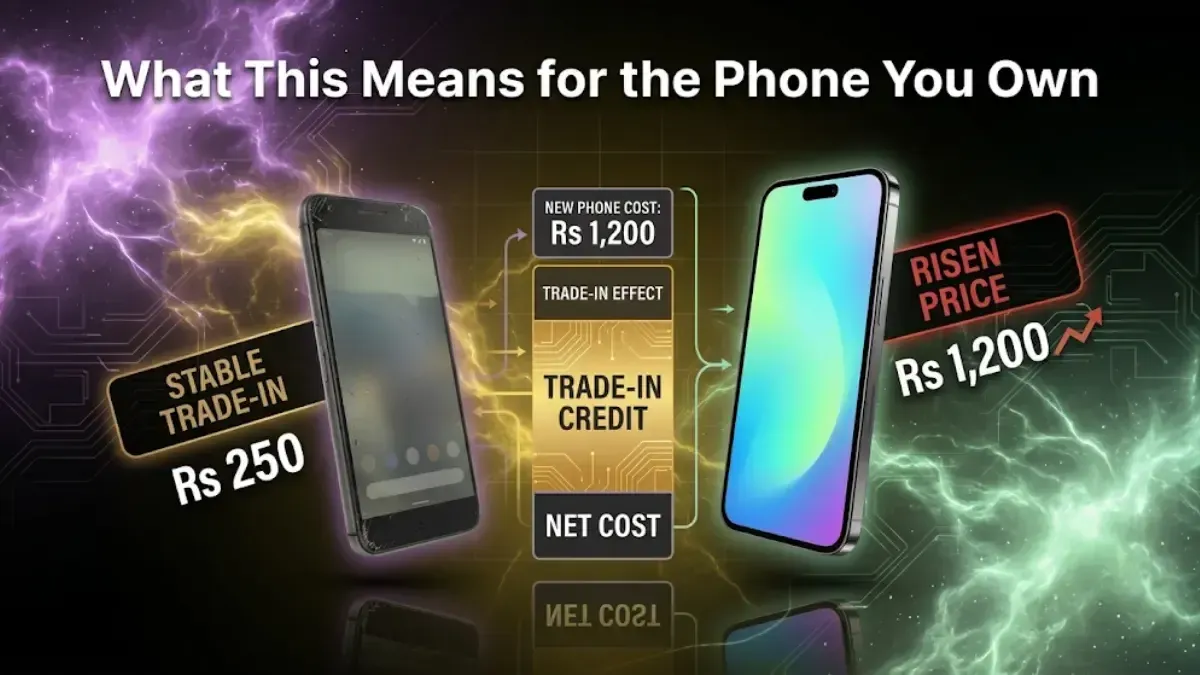
What This Means for the Phone You Already Own
Two things follow, and they point the same way.
Your current phone is worth more relative to a replacement than it was a year ago. Its resale value has not risen, but the thing you would spend it on has. The same trade-in covers a larger share of the upgrade.
Holding a phone you have stopped using is more expensive than usual. Used prices still fall every month and still step down when a successor launches. A phone sitting in a drawer through a price-rise year is losing value while the replacement it could have funded gets dearer.
If you are upgrading, selling the old handset first is worth more this year than it normally is. Check what yours is worth before you decide.
Before You Sell Anything
Back up, sign out of your Apple ID or Google account, remove the SIM and any eSIM, then factory reset — in that order. Resetting while still signed in locks the phone to you and the next owner cannot activate it.
FAQs
1. Why is there a smartphone price hike in 2026?
Memory. Manufacturers are paying five to seven times more for mobile DRAM and NAND flash than a year ago, with memory prices up roughly fourfold since September 2025. One analyst attributed more than 90 percent of the overall increase to memory costs. IDC recorded average selling prices in India at a record $302 in Q1 2026, up 10.4 percent year-on-year.
2. Why are budget phones affected most?
Because memory makes up over 60 percent of the bill of materials in a budget smartphone, against a much smaller share in a flagship. When memory quadruples in cost, the cheap phone's economics break first. The sub-₹10,000 segment fell 59 percent year-on-year in Q1 2026.
3. Should I buy now or wait for prices to fall?
Nobody can tell you when memory prices will normalise, and anyone who claims to is guessing. What is knowable is that if you need a phone now, last year's flagship and the used market are both better value than they were, and that waiting with a phone you have stopped using costs you resale value in the meantime.
4. Is a previous-generation flagship better value than a new mid-range phone?
Frequently, at the same price, and more so this year. You usually get a better camera, display, processor and build. Check how much software support is left, because that determines both usable life and resale value.
5. Does buying a more expensive phone save money long term?
Sometimes, against another flagship, because better resale value can outweigh the higher purchase price. It rarely works against a genuinely cheap phone, where a smaller percentage of a much smaller price is still less money. Compare purchase price minus expected resale, not sticker prices.
6. How do I work out what a phone really costs me?
Purchase price minus what you get back when you sell it. Estimate the resale side from published depreciation patterns for that brand and tier rather than guessing, and remember that timing matters — selling before the successor launches is worth more than selling after.
7. Does storage capacity affect resale value?
Yes, and higher storage variants hold value better, with the gap often widening on the used market. That said, storage costs more to buy this year for the same reason phones do, so buy the tier you will actually use.
8. Should I sell my old phone before buying a new one?
If you are upgrading anyway, yes. Its value only falls, and with new phones more expensive this year, that money covers a larger share of the replacement than it would have last year.