Best Camera Under Rs.50,000 in India (2026): Top 5 Picks Worth It
If you’re looking to buy your first real camera, Rs.50,000 is a great budget. It’s enough for a solid beginner mirrorless or DSLR with a lens, but not so much that a mistake is easy to ignore. The challenge is that many models in this range seem like good deals but can let you down when you actually use them.
We checked what’s really available in India right now, skipped phones and any options that go over ₹50,000 once you add a lens (like the Sony ZV-E10, Sony a6100, and Nikon Z30), and picked five cameras that are actually worth your money. For each one, you’ll see who it suits, the important specs, and most importantly, any drawbacks, so you know what to expect before you buy.
A quick note about prices: Camera prices in India change often because of bank offers, festive sales, and stock levels. The prices listed here are rough estimates from mid-2026. Always check the latest price on Amazon, Flipkart, or Croma before making a purchase.
Quick summary
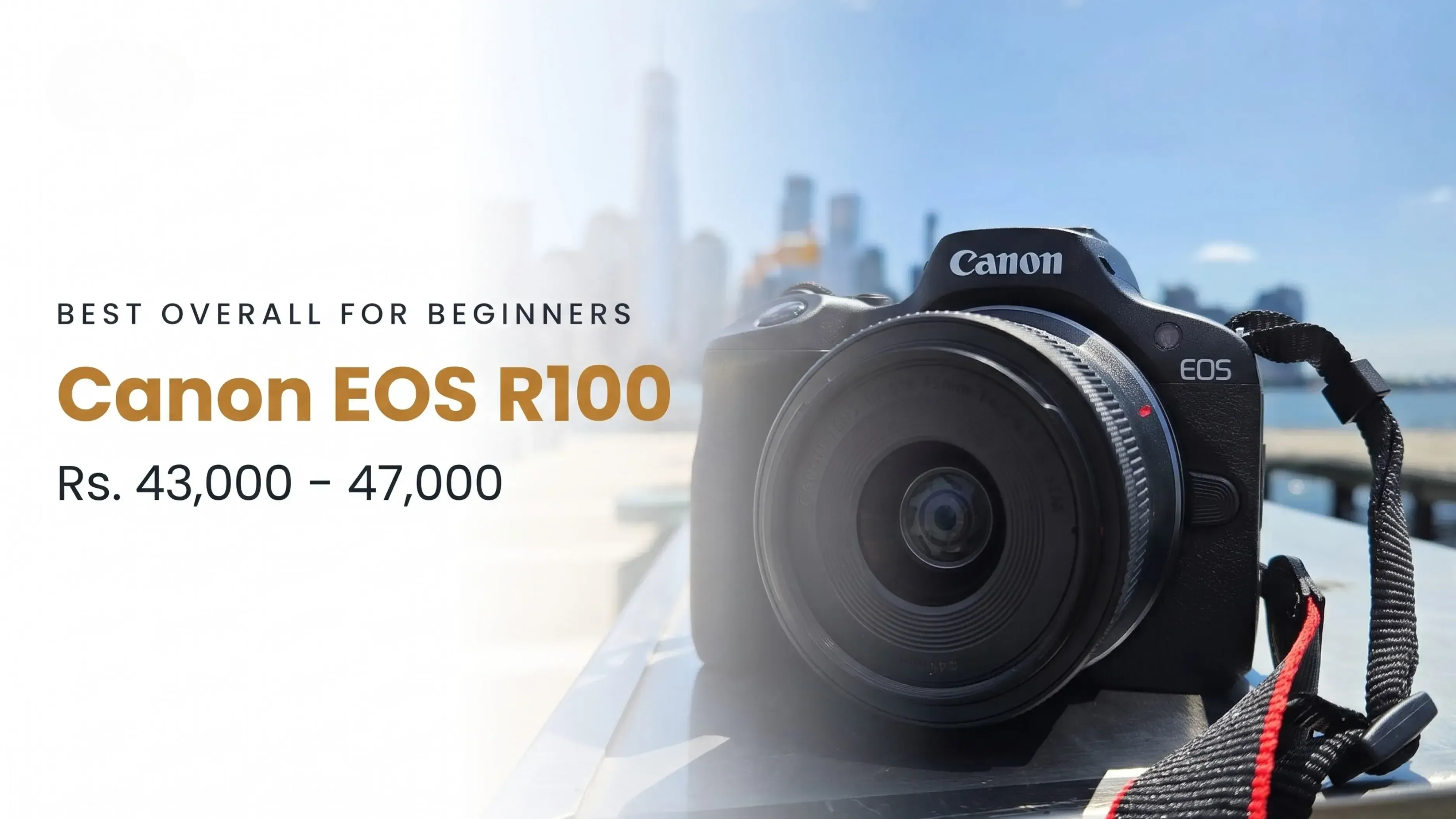
Canon EOS R100 (18-45mm kit) ₹43,000–47,000 — Best overall for most beginners
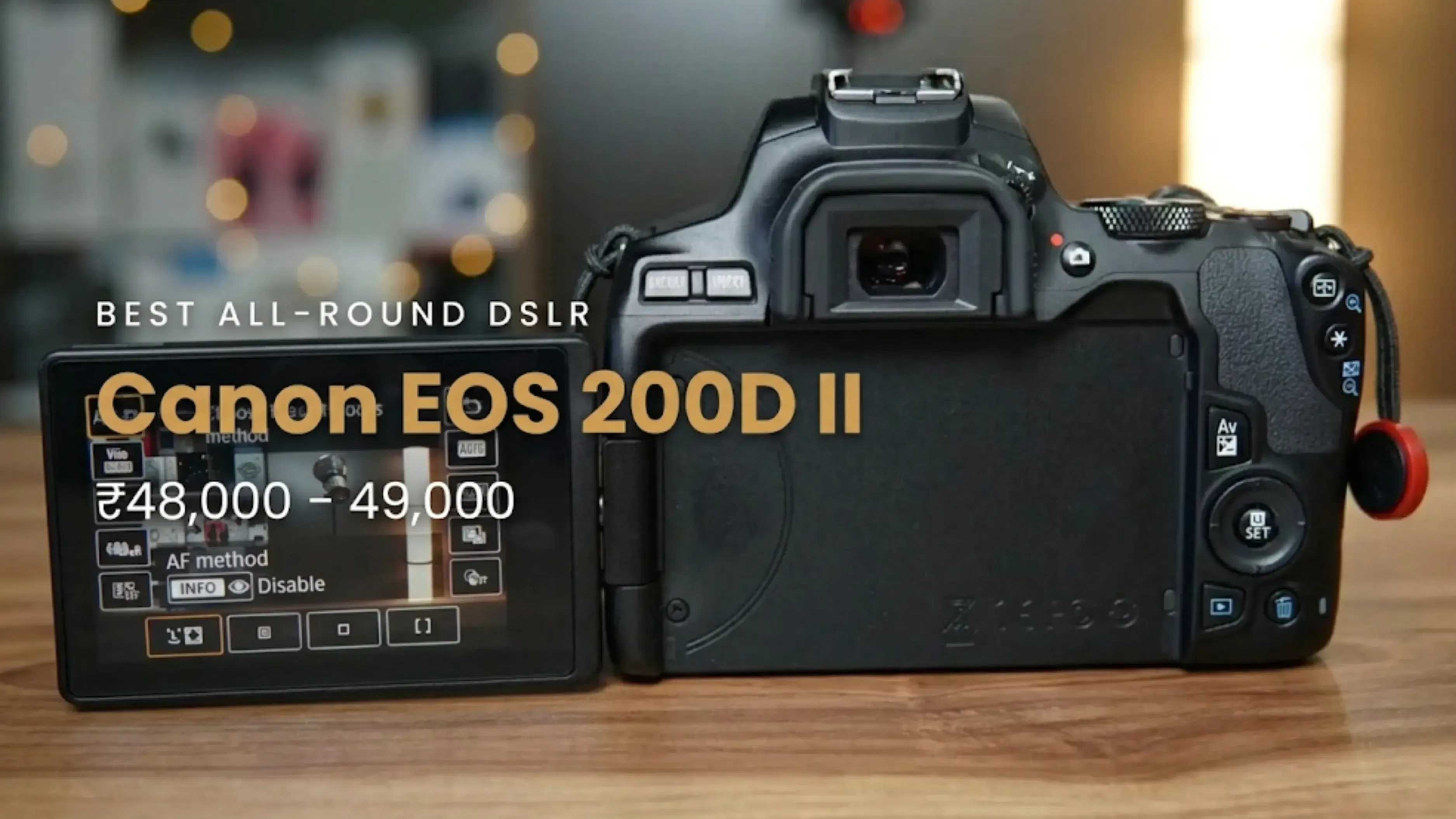
Canon EOS 200D II (18-55mm kit) ₹48,000–49,000 — Best all-round DSLR
Advertisement
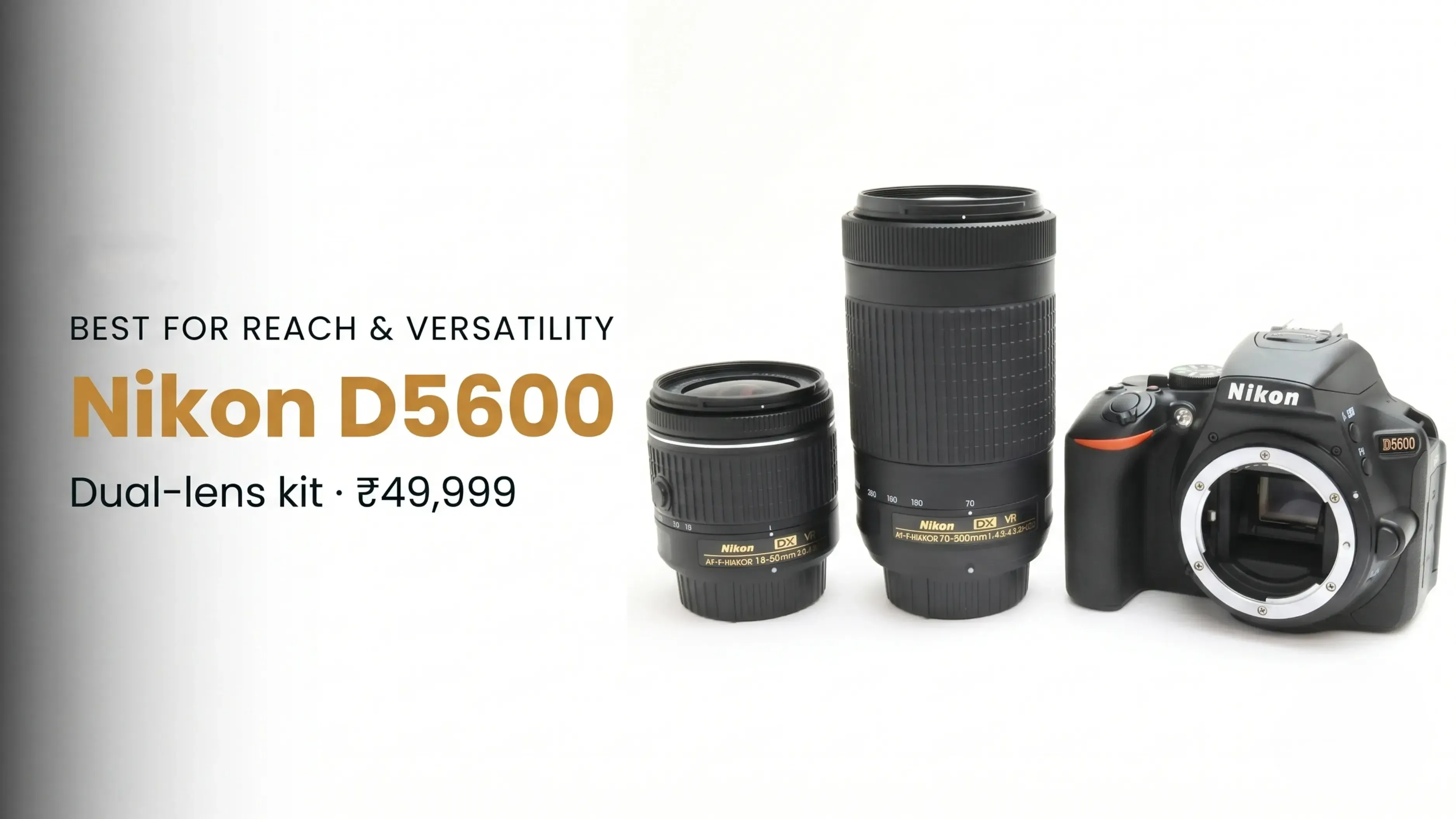
Nikon D5600 (dual-lens kit) ₹49,999—Best for reach and versatility
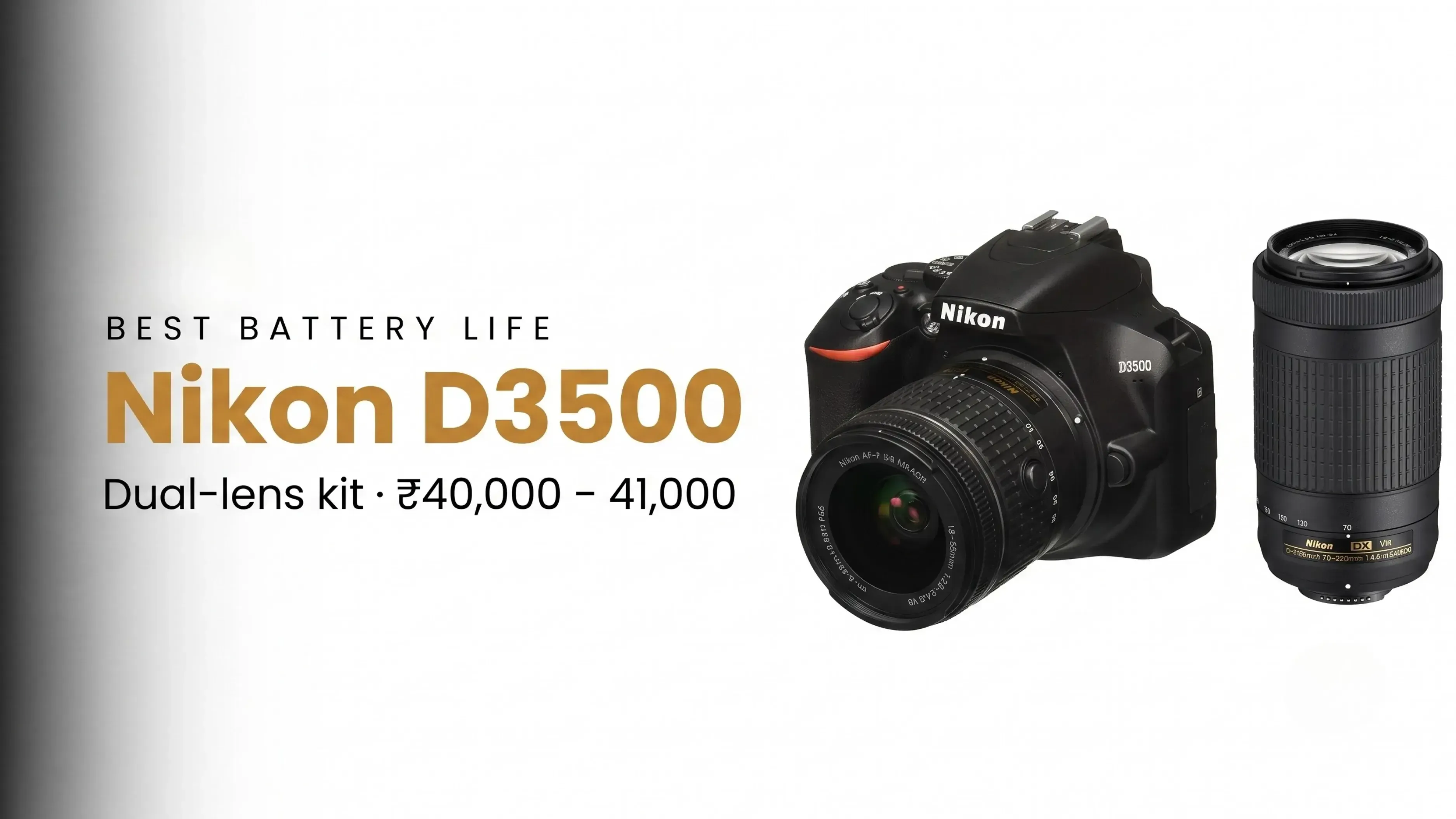
Nikon D3500 (dual-lens kit) ₹40,000–41,000 — Best battery life for pure stills
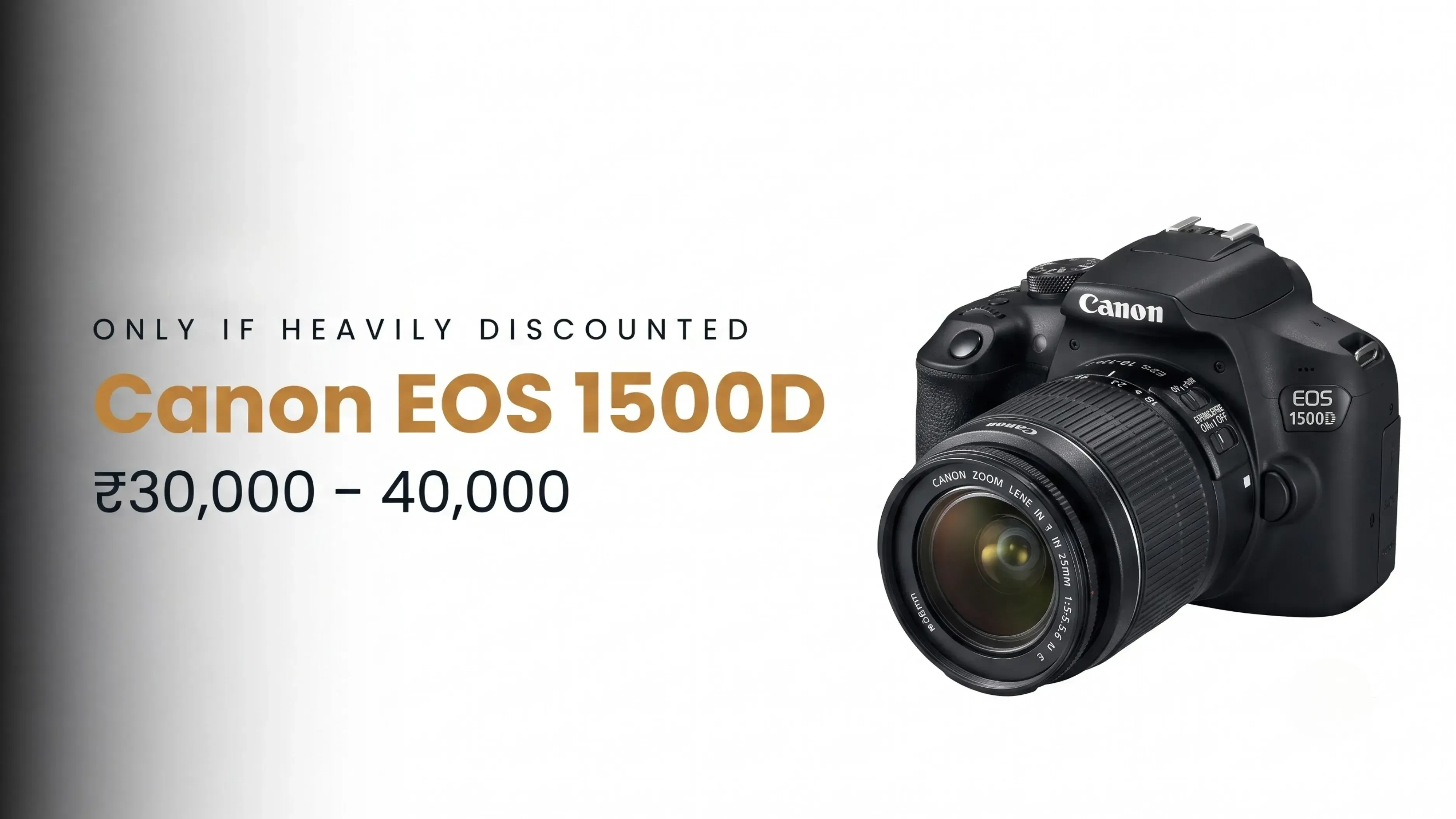
Canon EOS 1500D (18-55mm kit) ₹30,000–40,000 — Only if it’s heavily discounted
Specifications at a Glance
Model
Sensor & Processor
Max Video
Autofocus
Screen
Battery (shots)
Approx. Price (₹)
Canon EOS R100
24.1MP APS-C, DIGIC 8
4K 24p (cropped), Full HD 60p
Dual Pixel AF, 143 zones
Fixed, non-touch + EVF
~370
43,000 to 47,000
Canon EOS 200D II
24.1MP APS-C, DIGIC 8
4K 24p (cropped), Full HD
Dual Pixel AF
Vari-angle touchscreen
~1,070
48,000 to 49,000
1. Canon EOS R100: Best Overall for Most Beginners
Best for: Anyone who wants a modern, lightweight mirrorless camera and plans to grow into Canon’s current lens system.
The R100 is the easiest camera here to recommend because it’s the only pick built on Canon’s current RF mirrorless mount rather than an ageing DSLR line. It’s tiny (around 356g body), simple to shoot in full auto, and the 24.1MP APS-C sensor delivers clean, sharp images that look a clear step above any phone. For a student, traveller or new creator, it’s the most future-proof buy in this list.
Key specs
24.1MP APS-C CMOS sensor, DIGIC 8 processor
Dual Pixel AF with 143 focus zones and Eye Detection (in Full HD)
4K 24p video (cropped) and Full HD up to 60p
6.5 fps continuous shooting
Built-in electronic viewfinder, Wi-Fi and Bluetooth
Comes with the retractable RF-S 18-45mm f/4.5-6.3 kit lens
The Catch: The rear screen is fixed and not touch-sensitive, which feels dated and makes vlogging awkward since it can’t flip to face you. The 4K mode is cropped and uses slower contrast-detect autofocus, so it’s best treated as a photo-first camera. The native RF-S lens range is also still small, so you’ll lean on adapted EF lenses or the kit lens for a while.
2. Canon EOS 200D II: Best All-Round DSLR
Best for: Beginners who want a proper DSLR feel, a flip-out touchscreen, and reliable autofocus for both photos and casual video.
If you want a traditional camera with an optical viewfinder and real buttons, the 200D II (also called the EOS SL3 or Rebel SL3 in other countries) is a smart DSLR pick. Its main advantage over older Canon and Nikon DSLRs is Canon’s excellent Dual Pixel autofocus and a fully rotating touchscreen, which makes live-view shooting and selfies much easier. The battery life is also excellent, with over 1,000 shots per charge.
Key specs
24.1MP APS-C CMOS sensor, DIGIC 8 processor
Dual Pixel AF (fast, accurate live-view focus)
Vari-angle touchscreen LCD
4K 24p video (cropped) plus Full HD
Wi-Fi and Bluetooth
Comes with the EF-S 18-55mm STM kit lens
The Catch: It sits right at the top of the budget, so bank offers matter. As with the R100, the 4K is heavily cropped and drops back to slower autofocus, so don’t buy it for 4K. And it’s a DSLR — bigger and heavier than the mirrorless R100, on a lens mount Canon is slowly winding down.
3. Nikon D5600: Best for Reach and Versatility
Best for: Photographers who want two lenses out of the box to cover everything from wide shots to distant subjects, without spending more later.
The D5600 is a great value if you want flexibility right from the start. The dual-lens kit usually includes an 18-55mm lens for everyday and portrait photos, plus a 70-300mm telephoto lens for wildlife, sports, and travel. Buying these separately would cost much more. The image quality from Nikon’s 24.2MP sensor is excellent, the rotating touchscreen is useful, and the 39-point autofocus system is better than the one in the entry-level Nikon below.
Key specs
24.2MP APS-C CMOS sensor, EXPEED 4 processor
39-point autofocus system
Vari-angle touchscreen LCD
Full HD 1080p up to 60fps
SnapBridge wireless connectivity, strong ~970-shot battery life
Typically sold with 18-55mm + 70-300mm lenses
The Catch: No 4K video at all — it maxes out at Full HD. Live-view autofocus is slow because it relies on contrast detection, so it’s much happier shooting through the optical viewfinder. It’s also an older model that Nikon is phasing out, so treat it as a stills-first workhorse rather than a hybrid photo/video tool.
4. Nikon D3500: Best Battery Life for Pure Stills
Best for: Absolute beginners on a tighter budget who mainly want to learn photography and shoot stills, with battery life that just won’t quit.
The D3500 is the easiest camera here for beginners. It’s lightweight, simple, and its battery life is truly impressive, giving you about 1,550 shots on one charge—more than twice what most mirrorless cameras offer. Nikon’s beginner “Guide Mode” helps you learn the settings, and the 24.2MP sensor delivers image quality as good as more expensive models in good light. At around ₹40,000 for a dual-lens kit, it also leaves you with some budget left over.
Key specs
24.2MP APS-C CMOS sensor, EXPEED 4 processor
11-point autofocus system
Full HD 1080p up to 60fps
Exceptional ~1,550-shot battery life
Lightweight, beginner-friendly Guide Mode
Usually sold as a dual-lens kit
The down: This is the most basic option. There’s no 4K video, no touchscreen, a fixed screen that doesn’t flip, a simple 11-point autofocus system, and no microphone input for video. It’s a great camera for learning still photography, but it won’t offer as much room to grow as the R100 or 200D II.
5. Canon EOS 1500D: Only If It’s Heavily Discounted
Best for: Bargain hunters, but only if the price drops well below its usual level.
We’re including the 1500D (also called the EOS T7 in some places) because it often appears in “best budget camera” searches, and it’s important to be clear about what you get. It’s affordable, has the same 24.1MP resolution on paper, and takes decent photos in daylight. However, the technology inside is outdated.
The Catch: The old DIGIC 4+ processor, 9-point autofocus, and no 1080/60p video make this camera feel a generation behind the others. At full price, it’s not a good deal. If your budget is only around ₹30,000, it’s understandable, but if you can spend a bit more, the Canon R100 or a used higher-end model will be much better for the long run. Only consider the 1500D if you find a big discount.
Stretch Your Budget by Selling Your Old Device
Here’s a practical tip that most buying guides miss: you can stretch a ₹50,000 budget by selling the device you no longer use.
Old smartphones, previous cameras, or laptops you’ve upgraded from can still be sold for good money. Turning these into cash is the easiest way to move up from a basic camera to the R100 or R200D II. Instead of letting your old devices lose value in a drawer, get a quick quote and use that money for the camera you really want. This way, you avoid settling and get a camera you won’t need to replace soon, and you can check Cashkr if you are willing to sell your old devices.
How to Pick the Right Camera Under ₹50,000
First, choose between a mirrorless camera and a DSLR. Mirrorless cameras like the R100 are lighter and smaller, and they use methods that the makers are continually upgrading. DSLRs such as the Canon 200D II and Nikon D5600/D3500 have longer battery life, an optical viewfinder, and typically cheaper lenses, but they are also older technology that is being phased out.
Focus on the sensor, not just the megapixels. Nearly all these cameras have 24MP, which is more than enough. What really makes a difference is the autofocus quality, how new the processor is, and how good the images look straight out of the camera. A newer processor is always better than just having more megapixels.
Pick a camera that fits what you want to shoot. If you plan to vlog or make videos, a flip-out touchscreen (like on the 200D II or D5600) is very helpful. For wildlife or sports, the D5600’s twin-lens kit gives you more range. If you’re just starting with still photos, the D3500’s battery life and ease of use are perfect.
Don’t forget the lens is important too. A camera’s performance depends a lot on the lens you use. The dual-lens kits (D5600, D3500) let you try different styles right away, while the R100 and 200D II come with a single, flexible zoom lens to keep things simple.
Final Verdict
If you want a quick answer, go for the Canon EOS R100. It’s the most current, portable, future-ready camera in this price range, and most novices will still be delighted with it after a year or two. Its excellent image quality, compact size and use of Canon’s latest lens system make it the safest all-round choice.
Pick one of the other cameras if you have specific needs. Choose the Canon EOS 200D II if you want a DSLR with a flip screen and top autofocus for both photos and casual video. The Nikon D5600 is a good choice if you like the extra reach of the twin-lens kit and mostly shoot stills. The Nikon D3500 is the best budget camera for learning, thanks to its unmatched battery life. Only consider the Canon EOS 1500D if you find it at a very low price.
No matter which camera you choose, it’s best to buy the best one you can afford—the one you’ll grow into, not out of. If the camera you want is just above your budget, selling unused gear is the easiest way to make up the difference and get a camera you won’t need to replace soon.
FAQs
1. Which is the best camera under Rs. 50,000 in India in 2026?
Best overall for most beginners: Canon EOS R100. It's a modern, lightweight mirrorless camera with the current Canon lens mount, clear image quality, and simple controls. If you’re looking for a DSLR particularly, the Canon EOS 200D II is the best all-rounder.
2. Should I buy a DSLR or a mirrorless camera as a beginner?
For most people in 2026, mirrorless is the better long-term bet as the cameras are smaller and the technology is where the manufacturers are putting their money. If you’re looking for longer battery life, an optical viewfinder, or access to a huge pool of cheap used lenses, DSLRs still make sense.
3. Is a bigger megapixel count better?
Not really. Nearly every camera in this range is around 24MP, which is more than enough for prints and social media. Sensor performance, autofocus and image processing matter far more than a higher megapixel number.
4. Can these cameras shoot 4K video?
The Canon R100 and 200D II offer 4K, but it's cropped and uses slower autofocus, so it's best for occasional clips rather than serious video. The Nikon D5600 and D3500 shoot only Full HD. If video is your main goal, budget a little more for a dedicated vlogging-focused body.
5. Is it worth buying a used camera under ₹50,000?
Yes, often. For the same price you can get a higher-end certified pre-owned model with superior focusing, build quality, and image performance than a new entry-level camera. The trick is to buy from a reliable source who provides quality assurance and warranty.
6. Which camera brand is best for beginners in India — Canon or Nikon?
Both are great for beginners and neither is definitely better. Canon generally has easier menus and better live-view autofocus (Dual Pixel AF), which is useful for video and selfies. Nikon is frequently better on battery life and value in dual-lens sets. “Don’t buy the badge, buy the exact model that meets your needs.
7. Do these cameras come with a lens, or do I need to buy one separately?
Every camera on this list comes with at least one lens, so you can start shooting straight away. The Nikon D5600 and D3500 are usually sold as dual-lens kits (a standard zoom plus a telephoto), while the Canon R100, 200D II and 1500D come with a single versatile zoom lens.
8. Is a camera really better than a modern smartphone for photos?
A good phone is more than capable of casual snaps during the day. However, a dedicated camera beats it in low light, provides subject blur (bokeh) for portraiture, offers zoom range, and provides the creative control of interchangeable lenses and manual settings. If you want to learn photography properly, or print your work, a real camera is still a major upgrade.
9. What accessories should I buy along with my first camera?
At minimum, get a fast SD card (look for a U3/V30-rated card for video), a spare battery, and a basic cleaning kit. A padded bag protects your gear, and a lightweight tripod helps with low-light and video. You don't need to buy everything at once — start with a card and spare battery, then add the rest as you go.
10. Can I use these cameras for YouTube or Instagram videos?
Yes, especially those with a flip-out screen, like the Canon 200D II and Nikon D5600, which allow you to frame yourself while filming. The Canon R100 also takes clean video, but its screen is fixed. If you’re more into video than stills, you might want to stretch your budget a little for a specialized vlogging camera with better 4K autofocus.
If you want to sell your old devices then, click here.
 Yaskar Jung ShahUpdated: Aug 16, 2026·16 min read