Best Mobile Phones Under Rs. 70,000 in India: June 2026 Rankings
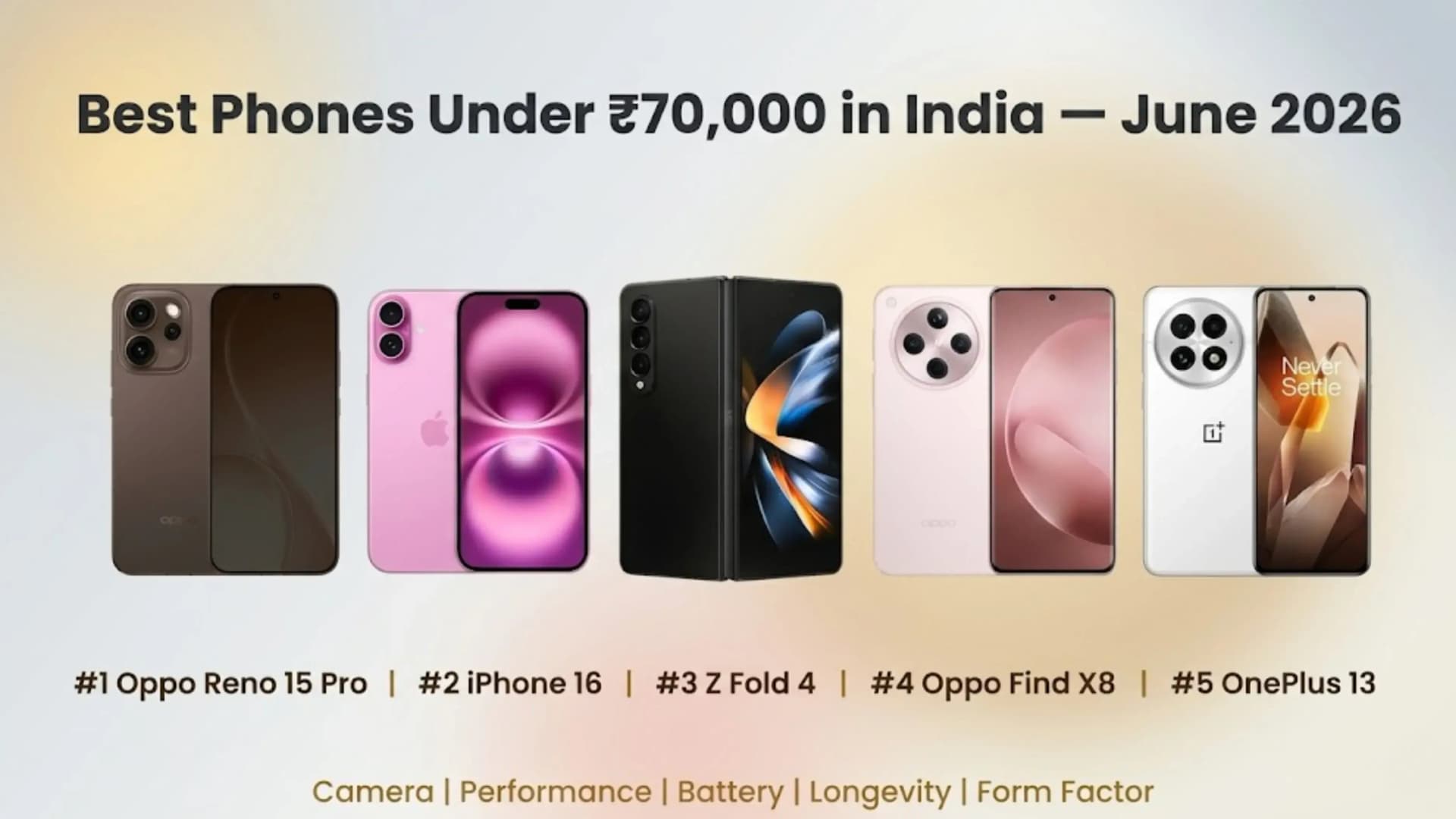
Phones under Rs. 70,000 are designed to give you high-end features without the full flagship price. In June 2026, top picks in this range include the Oppo Reno 15 Pro with a 200MP camera, the Apple iPhone 16 with its A18 chip and excellent video, and the Samsung Galaxy Z Fold 4 with its foldable design.
As of June 2026, five phones stand out under Rs. 70,000. The Oppo Reno 15 Pro is known for its 200MP camera. The Apple iPhone 16 is best for software updates and video. The Samsung Galaxy Z Fold 4 brings a foldable design. The Oppo Find X8, at Rs. 69,999, offers the Dimensity 9300 chip and Hasselblad cameras for a balanced experience. The OnePlus 13, also at Rs. 69,999, has the most complete specs, including a Snapdragon 8 Elite, QHD display, ultrasonic fingerprint sensor, and a 6,000mAh silicon-carbon battery.
These are the top five phones under Rs. 70,000 in India for June 2026. Three are highly recommended, while two have some drawbacks due to older hardware at this price.
Best phones under Rs. 70,000 for June 2026: 1. Oppo Reno 15 Pro (~Rs. 69,999) with a 200MP camera and Dimensity 8450, best overall. 2. Apple iPhone 16 (Rs. 69,900) with the A18 chip, long iOS support, and top video. 3. Samsung Galaxy Z Fold 4 (Rs. 69,999) with a foldable display. 4. Oppo Find X8 (Rs. 69,999) with Dimensity 9300, Hasselblad cameras, and a 5,600mAh battery. 5. OnePlus 13 (Rs. 69,999) with Snapdragon 8 Elite, QHD display, and a 6,000mAh silicon-carbon battery, with the fewest flaws.
Oppo Reno 15 Pro: Best Overall Phone Under Rs. 70,000
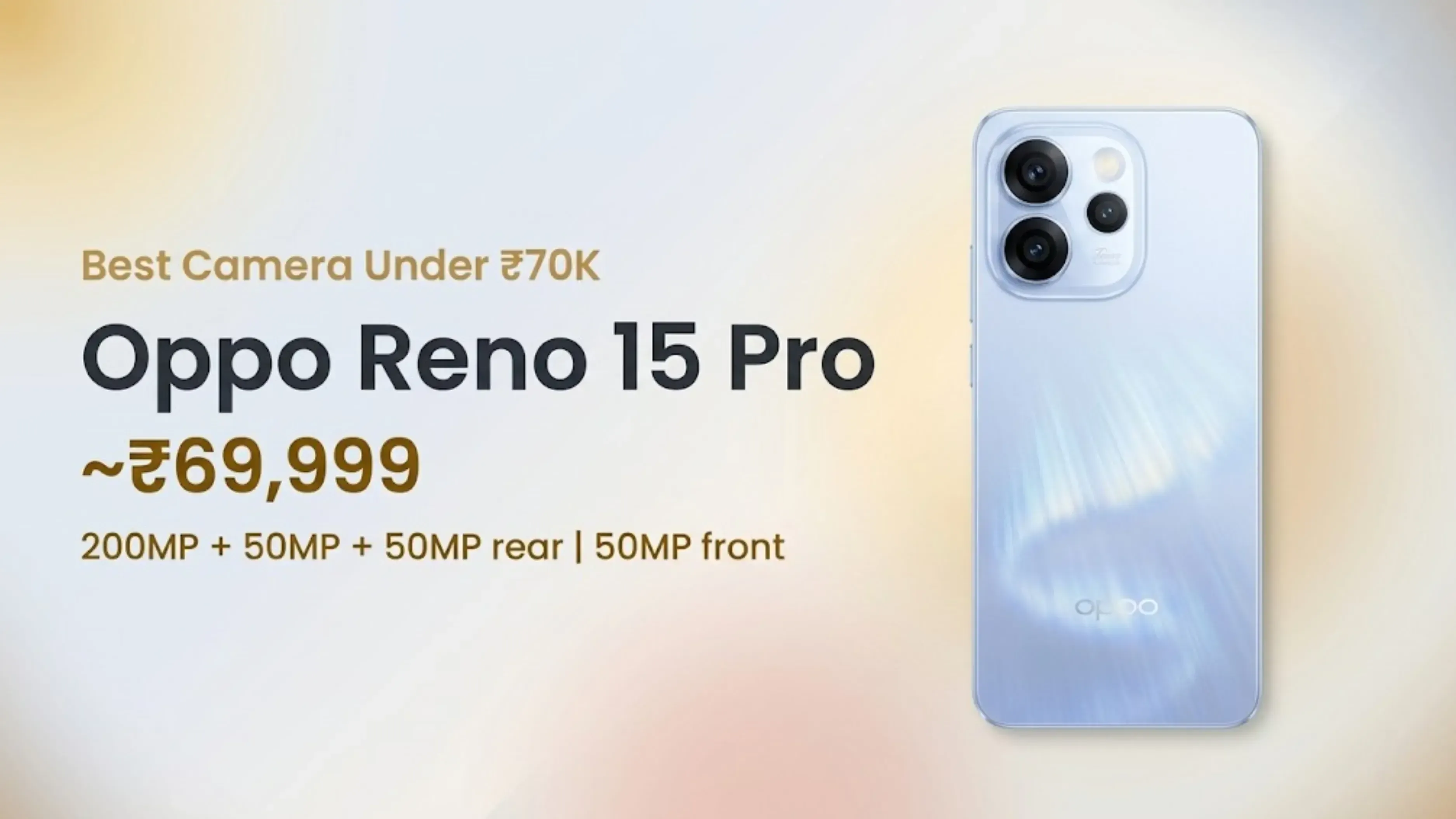
The Oppo Reno 15 Pro is the strongest all-round phone under Rs. 70,000 in India in June 2026. The camera system is the headline: a 200MP primary sensor alongside two 50MP secondary cameras and a 50MP front camera. At 200MP the primary camera captures images with exceptional detail that can be cropped aggressively without quality loss, producing usable close-ups from a standard wide-angle shot without a telephoto lens. The two additional 50MP cameras give the Reno 15 Pro versatility across photography scenarios that most competing phones at this price cannot match.
The MediaTek Dimensity 8450 chipset delivers strong performance for gaming, multitasking, and camera processing. While it is not the most powerful chip under Rs. 70,000—the Apple A18 in the iPhone 16 is better for single-core tasks and sustained efficiency—it is a great choice for Android users who want top camera hardware and a premium AMOLED display. The 6.78-inch 120Hz AMOLED screen is one of the largest here and is excellent for watching media and reviewing photos.
The Oppo Reno 15 Pro is the specific recommendation for buyers who are choosing between Android phones at this price and prioritise the camera hardware specification above all else. The 200MP primary is a genuine differentiator that no other phone in this ranking matches. For buyers who are deciding between Android and iOS at this price, the comparison with the iPhone 16 below is essential reading before making the final decision.
200MP primary camera At 200MP the Reno 15 Pro’s primary camera captures more pixel data per shot than any competing phone in this price range. The practical benefit is aggressive cropping without quality loss: a shot taken at full 200MP resolution can be cropped to a quarter of its original frame size and still produce a usable high-resolution image. For everyday use, the camera uses pixel binning to output lower-resolution files with improved light-gathering per pixel.
Apple iPhone 16: Best Phone Under Rs. 70,000 for iOS Users
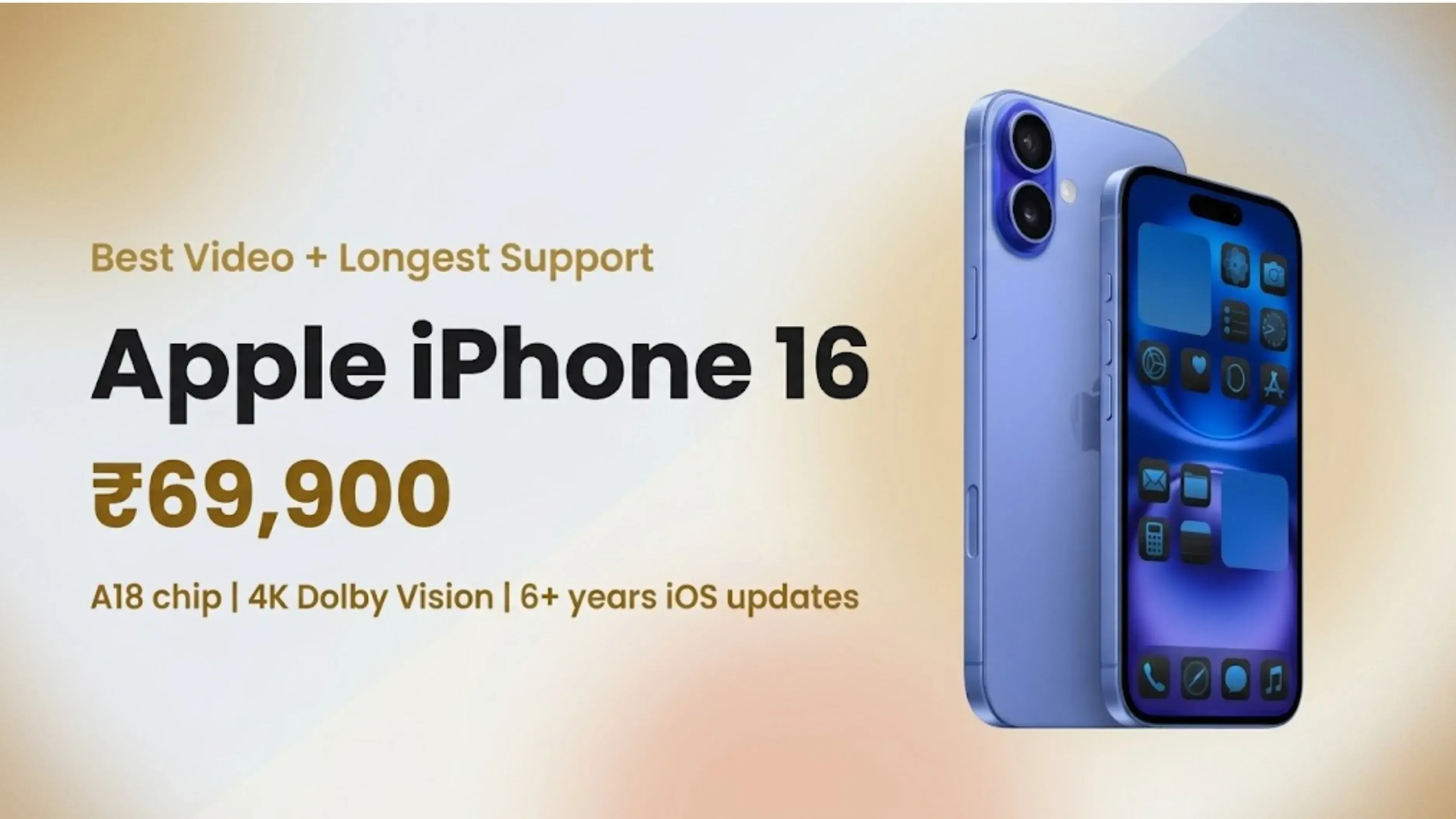
The Apple iPhone 16 at Rs. 69,900 is the best phone under Rs. 70,000 in India for buyers committed to or open to the Apple ecosystem. The A18 chip is the most powerful processor in this entire comparison, delivering better single-core performance than the Dimensity 8450 in the Oppo and the Snapdragon 8 Plus Gen 1 in the Z Fold 4. Apple’s neural engine in the A18 powers the most capable on-device AI processing available in any phone at this price, enabling features like Action Mode video stabilization, Photonic Engine processing and Apple Intelligence features that Android phones in this segment cannot replicate in the same form.
The camera system is a 48MP primary and 12MP ultrawide. The megapixel count looks modest compared to the Oppo Reno 15 Pro’s 200MP, but the comparison is not fair without the processing context. Apple’s Photonic Engine processes images through multiple computational passes using the A18’s image signal processor, producing output that is consistently well-exposed, natural in color and sharp in detail across a wider range of conditions than most competing cameras at this price. Apple’s 4K Dolby Vision video recording is the best video output available from any phone in this ranking, with color grading, stabilization and audio quality that content creators specifically choose iPhones for.
The iPhone 16’s most significant advantage over the Android competition at this price is software longevity. Apple commits to iOS updates for six or more years from launch. The iPhone 16 launched with iOS 18 in 2024 and will receive updates into 2030 or beyond. An Android phone at this price typically receives two to three years of OS updates. For buyers who keep a phone for 3 to 4 years, the iPhone 16’s software support extends the hardware's useful life, unlike any Android phone in this comparison.
Apple A18 chipset The A18 is built on a 3nm process and is the most efficient chip in this comparison. It handles everything from everyday tasks to 4K ProRes video recording to on-device AI workloads with less thermal throttling over sustained use than competing chips. The performance ceiling is higher than that of the Dimensity 8450 and is competitive with, or even above, the Snapdragon 8 Plus Gen 1 in the Z Fold 4.
6-plus years of iOS updates. Apple’s software support commitment means the iPhone 16 will continue receiving new iOS features, security patches, and camera algorithm improvements into 2030 or beyond. A camera that improves with software updates, a phone that stays secure for years, and an operating system that continues to add features to existing hardware are practical values that the hardware specification alone does not capture.
Samsung Galaxy Z Fold 4: Best Foldable Option Under Rs. 70,000
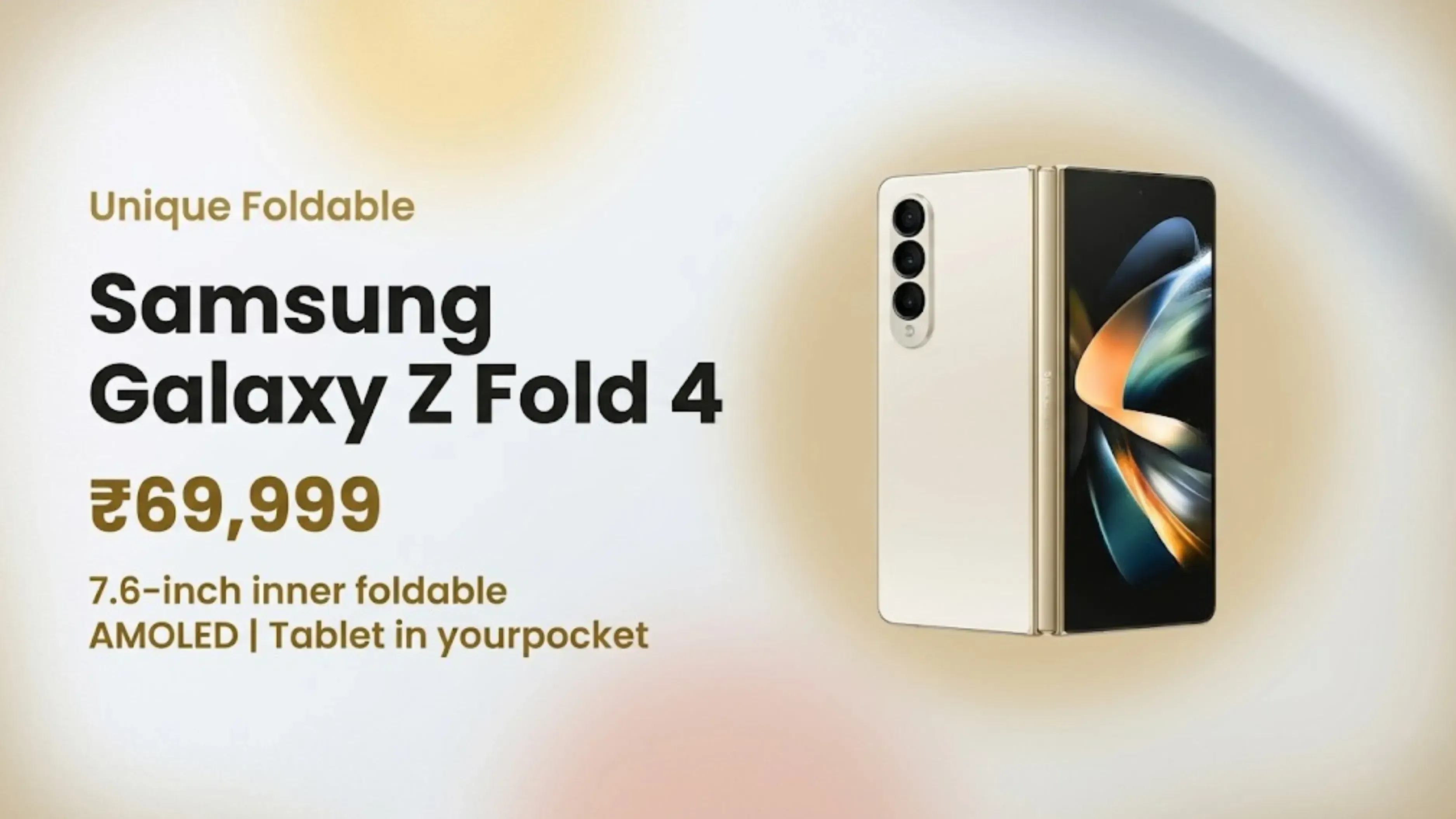
The Samsung Galaxy Z Fold 4 at Rs. 69,999 is the most physically unique phone on this list and is priced this way because newer Galaxy Z Fold generations have pushed it down from its original launch price. The 7.6-inch inner foldable AMOLED display is the defining feature: when unfolded it provides a tablet-sized screen for multitasking, gaming and media consumption that no traditional slab phone at this price can match. Samsung’s App Continuity, Flex Mode and split-screen implementation make the unfolded display genuinely useful for productivity rather than a novelty.
The triple rear camera covers the standard focal lengths with 50MP, 10MP and 12MP sensors. The camera quality is strong but not the highlight of this phone: buyers who want the best camera hardware should choose the Oppo Reno 15 Pro and buyers who want the best video and software experience should choose the iPhone 16. The Z Fold 4’s camera is adequate for everyday photography but not the reason to buy this phone. The reason to buy this phone is the 7.6-inch unfolded screen.
The significant caveat is the Snapdragon 8 Plus Gen 1 chip. This is a 2022 chipset that was excellent at launch but is now three years old. At Rs. 69,999 in 2026, the buyer is paying for the foldable display form factor, not for cutting-edge chip performance. The Z Fold 4 also runs an older version of One UI based on Android and Samsung’s update support for this generation is approaching its limit. Buyers who can stretch to a newer Galaxy Z Fold generation will get a more current chipset with the same foldable experience advantage.
Samsung Galaxy Z Fold 4 chipset context: The Snapdragon 8 Plus Gen 1 was Samsung’s flagship chip in 2022. In 2026 it competes below the Snapdragon 8 Gen 3 and 8 Elite used in current flagship phones. For the foldable display use cases, the chip remains capable, but for intensive gaming benchmarks and the most demanding 3D workloads, buyers will notice the generational gap compared to current chips in the Oppo and iPhone at similar prices.
Oppo Find X8: Best All-Round Android Phone Under Rs. 70,000
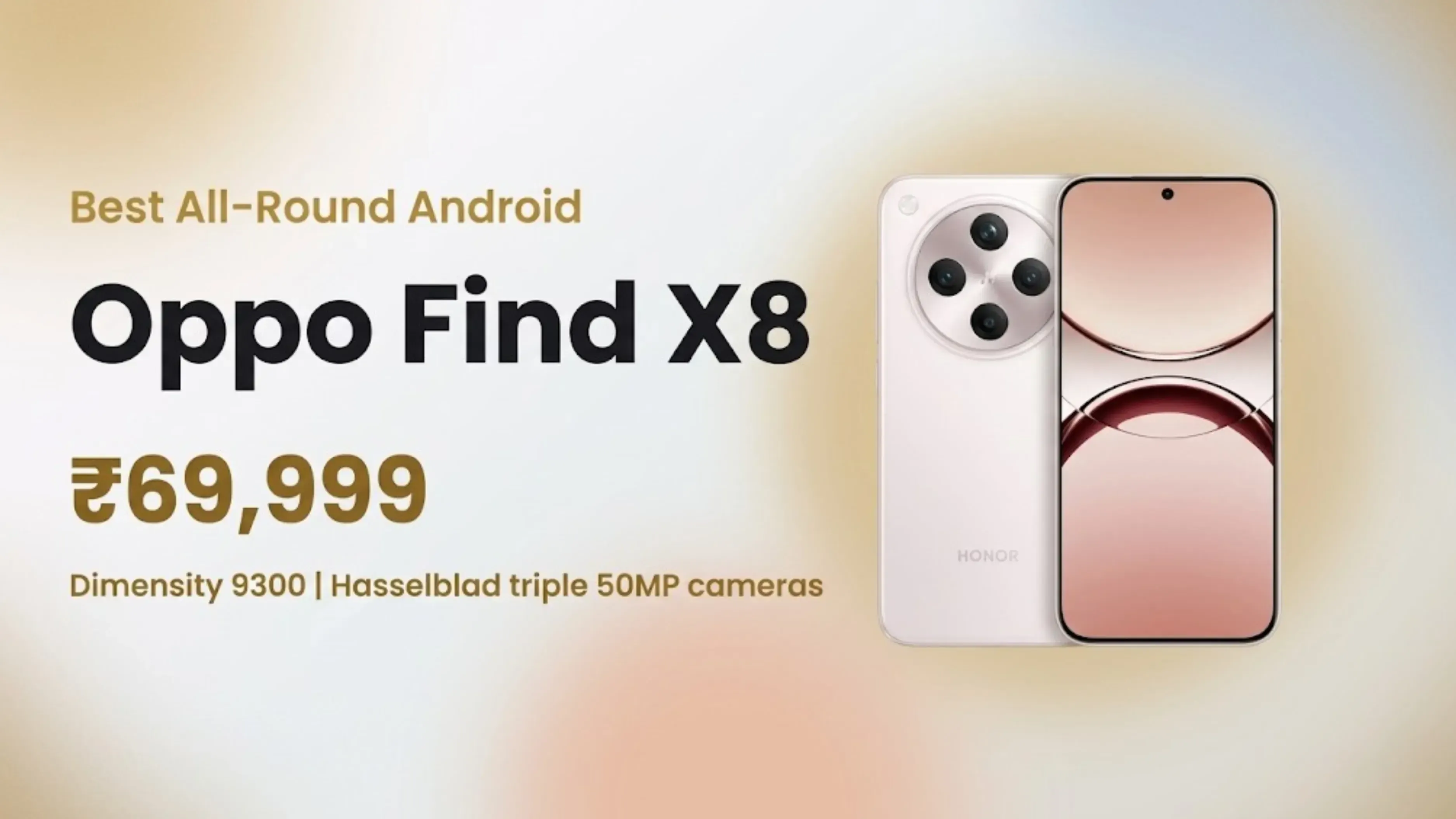
The Oppo Find X8 at Rs. 69,999 is powered by the MediaTek Dimensity 9300, a flagship-tier chip that handles all everyday tasks, gaming and camera processing at the top level available in 2024 and 2025 phones. The camera system is Hasselblad-tuned across all three lenses: a 50MP primary, a 50MP periscope telephoto and a 50MP ultrawide. Hasselblad’s involvement covers colour calibration, optical design and portrait rendering, producing outputs that are natural, accurate and consistent across all three focal lengths in a way that cameras without professional colour tuning often do not achieve.
The 5,600 mAh silicon-carbon battery with 80W wired and 50W wireless charging provides practical endurance. Silicon-carbon chemistry enables more energy storage in a slimmer chassis than standard lithium-ion cells, contributing to the Find X8’s slim design without a battery capacity trade-off. The software experience on ColorOS is one of the most optimized Android implementations available, with smooth animations, low latency, and consistent performance that Oppo has refined through multiple software updates since launch. The Find X8’s honest limitation, as described by those who have used it, is that it does not lead on any single specification: the display is FHD Plus rather than QHD, and it does not have an ultrasonic fingerprint scanner. For buyers who want the best available specification in every category, the OnePlus 13 below addresses both of those gaps. For buyers who want a well-rounded, beautifully built phone where every element works well together rather than individual specifications leading the segment, the Oppo Find X8 is the recommendation.
Hasselblad triple camera system. Hasselblad’s color calibration ensures the 50MP primary, 50MP periscope telephoto, and 50MP ultrawide all produce consistent color output that looks cohesive whether the buyer switches between cameras or mixes shots from different lenses in the same session. The 50MP periscope telephoto provides optical zoom at flagship quality for portrait and distance photography.
OnePlus 13: Most Complete Specs Under Rs. 70,000
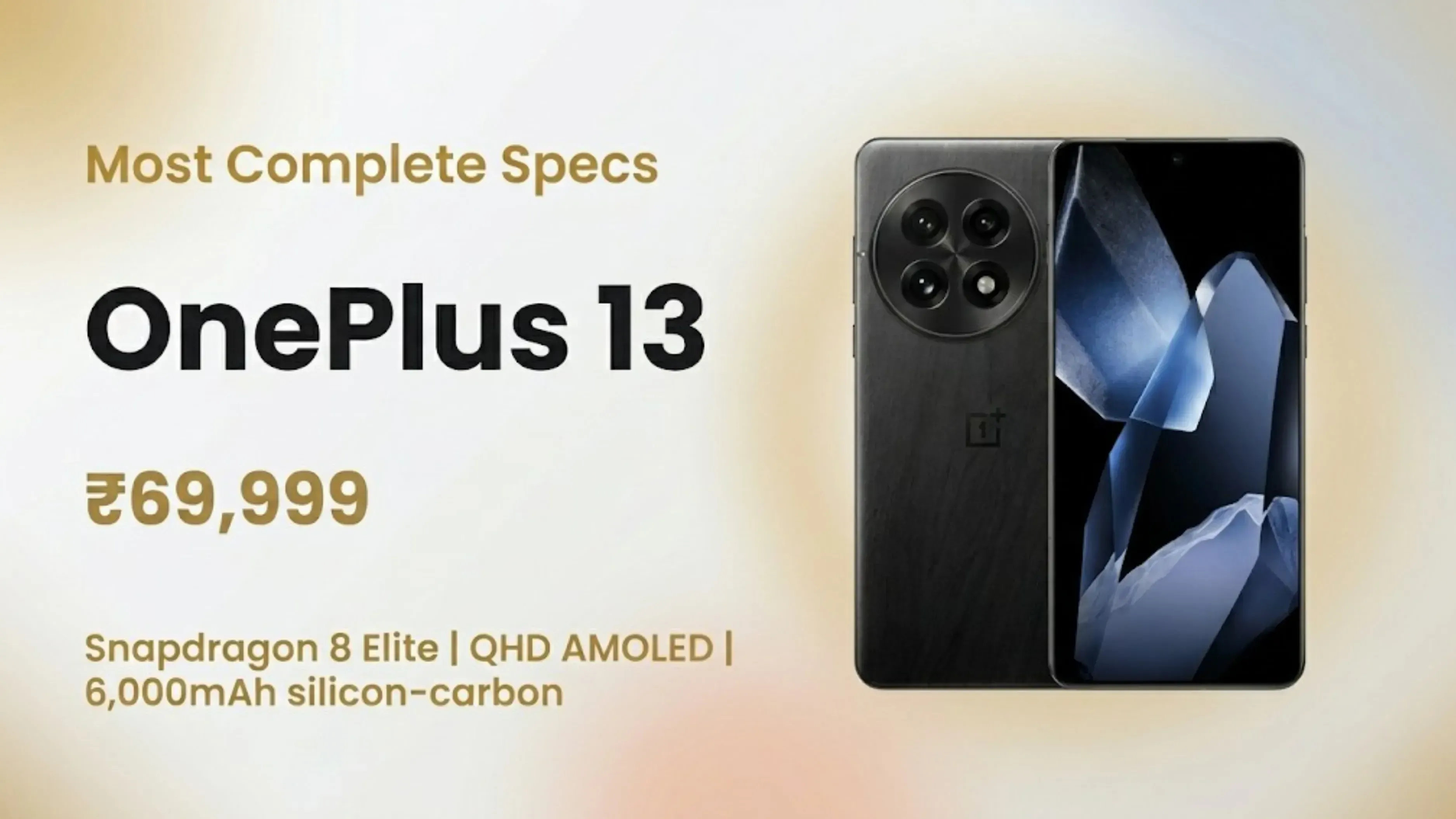
The OnePlus 13 at Rs. 69,999 is the most comprehensively specified phone in this entire list. Where the other four phones have at least one noticeable gap or compromise, the OnePlus 13 has the fewest. The Snapdragon 8 Elite is the most powerful chip in this comparison, above both the A18 in the iPhone 16 (for Android workloads) and the Dimensity 9300 in the Find X8. The QHD AMOLED display at 120Hz delivers more detail than any FHD Plus panel on this list and is one of the most accurate large displays available for under Rs. 70,000. The ultrasonic fingerprint scanner is the most accurate and fastest biometric available on any phone in this price bracket.
The 6,000mAh silicon-carbon battery is the largest in this comparison by a meaningful margin. Silicon-carbon chemistry delivers more energy in a slimmer form factor than standard lithium-ion, and 6,000 mAh in a OnePlus 13 chassis is notable for how slim and light the phone remains despite the capacity. The 100W wired and 50W wireless charging fill the large battery in well under an hour for wired charging and roughly 75 minutes for wireless charging. The Hasselblad-tuned triple camera covers all three standard focal lengths and produces strong results across the range.
The OnePlus 13 is the right choice for buyers who want no compromises at Rs. 70,000. The only reasons to choose a different phone at this price are specific preference for the Apple ecosystem (iPhone 16), the unique foldable form factor (Z Fold 4), Oppo’s camera processing character (Find X8) or the 200MP megapixel specification (Reno 15 Pro). For every other buyer who simply wants the best overall Android phone under Rs. 70,000 with the fewest trade-offs, the OnePlus 13 is the answer.
Snapdragon 8 Elite The Snapdragon 8 Elite is Qualcomm’s latest flagship chip and the most powerful Android processor available in any phone at this price. It delivers the highest benchmarks, best gaming performance, and strongest AI processing in this comparison, with excellent thermal management for sustained performance.
QHD AMOLED display. QHD resolution at this screen size delivers noticeably more detail than FHD Plus alternatives, visible in fine text, detailed photos, and UI elements at a normal reading distance. Combined with the 120Hz refresh rate and AMOLED contrast, this is the best display in this comparison for everyday use.
Best Mobile Phones Under Rs. 70,000: Comparing the Top Three Choices
Here is the detailed comparison between the top three genuinely competitive phones in this list:
Spec
Oppo Reno 15 Pro
Apple iPhone 16
Samsung Galaxy Z Fold4
Price
Rs. 69,999
Rs. 69,900
Rs. 69,999
Chipset
Dimensity 8450
Apple A18
Snapdragon 8+ Gen 1
Display
6.78-inch AMOLED, 120Hz
6.1-inch Super Retina OLED
7.6-inch Foldable AMOLED
Main Camera
200MP
48MP
50MP
Rear Cameras
200MP + 50MP + 50MP
48MP + 12MP
50MP + 10MP + 12MP
Front Camera
50MP
12MP TrueDepth
10MP
Battery
Premium battery with fast charging
Optimized battery efficiency
Standard foldable battery
Video Recording
4K
4K Dolby Vision
4K
Software
Android 16, ColorOS
iOS 19 (upgradeable)
Android, One UI
Software Support
2–3 years
5–6 years
3–4 years
Best For
Camera hardware and photography
Apple ecosystem and video recording
Foldable multitasking experience
The table helps clarify the choice. The Oppo Reno 15 Pro stands out for its camera hardware, offering the highest megapixel count across all cameras. The Apple iPhone 16 leads in software updates, video quality, and chip performance. The Samsung Galaxy Z Fold 4 is best for its large display and unique foldable design. Your decision should depend on which of these features matters most to you.
Who Should Buy Which Phone
Buy the Oppo Reno 15 Pro (~Rs. 69,999) if: you want the most camera hardware available under Rs. 70,000 and prefer Android. The 200MP primary and dual 50MP secondary cameras are the strongest camera specification set in this price range. For photography-focused Android buyers who want the maximum megapixel count and a premium display, this is the recommendation.
Buy the Apple iPhone 16 (Rs. 69,900) if you want the best video recording, the most software longevity and the Apple ecosystem. The A18 chip, Dolby Vision 4K video, six-plus years of iOS updates and Apple Intelligence features make the iPhone 16 the most future-proof phone in this comparison and the best choice for buyers who are open to iOS or already use Apple devices.
Buy the Samsung Galaxy Z Fold 4 (Rs. 69,999) if you specifically want the foldable tablet-in-a-phone experience and the 7.6-inch unfolded display for multitasking, gaming and media consumption. Accept the older Snapdragon 8 Plus Gen 1 chip as the trade-off for the foldable form factor. If budget allows, consider a newer Z Fold generation for a more current chipset.
Buy the Oppo Find X8 (Rs. 69,999) if you want a well-rounded, beautifully made Android phone where camera quality, software optimization and everyday smoothness are all strong without any single specification being the obvious hero. The Hasselblad triple camera and Dimensity 9300 make it a strong all-rounder, and Oppo continues to improve it through updates.
Buy the OnePlus 13 (Rs. 69,999) if you want the phone with the fewest flaws under Rs. 70,000. The Snapdragon 8 Elite, QHD display, 6,000mAh silicon-carbon battery, ultrasonic fingerprint and 100W charging give it the strongest overall specification sheet in this comparison. Skip it only if you prefer Oppo’s specific camera character or have a strong preference for another phone’s design.
Final Verdict
The Oppo Reno 15 Pro is the best Android phone under Rs. 70,000 in India for June 2026, especially if camera specs are your top priority. Its 200MP camera is unmatched at this price, and the Dimensity 8450 chip ensures smooth performance. The Apple iPhone 16 is a better long-term pick for those who want longer software support, better video, and the Apple ecosystem. The Samsung Galaxy Z Fold 4 is ideal for buyers who mainly want a foldable phone. All five phones listed here are strong choices for their prices. The Oppo Find X8 is a reliable all-rounder with Hasselblad cameras, and the OnePlus 13 has the most complete specs among Android phones. In June 2026, the Rs. 70,000 range offers its best lineup yet, so the real challenge is choosing between great options, not avoiding bad ones.
Bottom Line: The best mobile phones under Rs. 70,000 in India for June 2026 are: 1. Oppo Reno 15 Pro (~Rs. 69,999) for best camera hardware; 2. Apple iPhone 16 (Rs. 69,900) for iOS, top video, and 6-year updates; 3. Samsung Galaxy Z Fold 4 (Rs. 69,999) for its foldable display; 4. Oppo Find X8 (Rs. 69,999) as the best all-rounder with Hasselblad camera; and 5. OnePlus 13 (Rs. 69,999) for the most complete specs, Snapdragon 8 Elite, QHD, and 6,000mAh battery.
FAQs
1. Which is the best phone under Rs. 70,000 in India in June 2026?
The Oppo Reno 15 Pro, priced at approximately Rs. 69,999,, is the best Android phone under Rs. 70,000 in June 2026, featuring a 200MP triple camera system and a Dimensity 8450 chip. The Apple iPhone 16 at Rs. 69,900 is the best choice for iOS users and buyers who prioritize video quality and long-term software support. Both are strong depending on the buyer’s ecosystem preference.
2. Is the iPhone 16 worth buying under Rs. 70,000?
Yes, particularly for buyers who want long-term software support, the best video recording in this price range and Apple ecosystem integration. The A18 chip is the most powerful in this comparison, iOS receives updates for 6+ years from launch, and the 4K Dolby Vision video is the best available for under Rs. 70,000 on any phone.
3. Is the Samsung Galaxy Z Fold 4 a good buy at Rs. 69,999?
For buyers who specifically want the foldable tablet-in-a-phone experience, yes. The 7.6-inch inner display for multitasking, App Continuity and Flex Mode are unique features not available in any other phone at this price. The trade-off is a 2022 Snapdragon 8 Plus Gen 1 chip and approaching end of software support. If the foldable display is the priority, the Z Fold 4 is still the only foldable at this price.
4. Is the Oppo Find X8 worth buying at Rs. 69,999?
Yes, particularly for buyers who want a well-made, all-round Android phone with strong camera performance and a smooth user experience. The Dimensity 9300 flagship chip, Hasselblad-tuned triple camera and 5,600mAh silicon-carbon battery with wireless charging make it a complete package. The FHD Plus display and optical (not ultrasonic) fingerprint scanner are the honest limitations compared to the OnePlus 13 at the same price.
5. Is the OnePlus 13 the best phone under Rs. 70,000?
For buyers who want the most complete specification set, yes. The Snapdragon 8 Elite is the most powerful Android chip available at this price; the QHD AMOLED display is the best display in this comparison; the 6,000mAh silicon-carbon battery is the largest,; and the ultrasonic fingerprint is the most accurate biometric here. It has the fewest flaws of any phone in this list. Skip it only if you specifically want a different phone’s form factor (Z Fold 4), ecosystem (iPhone 16) or camera character (Oppo Find X8 or Reno 15 Pro).
6. Which has better cameras: the Oppo Reno 15 Pro or the iPhone 16?
The Oppo Reno 15 Pro has higher megapixel specifications, with a 200MP primary camera and dual 50MP secondary cameras. The iPhone 16 has a 48MP primary and 12MP ultrawide but Apple’s Photonic Engine processing and A18 image signal processor produce output that is often more natural, better exposed in difficult lighting and superior in video quality despite lower megapixel counts. For maximum resolution and camera hardware, Oppo wins. For consistent real-world camera performance and video, the iPhone wins.
7. What is the best camera phone under Rs. 70,000 in India?
The Oppo Reno 15 Pro is the best camera phone under Rs. 70,000 on the basis of hardware with 200MP plus dual 50MP rear cameras. For video recording specifically, the iPhone 16 is the best in class with 4K Dolby Vision. For portrait photography, the Oppo’s high-resolution telephoto gives it a strong advantage.
8. Is the Oppo Reno 15 Pro better than the Samsung Galaxy S25 FE for the camera?
The Oppo Reno 15 Pro has significantly higher camera megapixels with 200MP versus the Samsung Galaxy S25 FE’s 50MP primary. Both carry telephoto cameras. The Samsung Galaxy S25 FE’s flagship-derived image processing produces strong real-world results despite the lower megapixel count. The Oppo Reno 15 Pro is the better camera phone for maximum resolution and detail. The Samsung Galaxy S25 FE is the stronger camera phone for reliable processing and video quality.
9. Which phone has the best display under Rs. 70,000?
The Samsung Galaxy Z Fold 4 has the physically largest display at 7.6 inches when unfolded. The Oppo Reno 15 Pro has the largest traditional AMOLED at 6.78 inches with a 120Hz refresh rate. The iPhone 16’s 6.1-inch Super Retina display is the smallest, yet it delivers accurate color and brightness in a compact form. The Z Fold 4 wins on screen area, the Oppo on traditional phone display size and the iPhone on color accuracy.
10. How many years of software updates does the iPhone 16 get?
Apple provides five to six years of iOS updates from the iPhone 16’s 2024 launch date, meaning updates are expected through 2029 to 2030. No Android phone in this comparison offers the same level of update longevity. Samsung provides four years of OS updates for its Galaxy phones and Oppo provides two to three years.
If you want to sell your old devices then, click here.
Stay in the loop
Weekly tech insights in your inbox. No spam, ever.


 Yaskar Jung ShahUpdated: Aug 31, 2026·23 min read