Huawei Nova 16 Pro Launched: 200MP RYYB Camera & Full Specifications.
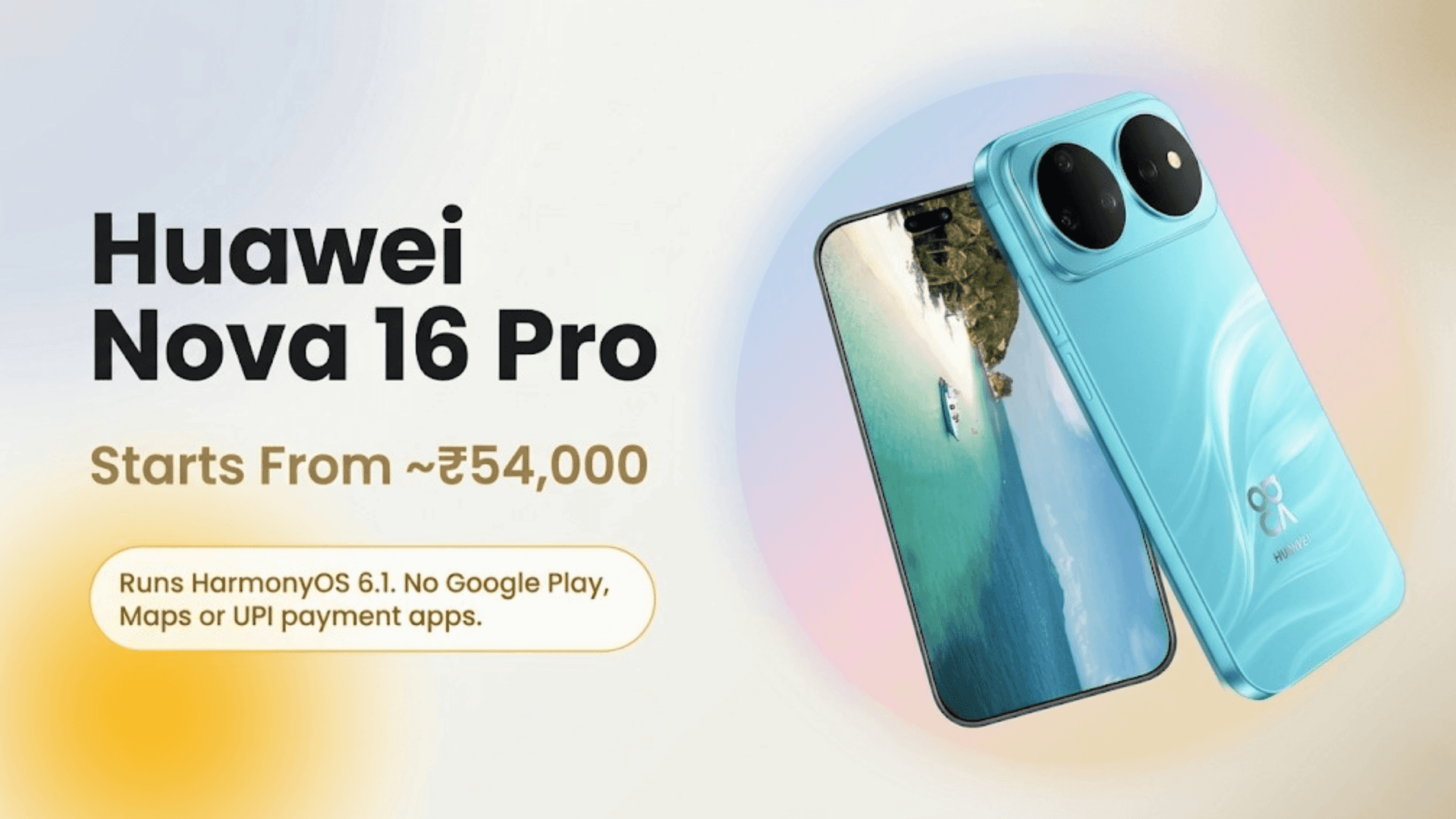
Huawei has launched the Nova 16 Pro in China as the top model smartphone in the Nova 16 series. Compared to the standard Nova 16, the Pro offers major upgrades: a 200MP RYYB main camera with OIS instead of 50MP, a 50MP ultrawide with macro as a third rear lens, an LTPO display with adaptive refresh from 1Hz to 120Hz, Kunlun Glass for better protection, and Wi-Fi 7 instead of dual-band Wi-Fi. The battery and charging stay the same at 7,000mAh and 100W.
In China, the Huawei Nova 16 Pro starts at CNY 3,899 (about Rs. 54,000) for 12GB+256GB, CNY 4,399 (about Rs. 61,000) for 12GB+512GB, and CNY 4,999 (about Rs. 68,000) for 12GB+1TB. It comes in Clear Blue, Iridescent Pearl, Sky White, and Starry Night Black. The phone is available in China, but there is no India launch announcement yet.
Like the standard Nova 16, the Nova 16 Pro uses HarmonyOS 6.1 and does not include Google Mobile Services. The impact of this for Indian buyers is explained later. Below is a full breakdown of the Pro’s upgrades and what they mean in everyday use.
Important for Indian buyers: The Nova 16 Pro runs HarmonyOS 6.1 and does not support Google Mobile Services. This means there is no Google Play Store, Google Maps, YouTube, Gmail, Google Pay, or UPI payment apps that need Play Protect certification. Apps like PhonePe, Paytm, and most bank UPI apps are affected. Please read the HarmonyOS section before deciding to buy.
Huawei Nova 16 Pro specs: CNY 3,899 (~Rs. 54,000) 12GB+256GB | CNY 4,399 (~Rs. 61,000) 12GB+512GB | CNY 4,999 (~Rs. 68,000) 12GB+1TB | China only, India TBC | Clear Blue, Iridescent Pearl, Sky White, Starry Night Black | 6.84-inch FHD+ LTPO OLED 1-120Hz 2160Hz PWM Kunlun Glass | Kirin 9010S 12GB RAM | 200MP RYYB OIS f/1.8 + 50MP periscope 3.7x OIS + 50MP UW macro + Red Maple sensor | 50MP front | Laser AF | 7,000mAh | 100W | IP65 | Wi-Fi 7 | Bluetooth 6 | NFC | HarmonyOS 6.1 | No Google services | 218g
Huawei Nova 16 Pro Price and Availability
The Huawei Nova 16 Pro launches in China at three price points. CNY 3,899 for 12 GB plus 256 GB converts to approximately Rs. 54,000. CNY 4,399 for 12 GB plus 512 GB is approximately Rs. 61,000. The 12GB plus 1TB top configuration at CNY 4,999 is approximately Rs. 68,000. These are CNY-to-INR conversions at current exchange rates, not confirmed India prices. The standard Huawei Nova 16 starts at CNY 2,999 (approximately Rs. 42,000), making the Pro CNY 900 more at base configuration for the upgrade package detailed in this guide.
Four color options are available at launch: Clear Blue, Iridescent Pearl, Sky White and Starry Night Black. The Iridescent Pearl shares the light-shifting finish approach of the standard Nova 16’s Iridescent Mother of Pearl option. Huawei India has not announced the Nova 16 Pro for India at the time of publication.
Display: 6.84-Inch LTPO OLED
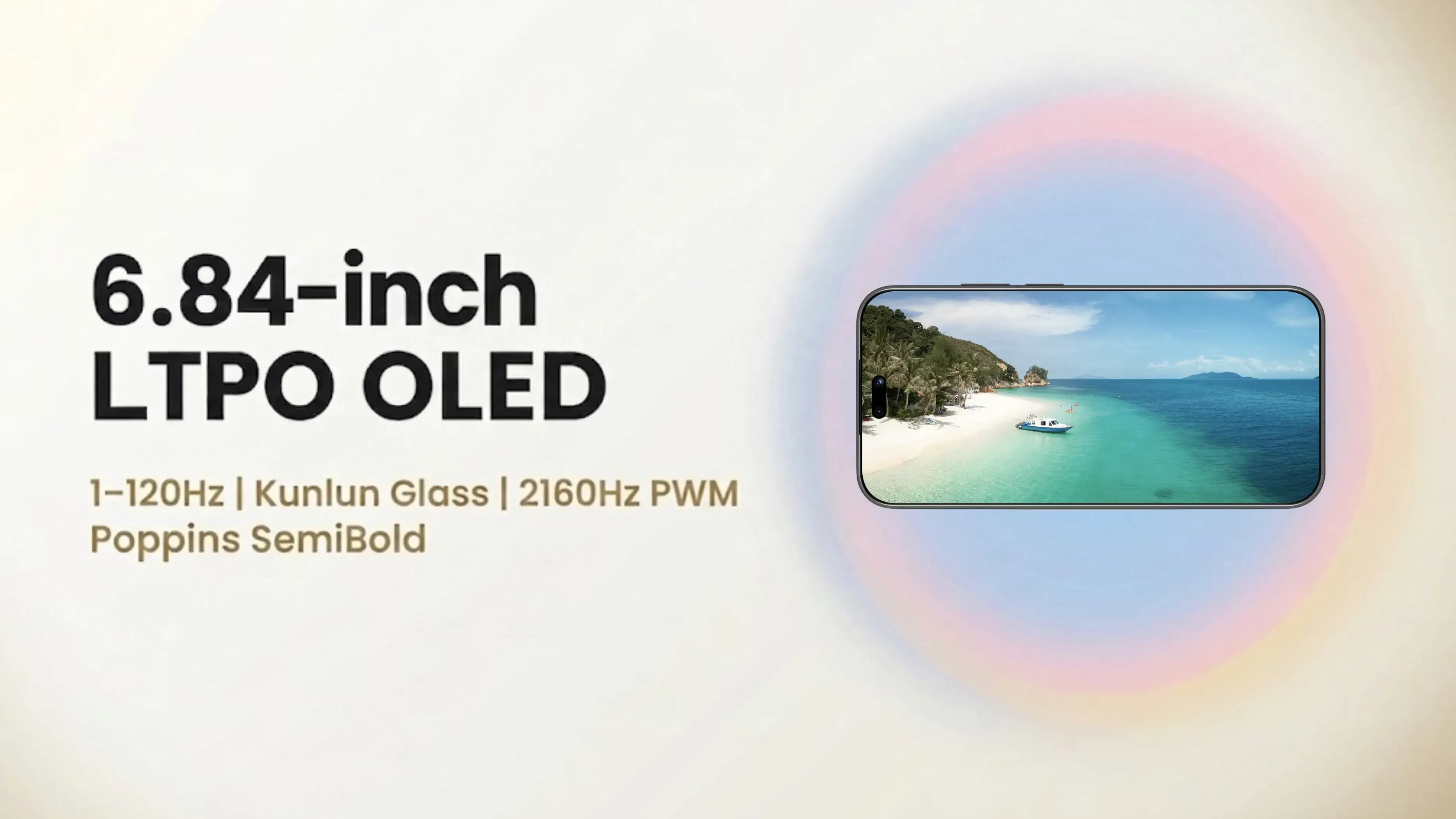
The Nova 16 Pro has a 6.84-inch Full HD+ OLED LTPO display with a resolution of 1320 by 2856 pixels. It supports adaptive refresh rates from 1Hz to 120Hz, 2160Hz PWM dimming, 300Hz touch sampling, and is protected by Kunlun Glass. The main upgrade over the standard Nova 16 is the LTPO technology, which lets the screen lower its refresh rate to 1Hz for things like reading or the lock screen, and quickly return to 120Hz for motion. This helps save battery during low activity without losing smoothness when you need it.
Kunlun Glass is Huawei’s own toughened display glass, designed to be harder and more drop-resistant than standard Aluminosilicate glass. Huawei says Kunlun Glass is much better at resisting drop damage than the glass used in other phones at this price. If you don’t use a screen protector and worry about drops, Kunlun Glass gives you extra protection compared to the standard Nova 16.
The Nova 16 Pro keeps the 2160Hz PWM dimming from the standard model, which helps reduce eye strain during long screen use. At this high frequency, screen flicker is almost gone. With the LTPO refresh rate, the display works well for people who use their phone a lot and for those who want a battery-friendly always-on display.
With a regular 120Hz screen, the display always refreshes at 120 frames per second, no matter what’s on it. An LTPO screen, like on the Nova 16 Pro, can drop to 1Hz or 10Hz for things like reading or checking the time, and goes back up to 120Hz for scrolling or video. This helps save battery during everyday use, so the 7,000mAh battery lasts longer than it would with a fixed 120Hz screen.
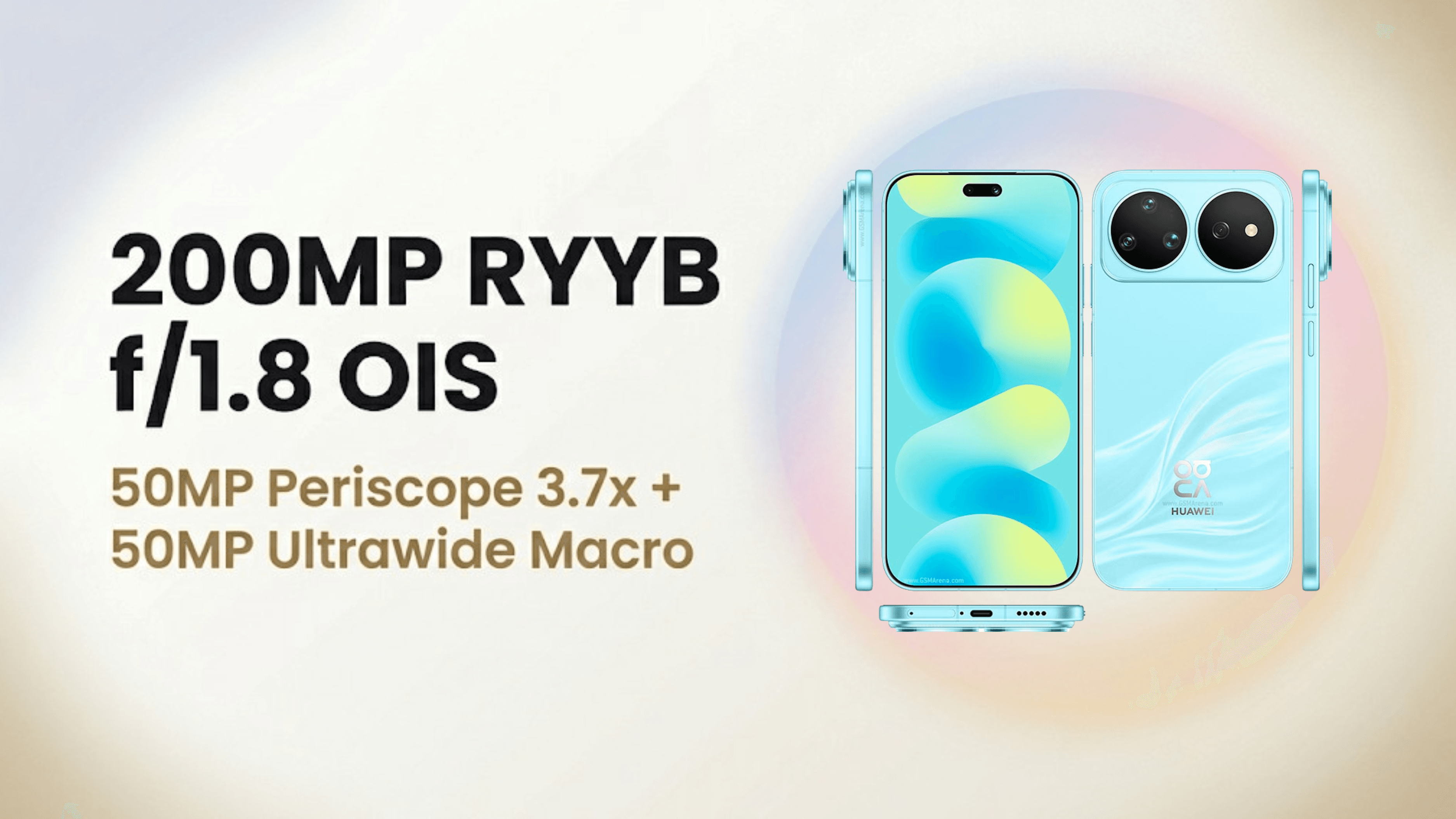
The camera setup is the main upgrade in the Nova 16 Pro compared to the standard Nova 16. The standard model has two rear cameras (50MP main and 50MP periscope), while the Pro has four: a 200MP RYYB main camera, a 50MP RYYB periscope telephoto, a 50MP ultrawide with macro, and a Red Maple color sensor. Here are the full camera details:
200MP RYYB primary with OIS at f/1.8. RYYB is Huawei’s sensor color filter array that replaces the standard green pixels in a traditional RGGB Bayer array with yellow pixels. Yellow pixels capture red and green light simultaneously, increasing total light input to the sensor by approximately 40% compared to a standard sensor under equivalent conditions. The result is better low-light performance at the same physical sensor size. Combined with the 200MP resolution, OIS and f/1.8 aperture, the primary camera is designed for both extreme detail capture in daylight and meaningful low-light advantage over competing standard-sensor cameras.
50MP RYYB periscope telephoto at 3.7x optical zoom. The Pro’s periscope telephoto has a longer optical zoom than the standard Nova 16’s 3.3x, reaching 3.7x. At 50MP and with a RYYB sensor design, the telephoto offers the same light-gathering advantage as the primary. OIS on the telephoto is essential for handheld shooting at zoom distances where camera shake is most amplified. The combination of 3.7x optical zoom and RYYB sensitivity produces telephoto shots that retain detail and color accuracy at distances where standard telephoto cameras show significant noise in challenging light.
50MP ultrawide with macro and Red Maple color sensor. The standard Nova 16 has no ultrawide. The Pro adds a 50MP ultrawide that doubles as a macro lens for close-up photography. The Red Maple color sensor is a dedicated hardware component that measures precise color temperature and scene illumination, feeding this data to the camera software to correct white balance more accurately than software estimation alone. It appears in both the rear and front camera systems, improving color accuracy in both.
Laser autofocus and portrait selfie front camera. Laser autofocus uses a separate sensor that fires an infrared laser beam and measures the time to the reflected light to calculate the exact subject distance, enabling faster, more accurate focus lock than contrast-detection methods, especially in low light and with fast-moving subjects. The 50MP front camera’s portrait selfie designation indicates specific processing tuning for facial photography.
The Huawei Nova 16 Pro carries the same 7,000mAh battery and 100W wired fast charging as the standard Nova 16. At 100W, the 7,000mAh battery takes approximately 40 to 50 minutes to fill from empty. The LTPO display’s efficiency means the Pro potentially delivers longer real-world endurance from the same 7,000mAh than the standard model’s fixed 120Hz panel would, particularly during passive use scenarios like reading and video.
The Pro model upgrades to Wi-Fi 7, while the standard Nova 16 has dual-band Wi-Fi. Wi-Fi 7 works on the 6GHz band as well as 2.4GHz and 5GHz, so you get much faster speeds if you have a Wi-Fi 7 router. This means quicker wireless transfers, less lag for cloud gaming, and better support for many devices at once. The Pro also keeps Bluetooth 6, NFC, full satellite navigation (including NavIC), and a side-mounted fingerprint scanner.
The Nova 16 Pro has the same IP65 rating as the standard model. This means it is fully protected against dust and can handle water jets from any direction, like rain or splashes. However, it is not protected against being dropped in water. For that, you would need a phone with IP68 certification.
HarmonyOS 6.1 and Google Services: The Critical Context for India
The Nova 16 Pro runs HarmonyOS 6.1 and does not include Google Mobile Services due to US trade restrictions on Huawei since 2019. This has a significant impact on Indian buyers and should be considered before evaluating the camera or battery features.
The absence of Google Mobile Services means no access to the Google Play Store, Google Maps, YouTube, Gmail, Google Drive, Google Pay, or any other Google applications. More critically for Indian daily life, UPI payment applications, including PhonePe, Paytm, and most bank-issued UPI apps, require Google Play Protect certification to run on a device. Without this certification, these apps either will not install or will flag the device as uncertified and refuse to process payments. For any Indian buyer who uses their phone for daily UPI transactions, grocery payments, fuel payments, utility bills, or money transfers, this limitation makes the Huawei Nova 16 Pro unsuitable as a primary smartphone regardless of its camera hardware.
Huawei’s AppGallery is an alternative app store with some popular apps, but its selection for India is smaller than the Google Play Store. Many Indian apps, like streaming services, government apps (DigiLocker, UMANG), regional banking, and OTT platforms, are missing or need sideloading, which isn’t always supported. HarmonyOS 6.1 is a smooth and capable system, but the main issue is the lack of apps due to missing Google services.
UPI payment apps like PhonePe, Google Pay, Paytm, and most bank apps need Google Play Protect certification. The Nova 16 Pro cannot run these apps reliably. If you use UPI for daily payments, this phone is not a good choice as your main device, no matter how good the hardware is.
Huawei Nova 16 Pro vs Huawei Nova 16: Is the Pro Worth the Premium
The Huawei Nova 16 Pro costs CNY 900 more at base configuration than the standard Nova 16. Here is what the premium buys:
Feature
Huawei Nova 16
Huawei Nova 16 Pro
Starting Price
CNY 2,999 (~Rs. 42,000)
CNY 3,899 (~Rs. 54,000)
Display
6.68-inch FHD+ OLED, 120Hz
6.84-inch FHD+ LTPO OLED, 1-120Hz
Glass Protection
Aluminosilicate Glass
Kunlun Glass
Primary Camera
50MP RYYB
200MP RYYB, OIS
Ultrawide Camera
None
50MP Ultrawide + Macro
Telephoto Camera
50MP Periscope, 3.3x OIS
50MP Periscope, 3.7x OIS
Colour Sensor
None
Red Maple Colour Sensor
Front Camera
50MP
50MP Portrait Selfie
Autofocus
Standard
Laser Autofocus
Battery
7,000mAh
7,000mAh
Charging
100W
100W
Maximum Storage
512GB
1TB
Weight
199g
218g
Wi-Fi
Dual-band
Wi-Fi 7
IP Rating
IP65
IP65
Google Services
No
No
The Nova 16 Pro offers major upgrades over the standard Nova 16 in display, cameras, and connectivity. The biggest change is the 200MP RYYB main camera instead of 50MP. The 50MP ultrawide with macro fixes the main camera gap in the standard model. LTPO display, Kunlun Glass, Red Maple colour sensor, laser autofocus, and Wi-Fi 7 are only on the Pro. Both models have the same battery, charging, chipset, and IP rating.
Choose the Nova 16 Pro if you are outside India or can manage without Google services. It’s the best option in the Nova 16 series if you want the most advanced camera setup, including the 200MP RYYB main camera, ultrawide lens, Red Maple colour sensor, and laser autofocus. The LTPO display and Kunlun Glass are also exclusive to the Pro.
Buy the standard Huawei Nova 16 if the camera priorities are satisfied by a dual 50MP system and the CNY 900 price difference is material to the buying decision.
For Indian buyers: Both Nova 16 models have the same Google services limitation. The main question is whether a HarmonyOS phone without Google apps or UPI support works for your daily needs, not which model to pick.
Full Specifications
Category
Details
Phone
Huawei Nova 16 Pro
Price (12GB + 256GB)
CNY 3,899 (~Rs. 54,000)
Price (12GB + 512GB)
CNY 4,399 (~Rs. 61,000)
Price (12GB + 1TB)
CNY 4,999 (~Rs. 68,000)
Display
6.84-inch FHD+ LTPO OLED
Resolution
1320 × 2856 pixels
Refresh Rate
Adaptive 1Hz–120Hz
PWM Dimming
2160Hz high-frequency
Touch Sampling Rate
300Hz
Protection
Kunlun Glass
Chipset
Kirin 9010S
RAM
12GB
Storage
256GB / 512GB / 1TB
Operating System
HarmonyOS 6.1
Google Services
Not available
Primary Camera
200MP RYYB, OIS
Periscope Camera
50MP RYYB, OIS, 3.7x Optical Zoom
Ultrawide Camera
50MP with Macro
Colour Sensor
Red Maple Colour Sensor
Autofocus
Laser Autofocus
Front Camera
50MP Portrait Selfie Camera
Battery
7,000mAh
Charging
100W Wired Fast Charging
IP Rating
IP65
Wi-Fi
Wi-Fi 7
Bluetooth
Bluetooth 6
NFC
Yes
IR Blaster
Yes
Navigation
GPS, NavIC, BeiDou, Galileo, GLONASS, QZSS
Fingerprint Scanner
Side-mounted
Weight
218g
Final Verdict
The Nova 16 Pro is the top model in the Nova 16 series and has a camera system that stands out for its hardware. With a 200MP RYYB main camera with OIS, RYYB periscope telephoto, 50MP ultrawide with macro, Red Maple colour sensor, and laser autofocus, it’s a strong choice for photography in the CNY 3,899 to CNY 4,999 price range in China.
For Indian buyers, the Nova 16 Pro’s great hardware is limited by the lack of Google services and UPI apps. The camera, battery, fast charging, LTPO display, and Kunlun Glass are all strong features, but most Indian users need Google apps and UPI for daily use. If Huawei India announces a launch, check if there are any changes to Google services support, though this hasn’t happened before. Keep an eye on Huawei India’s official channels for updates.
Bottom Line: Huawei Nova 16 Pro at CNY 3,899 (~Rs. 54,000) to CNY 4,999 (~Rs. 68,000). China only, India TBC. 200MP RYYB OIS f/1.8 + 50MP RYYB periscope 3.7x + 50MP ultrawide macro + Red Maple colour sensor. 50MP portrait selfie + laser AF. 6.84-inch LTPO OLED 1-120Hz Kunlun Glass 2160Hz PWM. 7,000mAh. 100W. Kirin 9010S. Wi-Fi 7. IP65. HarmonyOS 6.1. No Google services. No UPI apps. 218g.
FAQs
1. What is the price of the Huawei Nova 16 Pro?
CNY 3,899 (approximately Rs. 54,000) for 12GB plus 256GB, CNY 4,399 (approximately Rs. 61,000) for 12GB plus 512GB, and CNY 4,999 (approximately Rs. 68,000) for 12GB plus 1TB in China. Huawei India has not announced a price in India. These INR figures are CNY-to-INR conversions at current rates.
2. What is RYYB and why does it matter for the Huawei Nova 16 Pro camera?
RYYB is a color filter array for camera sensors that replaces standard green pixels with yellow ones. Yellow pixels capture both red and green light, increasing total light input by approximately 40% compared to a standard RGGB sensor under equivalent conditions. The result is better low-light photography and improved color accuracy. Both the 200MP primary and 50MP periscope telephoto on the Nova 16 Pro use RYYB sensors.
3. What is the Red Maple color sensor on the Huawei Nova 16 Pro?
The Red Maple color sensor is a dedicated hardware component that measures precise color temperature and light cast in a scene, feeding accurate color data to the camera processing system to improve white balance. It is mounted on both the rear camera module and integrated with the front camera. This hardware-based color measurement produces more accurate color reproduction than software estimation, particularly in mixed artificial and natural lighting.
4. Does the Huawei Nova 16 Pro support Google apps and UPI payments?
No. The Nova 16 Pro runs HarmonyOS 6.1 without Google Mobile Services. Google Play Store, Google Maps, YouTube, Gmail, and Google Pay are not available. UPI payment apps, including PhonePe, Paytm and most bank UPI apps, require Google Play Protect certification and do not function without GMS. This is a significant limitation for Indian buyers.
5. What is the difference between the Huawei Nova 16 and Nova 16 Pro cameras?
The standard Nova 16 has two rear cameras: 50MP primary and 50MP periscope telephoto. The Nova 16 Pro has four: a 200MP RYYB primary with OIS, a 50MP RYYB periscope telephoto with longer 3.7x optical zoom versus 3.3x, a 50MP ultrawide with macro capability, and a Red Maple color sensor. The Pro also adds laser autofocus and the RYYB sensor advantage on both rear zoom lenses.
6. What is LTPO on the Huawei Nova 16 Pro display?
LTPO (Low Temperature Polycrystalline Oxide) is a display technology that enables adaptive refresh rates. The Nova 16 Pro’s LTPO panel adjusts refresh rate between 1Hz for static content and 120Hz for motion. This reduces battery consumption during low-activity screen use compared to a fixed 120Hz panel, while maintaining full smoothness during gaming and scrolling.
7. What is Kunlun Glass on the Huawei Nova 16 Pro?
Kunlun Glass is Huawei’s proprietary chemically strengthened display protection glass, positioned as more drop-resistant than standard Aluminosilicate glass. Huawei claims its screens offer greater resistance to damage from accidental drops than conventional glass alternatives. The standard Nova 16 uses Aluminosilicate glass.
8. Does the Huawei Nova 16 Pro have an ultrawide camera?
Yes. The 50MP ultrawide with macro capability is a Pro-exclusive feature not present on the standard Huawei Nova 16. It handles wide-angle environmental shots, group photos, and architecture, as well as close-up macro photography.
9. What is the battery and charging on the Huawei Nova 16 Pro?
7,000mAh battery with 100W wired fast charging, identical to the standard Nova 16. At 100W, the battery fills from empty in approximately 40 to 50 minutes. The LTPO display’s adaptive efficiency improves endurance from the same 7,000 mAh battery compared to a fixed 120Hz panel.
10. When will the Huawei Nova 16 Pro launch in India?
Huawei India has not announced a launch of the Nova 16 Pro in India. The phone is available in China. The HarmonyOS without Google services limitation applies to any India launch and should be the primary consideration for Indian buyers before evaluating the camera hardware. Watch Huawei India’s official channels for any announcement.
If you want to sell your old devices then, click here.


 Yaskar Jung ShahUpdated: Aug 31, 2026·19 min read