Why India's Used Phone Market Is Growing While New Phone Sales Fall
In the first half of 2026, something unusual happened in India. Sales of new smartphones dropped, while sales of used and refurbished phones went up.
These two trends are linked, but not for the reasons most articles mention. Understanding why matters, because it affects what you should do if you are selling your old phone or buying your next one.
All the figures below include their sources at the end.
Advertisement
What the Numbers Show
New smartphone volumes in India fell by around 11 percent in the first half of 2026, according to Counterpoint Research.
Refurbished smartphone volumes grew 13 percent over the same period. Counterpoint expects the refurbished segment to grow about 16 percent across the whole of 2026.
In the second quarter alone, shipments dropped 10 percent compared to last year. Rising costs made people delay replacing their phones.
Indian smartphone prices rose by an average of 16 percent in the first half of 2026.
So, in just six months, one market shrank by about 10 percent while the other grew by more than 10 percent. This is no coincidence.
The Claim Almost Every Article Gets Backwards
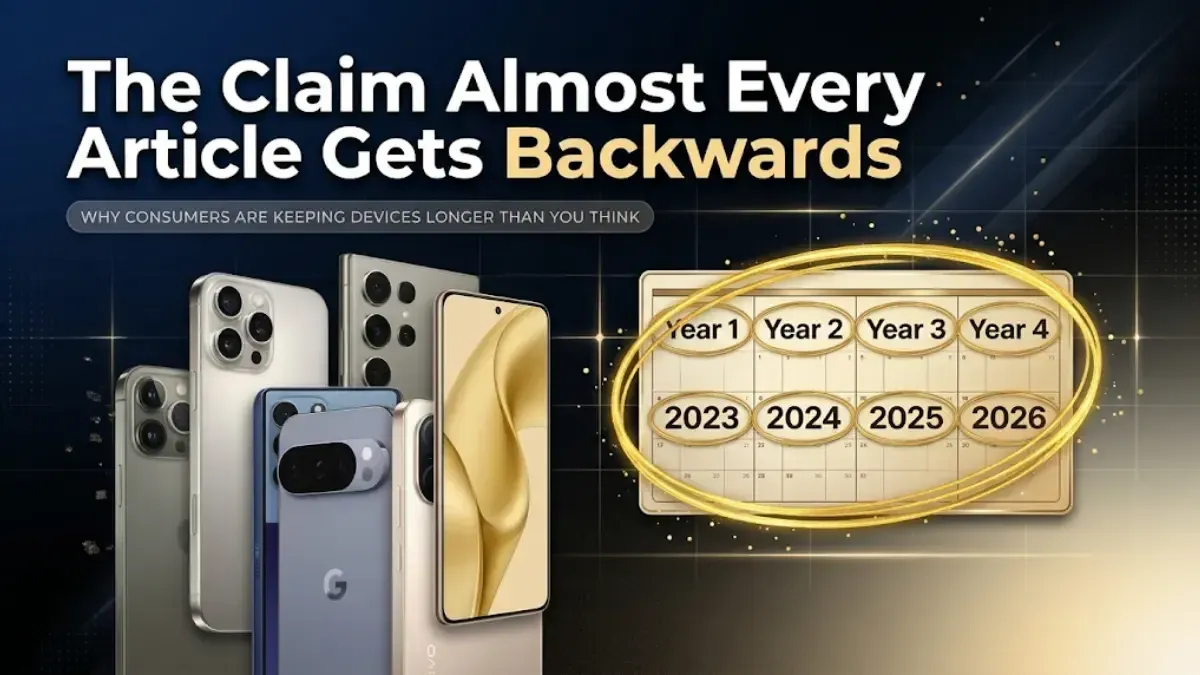
Many articles claim that Indians are upgrading their phones more often, and that shorter upgrade cycles are driving the used phone market.
But the opposite is true. People are keeping their phones longer than ever before.
Assurant, which handles trade-ins at scale, reported that the average age of an iPhone being traded in reached 4.03 years in the second quarter of 2026. That is the first time the figure has crossed four years. The cycle people used to describe was two to three years.
This is important because it flips the usual explanation. The used market is not growing because people are replacing phones more quickly. Instead, it is growing because new phones became expensive, so buyers started looking for more affordable options. Sellers also began selling phones they had kept for four years.
If you have seen claims about shorter upgrade cycles, those articles are likely talking about 2017, not today.
Why New Phones Got More Expensive
This next part is important to understand, and it is not about tariffs or taxes.
Memory chips got dear. The price rise has been attributed in large part to higher DRAM and NAND flash costs, as AI data centre construction absorbed memory supply that would otherwise have gone into consumer devices.
Every phone has two types of memory: RAM for running and storage for saving. When both become more expensive, all phones cost more, but the impact is hardest on cheaper models, where profit margins were already low.
So the pressure landed hardest on entry and mid-range phones, which is exactly where India's volume is. Counterpoint links part of the refurbished growth directly to rising prices in those segments pushing price-sensitive buyers into the secondary market.
Upgrading also became less appealing. The latest models only offer small improvements in camera, processor, or display, but cost 16 percent more than last year. Keeping a working phone now seems like the smart choice.
What the Used Market Looks Like Now
Who is selling well. In the organized refurbished market, Counterpoint puts Samsung at 30 percent, Apple at 23 percent and Vivo at 10 percent, with other brands making up the remaining 37 percent.
The market is shifting toward higher-end phones. Cashify's 2025 data shows that phones priced between Rs. 45,000 and Rs. 60,000 made up 11.2 percent of sales, up from 7.5 percent the previous year. Phones above Rs. 60,000 rose to 6.2 percent from 3.4 percent, while phones under Rs. 10,000 dropped to 8.4 percent from 10.7 percent.
This means people are buying better used phones, not just cheaper ones. As new phone prices rise, a used flagship can cost the same as a new mid-range phone, so many buyers choose the used flagship.
It is also getting easier to refurbish newer flagship phones. Omdia reports that replacement OLED panels are now more widely available, which is important because the display often determines if a damaged flagship can be repaired affordably.
What This Means If You Are Selling
Here are three practical takeaways.
Your phone is probably older than you think, and that is normal now. If you have had it three or four years, you are not unusual, and it is not too late to sell. The market that grew 13 percent is buying exactly these phones.
Higher new phone prices help support used phone prices. This is good news for sellers. When new phones get more expensive, used phones can sell for more too, especially models in the price ranges that saw the biggest increases.
Timing is still important. Counterpoint expects more trade-ins during the festive season and after new flagship launches. When more people trade in their phones, supply goes up and prices drop. So, it is better to sell your recent phone before everyone else does.
What This Means If You Are Buying Used
The value of buying used has improved. Refurbished phones have always been attractive because they cost less than new ones. Now that new phone prices are up 16 percent, the price gap is even bigger.
Check how many years of software support are left before looking at other specs. A four-year-old flagship is better than a new budget phone in most ways, except for how long it will keep getting security updates. That is the first thing to check.
Check the IMEI before you pay. Dial *#06# on the handset for its 15 digit IMEI, then send an SMS reading KYM followed by that number to 14422, or use the IMEI verification page on the government's Sanchar Saathi portal at ceir.sancharsaathi.gov.in. It returns the make, model and status. If it comes back blacklisted, duplicate or already in use, do not buy the phone.
Checking the IMEI only takes a minute, but very few people actually do it.
What Has Not Changed
None of this alters what you have to do before your old phone leaves your hands.
Sign out of your Google or Apple account, then factory reset. In that order. Resetting while still signed in locks the phone to your account, and nobody else can set it up.
A factory reset is enough. Modern phones encrypt their storage, so resetting deletes the encryption key and makes your data unreadable. You do not need special wiping software, and you should be cautious of anyone trying to sell it to you.
We have a guide that compares different ways to sell your old phone online, including options that are not our own.
Yes. Counterpoint Research reported refurbished smartphone volumes up 13 percent year on year in the first half of 2026, and expects about 16 percent growth across the full year. New smartphone volumes fell roughly 11 percent over the same six months.
2. Are Indians upgrading phones more often than before?
No, less often. Assurant reported the average age of an iPhone traded in reaching 4.03 years in the second quarter of 2026, crossing four years for the first time, against a traditional two to three-year cycle. Articles claiming upgrade cycles are shrinking are describing a much older market.
3. Why did smartphone prices go up in India in 2026?
Prices rose an average of 16 percent in the first half of the year, attributed in large part to higher DRAM and NAND memory costs as AI data centre demand absorbed supply. Memory sits in every phone as both RAM and storage, so the increase affected the whole range and hit entry and mid-range models hardest.
4. Which brands sell best in India's refurbished market?
Counterpoint puts Samsung at 30 percent of the organized refurbished market, Apple at 23 percent and Vivo at 10 percent, with other brands accounting for the remaining 37 percent.
5. Is a refurbished phone a better deal now than it was?
The gap between a refurbished phone and a new one has widened, because new prices rose and used prices did not rise as fast. The thing to check before specifications is how many years of security updates the model has left, because that is where an older flagship loses to a newer budget phone.
6. Did rising new phone prices help or hurt my old phone's value?
Helped, in principle. A used phone competes against a new one, so when new prices rise the used ceiling rises too. The offsetting force is supply: festive season and new flagship launches bring a wave of trade-ins, and more supply pushes prices back down.
7. When should I sell if I want the best price?
Before the wave, not during it. Counterpoint expects festive demand and second half flagship launches to raise trade-in volumes, which increases the supply of recent used handsets. Selling ahead of that is better than selling into it.
8. How do I check a used phone is not stolen before buying it?
Dial *#06# for the IMEI, then SMS KYM followed by the 15 digit number to 14422, or use the IMEI verification page on the Sanchar Saathi portal. It returns make, model and status, and advises against purchase if the handset is blacklisted, duplicate or already in use.
9. What should I do before selling my old phone?
Back up your data and check the backup, move your authenticator app, sign out of your Google or Apple account, remove the SIM and any eSIM, then factory reset. Signing out before the reset is the step people miss, and missing it locks the phone to your account.
10. Do I need special software to wipe my phone before selling it?
No. Modern phones encrypt their storage and the factory reset destroys the encryption key, so what remains cannot be read. Multi-pass wiping is a hard drive technique that does not transfer to phone storage.