Xiaomi 17 Max Launched: 8,000mAh Battery, Leica 200MP Camera and Price
 Yaskar Jung ShahUpdated: May 22, 2026·21 min read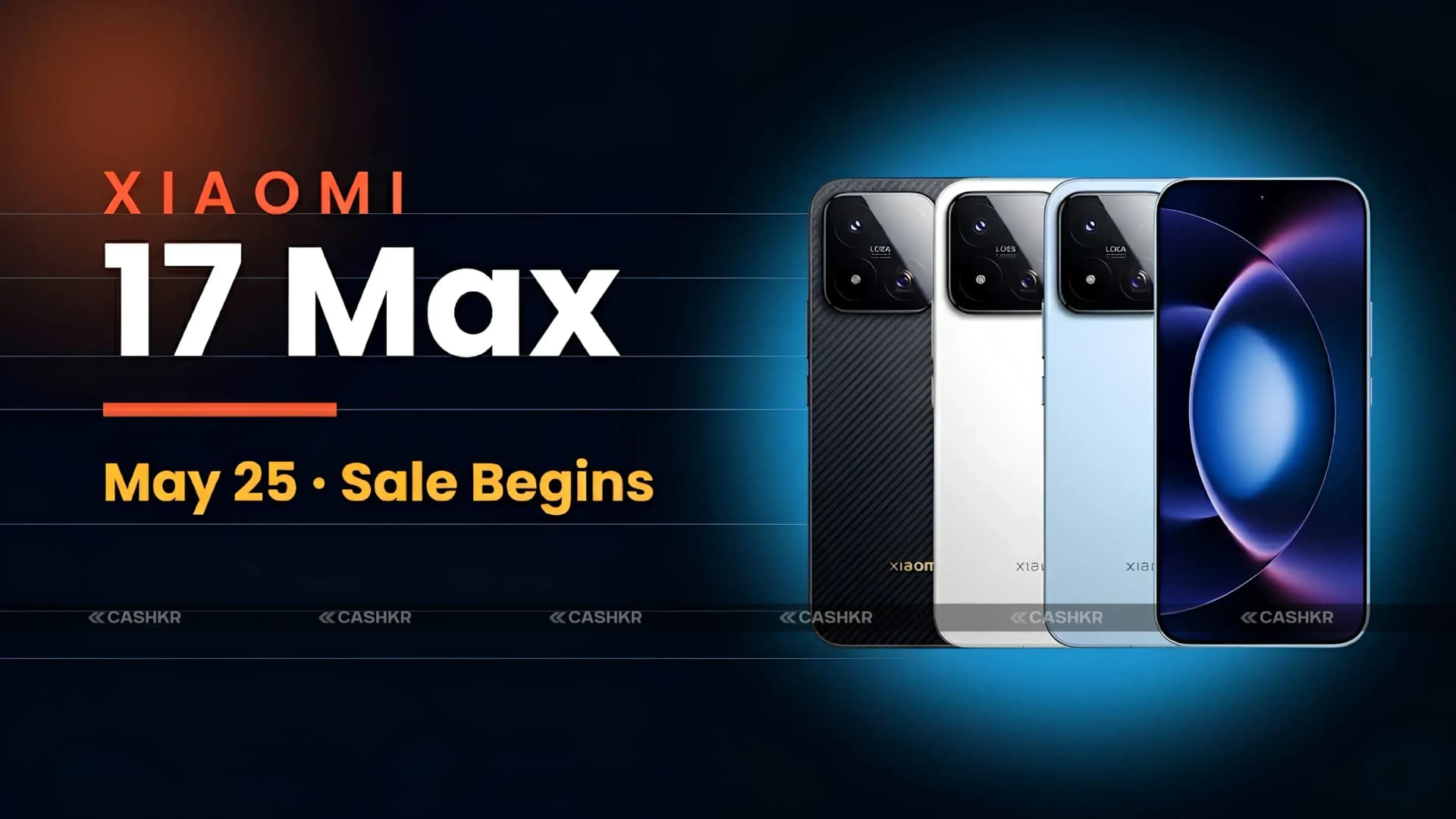
Xiaomi 17 Max launched with Leica cameras and 8,000mAh battery.
- Xiaomi 17 Max Price and Sale Date in China
- Xiaomi 17 Max Color Options
- Xiaomi 17 Max Display: 6.9-Inch 1.5K AMOLED with 3,500 Nits and Dolby Vision
- Xiaomi 17 Max Processor: Snapdragon 8 Elite Gen 5 at 4.6GHz
- Xiaomi 17 Max Camera System: Leica-Tuned Triple Cameras with Samsung HP9
- Xiaomi 17 Max Battery: 8,000mAh with 100W Wired Charging
- Xiaomi 17 Max Connectivity and Sensor Suite
- Xiaomi 17 Max Dimensions and Build
- Xiaomi 17 Max Full Specifications
- How Does the Xiaomi 17 Max Compare to Its Competitors in Its Segment?
- Final Verdict
- FAQs
Xiaomi 17 Max Launched: 8,000mAh Battery, Leica 200MP Camera
Quick Summary: Xiaomi has officially launched the Xiaomi 17 Max in China with pre-orders open and sales starting May 25. The phone is priced from CNY 4,799 (approx. Rs. 68,000) for 12GB plus 256GB to CNY 5,799 (approx. Rs. 82,000) for 16GB plus 512GB. Key confirmed specifications include a 6.9-inch 1.5K AMOLED display at 120Hz with 3,500 nits peak brightness and Dolby Vision, the Snapdragon 8 Elite Gen 5 at 4.6GHz with up to 16GB LPDDR5x RAM and 512GB UFS 4.1 storage, a Leica-tuned triple camera with a 200MP Samsung HP9 primary sensor, 50MP 3x periscope telephoto, and 50MP 102-degree ultra-wide, an 8,000mAh battery with 100W wired and 22.5W reverse charging, Dragon Crystal 3.0 glass protection, IP68, 3D ultrasonic fingerprint, Wi-Fi 7, NavIC, and Android 16 with HyperOS 3. Colors are Pixel Black, Sky Blue, and White. No India launch has been confirmed.
Xiaomi 17 Max Price and Sale Date in China
| RAM + Storage | Price (CNY) | Approx. Price (INR) |
|---|---|---|
| 12GB + 256GB | CNY 4,799 | ₹68,000 |
| 16GB + 256GB | CNY 5,099 | ₹72,000 |
| 12GB + 512GB | CNY 5,399 | ₹76,000 |
| 16GB + 512GB | CNY 5,799 | ₹82,000 |
Xiaomi 17 Max Color Options
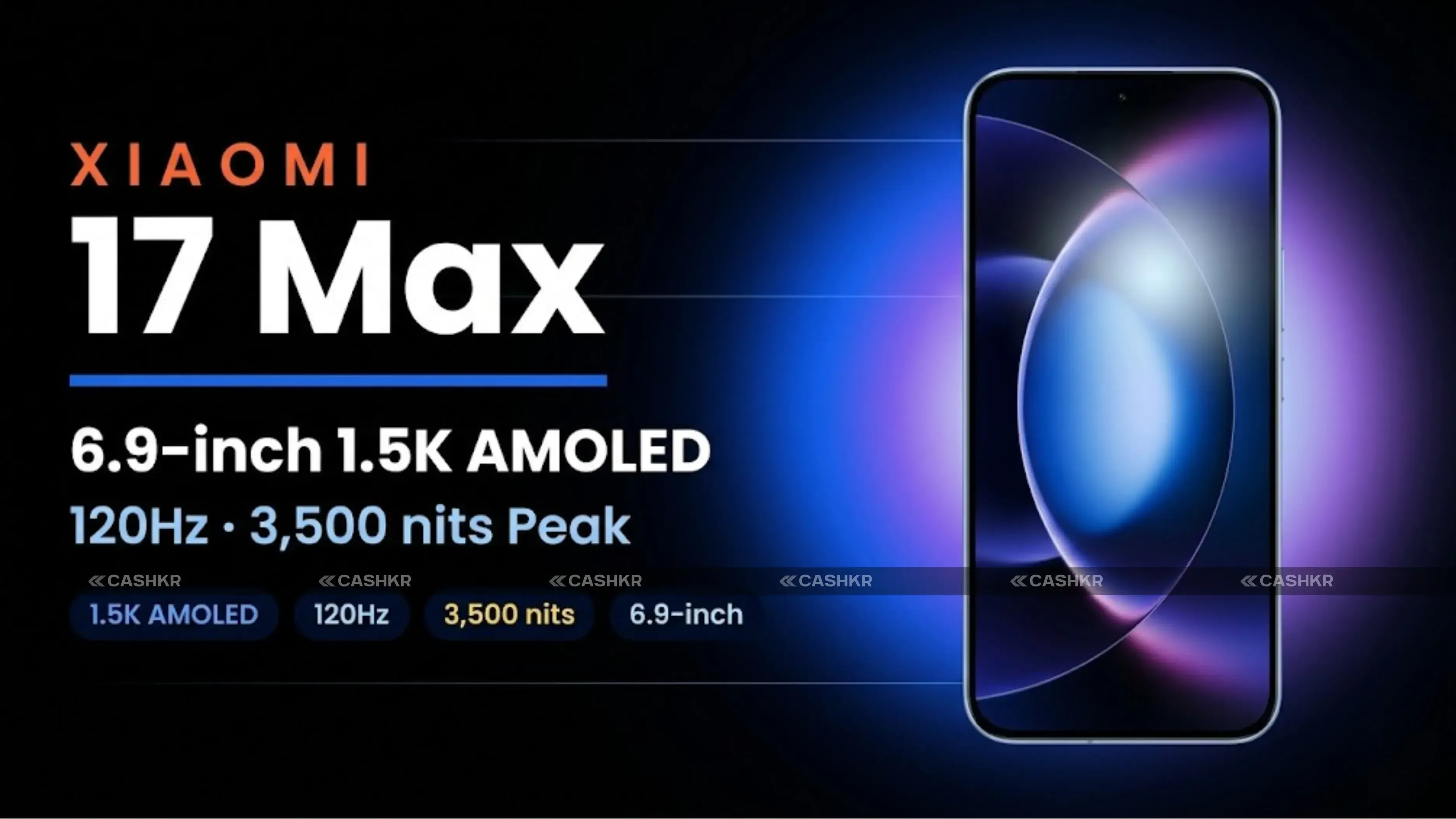
Xiaomi 17 Max Display: 6.9-Inch 1.5K AMOLED with 3,500 Nits and Dolby Vision
Xiaomi 17 Max Processor: Snapdragon 8 Elite Gen 5 at 4.6GHz
Xiaomi 17 Max Camera System: Leica-Tuned Triple Cameras with Samsung HP9
Xiaomi 17 Max Battery: 8,000mAh with 100W Wired Charging
Xiaomi 17 Max Connectivity and Sensor Suite
Xiaomi 17 Max Dimensions and Build
Xiaomi 17 Max Full Specifications
| Category | Specification |
|---|---|
| Display | 6.9-inch 1.5K AMOLED |
| Resolution | 1,200 × 2,608 pixels |
| Refresh Rate | 120Hz |
| Touch Sampling Rate | 300Hz |
| Peak Brightness | 3,500 nits |
| HDR Support | HDR10+, HDR Vivid, Dolby Vision |
| Colour Gamut | 100% DCI-P3 |
| Glass Protection | Dragon Crystal 3.0 |
| IP Rating | IP68 |
| Chipset | Qualcomm Snapdragon 8 Elite Gen 5 (3nm, up to 4.6GHz) |
| GPU | Adreno with Qualcomm AI Engine |
| RAM | 12GB / 16GB LPDDR5x |
| Storage | 256GB / 512GB UFS 4.1 |
| Operating System | Android 16 with HyperOS 3 |
| Fingerprint Scanner | 3D ultrasonic in-display scanner |
| Primary Camera | 200MP Samsung HP9 sensor with OIS, Leica-tuned |
| Periscope Telephoto Camera | 50MP with 3x optical zoom |
| Ultra-wide Camera | 50MP, 102-degree field of view |
| Front Camera | 32MP |
| Video Recording | 4K at 30fps |
| Battery | 8,000mAh |
| Wired Charging | 100W fast charging |
| Reverse Charging | 22.5W wired reverse charging |
| Wi-Fi | Wi-Fi 7 |
| Bluetooth | Bluetooth 5.4 |
| NFC | Yes |
| USB | Type-C |
| Navigation | GPS, GLONASS, QZSS, NavIC |
| Other Sensors | Barometer, colour temperature sensor, IR blaster |
| Dimensions | 162.9 × 77.6 × 8.2mm |
| Weight | 225g |
| India Launch | Not confirmed |
How Does the Xiaomi 17 Max Compare to Its Competitors in Its Segment?
Final Verdict
Bottom line: The Xiaomi 17 Max is a powerful flagship for China, with a Snapdragon 8 Elite Gen 5 chip, Leica triple cameras (including a 200MP main sensor), an 8,000mAh battery with 100W charging, a 3,500 nit display, and NavIC support in an 8.2mm body. Sales in China start May 25. There’s no India launch confirmed yet, so watch for updates from Xiaomi India.
FAQs
1. What is the price of the Xiaomi 17 Max?
The Xiaomi 17 Max is priced in China in four configurations. The 12GB plus 256GB base variant costs CNY 4,799, approximately Rs. 68,000. The 16GB plus 256GB option is CNY 5,099, around Rs. 72,000. The 12GB plus 512GB model costs CNY 5,399, approximately Rs. 76,000. The top 16GB plus 512GB configuration is CNY 5,799, around Rs. 82,000. Pre-orders are open in China, and the sale begins on May 25. These are China market prices, and rupee figures are approximate conversions for reference. No pricing or launch in India has been confirmed by Xiaomi.
2. What cameras does the Xiaomi 17 Max have?
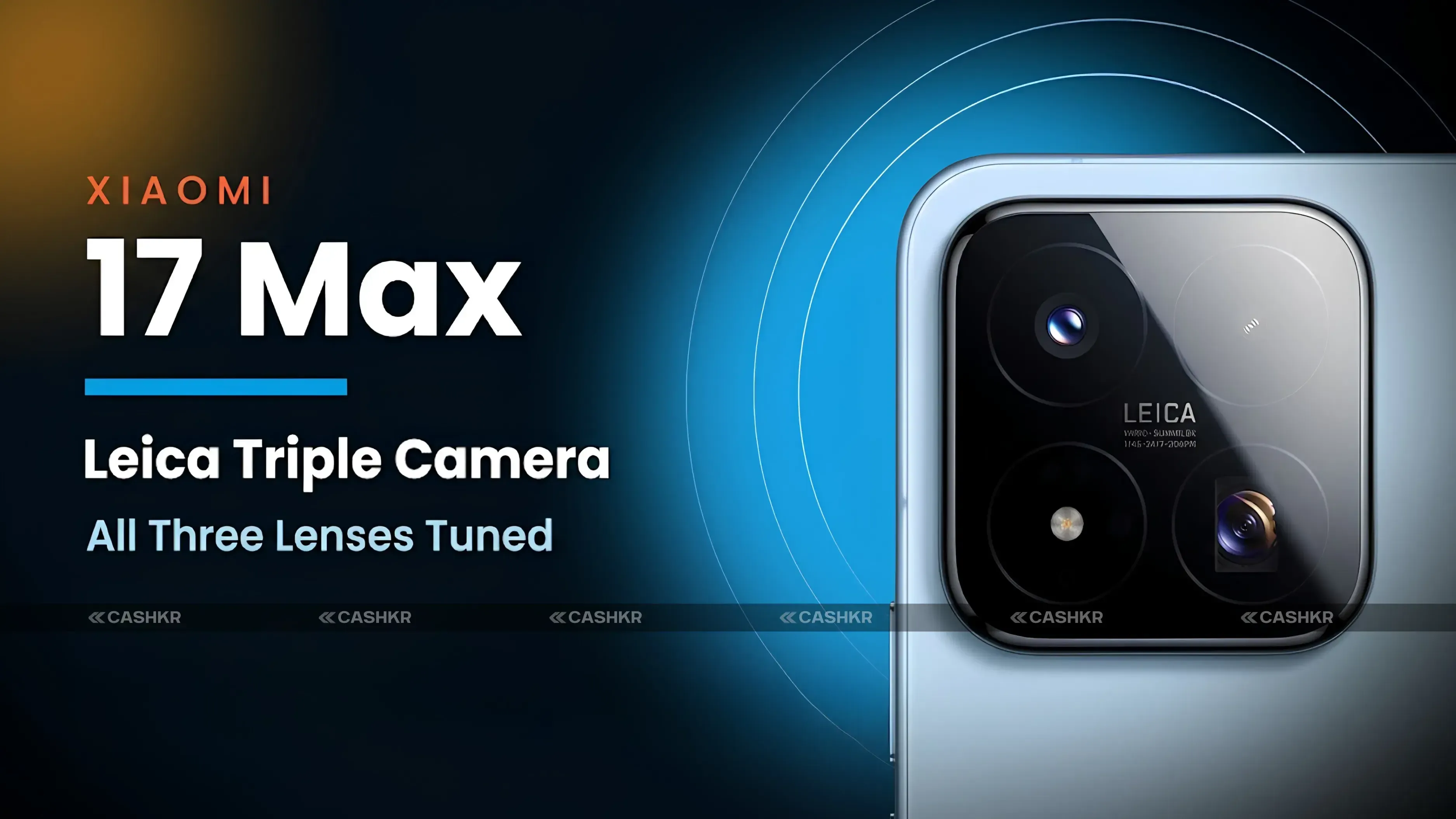
The Xiaomi 17 Max features a Leica-tuned triple rear camera system. The primary camera is a 200-megapixel unit using the Samsung HP9 sensor with optical image stabilization. The telephoto camera is a 50-megapixel periscope lens with 3x optical zoom. The ultra-wide camera is a 50-megapixel unit with a 102-degree field of view. All three lenses feature Leica's Natural Color tuning for consistent, accurate color across focal lengths. The front camera is 32 megapixels. Rear video recording supports 4K at 30 frames per second.
3. What chipset does the Xiaomi 17 Max use?
The Xiaomi 17 Max uses the Qualcomm Snapdragon 8 Elite Gen 5 chipset built on 3nm architecture, clocked at up to 4.6GHz. This is the standard high-performance Snapdragon 8 Elite Gen 5, the same chipset powering the Samsung Galaxy S26 Ultra and the Lenovo Legion Y70 (2026). It is paired with either 12GB or 16GB of LPDDR5x RAM and 256GB or 512GB of UFS 4.1 storage, depending on the configuration chosen. The software is HyperOS 3, based on Android 16, running with full Google Play access.
4. How big is the battery in the Xiaomi 17 Max, and how fast does it charge?
The Xiaomi 17 Max features an 8,000 mAh battery, the largest in any Xiaomi 17 series model. It charges at 100W wired, which should bring the cell to approximately 50 percent in around 25 minutes and complete a full charge in 45 to 50 minutes. Wired reverse charging at 22.5W allows the phone to share its battery with other USB-C devices. Wireless charging has not been confirmed in the official launch details and would need to be verified through subsequent Xiaomi communications or post-launch product testing.
5. What display does the Xiaomi 17 Max have?
The Xiaomi 17 Max features a 6.9-inch AMOLED display with a 1.5K resolution of 1,200 by 2,608 pixels, a 120Hz refresh rate, a 300Hz touch sampling rate, and up to 3,500 nits peak brightness. The display supports HDR10+, Dolby Vision, and Xiaomi's HDR Vivid format, and covers 100 percent of the DCI-P3 color gamut. Dragon Crystal 3.0 glass protection is applied to the display surface. The 3,500-nit peak brightness matches the Redmi Turbo 5 launched in the same session and is a strong outdoor visibility specification.
6. What is the Leica camera partnership on the Xiaomi 17 Max?
Leica is a German professional camera brand renowned for its optical design and color science used in premium cameras and photographic equipment. Xiaomi's partnership with Leica for the 17 series applies Leica's color science calibration across all three rear cameras on the Xiaomi 17 Max. The Leica tuning adjusts how the camera's image signal processor converts raw sensor data into final images, prioritizing natural, accurate color reproduction over artificially boosted saturation. Leica's involvement also influences the camera interface design within HyperOS 3, including professional shooting modes styled after Leica's camera control philosophy.
7. Does the Xiaomi 17 Max support wireless charging?
Wireless charging support has not been confirmed in the official Xiaomi 17 Max launch details available at this time. The confirmed charging features are 100W wired fast charging and 22.5W wired reverse charging. The absence of wireless charging from the official launch specification list is notable for a flagship at this price tier. This may be an omission in early launch communications that Xiaomi will clarify, or the feature may genuinely be absent from the Xiaomi 17 Max. Post-launch hands-on coverage and official product pages in China will confirm this detail.
8. How does the Xiaomi 17 Max compare to the iQOO 15T?
Both the Xiaomi 17 Max and iQOO 15T were launched in China in the same period and share an 8,000mAh battery and 100W wired charging. The iQOO 15T uses the MediaTek Dimensity 9500 Monster Edition with a co-processor and has a 200MP primary camera, while the Xiaomi 17 Max uses the Snapdragon 8 Elite Gen 5 with Leica tuning across three cameras. The iQOO 15T starts at CNY 4,099, compared with the Xiaomi 17 Max at CNY 4,799, giving iQOO a price advantage. The Xiaomi 17 Max has Leica color science and a 3x periscope telephoto, whereas the iQOO 15T does not specifically emphasize either. The choice between them depends on whether Leica photography or gaming-focused Monster Edition performance is the priority.
9. What is Dragon Crystal 3.0 protection on the Xiaomi 17 Max?
Dragon Crystal 3.0 is Xiaomi's proprietary glass protection technology applied to the display surface of the Xiaomi 17 Max. Xiaomi developed Dragon Crystal as an alternative to Corning Gorilla Glass for its high-end devices, claiming it offers better competitive impact and scratch resistance than Gorilla Glass Victus. The 3.0 version is the latest iteration of this proprietary glass. It is worth noting that Dragon Crystal is Xiaomi's own brand name rather than a third-party, independently certified glass standard, so direct comparisons with Gorilla Glass Victus 2 or Armor Glass from other manufacturers should be approached with the understanding that the durability claims are based on Xiaomi's own testing.
10. Will the Xiaomi 17 Max launch in India?
Xiaomi has not confirmed an India launch for the Xiaomi 17 Max. The device launched in China on May 25 and is currently available only through Xiaomi's Chinese channels. Xiaomi India has a track record of bringing selected flagship models from the Chinese lineup to India, sometimes under the same name and sometimes with specification adjustments. Whether and when the 17 Max will reach India will be announced through Xiaomi India's official website, social media channels, and Flipkart, which has been the primary exclusive partner for Xiaomi flagship launches in India. Monitoring these channels after the China launch is the recommended approach for Indian buyers interested in the device.
If you want to sell your old devices, then click here.
Sell with Cashkr
Got an old phone lying around?
Cashkr buys used devices at a fair price with free doorstep pickup and same-day payment across 2,000+ pincodes. Get an upfront quote in seconds.
Sell Old Phone OnlineCheck your phone's value in seconds
Written by