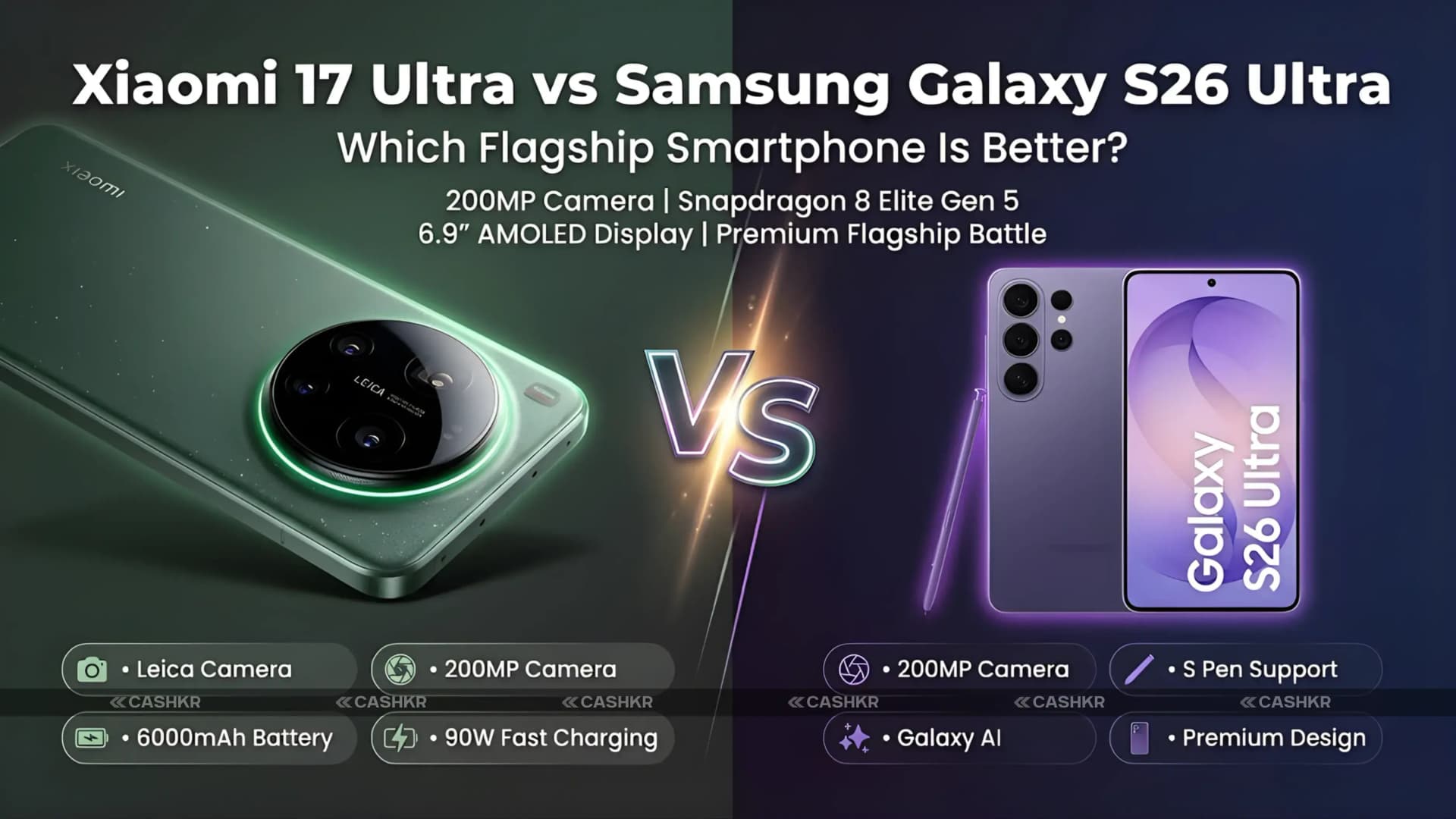
Xiaomi 17 Ultra vs Samsung Galaxy S26 Ultra: A Head-to-Head Flagship Battle
Two flagship phones. Both priced above Rs. 1,39,999. Both are powered by the same Snapdragon 8 Elite Gen 5 chipset. And yet, choosing between the Xiaomi 17 Ultra and the Samsung Galaxy S26 Ultra is not as straightforward as the shared specs sheet might suggest.
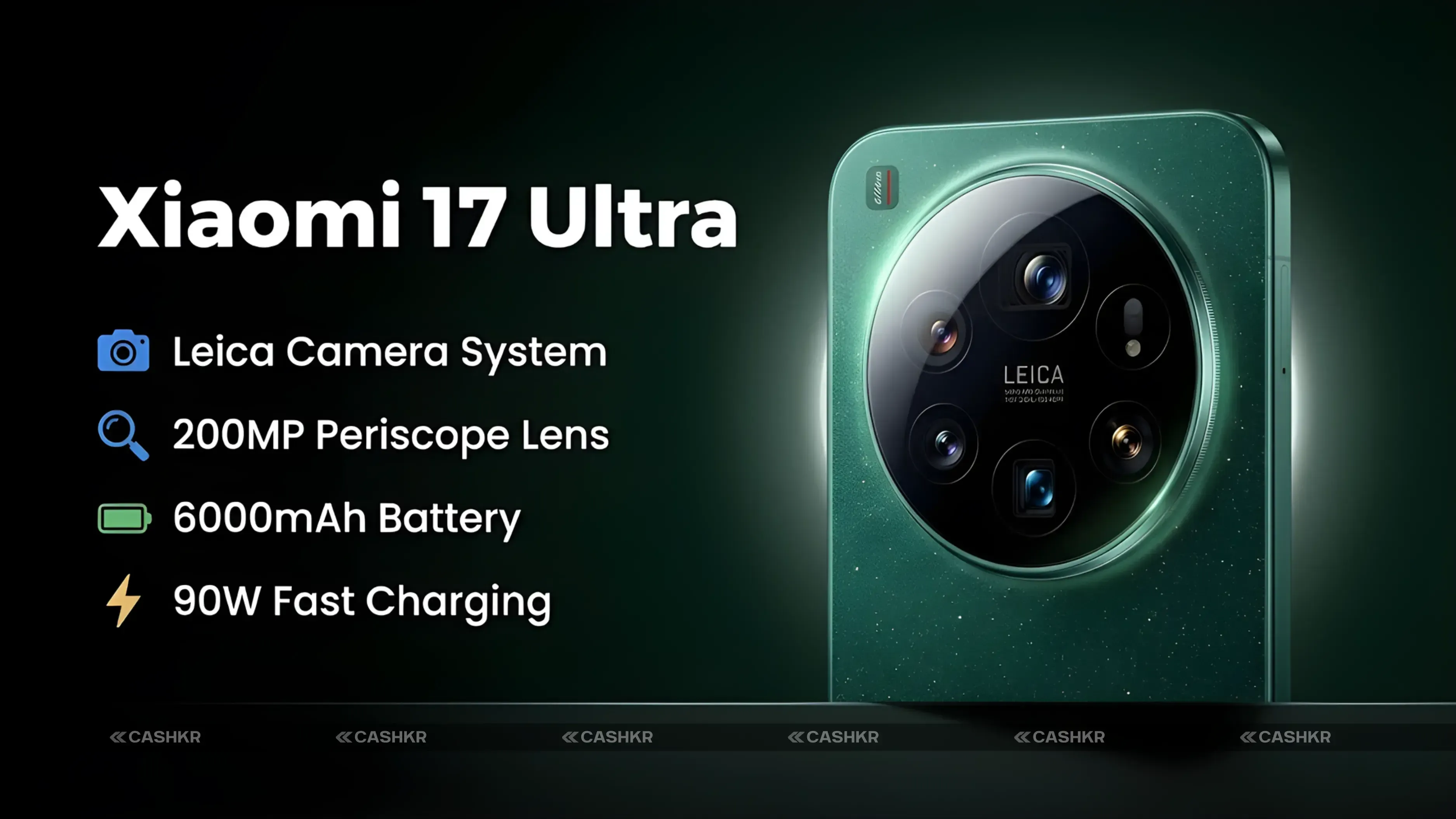
Xiaomi has gone all-in on camera innovation with the 17 Ultra. A Leica-tuned 1-inch sensor, a physical zoom ring, a 200MP periscope telephoto, and a 6000mAh battery with 90W charging paint a picture of a phone designed for people who push their photography hard. Samsung, on the other hand, has doubled down on what it does best: a polished ecosystem, S Pen support, seven years of software updates, and Galaxy AI tools that are genuinely more mature than anything Xiaomi currently offers.
This comparison breaks down every major category so you can decide which phone actually fits your life better in 2026.
Quick Verdict: Xiaomi 17 Ultra wins on camera hardware, battery size, and charging speed. Samsung Galaxy S26 Ultra wins on software longevity, S Pen productivity, and AI features. Read on for the full breakdown.
Price and Availability
The Xiaomi 17 Ultra comes in one primary India configuration: 16GB RAM with 512GB storage at Rs. 1,39,999. Xiaomi is offering an Rs. 10,000 bank discount for SBI credit card holders, and buyers between March 13 and March 17 receive a Xiaomi Professional Photography Kit Pro worth Rs. 19,999 at no extra cost.
Samsung's lineup is broader. The S26 Ultra starts at Rs. 1,39,999 for the base 12GB + 256GB variant and goes up to Rs. 1,59,999 for the 512GB variant. Samsung also offers the standard S26 and S26 Plus for buyers who want flagship performance at a lower price.
India Pricing at a Glance
Xiaomi 17 Ultra
16GB + 512GB
₹1,39,999
Samsung Galaxy S26
12GB + 256GB
₹87,999
Samsung Galaxy S26
12GB + 512GB
₹1,07,999
Samsung S26 Plus
12GB + 256GB
₹1,19,999
Samsung S26 Plus
12GB + 512GB
₹1,39,999
Samsung S26 Ultra
12GB + 256GB
On paper, the Xiaomi 17 Ultra offers more RAM and double the storage at the same base price as the Samsung S26 Ultra 256GB variant. Factor in the bank discount and the photography kit, and the value proposition shifts noticeably in Xiaomi's favour for launch-period buyers.
Full Specifications Comparison
Features
Xiaomi 17 Ultra
Samsung Galaxy S26 Ultra
OS
Android 16 with HyperOS 3
Android 16 with One UI 8.5
Processor
Snapdragon 8 Elite Gen 5
Snapdragon 8 Elite Gen 5
Display
6.9-inch LTPO AMOLED
6.9-inch Dynamic AMOLED 2X
Refresh Rate
1 to 120Hz LTPO
120Hz adaptive
Peak Brightness
3500 nits
2600 nits
Design and Display
Both phones use a 6.9-inch panel and look unmistakably premium. The differences show up in the details. The Xiaomi 17 Ultra measures 162.9 x 77.6 x 8.3 mm and weighs 218g. It uses an aluminium alloy frame with either a glass fibre or eco-leather back, and Xiaomi Shield Glass 3.0 on the front. The IP69 certification, on top of IP68, means it can withstand high-pressure water jets in addition to standard immersion.
The Samsung Galaxy S26 Ultra is slightly slimmer at 7.9mm thick and marginally lighter at 214g. It uses Gorilla Glass Victus 2 on the front and back, an Armour Aluminium 2 frame, and IP68 protection. The S Pen slot is built directly into the chassis, as expected from the Ultra lineup.
Display Highlights
The Xiaomi 17 Ultra's LTPO AMOLED display drops to 1Hz for always-on content and peaks at 3500 nits, making it exceptionally readable in direct sunlight. Dolby Vision and HDR10+ are both supported.
The Samsung S26 Ultra's Dynamic AMOLED 2X panel peaks at 2600 nits and supports HDR10+. Samsung's Privacy Display mode limits the screen's viewing angle from the sides, which is a practical feature for users who work in public spaces. The S Pen integration remains a genuine productivity differentiator that Xiaomi simply cannot match.
Winner: Xiaomi 17 Ultra on brightness and durability ratings. Samsung S26 Ultra on S Pen and privacy display.
Camera System
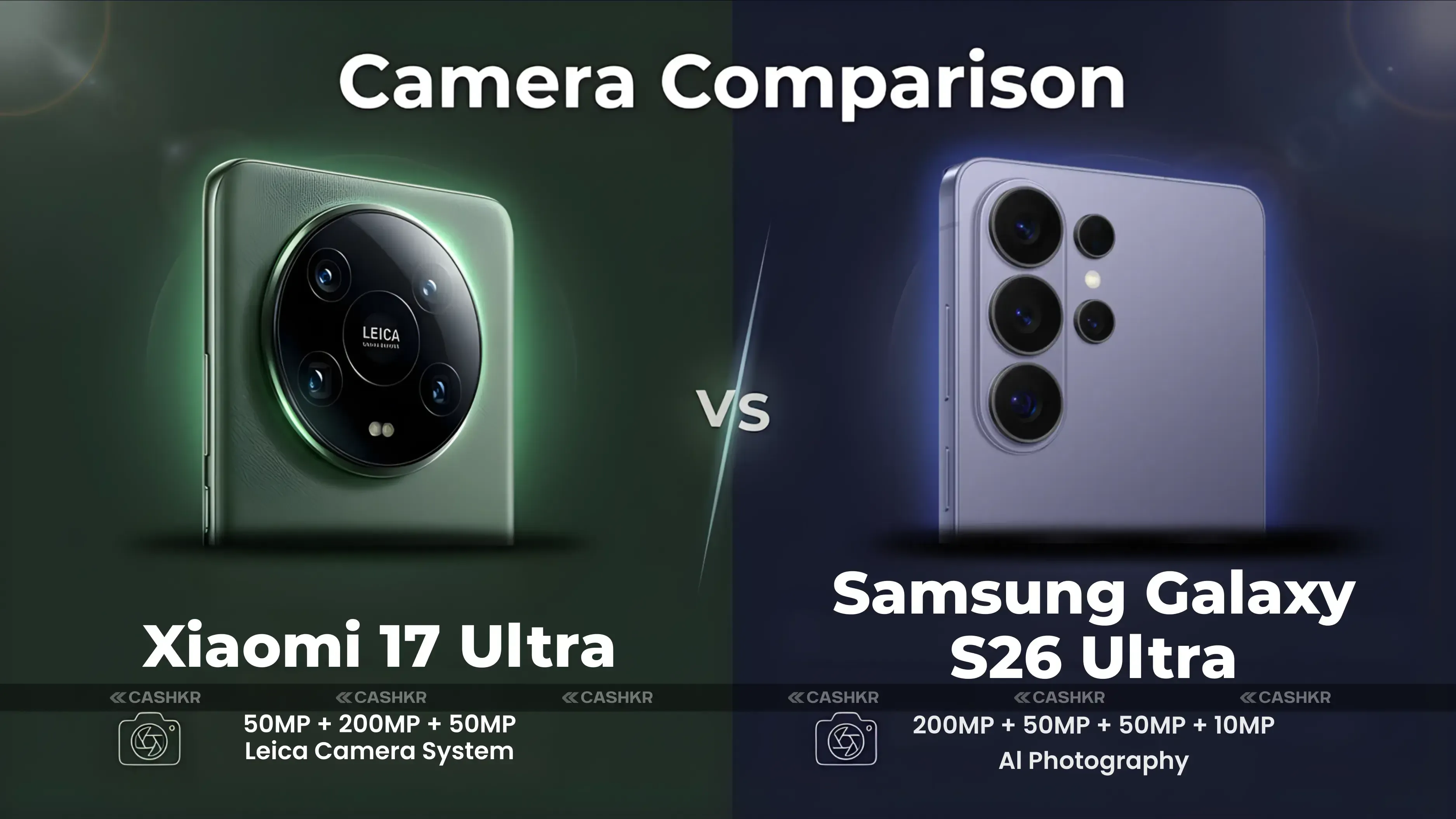
This is where the Xiaomi 17 Ultra makes its strongest argument. The hardware lineup is built around a Leica-tuned 1-inch 50MP main sensor with OIS, a 200MP periscope telephoto, and a 50MP ultrawide. The 1-inch sensor captures dramatically more light than the smaller sensors found in most competing phones, and the physical zoom ring on the camera module gives the phone a DSLR-like handling experience that no other smartphone currently offers.
Continuous optical zoom runs from 3.2x to 4.3x, and the 200MP telephoto delivers exceptional detail at distance. The 50MP front camera supports 4K video recording, which is unusual and impressive for a selfie camera. The phone also shoots 8K video from the rear.
Samsung's quad-camera system takes a different approach. A 200MP primary sensor anchors the setup, supported by dual telephoto options: a 50MP lens at 5x optical zoom and a 10MP lens at 3x optical zoom. The dual telephoto configuration gives more flexibility across different zoom ranges than Xiaomi's single periscope solution. Samsung's ProVisual Engine and Galaxy AI tools handle post-processing, including Horizon Lock stabilisation, and include advanced editing features built in.
Winner: Xiaomi 17 Ultra on hardware and low-light capability. Samsung S26 Ultra on zoom range flexibility and AI processing.
Battery and Charging
The Xiaomi 17 Ultra has a clear advantage here, and it is not particularly close. A 6000mAh battery against Samsung's 5000mAh already gives Xiaomi a meaningful endurance edge. On top of that, 90W wired charging and 50W wireless charging are comfortably ahead of Samsung's 60W wired and 25W wireless speeds.
Xiaomi also supports 22.5W reverse wired charging and 10W reverse wireless charging, meaning the phone can top up accessories like earbuds directly. Samsung's reverse wireless charging maxes out at 4.5W, which is functional but noticeably slower.
For users who travel frequently, game heavily, or simply dislike hunting for a charger at the end of the day, the Xiaomi 17 Ultra is the more capable battery phone by a significant margin.
Winner: Xiaomi 17 Ultra on battery size, wired charging speed, and wireless charging speed.
Performance and Software
Both phones use the Snapdragon 8 Elite Gen 5 on a 3nm process node, so raw performance differences between them are negligible. Gaming, multitasking, video editing, and AI workloads all run comparably on either device. Thermal management and sustained performance under load will vary by brand, but neither phone has a clear advantage here.
The software picture is more interesting. Samsung's One UI 8.5 ships with a more comprehensive Galaxy AI suite than HyperOS 3. Live Translate, Note Assist, Circle to Search, and generative editing tools are more deeply integrated into the Samsung experience than anything Xiaomi currently offers. If AI-powered productivity features are important to your daily workflow, Samsung pulls ahead.
Software update commitments also favour Samsung. Seven years of Android OS updates and security patches versus Xiaomi's six years is a meaningful difference if you plan to keep your phone for four or five years. For users who upgrade every two years, it matters less.
Winner: Samsung Galaxy S26 Ultra on Galaxy AI depth, software polish and update longevity.
Which Phone Should You Buy?
Buy the Xiaomi 17 Ultra if you:
Shoot a lot of photos and want the best camera hardware available in a smartphone.
Value battery endurance and want to charge less frequently.
Need fast charging and cannot wait long for a full top-up.
Want a 1-inch sensor with Leica tuning and a physical zoom ring.
Want more RAM and storage for the same base price as the Samsung Ultra.
Use the S Pen regularly for notes, sketches or documents.
Want the longest software support available on any Android phone in 2026.
Rely on Galaxy AI tools for productivity and everyday tasks.
Prefer Samsung's mature One UI ecosystem and its deep third-party integrations.
Value a slimmer, lighter build with trusted Samsung after-sales support in India.
Final Verdict
The Xiaomi 17 Ultra is the better camera phone. That is not a close call. The 1-inch Leica sensor, the physical zoom ring, the 200MP periscope telephoto, and the 50MP front camera capable of 4K video collectively represent the most ambitious camera hardware in any smartphone shipping in early 2026. The battery and charging advantage is equally unambiguous.
The Samsung Galaxy S26 Ultra wins where it always has: ecosystem, longevity, and productivity. Seven years of updates, the S Pen, and a Galaxy AI suite that continues to improve with each software update make it a more sensible long-term investment for users who want a phone that keeps getting better over time.
If camera capabilities and battery life are what you look for in a flagship, then the Xiaomi 17 Ultra is the way to go. If you are looking for a device that can support your workflow, update for years to come, and is deeply integrated into the Samsung ecosystem, then the Galaxy S26 Ultra is still one of the best Android flagships that money can buy.
Bottom Line: Xiaomi 17 Ultra for photography and battery performance. Samsung Galaxy S26 Ultra for software longevity, S Pen, and AI features. Both are exceptional flagships; the right answer depends entirely on how you use your phone.
FAQs
1. What is the main difference between the Xiaomi 17 Ultra and Samsung Galaxy S26 Ultra?
The biggest difference lies in their focus. The Xiaomi 17 Ultra prioritizes camera hardware, battery capacity, and faster charging speeds. The Samsung Galaxy S26 Ultra focuses more on software features, S Pen productivity, and longer software support.
2. Which phone has the better camera system?
The Xiaomi 17 Ultra has more advanced camera hardware, including a Leica-tuned 1-inch sensor and a 200MP periscope telephoto lens. This setup captures more light and offers strong low-light performance. Samsung, however, balances its cameras with powerful AI processing and flexible zoom options.
3. Do both phones use the same processor?
Yes, both smartphones have the same Snapdragon 8 Elite Gen 5 Chipset. This means that, in terms of performance, whether in gaming, multitasking, or other applications, the performance of both smartphones is almost the same. What makes them different is the optimization and other features.
4. Which phone has a better battery and charging speed?
The Xiaomi 17 Ultra clearly leads in battery and charging. It features a 6000mAh battery with 90W wired and 50W wireless charging. The Samsung Galaxy S26 Ultra uses a 5000mAh battery with slower 60W wired and 25W wireless charging.
5. Which phone offers better display brightness?
The Xiaomi 17 Ultra has an advantage in brightness, reaching a peak of 3500 nits. This makes the screen easier to see in direct sunlight. The Samsung Galaxy S26 Ultra reaches 2600 nits but still delivers excellent color accuracy and clarity.
6. Does the Xiaomi 17 Ultra support the S Pen?
No, the Xiaomi 17 Ultra does not support stylus input. The Samsung Galaxy S26 Ultra includes the S Pen built into the device. This makes it useful for note-taking, drawing, and productivity tasks.
7. Which phone has better software support?
Samsung provides longer software support with seven years of Android updates and security patches. Xiaomi promises six years of updates for the 17 Ultra. For users planning to keep their phone longer, Samsung offers a slight advantage.
8. Which phone is better for AI features?
Samsung currently has stronger AI integration through its Galaxy AI suite. Features like Live Translate, Note Assist, and AI photo editing are deeply integrated into the system. Xiaomi offers HyperOS AI, but its tools are not as mature yet.
9. Which phone provides better value for the price?
The Xiaomi 17 Ultra offers higher RAM and storage at the same starting price as the Samsung Galaxy S26 Ultra base model. It also includes launch offers, such as a bank discount and a photography kit. This makes Xiaomi more attractive for buyers focused on hardware value.
10. Which flagship phone should you choose in 2026?
Go for the Xiaomi 17 Ultra if you want the best camera hardware and longer battery life. Go for the Samsung Galaxy S26 Ultra if you want software longevity, S Pen functionality, and the Samsung ecosystem. It all depends on whether you want hardware advancement or software longevity.
If you want to sell your old devices then, click here.
 Yaskar Jung ShahUpdated: Jul 28, 2026·14 min read