Many companies do not handle old phones well. Often, the devices end up forgotten in a cupboard, given to staff at random prices, or sold off in small batches whenever someone finds the time.
Getting money for old phones is important, but it is not the main reason to handle this process carefully. Corporate device disposal is different from selling your personal phone because the data is protected by law, and the devices are often locked to your company in ways that are easy to overlook.
This guide explains the process, highlights the two compliance rules that matter in India, and points out the step most people miss.
Advertisement
We have not included resale prices in this guide because they change based on the model, age, condition, and even the timing. A table of rough averages would not help when valuing a group of devices. Instead, get itemised quotes. The rest of this guide will show you how to compare them.
This is a common mistake for companies, and most guides do not mention it.
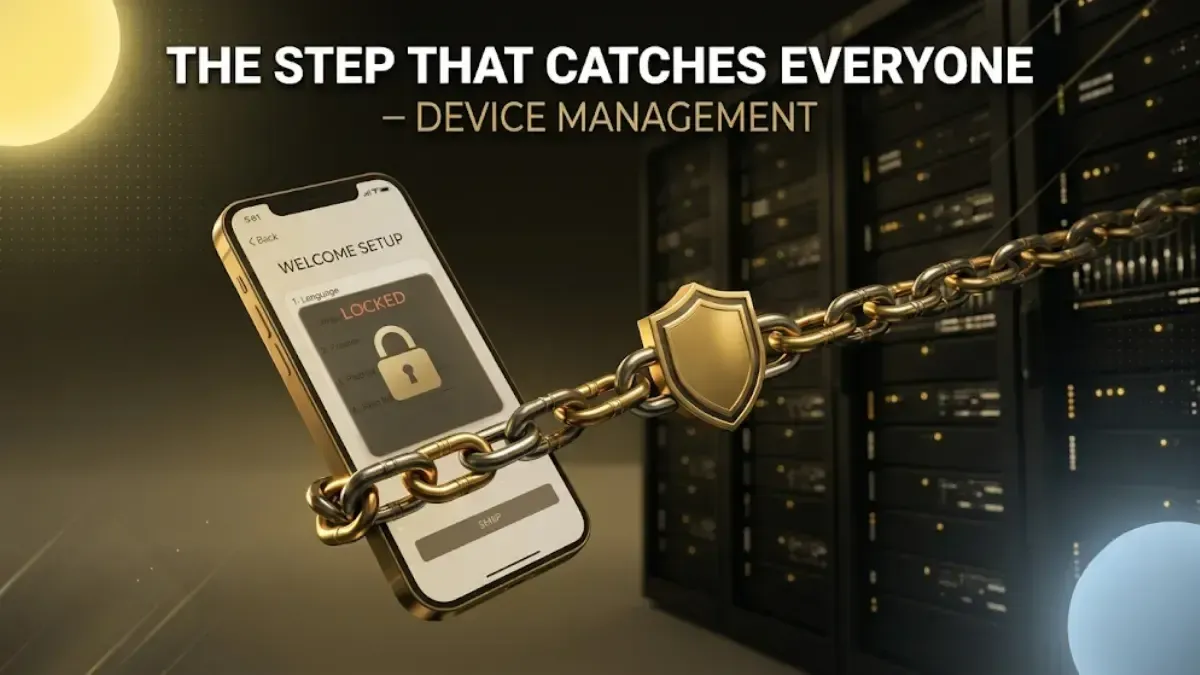
If your phones were set up with a device management system like Intune, Jamf, Workspace ONE, or Google Workspace, a factory reset will not remove them from management. As soon as the next owner connects to the internet, the device will re-enrol under your company's control and become unusable for them.
Three things to unwind, in this order:
1. Release the device from your MDM console. Retire or wipe the record properly, do not just delete the user.
2. Remove it from Apple Business Manager or Android Zero-Touch. This is the one people miss. Devices bought through a corporate programme are tied to your organisation at Apple's or Google's end, independently of your MDM. If the serial number stays in ABM or Zero-Touch, the phone will force enrolment at setup forever. A buyer cannot fix this. Only you can.
3. Remove the Apple ID or Google account on the device. Otherwise Activation Lock or Factory Reset Protection leaves the phone tied to that account.
If you miss these steps, the device will lose most of its value, no matter its condition. If you do them correctly, the phone will be ready for the next owner without issues.
To check, turn on a sample device after wiping it and go to the welcome screen. If it asks for an organisation sign-in, the release was not successful.
The Data Obligation Is Real, and It Is Not the IT Act
Corporate devices carry personal data belonging to employees and often to customers. In India that is now governed by the Digital Personal Data Protection Act, 2023.
Section 8 requires a data fiduciary to erase personal data once the purpose it was collected for is no longer served, unless the law requires it to be kept.
The penalties are significant: up to Rs. 250 crore for poor security and up to Rs. 50 crore for not deleting data properly.
What this means in practice when you retire a fleet:
Erase all devices before they leave your company, and keep a record to prove it. The record is just as important as the erasure itself, since you may need it if questions come up later.
A technical note worth having, because vendors oversell this. Modern phones encrypt their storage by default. Android has since Android 6 and required it from Android 10; iPhones for much longer. A factory reset destroys the encryption key, which makes the remaining data unreadable. For ordinary corporate handsets, a properly executed reset after account and MDM removal is the substance of the job.
Multi-pass overwriting works for hard drives, but not for flash storage. Flash controllers move data to prevent wear, so repeated overwrites do not always reach the same spots. If a vendor focuses on the number of passes, they are selling you a number, not a real solution.
Instead, ask for a clear, repeatable erasure process and a record for each device that links its serial or IMEI number to the date it was wiped. This is what will matter if you need proof later. If your industry has its own standard, include it in the contract and ask the vendor to show evidence, not just make claims.
The E-Waste Rule, and Whether It Applies to You
The E-Waste (Management) Rules, 2022 came into force on 1 April 2023 and cover 106 categories of equipment.
First, see if you qualify as a bulk consumer. The Rules say this means any company that has used at least 1,000 units of listed equipment in a financial year. Most companies with only a few hundred phones do not meet this threshold, so these rules may not apply. Some guides suggest all companies are affected, but that is not correct.
If you are a bulk consumer, your main responsibility is to give your e-waste only to a registered producer, refurbisher, or recycler. Do not hand it over to traders, informal collectors, or just anyone offering the highest price.
It is useful to know that the 2022 Rules removed two requirements from the 2016 Rules for bulk consumers: keeping records of e-waste generated and filing annual returns. This means there is less paperwork, but the rule about handing over e-waste is stricter.
In any case, ask your vendor for their registration number and verify it. Sending one email can be the difference between a properly documented disposal and just hoping everything is done right.
The Process
1. Audit the fleet. Model, storage, IMEI or serial, purchase date, condition, and whether it was MDM-enrolled. Without the IMEI list you cannot prove which device was which later.
2. Unwind the management. MDM, then Apple Business Manager or Zero-Touch, then the account on the device. Covered above. Do this before anything else leaves the building.
3. Erase, and record it. Wipe each device and log the serial against the date.
4. Grade and sort the devices. Separate iPhones from Androids, working devices from non-working ones, and clean devices from damaged ones. Do this yourself instead of letting the vendor handle it at pickup. If you leave devices unsorted, you will likely get a blended price, which is usually based on the lowest-value units.
5. Get three itemised quotes. Make sure each quote lists prices by model and condition, not just a single total. This way, you can compare vendors and see if your best devices are being undervalued.
6. Make sure transport is insured and documented. You are responsible for the devices until the vendor officially takes them. Use secure packaging, get tracking, and have a signed handover that lists the number and condition of the devices.
7. Complete the paperwork. Get a GST-compliant invoice for the sale. Your finance team or auditor should decide how to handle the disposal and any tax credits, since it depends on how the assets were recorded. The key is to have all the paperwork ready for them.
What to Require From Any Vendor
Useful whoever you use, including us.
What to Check
Why It Matters
Itemised pricing by model and grade
A single blended rate hides what your best devices are worth
Documented erasure process, with a per-device record
This is what you rely on if anything is questioned later
Registration under the E-Waste Rules, with the number
Required for your handover if you are a bulk consumer
Insured transport and a signed handover
Devices are yours until they are formally received
GST-compliant invoicing
Your finance team will need it
Payment timeline agreed in writing beforehand
Removes the most common source of dispute
Stated route for devices that cannot be resold
Tells you whether they are refurbished, stripped, or recycled
If a vendor cannot answer the second and third questions, they are not able to guarantee compliance.
Mistakes That Actually Cost Money
Accepting a flat rate for mixed inventory. One price for two hundred devices means your best handsets are covering your worst. Ask for the breakdown.
Forgetting to remove devices from Apple Business Manager or Zero-Touch is the most costly mistake here. You will not notice it until the buyer tries to set up the phone and cannot use it.
Letting devices sit in a cupboard. Prices fall every month, and step down further each time a successor model launches. A fleet retired in March and sold in December has lost real money for no reason. Our guide on why electronics lose value so fast explains the shape of that curve.
Only getting one quote is a mistake. Prices can vary between vendors for the same devices. Getting three quotes only takes an afternoon.
Using an informal collector to dispose of devices is risky. There is no record or registration, and if you are a bulk consumer, this does not meet the official handover requirement.
Selling to Us
We buy corporate fleets, including phones, laptops, tablets, smartwatches, and wearables, and can evaluate mixed brands together. You will get a quote, schedule one pickup from your office, and we will check the devices' condition before making payment.
A couple of honest points: As a buyback service, we pay less than you would get by selling each device individually, but you save time by handling everything in one go instead of selling hundreds of devices separately. Also, no matter which vendor you choose, you are responsible for releasing devices from MDM and Business Manager. No vendor can do this for you, and any device that arrives still enrolled will have to be returned.
1. How do I sell old corporate phones in bulk in India?
Audit the fleet with IMEIs, release the devices from your MDM and from Apple Business Manager or Android Zero-Touch, remove the accounts, erase and log each device, sort by model and condition, then get three itemized quotes and arrange insured pickup with a signed handover.
2. What is the step companies most often miss?
Removing devices from Apple Business Manager or Android Zero-Touch. A factory reset does not release them. The phone re-enrols itself under your company's management at setup, and only you can undo it.
3. What law covers the data on retired corporate devices?
The Digital Personal Data Protection Act, 2023. Section 8 requires personal data to be erased once its purpose is served. Penalties run to Rs. 250 crore for inadequate security safeguards and Rs. 50 crore for failing to delete appropriately.
4. Do we need a multi-pass or certified wipe?
For ordinary handsets, what matters is a properly executed reset after the accounts and MDM are cleared, plus a record of it. Phone storage is encrypted and the reset destroys the key. Multi-pass overwriting comes from hard drives and does not transfer cleanly to flash storage. Ask a vendor for a documented process and a per-device record rather than a number of passes.
5. Do the E-Waste Rules apply to our company?
Only if you are a bulk consumer, which the 2022 Rules define as having used at least 1,000 units of listed equipment at any point in a financial year. Below that, these specific obligations do not apply. If you are above it, you must hand e-waste over only to a registered producer, refurbisher or recycler.
6. Do we still have to file e-waste returns?
The 2022 Rules removed the requirements on bulk consumers to maintain records of e-waste generated and to file annual returns, which the 2016 Rules had imposed. The handover requirement remains.
7. Should iPhones and Android devices be quoted separately?
Yes. They sell into different markets at different values. Mixed into one lot, the stronger devices get averaged down.
8. How many quotes should we get?
Three, itemized by model and grade. A single total tells you nothing you can compare or negotiate against.
9. When should we retire and sell?
Sooner than feels urgent. Depreciation is front-loaded and steps down again at each successor launch, so devices held "until we get round to it" lose value for no return. Set the disposal as part of the refresh, not as a task afterward.
10. What happens to devices that cannot be resold?
They should go to a registered recycler for materials recovery. Ask your vendor to state the route and, if you are a bulk consumer, to give you their registration number.


 Yaskar Jung ShahPublished at: Apr 1, 2026·13 min read