Why Are Budget Smartphones Getting Expensive in India? Understanding the Price Hike in 2026
If you’ve been shopping for a new phone recently, you’ve undoubtedly seen something annoying. That smartphone worth ₹10,000 you were eyeing? It is currently around Rs. 13,000. That reliable entry-level device you suggested to your cousin two years ago? Its new edition is a solid Rs 3,000 to 4,000 costlier.
You’re not imagining things. The budget smartphone price hike in India has become impossible to ignore.
For years, India was a sweet spot for affordable phones. Brands like Xiaomi, Realme, Samsung, and Motorola were locked in fierce competition, constantly undercutting each other. You could walk away with a surprisingly capable device for under ₹10,000 without breaking a sweat.
But 2026 tells a different story. So what’s really going on? Let’s break it down without the jargon and without the fluff.
Here’s the honest truth. There’s no single villain behind why smartphones are getting expensive. Instead, it’s a mix of global shifts, changing habits, and yes, some strategic moves by brands themselves.
Let me show you the main culprits:
1. Memory Chips Are Costing a Fortune Right Now
You know all this chatter about AI these days? Well, all that artificial intelligence running in data centers and cloud platforms requires vast quantities of memory. And I mean huge.
AI infrastructure companies are gobbling up RAM and storage processors as if there’s no tomorrow. That spike in demand has put the pinch on the whole electronics supply chain. Smartphone makers, especially those creating inexpensive devices with razor thin margins, just can’t sustain these rising expenses.
So they pass it on. To us.
That 4GB or 6GB RAM chip in your budget phone? It’s significantly more expensive than it was a year ago. And that’s a big reason behind smartphone prices increasing in India.
2. Even Basic Components Are Getting Pricier
And it's not only memory. What do we expect from the cheapest phone today:
90Hz or 120Hz display for smoother scrolling
50MP multi-lens cameras
Advertisement
Fast charging of 5000mAh+ batteries* 5G processors without any lag
These are no longer “premium” features. They’re just minimum expectations. But they cost actual money to make. “Every time a brand puts in a better camera sensor or a higher refresh rate screen, the price goes up.
And when the bill goes up, so does the price tag on budget phones under 15000 India.
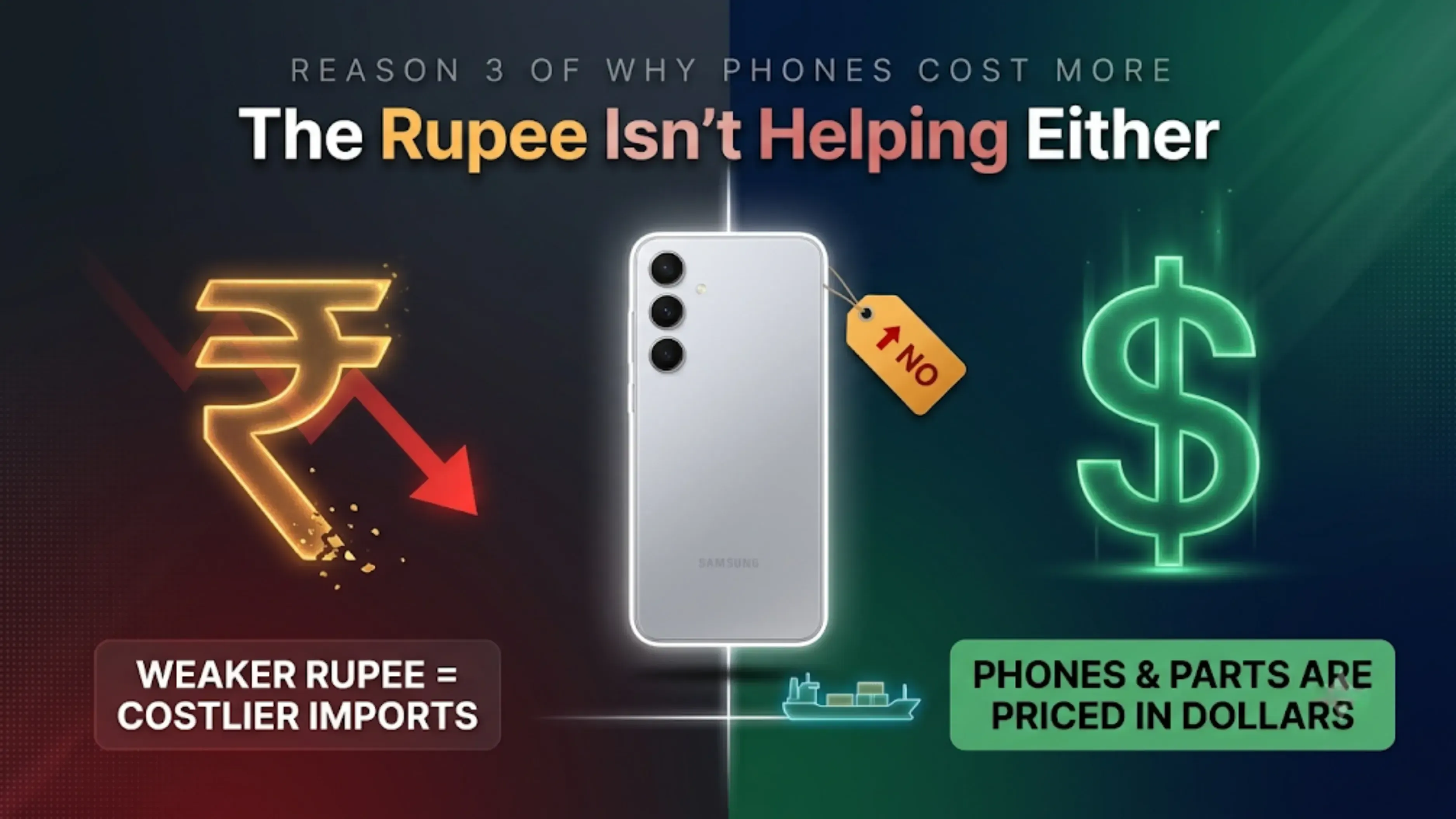
3. The Rupee Isn’t Helping Either
Here’s something many of us overlook. Even though India manufactures a lot of phones locally now, the components, things like chips, displays, and sensors, are still mostly imported. And they’re priced in US dollars.
The Indian rupee has been shaky against the dollar over the past couple of years. Even a small dip in the exchange rate translates into higher procurement costs when you’re buying millions of components.
Brands can’t just eat that loss. So they adjust retail prices. It’s basic math, really.
4. Brands Are Chasing Bigger Profits Now
This one stings a little.
For years, companies fought tooth and nail in the sub-₹12,000 segment. But margins there are paper thin. So what are they doing now? They’re shifting focus to higher priced devices where they can actually make decent money.
This trend, called “premiumization,” is reshaping the smartphone market India 2026. Brands that once dominated the budget space are now launching more devices in the ₹20,000 to ₹40,000 range.
And honestly? They’re doing it because we’re buying. Consumers are willing to spend more for better cameras, sleeker designs, and longer software support. But the downside is clear. Fewer aggressive deals in the budget segment, and less pressure to keep prices low.
5. Manufacturing and Logistics Just Cost More Now
This is more than pieces. It’s all the stuff surrounding them.
Shipping charges, warehouse rents, wages for personnel, packaging materials, energy bills. Everything has gone up. Supply chains globally are still rebuilding from years of upheaval and that unpredictability puts a price on every step of manufacturing.
Even with India’s push for local manufacturing, we’re still deeply connected to international supply networks. When those networks sneeze, our phone prices catch a cold.
6. AI Features Are Sneaking Into Budget Phones
Remember when AI was only for flagships? Not anymore.
Today, even affordable devices come with AI powered photography, smart battery management, real time translation, and photo editing tools that would’ve seemed like magic a few years ago.
But this is the catch. These capabilities demand more powerful processors and more development effort. That’s additional money. These developments are all extremely good, but they also contribute to the rising prices of smartphones we all feel.
7. We’re Holding Onto Our Phones Longer
This is a bit of a paradox.
Because phones are getting more expensive, we’re keeping them longer. Three, four, sometimes five years. That means brands are selling fewer devices overall.
To keep their revenue steady, they focus on selling higher priced models instead of pushing ultra cheap ones. It’s a cycle that feeds itself. Fewer budget buyers leads to less focus on budget phones, which leads to higher prices, which leads to even fewer budget buyers.
What Does This Mean for You?
If you’re someone who’s always relied on affordable devices, this shift is frustrating. I get it. Upgrading now feels like a bigger financial decision than it used to be.
But here’s the good news. You’re not completely powerless.
One of the smartest moves you can make right now is to sell your old phone before buying a new one. Instead of letting your current device collect dust in a drawer, you can unlock real cash from it. Cash that can directly offset the inflated price of your next purchase.
With platforms like Cashkr, this is shockingly straightforward. It takes just a few minutes to receive a free estimate on the resale value of your item. No confusion. No haggling. Just a straightforward number that informs you what your old phone is worth.
Seriously? With the regular price hike of budget cellphones in India becoming the new normal, that extra cash may go a long way. It may make a ₹15,000 phone cost ₹10,000 effective post trade in. That’s no little potatoes. That’s a good way of doing it.
So, Will Prices Keep Going Up?
Most experts think yes, at least for the near future.
The demand for memory chips isn’t slowing down. AI isn’t going anywhere. Component costs are unlikely to drop dramatically. And brands have tasted the profitability of premium devices.
That doesn’t mean affordable options will disappear entirely. But the days of getting a genuinely solid phone for under ₹8,000? Those are probably behind us.
What Can You Actually Do About It?
Here are a few practical tips that actually work.
Look at last year’s models.The new isn’t always the best value. A 2025 phone usually gives you 90% of the performance for 70% of the price.
Wait for sales.Flipkart and Amazon deals still provide great discounts, cashback and exchange offers. It’s all about timing.
Consider refurbished. Certified refurbished devices can give you premium features without the premium price tag.
And seriously, sell your old device. This is the simplest, most underrated move. Before you even start shopping, check what your current phone is worth. With Cashkr, you can get a free resale estimate, schedule a doorstep pickup, and receive instant payment. That money goes straight into your upgrade budget.
Final Thoughts
Look, I'm not going to pretend this is a fun scenario. Phones are getting better, but they’re also getting more expensive. This transformation is real, and it is being driven by real things.
This doesn’t mean that you should overpay, however.
The market is shifting. But skilled purchasers always find a way to make it work.
FAQ’s
1. Why are budget smartphones becoming expensive in India?
Budget smartphones are becoming expensive due to rising component costs, memory shortages, AI integration, currency fluctuations, and increasing manufacturing expenses.
2. Have smartphone prices increased in 2026?
Yes.Several smartphone brands have increased pricing in the entry-level and mid-range segments citing higher costs of manufacture and changing market dynamics.
3. What components contribute most to smartphone price increases?
The cost of components including RAM, storage chips, processors, camera sensors, screens and batteries has skyrocketed.
4. How does the US dollar affect smartphone prices in India?
A lot of the components for smartphones are imported and priced in dollars. As the rupee falls, the cost of these imports increases, raising retail prices.
5. What is premiumization in the smartphone industry?
Premiumization refers to brands focusing on higher-priced devices with better features and profit margins instead of competing heavily in the budget segment.
6. Are AI features increasing smartphone costs?
Yes. AI features require advanced hardware and software development, which adds to the overall production cost of smartphones.
7. Is it better to buy a refurbished smartphone?
Certified refurbished smartphones can be a cost-effective alternative, especially for buyers looking for premium features at lower prices.
8. Will smartphone prices continue to rise in India?
Industry analysts say prices are likely to remain high due to continued shortages of components, the rise of AI and high production costs.
9. How can I reduce the cost of upgrading my smartphone?
Selling off your old phone, or taking advantage of exchange offers and seasonal specials might help you cut upgrading costs. Check your device resale value with sites like Cashkr beforehand.
10. How can Cashkr help when smartphone prices are rising?
Cashkr makes upgrading your smartphone easier with reasonable buyback method to unlock the value of your old phones. You may verify the market worth of your equipment for free, book a doorstep pickup and get paid on the spot.