Best Drones Under Rs 50,000 in India (2026): Top 5 Picks Worth It
Drones used to be expensive and hard to use, but now almost anyone can pick one up and fly it. You can now get a really useful camera drone for less than Rs 50,000 that can shoot clear video from above, folds up into a bag, and stays light enough to skip the hardest paperwork. There are a lot of models in this price range, though, so it's easy to either pay too much for an older one or miss a newer one that does more for the money.
In India, you can buy drones right now. We looked at them all and picked five that are worth your money. We chose small drones for vlogging, reliable all-arounders, and a good non-DJI choice. We tell you who it's best for, its best features, and its worst features, so you know what to expect before you buy.
A quick note about prices and bundles: India has many deals on drones, and the basic model with one battery usually costs much less than the Fly More Combo, which comes with three batteries and other extras. This list of prices is a rough estimate for the middle of 2026 and may include both models. Before you buy, you should always check the price.
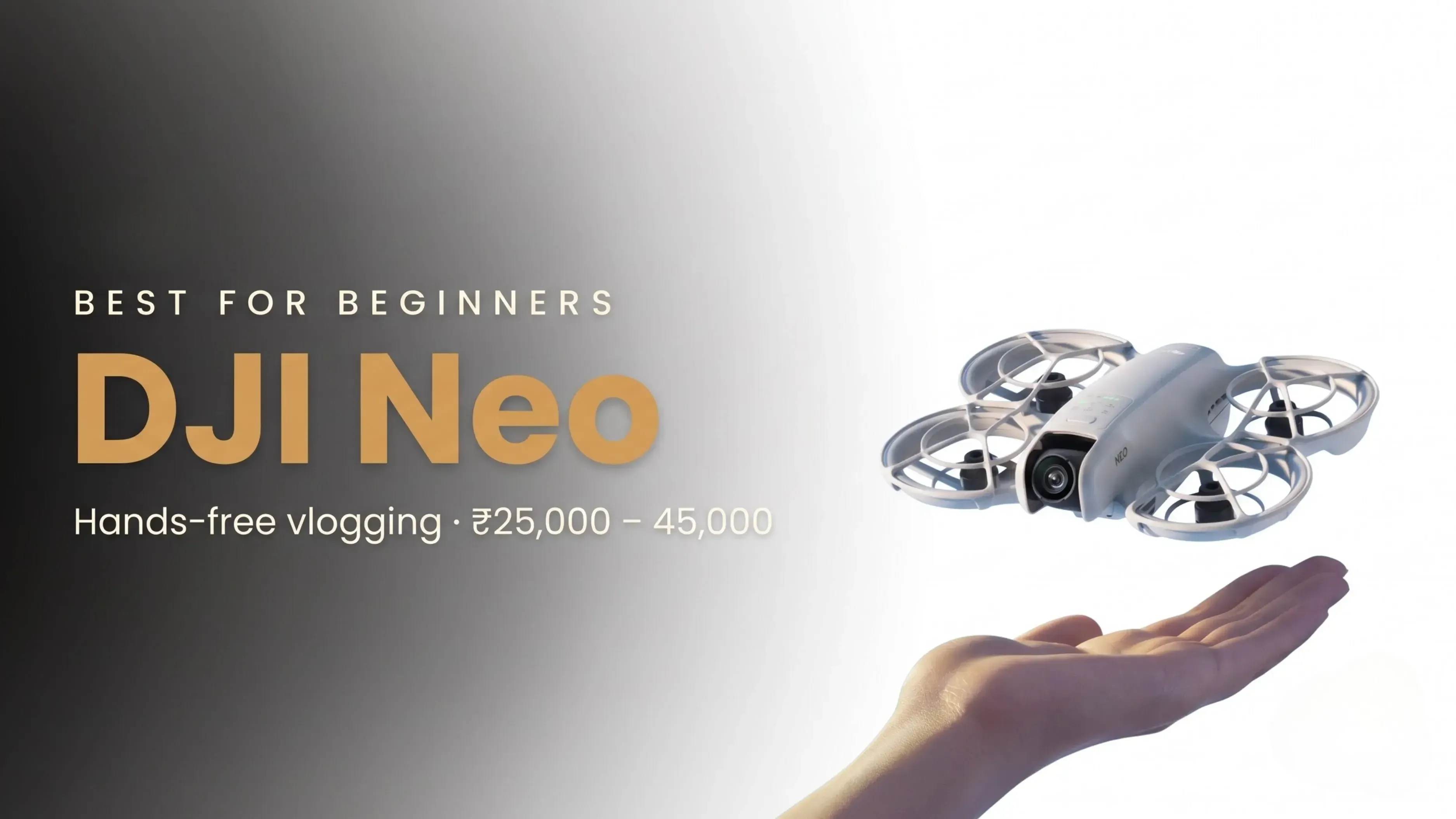
The Neo is DJI's smallest and cheapest drone, and it's a genuinely clever little thing. At just 135g, it takes off from and lands on your palm, responds to voice and gesture commands, and can follow you for automatic tracking shots, all without a controller if you like. It shoots 4K video, is happy flying indoors thanks to its enclosed propellers, and is the most forgiving drone here for someone who has never flown before. Priced from around Rs 25,000 as a standalone and up to Rs 45,000 for a Fly More Combo, it's the easiest and cheapest way into the DJI ecosystem.
Key specs
Just 135g, the lightest DJI drone
1/2-inch sensor, 12MP photos, 4K/30fps video
Single-axis gimbal with RockSteady electronic stabilization
~18 minutes flight time per battery
22GB internal storage, palm take-off, voice and gesture control
Fully enclosed propeller guards for safe indoor flying
The Catch: It uses only a single-axis mechanical gimbal helped by electronic stabilisation, so footage looks slightly less rock-steady than the 3-axis Mini drones, especially in wind. Flight time is short at around 18 minutes, so a Fly More Combo with extra batteries is worth it. It has downward sensing only, with no real obstacle avoidance, and it's a weaker choice for wide, cinematic landscape shots.
2. DJI Mini 4K: Best for True 4K Video on a Budget
Best for: Beginners and casual creators who specifically want real 4K footage from a properly stabilised drone at the lowest sensible price.
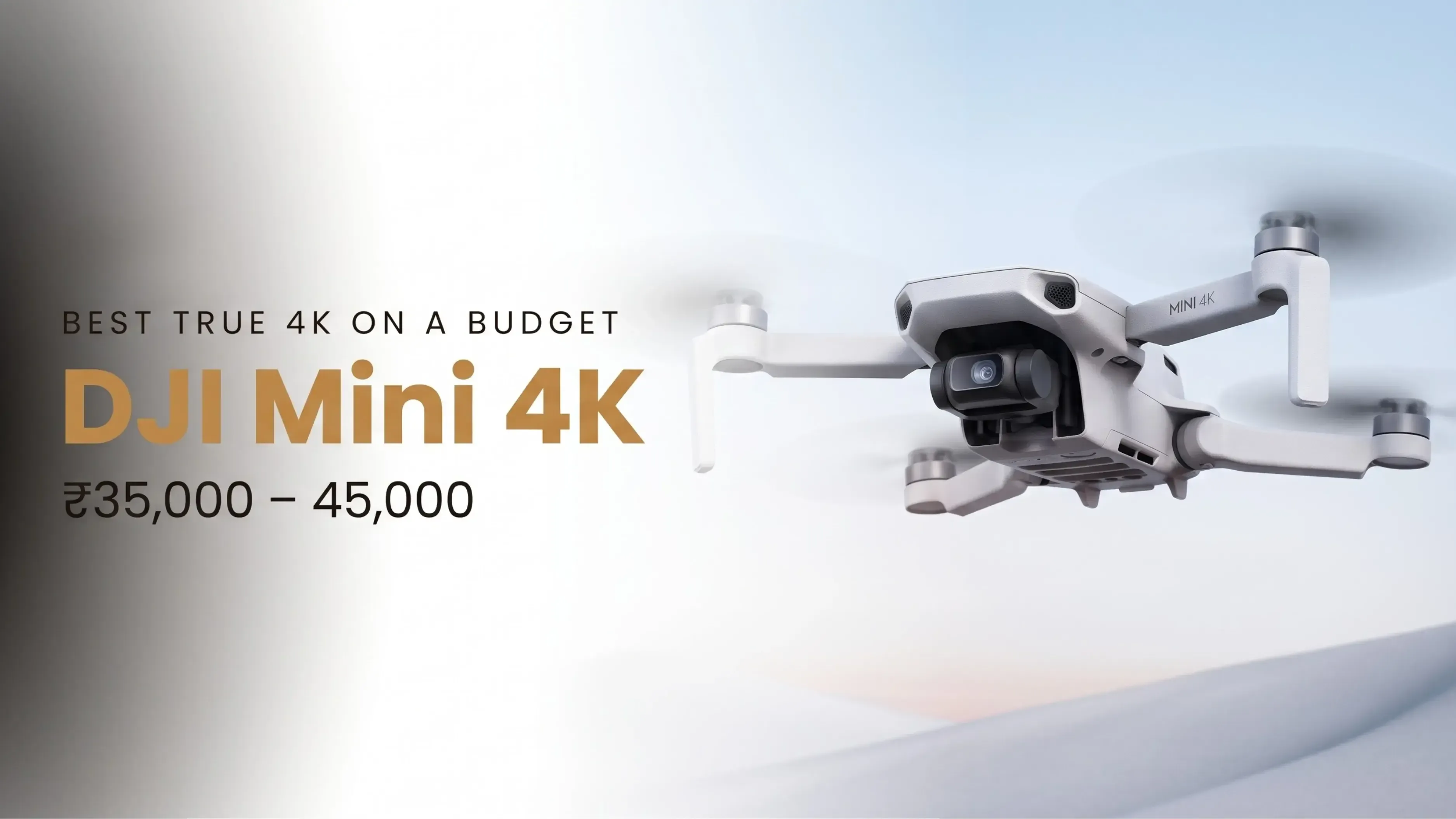
The Mini 4K takes the trusted Mini-series formula and pairs a true 4K/30fps camera with a proper 3-axis mechanical gimbal and long flight time. If your main goal is crisp aerial video for YouTube or travel reels, this is the most affordable way to get genuine 4K with smooth, professional-looking stabilisation. At 249g it stays in the lighter regulatory category, and it's famously beginner-friendly: one-tap take-off, GPS-locked hovering, and automatic Return to Home make it hard to get wrong.
Key specs
Under 250g take-off weight
1/2.3-inch sensor, 12MP photos, 4K/30fps video
3-axis mechanical gimbal
Up to 31 minutes flight time
10km video transmission (DJI O2), 4x digital zoom
Level 5 wind resistance
The Catch: The small 1/2.3-inch sensor is clean in good daylight but struggles in low light and at dusk. It has no obstacle sensors, no subject tracking, and no D-Log or RAW capture for advanced colour grading. It's a straightforward "point it and film" drone: reliable, but not clever.
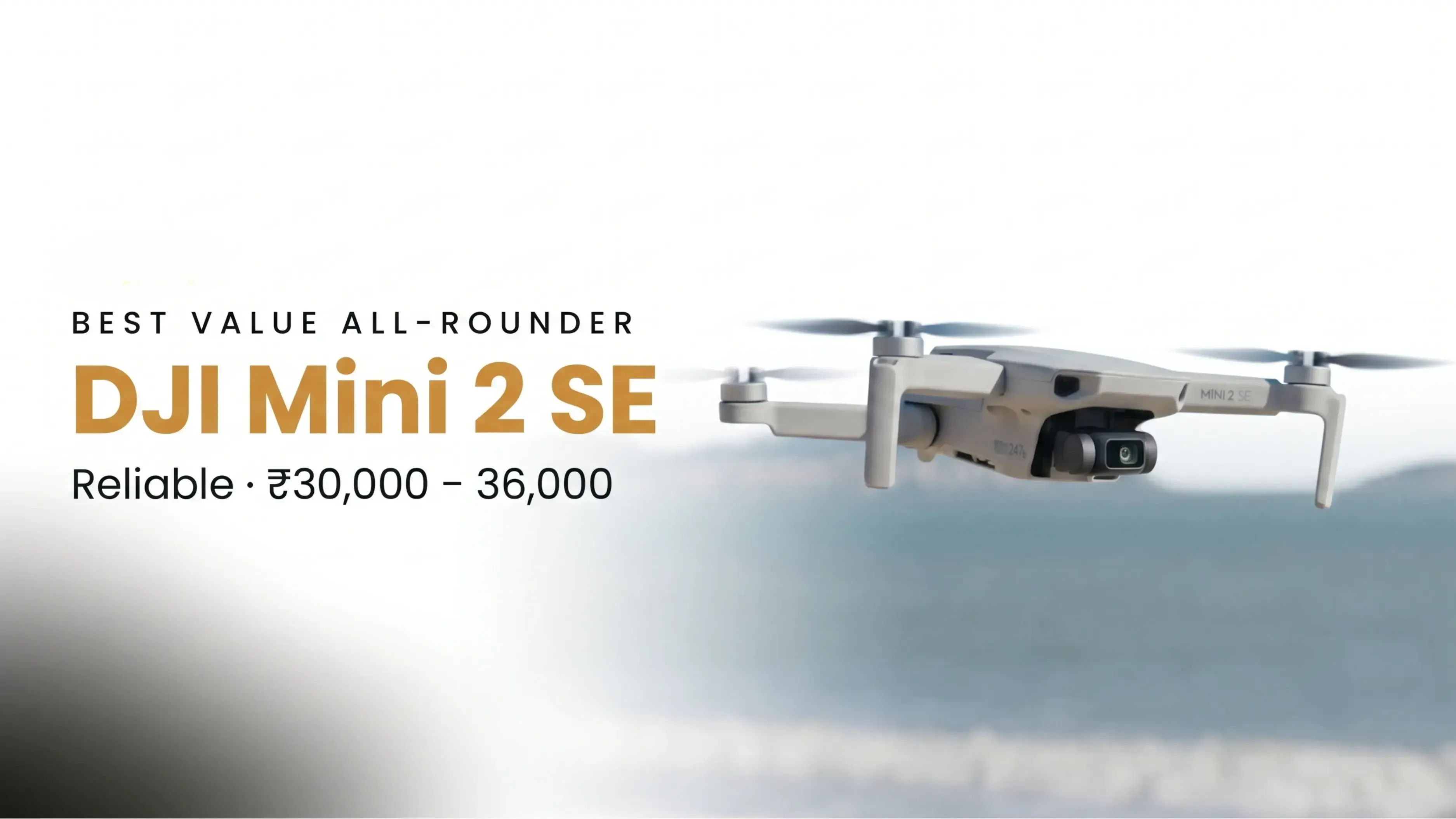
3. DJI Mini 2 SE: Best Reliable, Value All-Rounder
Best for: Hobbyists who want one of the most proven, dependable drones ever made at the lowest price a real DJI camera drone reaches.
The Mini 2 SE is a slightly older model, but that's exactly why it's such good value now. It's one of the most reliable flyers DJI has ever released: easy to control, steady in wind, and backed by the same excellent 3-axis mechanical gimbal that separates smooth footage from the jelly-like wobble of cheaper drones. With a 31-minute flight time and a 10km transmission range, it does the fundamentals brilliantly and often sells for less than the newer models here.
Key specs
Under 250g take-off weight
1/2.3-inch sensor, 12MP photos, 2.7K/30fps video
3-axis mechanical gimbal for smooth stabilization
Up to 31 minutes flight time
10km video transmission (DJI O2)
Level 5 wind resistance, 4,000m max altitude
The Catch: It tops out at 2.7K video rather than 4K, which is fine for social media and most screens but limits heavy cropping and editing. Like other Mini drones at this price, it has no obstacle avoidance or subject tracking, so you handle all the flying yourself.
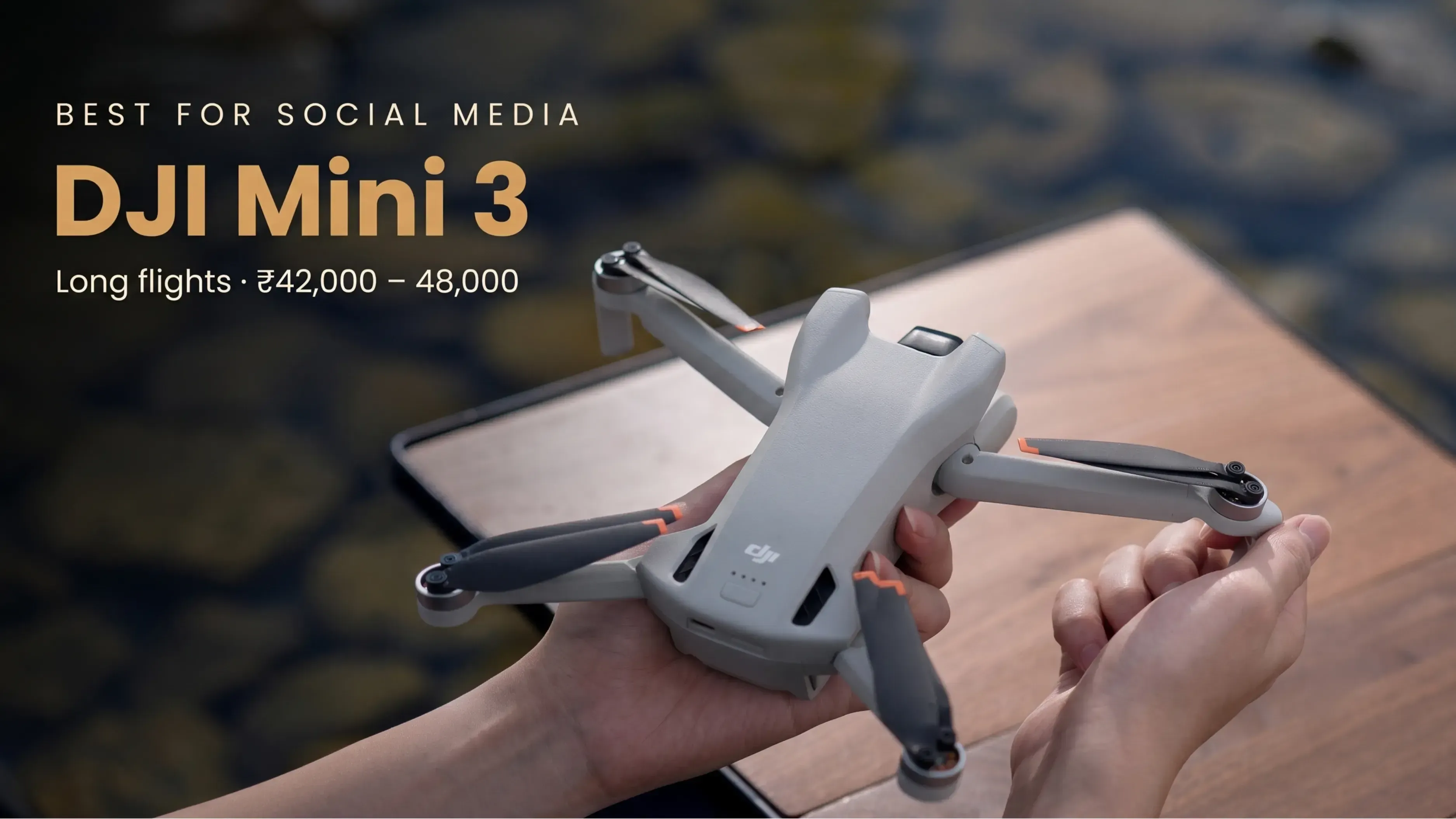
4. DJI Mini 3: Best for Social Media and Long Flights
Best for: Content creators who post vertical video for Instagram Reels or YouTube Shorts, and anyone who wants the longest flight time in this list.
The Mini 3 is the most capable DJI drone that still fits this budget, especially near the lower end of its price range. Its standout trick is a gimbal that physically rotates to shoot true vertical video, which is a real advantage for social platforms rather than an afterthought crop. It also has a larger 1/1.3-inch sensor for noticeably better low-light performance than the Mini 4K and Mini 2 SE, plus an impressive 38-minute flight time, the best here.
Key specs
248g take-off weight
Larger 1/1.3-inch sensor, 4K HDR video
3-axis gimbal that rotates for native vertical shooting
Up to 38 minutes flight time
10km video transmission (DJI O2)
True vertical shooting for Reels and Shorts
The Catch: It sits at the top of this budget, so you'll usually be buying the base version with a basic controller rather than the pricier Fly More Combo. The base model has downward-only sensing, not the full obstacle avoidance of the Mini 3 Pro, and its higher price makes sense mainly if vertical video, low-light performance, or long flights matter to you specifically.
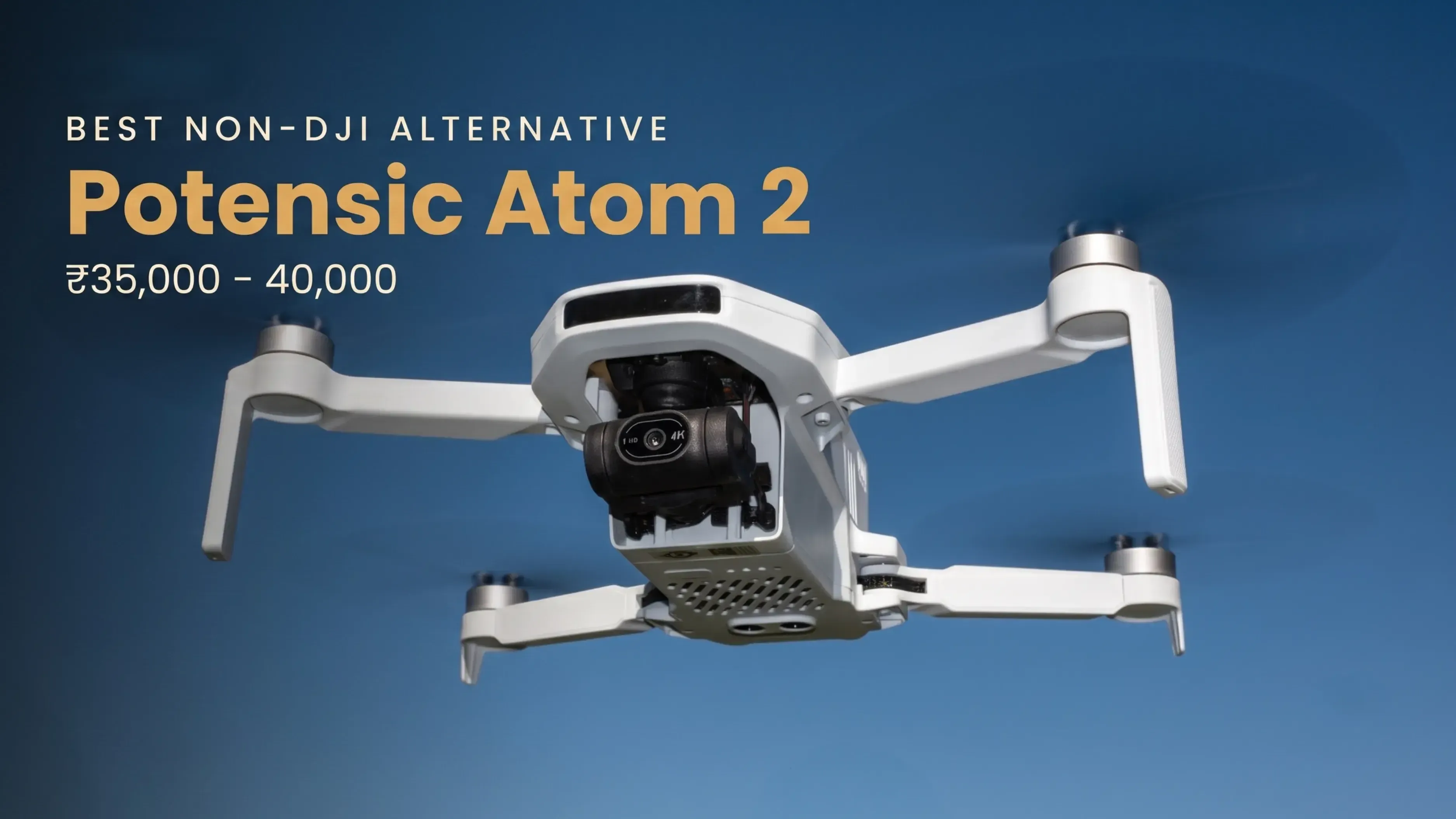
5. Potensic Atom 2: Best Non-DJI Alternative
Best for: Buyers who want to step outside the DJI ecosystem and still get premium features, often at a lower price.
The Atom 2 proves DJI doesn't have the budget category to itself. It packs a genuinely impressive feature set for the money: a 1/2-inch Sony CMOS sensor, 4K/30fps HDR video, a true 3-axis mechanical gimbal, AI subject tracking, and vertical shooting, all in a sub-250g body with strong wind resistance. Its 10km transmission and roughly 32-minute flight time per battery put it right alongside the DJI Minis, and its Fly More kits are often very aggressively priced in India.
Key specs
Under 250g take-off weight
1/2-inch Sony CMOS sensor, 48MP photos, 4K/30fps HDR video
3-axis mechanical gimbal
~32 minutes flight time per battery (around 96 minutes with a 3-battery combo)
10km transmission (PixSync 4.0), AI Track and vertical shooting
Level 5 wind resistance, RAW and P-Log support
The Catch: Some listings advertise "8K," but that's an interpolated photo mode; the real video ceiling is 4K/30fps, so judge it as a 4K drone. It has no obstacle-avoidance sensors, and Potensic's after-sales network and spare-parts availability in India are smaller than DJI's, which matters if you ever need a repair. Buy from a seller with proper Indian support.
Stretch Your Budget by Selling Your Old Device
Here’s a tip that most buying guides miss: you can upgrade to a better drone or a full Fly More kit by selling old gadgets you don’t use anymore, like a phone or camera.
Old phones, cameras, or laptops you no longer use can be sold for cash, which can help you cover a Rs 5,000 to Rs 10,000 difference in price. Instead of letting them sit unused, get a quick quote and use that money for the drone you really want. This can be the difference between a basic kit and one that lasts you much longer, and you can check Cashkr if you are willing to sell your old devices.
Drone Rules in India: What You Must Know Before Flying
Many first-time buyers miss this: every drone here is under 250 grams, which puts it in the DGCA’s Nano category. This is the lightest and least restricted class, making the rules and process much simpler than for heavier drones.
But just because these drones are light doesn’t mean there are no rules. Here are a few basics:
Register on the DGCA Digital Sky portal and check the latest requirements for recreational flying before you take off. Rules change, so confirm the current position rather than relying on old advice.
Respect airspace zones. India's airspace is divided into Green, Yellow, and Red zones. Red zones (near airports, military bases, and sensitive areas) are off-limits. Always check the Digital Sky app for a new location, even if it looks like open ground.
Fly responsibly: keep the drone in sight, avoid crowds and private property, and don't fly at night unless you're properly equipped and permitted.
Commercial use (paid work) has stricter requirements than recreational flying, so factor that in if you plan to earn from your footage.
How to Pick the Right Drone Under Rs 50,000
Focus on the gimbal, not just megapixels. A 3-axis mechanical gimbal (like on the Mini 4K, Mini 2 SE, Mini 3, and Atom 2) is the key to smooth, professional-looking video. Even if a drone claims lots of megapixels, it won’t look good without a proper gimbal.
Get extra batteries because flight time is short. Most of these drones fly for 18 to 38 minutes per battery, which goes by quickly. A Fly More Combo or a few spare batteries will improve your experience far more than a small spec upgrade.
Pick a drone that fits how you want to film. If you want hands-free tracking, the Neo is made for that. If you need vertical video, the Mini 3 does it natively. For the best value, the Mini 2 SE and Atom 2 offer more than you’d expect for the price.
Stick with drones under 250g on purpose. All the picks here are under that limit to keep things simple with regulations. Heavier drones can do more, but they also mean more paperwork and restrictions.
Stay away from no-name "8K" toy drones. In this price range, you’ll see lots of cheap drones claiming "8K cameras" and "50-minute flights," but these are usually not true. They often have low-quality cameras, no gimbal, no GPS, and can easily crash or get lost. Any of the five drones listed above is a much safer choice.
Always buy from an authorized seller. Grey-market drones might be cheaper at first, but you won’t get an Indian warranty or repair support, which is a big risk since drones can be easily damaged.
Final Verdict
If you want a quick answer: the DJI Mini 4K and DJI Mini 2 SE are the safest and best-value choices in this price range. Both have 3-axis gimbals that make your videos look smooth and professional.
Pick one of the other drones if you have specific needs. Go for the DJI Neo if you want a small drone for hands-free filming and learning. Choose the DJI Mini 3 if you care about vertical videos, better low-light shots, or longer flights. The Potensic Atom 2 is a good choice if you want premium features outside the DJI brand, but keep in mind the support network is smaller.
No matter which drone you choose, buy from an authorized seller and learn the DGCA rules before your first flight. Also, selling old gear you don’t use anymore is a simple way to boost your budget for the drone you really want.
FAQs
1. Which is the best drone under Rs 50,000 in India in 2026?
Well, that depends on what you want. For all-round reliability and pricing, the safest choices are the DJI Mini 2 SE and Mini 4K. Best camera and vertical video? Stretch for the DJI Mini 3. The DJI Neo is unrivaled for hands-free self-filming, while the Potensic Atom 2 is the best non-DJI choice.
2. Do I need a licence to fly a drone in India?
For recreational use with a sub-250g drone (all the picks here), you don't need a pilot licence, but you should register on the DGCA's Digital Sky portal and follow current rules. Always check the latest guidance, as regulations are updated periodically.
3. Why are the "Fly More Combos" more expensive than the drone itself?
A Fly More Combo bundle includes extra batteries (usually 3 total), a charging hub, and often a controller and carry case. Because a single battery only lasts 18 to 38 minutes, the combo is usually worth it, but it can push the price toward or past Rs 50,000, which is why standalone versions matter at this budget.
4. Is a gimbal really that important on a drone?
Yes, it's arguably the most important feature. A 3-axis mechanical gimbal physically stabilizes the camera for smooth, cinematic footage. Cheap drones without one produce shaky, wobbly video no matter how high the advertised resolution is.
5. Can these drones shoot 4K video?
DJI Neo, Mini 4K, Mini 3, and Potensic Atom 2 all record in 4K. The DJI Mini 2 SE maxes out at 2.7K, which still looks great on phones and most displays. Watch out for cheap drones that say "8k" - usually that is an interpolated photo mode, not actual video.
6. Which drone is best for vlogging or following me around?
The DJI Neo. At 135g it launches from your palm, responds to voice and gestures, and can automatically track and film you. The Potensic Atom 2 also has strong AI tracking if you want a larger drone with the same following ability.
7. Which drone is best for Instagram Reels and YouTube Shorts?
The DJI Mini 3, because its gimbal physically rotates to shoot true vertical video rather than cropping a horizontal frame. The Potensic Atom 2 also offers a vertical shooting mode.
8. How long do drones in this price range fly on one battery?
Between about 18 and 38 minutes depending on the model. The DJI Mini 3 leads at up to 38 minutes, the Mini 4K and Mini 2 SE manage 31, the Atom 2 around 32, and the lightweight Neo around 18. Buying spare batteries is strongly recommended.
9. Are non-DJI drones like the Potensic Atom 2 any good?
Yes. The Atom 2 offers a Sony sensor, 4K HDR video, a 3-axis gimbal, and AI tracking at a competitive price. The main trade-offs versus DJI are a smaller service and spare-parts network in India and no obstacle avoidance, so buy from a seller with proper local support.
10. What accessories should I buy with my first drone?
Start with spare batteries (or a Fly More Combo), then add a landing pad for clean take-offs from uneven ground, a set of ND filters if you shoot video in bright sun, and a fast microSD card if your drone uses one. A small carry case protects everything.
If you want to sell your old devices then, click here.
Advertisement
Stay in the loop
Weekly tech insights in your inbox. No spam, ever.

 Yaskar Jung ShahUpdated: Aug 15, 2026·17 min read