Best Gaming Laptop Under Rs. 60,000 in India: June 2026 Rankings
In June 2026, gaming laptops under Rs. 60,000 in India get entry-level GPUs like the RTX 2050, RTX 3050, and GTX 1650. These are teamed up with the latest AMD Ryzen and Intel Core processors. So, shoppers usually need to decide between better GPU performance and a newer CPU. This makes spec comparison pretty complex; it's not just about the price.
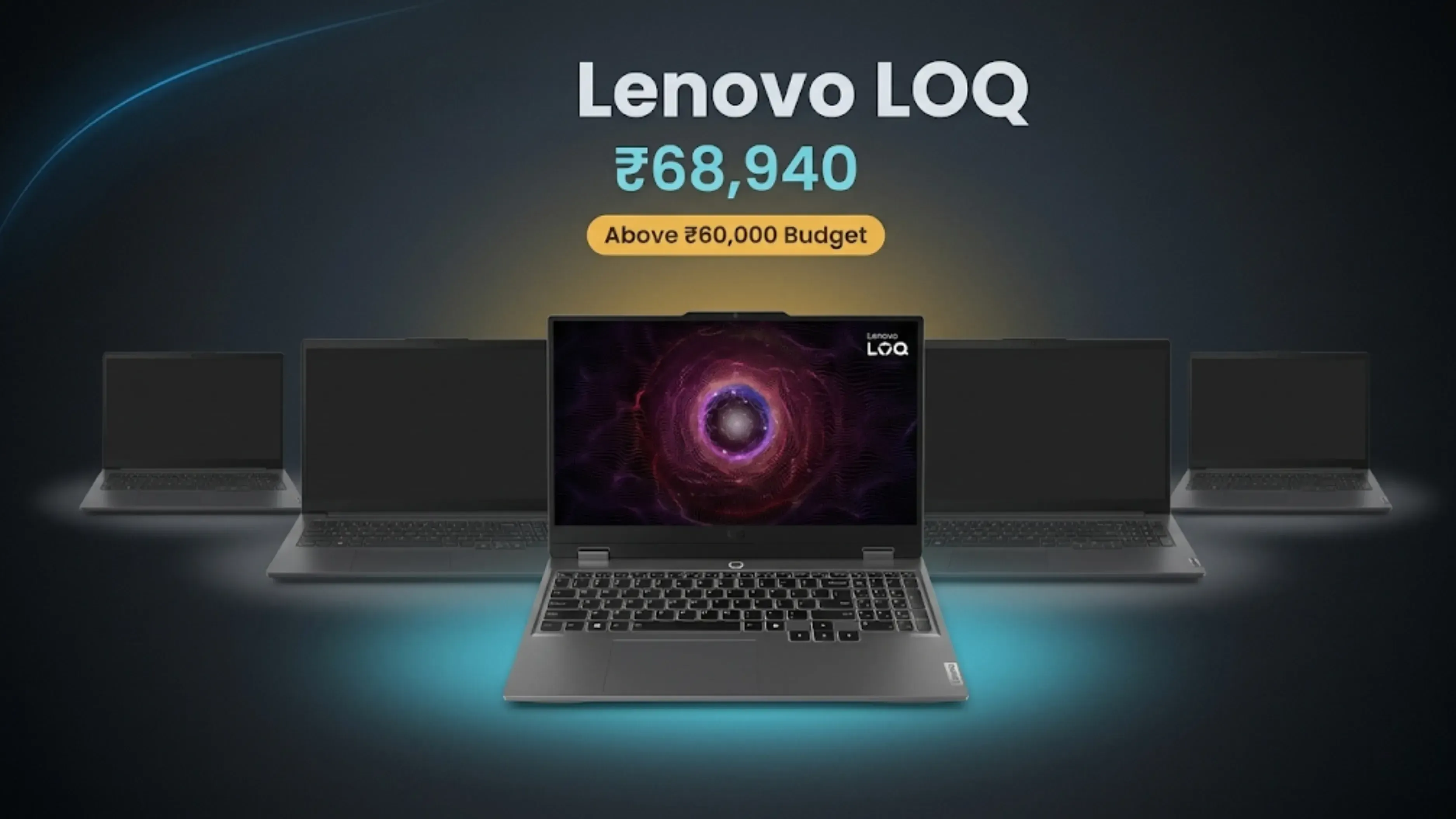
The best gaming laptop under Rs. 60,000 list has three genuinely competitive options: the ASUS TUF Gaming A15 at Rs. 54,990 with a Ryzen 7 7435HS and RTX 2050, the HP Victus 15 at Rs. 56,990 with a stronger RTX 3050 GPU and the Lenovo IdeaPad Gaming 3 at Rs. 59,990 with Intel’s 11th-gen i5 and GTX 1650. Two other laptops on the list require an honest, upfront note: the HP Pavilion Gaming at Rs. 51,990 uses a 2019-era processor and a 1TB hard drive rather than an SSD, and the Lenovo LOQ at Rs. 68,940 exceeds the Rs. 60,000 budget by nearly Rs. 9,000.
Below, all five laptops are ranked and explained for June 2026. This guide highlights which ones are truly worth considering and points out any hardware compromises buyers should know about before making a decision.
Best gaming laptops under Rs. 60,000 for June 2026: 1. ASUS TUF A15 (Rs. 54,990) with Ryzen 7 7435HS, RTX 2050, and DDR5 RAM. 2. HP Victus 15 (Rs. 56,990) with a better RTX 3050 GPU and Ryzen 5 5600H. 3. Lenovo IdeaPad Gaming 3 (Rs. 59,990) with GTX 1650 and i5-11320H. 4. HP Pavilion Gaming (Rs. 51,990) should be avoided due to its 2019 chip, 1TB HDD, and Windows 10. 5. Lenovo LOQ (Rs. 68,940) is above budget but offers RTX 3050A, 16GB RAM, and i5-12450HX.
There are two important things to note: The HP Pavilion Gaming (Rs. 51,990) comes with a 1TB HDD instead of an SSD, a 2019 Ryzen 5 3550H chip, and Windows 10. In 2026, having an HDD as the main drive is a major performance drawback that the low price does not make up for. The Lenovo LOQ (Rs. 68,940) is included only for comparison, as it is Rs. 8,940 over the Rs. 60,000 budget.
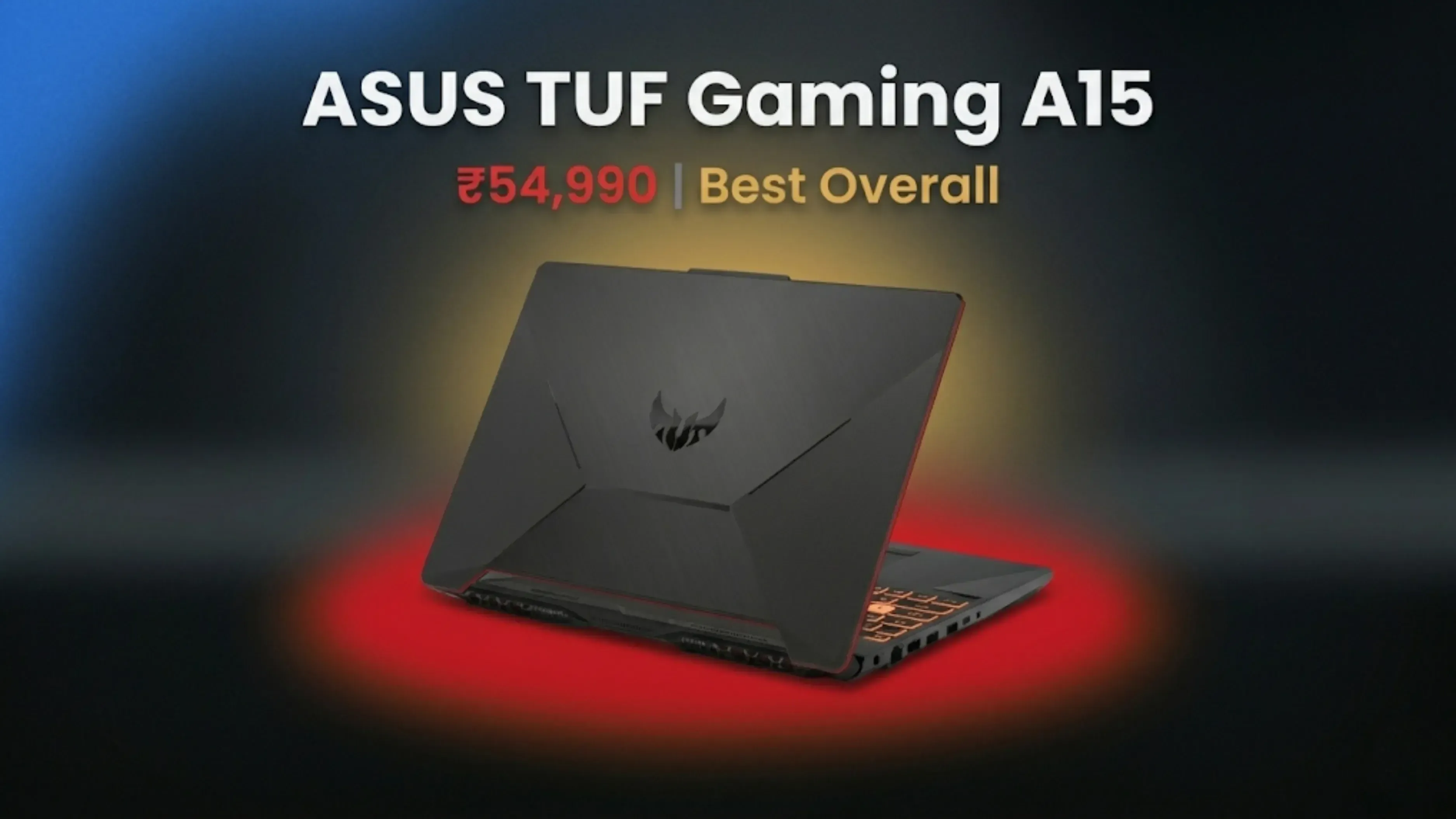
ASUS TUF Gaming A15: Best Gaming Laptop Under Rs. 60,000 Overall
The ASUS TUF Gaming A15 at Rs. 54,990 is the recommended starting point for the best gaming laptop under Rs. 60,000 in India in June 2026. The Ryzen 7 7435HS is the most modern and most capable CPU in this comparison: an octa-core processor with a 4.5 GHz boost clock and AMD’s latest architecture in this budget tier. Eight cores at this price point enables smoother multitasking alongside gaming, better streaming performance and stronger CPU-side gaming frame rates in titles that use multiple CPU threads.
The RTX 2050 is the weakest GPU in the RTX 30 and 20 series lineup but represents the entry point into ray tracing capability and DLSS upscaling. DLSS (Deep Learning Super Sampling) allows the RTX 2050 to render games at lower internal resolutions and upscale to FHD using AI, producing significantly higher frame rates than native rendering at the same visual quality. For competitive gaming in BGMI, Valorant and CS2, the RTX 2050 with DLSS delivers playable high-settings frame rates. For graphically demanding open-world titles like Cyberpunk 2077, medium to low settings are recommended.
The ASUS TUF Gaming A15 comes with 8GB DDR5 RAM, which is the most future-ready memory in this group. DDR5 offers higher bandwidth than the DDR4 found in the HP Victus and Lenovo IdeaPad Gaming 3, leading to better performance in memory-heavy games and tasks like video editing. However, its 48 WHrs battery is the smallest here, so gaming on battery won’t last as long as on the HP Victus. If you often play unplugged, the HP Victus’s 70 WHrs battery is a real plus.
Ryzen 7 7435HS, the CPU advantage. Eight cores at 4.5 GHz in a gaming laptop under Rs. 55,000 is exceptional for this price tier. The Ryzen 7 7435HS runs more demanding CPU workloads alongside gaming better than the six-core Ryzen 5 5600H in the HP Victus or the quad-core i5-11320H in the Lenovo IdeaPad Gaming 3. For buyers who also use the laptop for content creation, development or streaming, the octa-core advantage is felt every day.
RTX 2050 with DLSS and ray tracing The RTX 2050 is the entry point into Nvidia’s RTX architecture. It supports DLSS upscaling, which provides a substantial frame rate boost in supported titles by rendering at 1080p using AI upscaling from lower internal resolutions. DLSS quality mode typically adds 40 to 60 percent more frames per second than native rendering at comparable image quality. It also supports ray tracing, though at the RTX 2050’s performance level, ray tracing is only practical in less demanding titles.
DDR5 RAM DDR5 operates at higher memory speeds and bandwidth than DDR4. The performance difference in gaming is moderate but measurable in CPU-bound scenarios. For bandwidth-sensitive content creation workloads like video editing, 3D rendering, and data processing, DDR5 delivers a more noticeable improvement over DDR4.
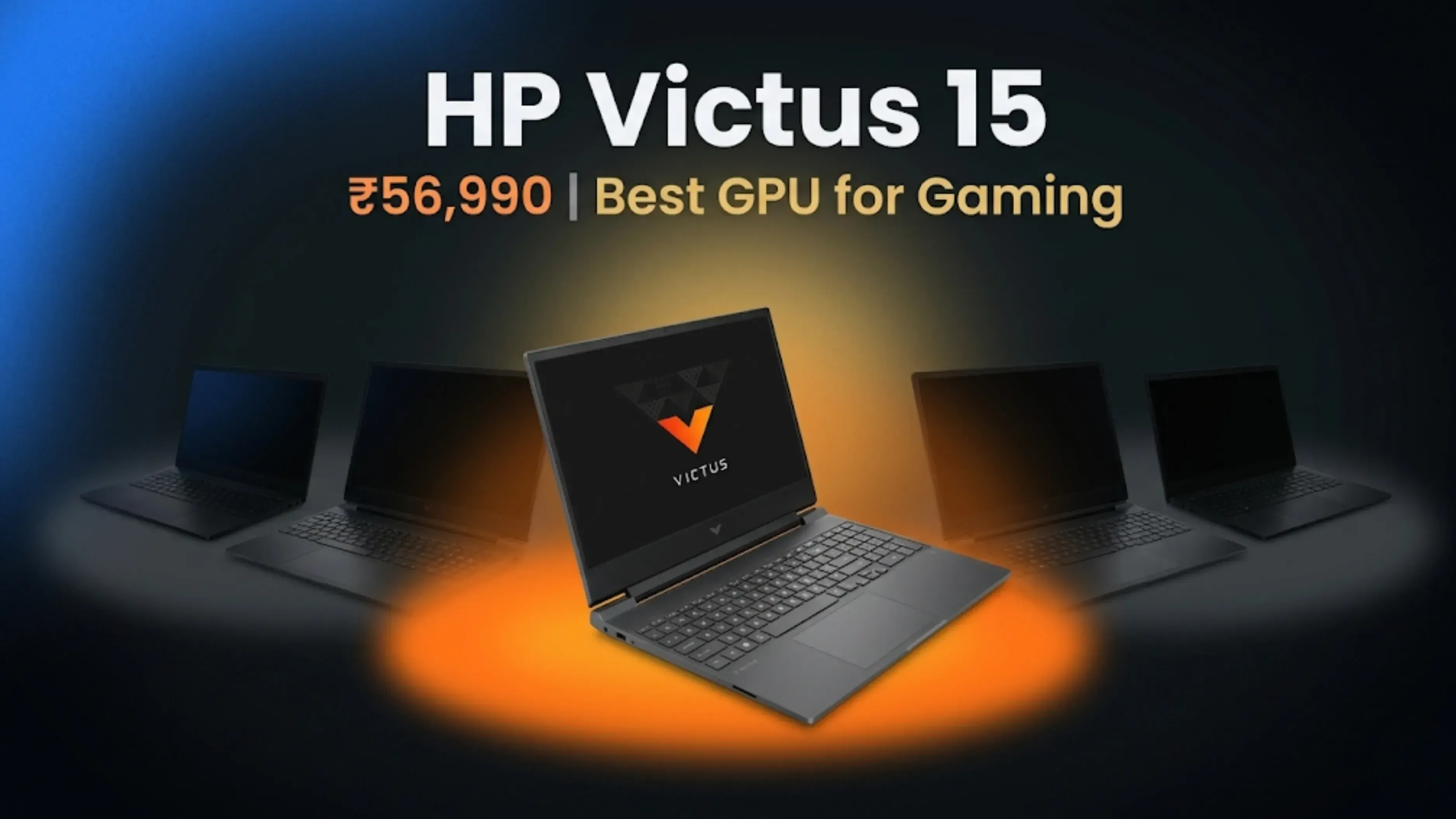
HP Victus 15: Best GPU for Gaming Under Rs. 60,000
The HP Victus 15 goes for Rs. 56,990 and has a RTX 3050, a way better GPU than the RTX 2050 in the ASUS TUF A15. Tests show that the RTX 3050 performs around 20 to 30 percent better at rasterization tasks, resulting in higher frame rates in intense games with the same settings. If you love playing graphically-heavy games at high settings, the HP Victus 15 is the clear winner because of its superior GPU, even if its CPU isn't the top one.
The Ryzen 5 5600H is a six-core processor with a 4.2 GHz boost clock, based on AMD’s Zen 3 architecture. It is a generation older than the Ryzen 7 7435HS in the ASUS TUF A15 and has two fewer cores. For gaming, the six-core configuration is adequate for all current titles. For CPU-intensive workloads like streaming, video editing and development, the fewer cores relative to the ASUS TUF A15’s octa-core Ryzen 7 are a limitation. The HP Victus 15 has the biggest battery in this group at 70 WHrs, so it lasts longer for work and general use when you’re not gaming. It runs Windows 11 and comes with 8GB DDR4 RAM, which is standard for this price. If you want to upgrade the RAM later, check whether your HP Victus 15 has additional SODIMM slots.
RTX 2050 vs RTX 3050 for gaming in India: The RTX 3050 is approximately 20-30% stronger in most gaming benchmarks. For titles that primarily use GPU performance, such as Forza Horizon 5, GTA V, Red Dead Redemption 2, and Elden Ring, the HP Victus 15 delivers higher frame rates at the same settings. For competitive esports titles like Valorant and CS2 that are CPU-bound and run well below 100 FPS on either GPU, the difference is less visible. The ASUS TUF A15’s better CPU and DDR5 RAM partially compensate for the RTX 2050’s GPU disadvantage in CPU-bound scenarios.
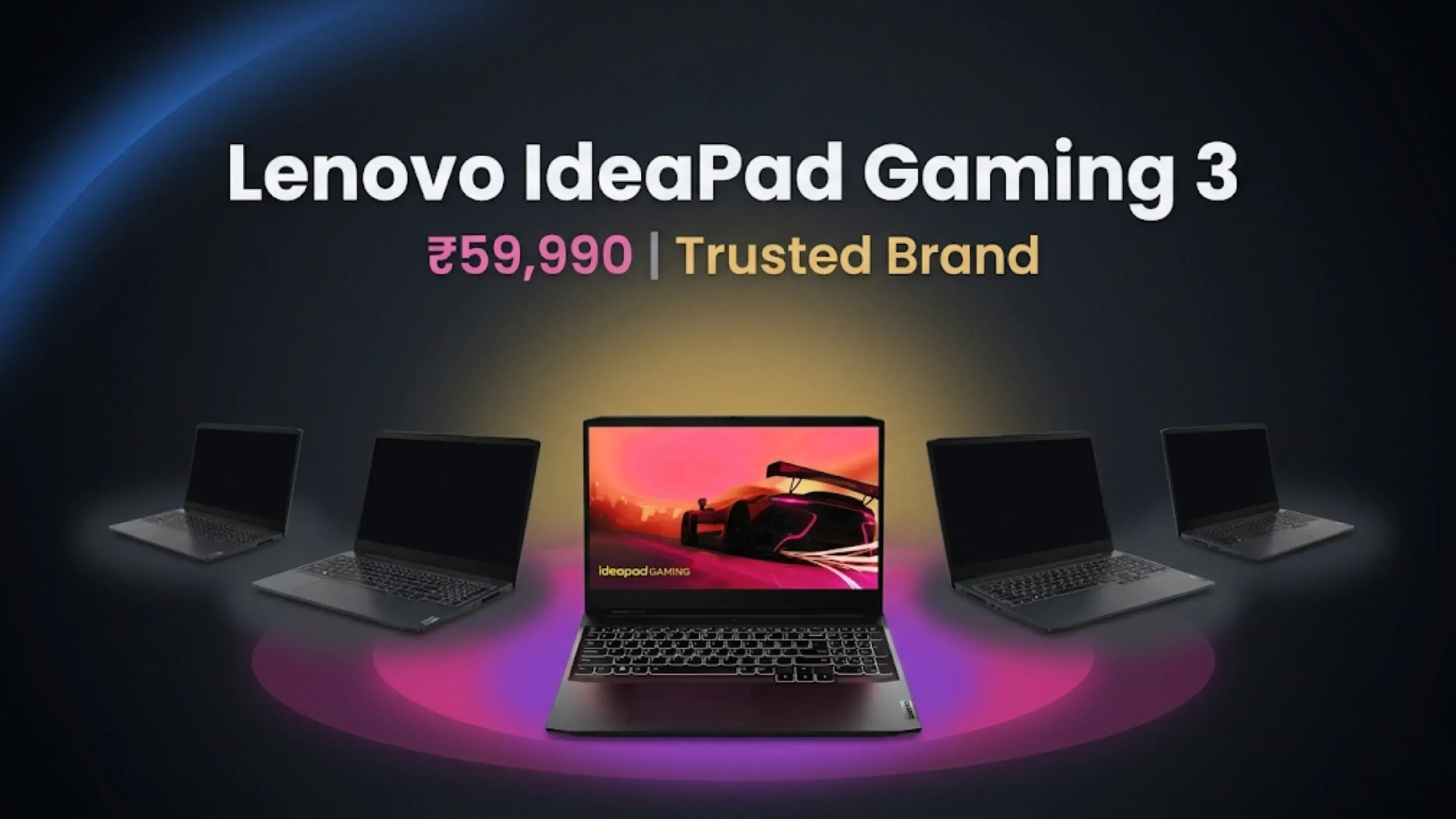
Lenovo IdeaPad Gaming 3: Established Choice at the Budget Ceiling
The Lenovo IdeaPad Gaming 3 at Rs. 59,990 is the most expensive laptop in this budget and features the GTX 1650, which is the oldest and weakest GPU in this comparison. The GTX 1650 does not support DLSS or ray tracing, features that both the RTX 2050 and RTX 3050 in the competing laptops carry. In gaming benchmarks, the GTX 1650 performs below the RTX 2050 and significantly below the RTX 3050. At Rs. 59,990, the Lenovo IdeaPad Gaming 3 costs Rs. 5,000 more than the ASUS TUF A15 and delivers a weaker GPU.
The Intel Core i5-11320H is a quad-core processor with a 4.5 GHz boost clock. The 11th-generation Intel architecture performs well in single-core tasks and the 4.5 GHz boost matches the ASUS TUF A15’s CPU clock. The limitation is four cores versus eight on the ASUS TUF A15. For gaming in most current titles, four cores is still adequate. For streaming gameplay, running background applications and future titles that increasingly use more CPU threads, four cores is a more constrained starting point.
The Lenovo IdeaPad Gaming 3 has a solid user rating of 4.3 out of 5 from 5,215 reviews, the highest number in this comparison, showing steady buyer satisfaction. Lenovo is known for good build quality, cooling, and support. However, at its current price, you pay more for a weaker GPU and fewer CPU cores compared to the ASUS TUF A15, mainly for Lenovo’s build and after-sales service.
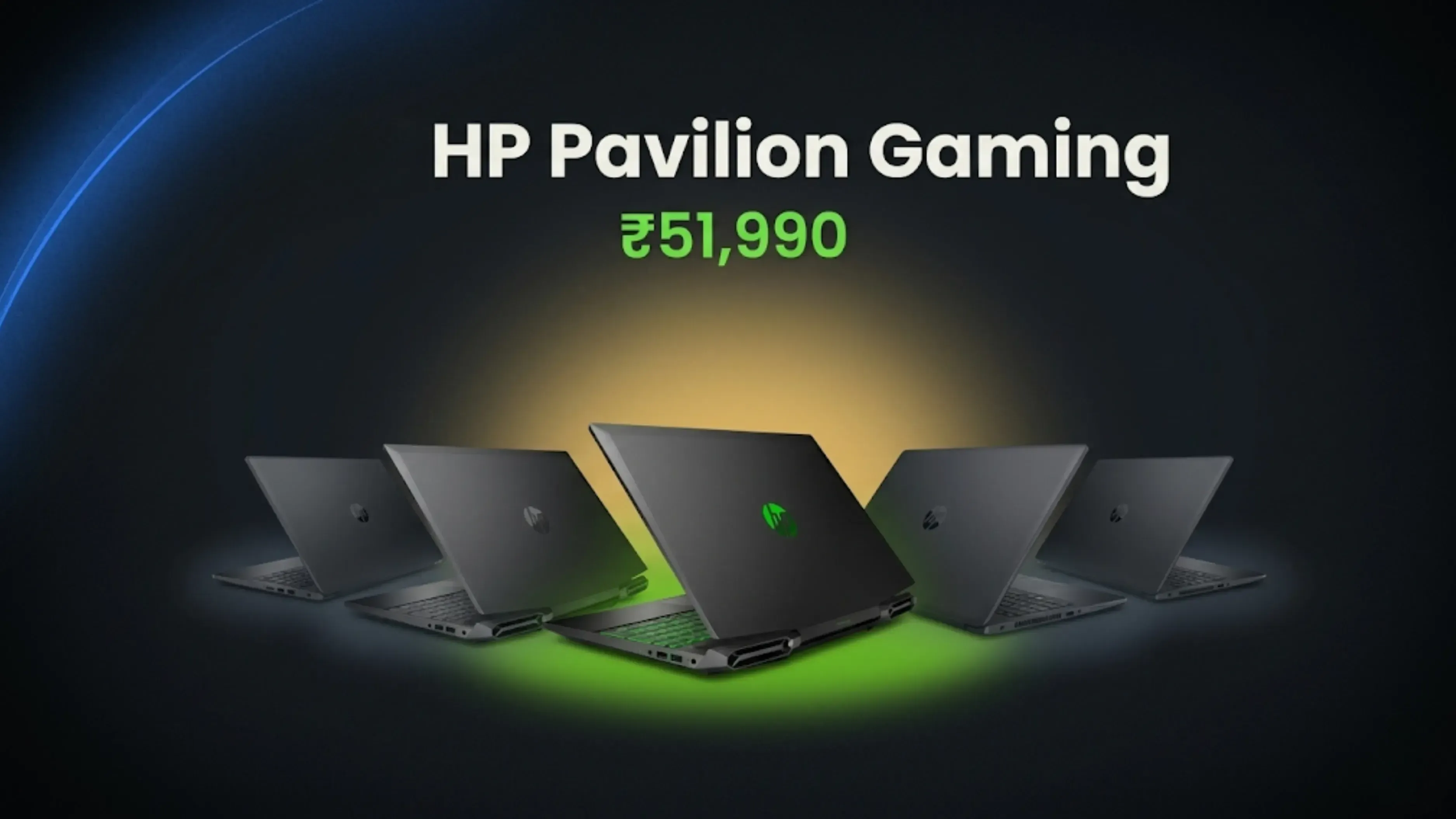
HP Pavilion Gaming: Why This Laptop Should Be Avoided in 2026
The HP Pavilion Gaming is the cheapest option here at Rs. 51,990, but it has two major hardware drawbacks that make it a poor choice for gaming in 2026. First, it uses a 1TB hard disk drive instead of a faster SSD. Second, it runs on the Ryzen 5 3550H, a processor from 2019 with older technology. By 2026, using a gaming laptop with a hard disk drive as the main storage is a big step down from SSD models. Games load much slower on an HDD—a game that takes 10 seconds to load on an SSD might take 60 to 90 seconds on an HDD. Starting Windows, opening apps, and moving large files are all much slower too. While 1TB of storage sounds good, the slow speed of an HDD makes everyday use frustrating. With SSD options available at similar or lower prices, no one should settle for an HDD in a gaming laptop.
The Ryzen 5 3550H is a 2019 processor with older technology, and it’s outperformed by the Ryzen 5 5600H in the HP Victus 15 and the Ryzen 7 7435HS in the ASUS TUF A15. This laptop also comes with Windows 10 instead of Windows 11. Even though it has a 4.2 out of 5 rating from over 15,000 reviews, its outdated hardware and software make it a poor choice in 2026. For just Rs. 3,000 more, the ASUS TUF A15 offers an SSD, newer processor, and DDR5 RAM.
HDD vs SSD in gaming: Hard disk drives read data at about 80 to 160 MB/s, while standard SATA SSDs reach 500 to 550 MB/s, and NVMe SSDs reach 3,000 to 7,000 MB/s. Loading a modern game from an HDD instead of an SSD isn’t just a small difference—it can mean waiting 60 to 90 seconds instead of just 10. In 2026, no gaming laptop should rely on an HDD for main storage. The HP Pavilion Gaming’s 1TB HDD at Rs. 51,990 isn’t good value, especially since the ASUS TUF A15 with an SSD is only Rs. 3,000 more.
Lenovo LOQ: Best Specs But Above the Budget
The Lenovo LOQ costs Rs. 68,940, which is Rs. 8,940 over the Rs. 60,000 budget, but it’s included here as the most powerful option if you can stretch your budget. It features a 12th-gen Intel Core i5-12450HX, 16GB RAM, and an RTX 3050A GPU. The 16GB RAM stands out in this group and is much better for gaming at high settings, streaming, and multitasking compared to the 8GB found in the other laptops.
The RTX 3050A is a version of the RTX 3050 designed for laptops with different cooling needs. It supports DLSS and ray tracing, just like the RTX 3050 in the HP Victus 15. If you can spend more than Rs. 60,000 and want 16GB RAM with RTX performance, the Lenovo LOQ at Rs. 68,940 is a good option to consider.
Full Specification Comparison: The Three Recommended Laptops
Spec
ASUS TUF Gaming A15
HP Victus 15
Lenovo IdeaPad Gaming 3
Price
Rs. 54,990
Rs. 56,990
Rs. 59,990
GPU
RTX 2050 (4GB)
RTX 3050 (4GB)
GTX 1650 (4GB)
CPU
Ryzen 7 7435HS (8-core)
Ryzen 5 5600H (6-core)
i5-11320H (4-core)
Max CPU Speed
4.5 GHz
4.2 GHz
4.5 GHz
RAM
8GB DDR5
8GB DDR4
8GB DDR4
Storage
512GB SSD
512GB SSD
512GB SSD
Display
15.6-inch FHD IPS
15.6-inch FHD IPS
15.6-inch FHD IPS
Battery
48Wh
70Wh
~8 hours claimed
OS
Windows 11
Windows 11
Windows 11
User Rating
4.3/5 (1,881 ratings)
4.2/5 (428 ratings)
4.3/5 (5,215 ratings)
The HP Pavilion Gaming and Lenovo LOQ are not included in this comparison table. The Pavilion Gaming is left out because its HDD and 2019 processor don’t match up to the three SSD-equipped options, and the Lenovo LOQ is excluded because it’s over the Rs. 60,000 budget. The three laptops listed above are the real choices within budget.
Best Gaming Laptop Under Rs. 60,000: Who Should Buy Which One
Choosing between the three recommended laptops comes down to whether you care more about gaming GPU performance or CPU power:
Buy the ASUS TUF Gaming A15 (Rs. 54,990) if you want the best CPU performance in this budget, with the Ryzen 7 7435HS’s eight cores, modern DDR5 memory, and DLSS support from the RTX 2050. The combination is well-suited for gamers who also stream or create content alongside gaming, and the RTX 2050’s DLSS and ray tracing support are meaningful features for the GPU’s long-term relevance. It is also Rs. 2,000 cheaper than the HP Victus 15.
Buy the HP Victus 15 (Rs. 56,990) if GPU performance in graphically demanding games is your top priority and you play titles where the RTX 3050’s 20 to 30 percent frame-rate advantage over the RTX 2050 is consistently felt. The 70 WHr battery is also the strongest in the comparison for buyers who regularly use the laptop away from a power outlet. Accept the six-core Ryzen 5 5600H and DDR4 RAM as the trade-offs for the better GPU.
Buy the Lenovo IdeaPad Gaming 3 (Rs. 59,990) if you specifically want a Lenovo laptop with the IdeaPad Gaming brand’s track record and after-sales support, or if Lenovo’s service network in your area is a deciding factor. Be aware that it costs more than the ASUS TUF A15 while delivering a weaker GPU without DLSS support. The strong user rating history (4.3 from 5,215 reviews) is its strongest argument over specification comparison.
Avoid the HP Pavilion Gaming. Its 1TB HDD as the main storage makes it a bad choice for gaming in 2026, no matter the Rs. 51,990 price tag. For just Rs. 3,000 more, the ASUS TUF A15 gives you an SSD, a newer CPU, and a better GPU.
Final Verdict
For most buyers, the ASUS TUF Gaming A15 at Rs. 54,990 is the best gaming laptop under Rs. 60,000 in India for June 2026. It offers a Ryzen 7 7435HS octa-core CPU, DDR5 RAM, RTX 2050 with DLSS, and SSD storage—all at the lowest price among the top options. If you want the best GPU performance for demanding games, the HP Victus 15 with RTX 3050 at Rs. 56,990 is a good alternative, as long as you’re okay with a slightly weaker CPU for the extra Rs. 2,000. To get the best gaming laptop under Rs. 60,000 in India, it’s important to look closely at the specs. The HP Pavilion Gaming may be cheap, but its 2019 processor and HDD storage make it a bad pick for 2026. The Lenovo LOQ has great specs but is over budget. Between the ASUS TUF A15 and HP Victus 15, your choice depends on whether you want better CPU flexibility or higher GPU frame rates. Both are strong options with SSDs, up-to-date operating systems, and dedicated RTX GPUs.
Bottom Line: Best gaming laptop under Rs. 60,000 in India June 2026: 1. ASUS TUF A15 (Rs. 54,990) — Ryzen 7 7435HS, RTX 2050, DDR5, DLSS | 2. HP Victus 15 (Rs. 56,990) — RTX 3050 better GPU, 70WHrs battery | 3. Lenovo IdeaPad Gaming 3 (Rs. 59,990) — GTX 1650, trusted brand. Avoid HP Pavilion Gaming (HDD, 2019 chip). Consider Lenovo LOQ (Rs. 68,940) if budget is flexible.
FAQs
1. Which is the best gaming laptop under Rs. 60,000 in India in June 2026?
The ASUS TUF Gaming A15 at Rs. 54,990 is your best bet for gaming under Rs. 60,000, packing the latest Ryzen 7 7435HS octa-core CPU, DDR5 RAM, and an RTX 2050 with DLSS. Looking for a better GPU? The HP Victus 15, at Rs. 56,990, comes with an RTX 3050.
2. Is the RTX 3050 better than the RTX 2050 for gaming?
The RTX 3050 outperforms the RTX 2050 in gaming by about 20-30%. In graphically intense games, the HP Victus 15 with its RTX 3050 gets higher frame rates compared to the ASUS TUF A15 which has an RTX 2050, all at the same settings. Both laptops handle DLSS and ray tracing just fine. On the bright side, the ASUS TUF A15 has a faster octa-core CPU and DDR5 RAM, but it still can't catch up to the HP Victus
3. Why should I avoid the HP Pavilion Gaming at Rs. 51,990?
The HP Pavilion Gaming uses a 1TB hard disk drive as its primary storage. In 2026, a gaming laptop with an HDD loads games multiple times slower than SSD-equipped alternatives — loading times of 60 to 90 seconds versus 10 to 15 seconds. The laptop also uses a 2019-era Ryzen 5 3550H chip and comes with Windows 10. The ASUS TUF A15 at Rs. 54,990 offers SSD storage, a newer architecture and DDR5 for Rs. 3,000 more.
4. Is the Lenovo LOQ within the Rs. 60,000 budget?
No. The Lenovo LOQ is listed at Rs. 68,940, which exceeds the Rs. 60,000 budget by Rs. 8,940. It is included in this guide for comparison. Within budget, the ASUS TUF A15, HP Victus 15 and Lenovo IdeaPad Gaming 3 are the relevant options.
5. Which gaming laptop has the best GPU under Rs. 60,000?
The HP Victus 15 at Rs. 56,990 has the RTX 3050, which is the strongest GPU in the within-budget comparison. It outperforms the RTX 2050 in the ASUS TUF A15 by approximately 20-30% and significantly outperforms the GTX 1650 in the Lenovo IdeaPad Gaming 3.
6. Does the ASUS TUF A15 support DLSS?
Yes. The RTX 2050 in the ASUS TUF A15 supports Nvidia DLSS (Deep Learning Super Sampling), which uses AI to upscale from lower internal resolutions to FHD. DLSS quality mode typically delivers 40 to 60 percent higher frame rates than native 1080p rendering at comparable image quality. The GTX 1650 in the Lenovo IdeaPad Gaming 3 does not support DLSS.
7. What is the difference between the ASUS TUF A15 and HP Victus 15 for gaming?
The HP Victus 15 has a stronger GPU (RTX 3050 vs RTX 2050, approximately 20-30% better) and a a larger battery (70 WHrs vs 48 WHrs). The ASUS TUF A15 has a more capable CPU (Ryzen 7 7435HS octa-core vs Ryzen 5 5600H hexa-core), newer RAM (DDR5 vs DDR4) and costs Rs. 2,000 less. For GPU-intensive games, the HP Victus 15 wins. For CPU-intensive workloads and future-proofing the ASUS TUF A15 wins.
8. Is 8GB RAM enough for gaming in 2026?
In 2026, you need at least 8GB of RAM for gaming. Most games can run with that, but 16GB is better for streaming while playing. The three laptops suggested all come with 8GB of RAM, though. It's smart to see if you can upgrade later, since that's a good way to save money and future-proof your device at this price level.
9. Which gaming laptop has the best battery life under Rs. 60,000?
The HP Victus 15 has the largest battery at 70 WHrs compared to the ASUS TUF A15’s 48 WHrs and the Lenovo IdeaPad Gaming 3’s claimed 8 hours. For gaming connected to power, battery size does not matter significantly. For productivity use and travel between gaming sessions, the HP Victus 15’s larger battery is a practical advantage.
10. Should I buy the Lenovo IdeaPad Gaming 3 over the ASUS TUF A15?
Only if Lenovo’s specific service network or brand preference is a deciding factor. In specification terms, the Lenovo IdeaPad Gaming 3 at Rs. 59,990 costs Rs. 5,000 more than the ASUS TUF A15 while delivering a weaker GPU (GTX 1650 vs RTX 2050), fewer CPU cores (4 vs 8), no DLSS support and older DDR4 memory. The IdeaPad Gaming 3’s strong user rating (4.3 from 5,215 reviews) reflects satisfaction with build quality and reliability, which are valid purchase reasons if they outweigh the specification disadvantage.
If you want to sell your old devices then, click here.
Stay in the loop
Weekly tech insights in your inbox. No spam, ever.


 Yaskar Jung ShahUpdated: Sep 2, 2026·22 min read