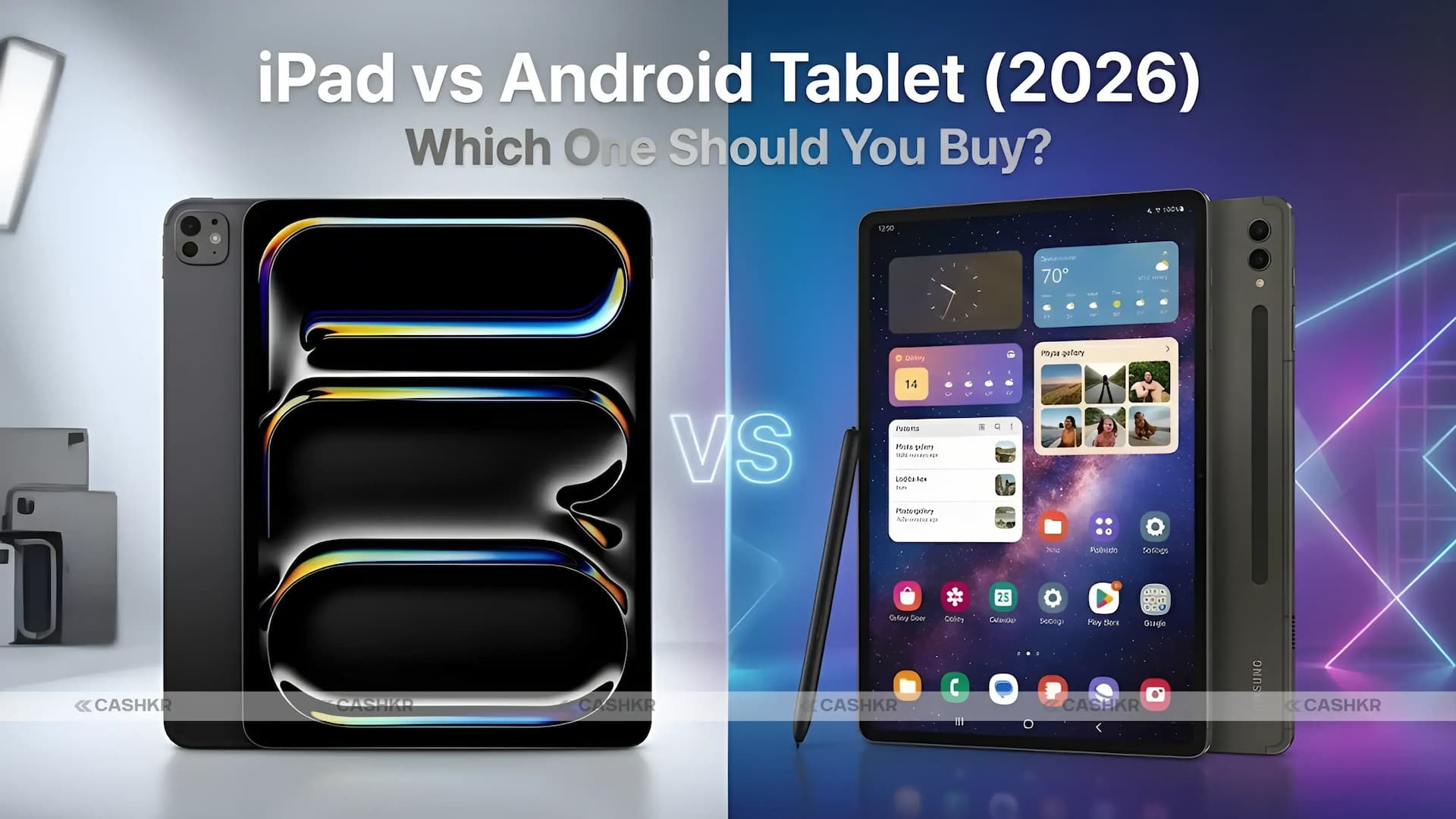
iPad vs Android Tablet: Which One Should You Buy in 2026?
Buying a tablet sounds simple until you actually start looking. Then you realize there are a dozen options, two very different ecosystems, and a whole lot of conflicting opinions online. Should you go with an iPad? Or is an Android tablet the smarter pick?
Both options are great, but they suit different people. This guide explains everything in simple terms to help you decide which tablet matches your needs, budget, and lifestyle.
Quick Verdict: iPad wins for performance, apps, and long-term updates. Android tablets win for flexibility, price range, and customization. Read on to find out which one is right for YOU.
1. iPad vs Android Tablet: A Quick Overview
Before we go deep, here's a simple side-by-side comparison of both platforms:
Feature
iPad
Android Tablet
Operating System
iPadOS (Apple)
Android (Google)
Price Range
$329 – $1,599+
$100 – $1,200+
App Store Quality
Excellent
Good (improving)
Customization
Limited
Very High
Long-term Updates
5–7 years
2–4 years (varies)
Now let's go through each major area one by one.
2. Performance: Who's Faster?
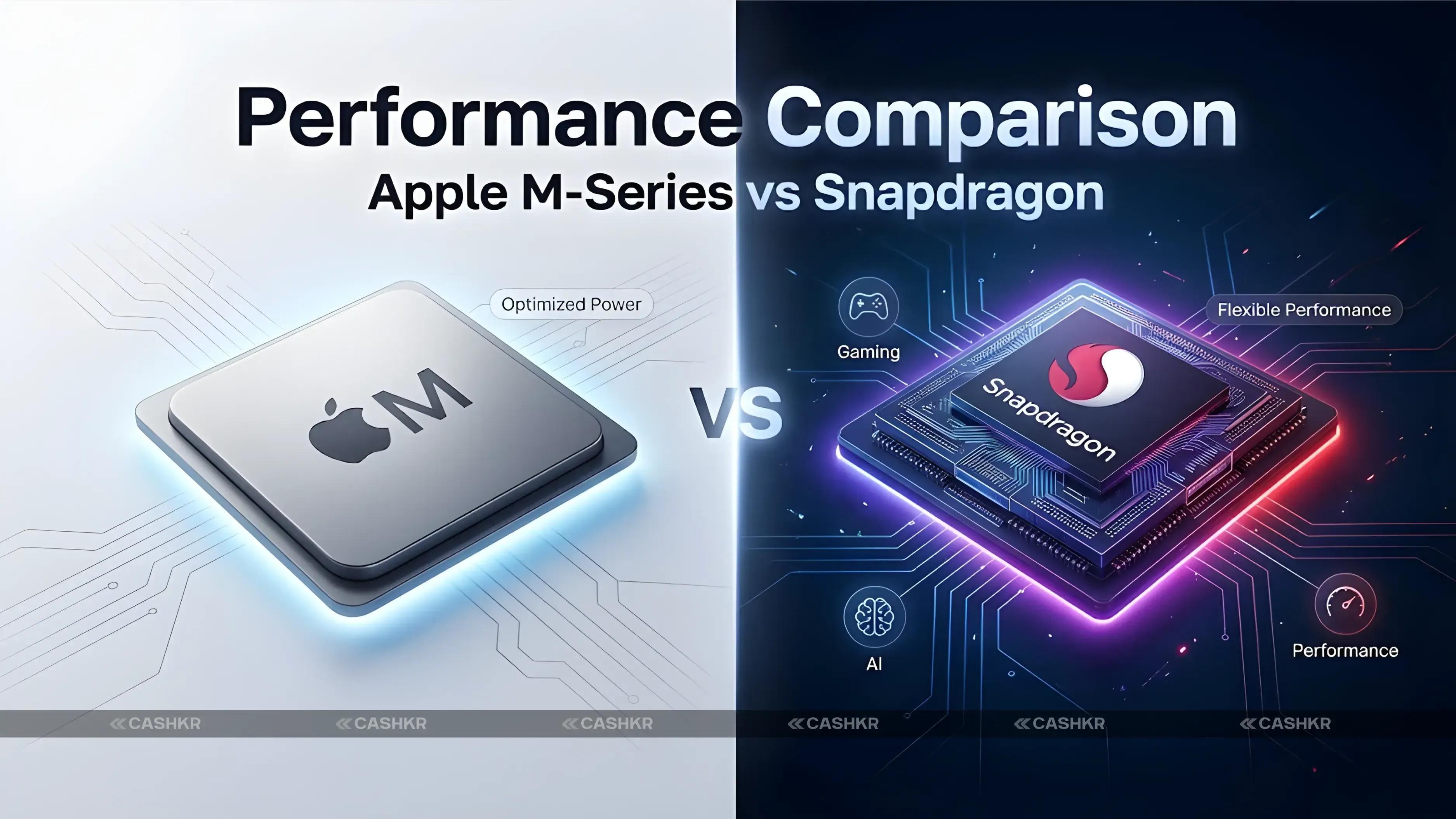
If raw performance matters to you, the iPad is hard to beat. Apple's M-series and A-series chips are among the fastest in any mobile device right now. The iPad Pro (M4) in particular crushes most Android tablets in CPU benchmarks and sustained performance under load.
That said, Android flagships are no slouch either. The Samsung Galaxy Tab S9 Ultra uses Qualcomm's Snapdragon 8 Gen 2, and it handles gaming, multitasking, and 4K video editing without breaking a sweat. For casual use, even mid-range Android tablets feel smooth and responsive these days.
Winner: iPad Apple's chips are usually faster than the competition, but unless you do video editing or use demanding apps, most people won't notice much difference in everyday use.
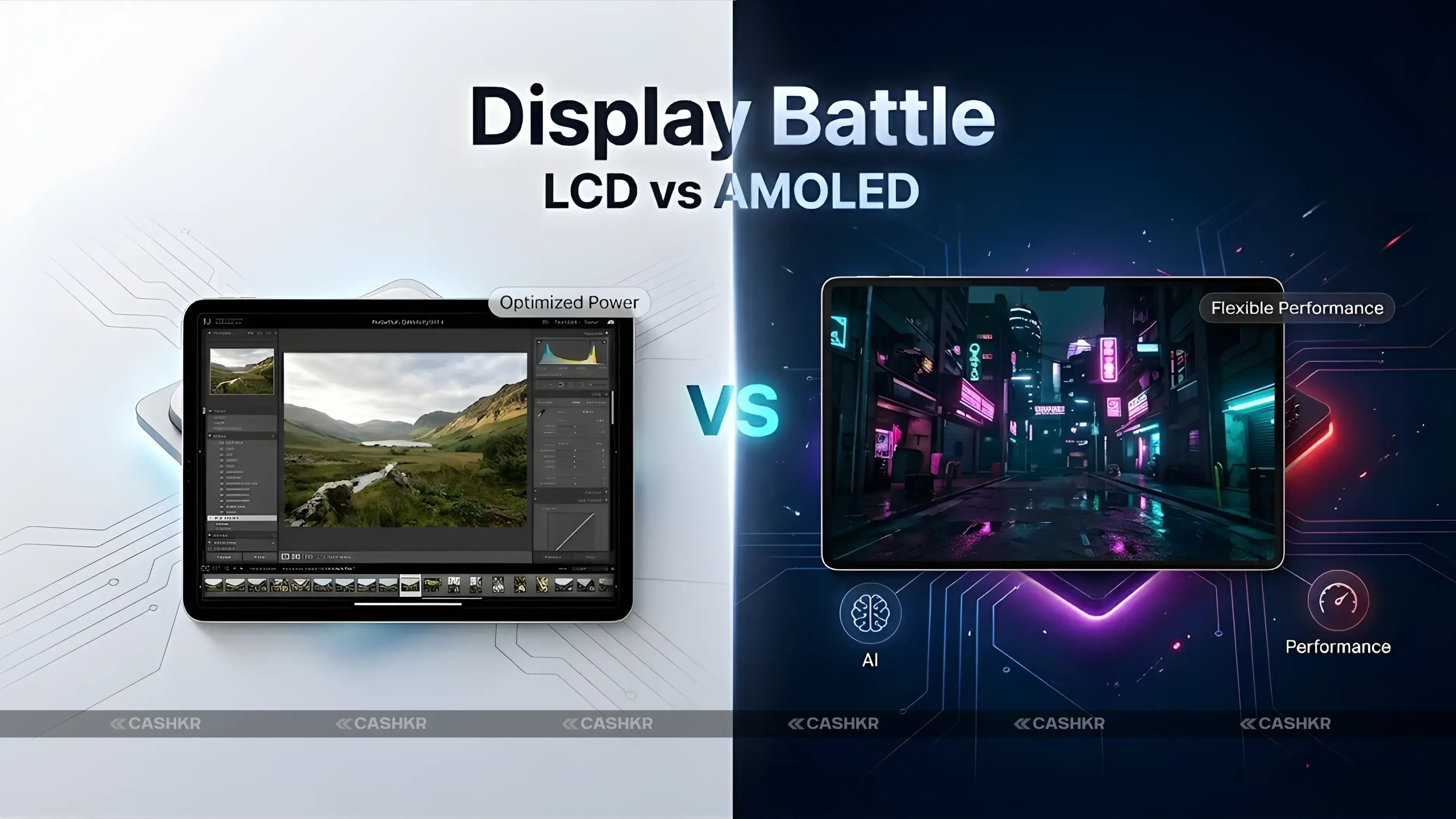
Both platforms offer excellent displays at the higher price tiers. The iPad Pro features a stunning Liquid Retina XDR display with ProMotion (120Hz), incredible brightness, and true-to-life color accuracy. It's one of the best screens you'll ever see on a tablet.
Android also has some serious contenders. The Samsung Galaxy Tab S9 Ultra sports a 14.6-inch Dynamic AMOLED 2X panel with a 120Hz refresh rate and deep blacks that iPad can't quite match thanks to OLED technology. Samsung's AMOLED screen is especially good for watching movies in dark rooms.
Winner: Draw iPad has better overall display consistency and brightness. Samsung's AMOLED offers better contrast and black levels. It depends on what you value more.
This is where things get interesting, and where the iPad stands out for most people.
iPadOS is designed specifically for tablets. Apps like Procreate, LumaFusion, Final Cut Pro (iPad), and GoodNotes are polished, powerful, and optimized for touch. The iPad App Store has thousands of apps built for large screens.
Android has Google Play, which offers more apps overall, but many Android apps are just stretched versions of phone apps. Not all are properly optimized for tablet screens. This is slowly getting better as Google encourages tablet-first design, but iPad still leads by a wide margin in tablet-specific app quality.
Winner: iPad The app ecosystem is simply more mature and better optimized for tablet use. If apps matter to you, iPad wins this round.
5. Price & Value for Money
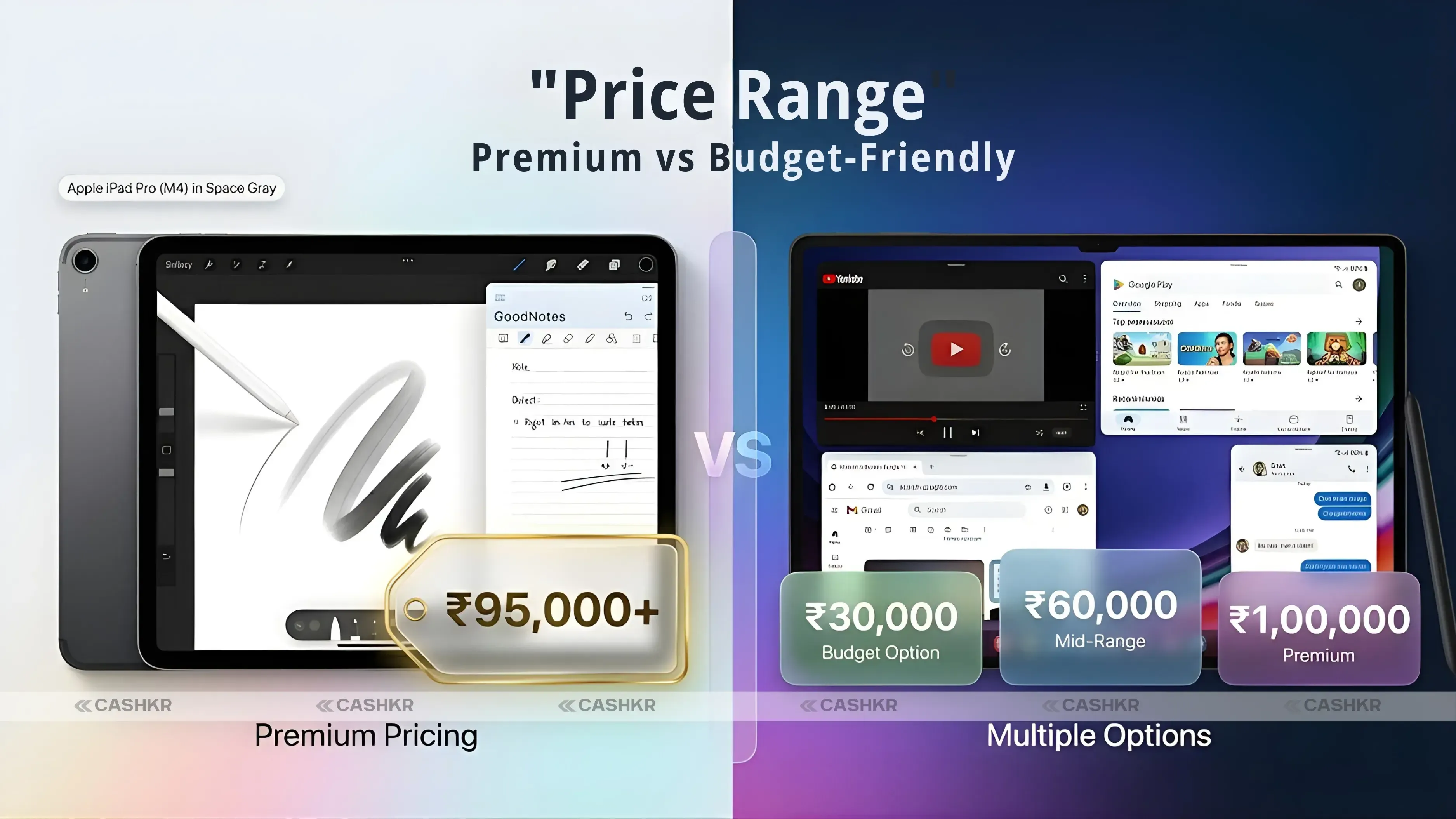
Android tablets absolutely dominate this category. You can get a perfectly capable Android tablet for ₹15,000–₹35,000 that handles Netflix, YouTube, browsing, and light gaming without any problems. Brands like Samsung, OnePlus, Xiaomi, and Realme offer solid options at various price points.
Advertisement
The most affordable iPad, the base iPad (10th Gen), starts at around ₹27,000–₹35,000 in India depending on offers and variants. It does not support Apple Pencil Gen 2 or offer full USB-C accessory compatibility.
If you want higher-end models, the iPad Air starts at around ₹59,900, and the iPad Pro starts at about ₹99,900 in India.
Winner: Android Tablet For buyers on a budget, especially in places like Nepal and India, Android offers much better value for your money.
6. Customization & Flexibility
Android is basically built for people who like to customize things. You can change your launcher, install apps from outside the Play Store (sideloading), plug in USB drives, connect to external storage, use split-screen and floating windows freely, and even run desktop-like interfaces on Samsung DeX.
iPadOS has improved with features like Stage Manager and better multitasking, but it is still more limited. Apple controls what you can do. You cannot easily sideload apps, change the default browser engine (except recently in the EU), and many advanced features are only available on certain iPad models.
Winner: Android Tablet If you want more control over your device, Android offers greater freedom than iPad does.
7. Apple Pencil vs Android Stylus
For artists, note-takers, and digital planners, the stylus experience is important. The Apple Pencil (USB-C and 2nd Gen) is considered the gold standard because of its low latency, pressure sensitivity, and strong app support with tools like Procreate.
Android alternatives, like the Samsung S Pen (built into the Galaxy Tab S series), are genuinely impressive. The S Pen has near-zero latency, supports Air Actions (gesture controls), and costs nothing extra on Samsung tablets. For Wacom fans, some Android devices also support Wacom styluses.
Winner: Very Close. Apple Pencil is slightly better for art, while the S Pen offers better value.
8. Software Updates & Longevity
Apple supports its devices for a long time. The iPad (6th Gen, launched in 2018) still gets iPadOS 17 updates. That's 6+ years of software support. Your investment lasts.
Android updates are more complicated. Samsung gives 4 years of OS updates and 5 years of security patches on the Galaxy Tab S series, which is good. However, many budget Android tablets get only 2 to 3 years of updates, and some get even less. If you are buying a cheaper Android tablet, check the update policy carefully.
Winner: iPad For long-term software support and security updates, Apple is still the most reliable option.
9. Who Should Buy an iPad?
An iPad is a great choice for students, artists, and professionals. It is also ideal if you already use an iPhone or Mac, want the best app experience, do not mind paying more, and need long-term software support.
Students using digital note-taking apps like GoodNotes or Notability.
Artists using Procreate or Adobe Fresco.
Professionals needing Final Cut Pro, Logic Pro, or Microsoft 365 tablet experience.
People deep in the Apple ecosystem (iPhone, Mac, AirPods).
Anyone who wants guaranteed software support for 5+ years.
10. Who Should Buy an Android Tablet?
An Android tablet is a good choice if you want more features for less money, prefer freedom and customization, use many Google services, need USB flexibility or desktop mode, and are not tied to any specific ecosystem.
Budget buyers who want good value under Rs. 30,000.
Power users who want to customize their device.
People who use Gmail, Google Drive, and YouTube heavily.
Users who need USB OTG, external storage, or DeX-like desktop mode.
Android phone users who want a seamless cross-device experience.
Final Verdict
If budget is not a concern and you want the best tablet experience, especially for creative work, productivity, or if you already use Apple products, choose an iPad. Its app ecosystem, performance, and longevity are excellent.
However, if you are in Nepal or India where budgets are tighter, or if you want more freedom and flexibility without spending a lot, Android tablets are a great value. Samsung's Galaxy Tab S series competes with iPad at the high end, and mid-range tablets from Xiaomi or OnePlus provide good performance for daily use.
There is no single right answer. The best tablet is the one that fits your needs and lifestyle.
FAQs
1. Is the iPad better than Android tablets?
For app quality, performance, and software longevity, the iPad is generally better. However, Android tablets offer more flexibility, better value for money, and more customization options.
2. Which is better for students, iPad or Android tablet?
The iPad is popular among students because of apps like Notability, GoodNotes, and Procreate. However, Android tablets such as the Samsung Galaxy Tab A8 are a good budget choice for basic study needs.
3. Can Android tablets replace a laptop?
Samsung tablets with DeX mode come close, as you can connect a keyboard and mouse for a desktop-like experience. However, for demanding tasks like coding or using complex software, a laptop is still better.
4. Which tablet is best for drawing and digital art?
iPad with Apple Pencil and Procreate is the top choice for digital artists. Samsung Galaxy Tab S9 with S Pen is an excellent Android alternative with near-zero latency.
5. Is there a cheap iPad alternative on Android?
Yes. Tablets like Xiaomi Pad 6, Realme Pad X, and Samsung Galaxy Tab A9+ offer solid performance for a fraction of the iPad's price.
6. How long do Android tablets get software updates?
It varies by brand. Samsung's flagship tablets now get 4 years of OS updates and 5 years of security patches. Budget Android tablets may get only 2–3 years.
7. Is the iPad worth the price in Nepal/India?
For professional use, the iPad is worth the price. For casual use such as browsing, streaming, or social media, Android tablets offer similar performance at 40 to 60 percent of the iPad's price.
8. Which tablet is best for gaming?
The iPad (especially the iPad Pro with the M4 chip) offers superior gaming performance. For Android gaming tablets, the ROG Flow Z13 or the Samsung Galaxy Tab S9 Ultra are excellent picks.
9. Can I use Microsoft Office on both iPad and Android?
Yes, Microsoft Office (Word, Excel, PowerPoint) is available on both iPadOS and Android. Both versions are well-optimized, though the iPad's version feels slightly more polished.
10. Which tablet has better battery life?
Both offer similar battery life of 8–12 hours for typical use. iPad tends to be more power-efficient thanks to Apple Silicon. Android tablets often support faster charging, though.
If you want to sell your old devices, then click here.
 Yaskar Jung ShahUpdated: Aug 1, 2026·11 min read