Android vs iPhone: Which One Holds Its Value Better in India?
Most Android vs iPhone comparisons focus on cameras and processors. That’s helpful, but they often miss the key question: what is your phone worth when you’re ready to sell it?
Few people compare Android and iPhone based on resale value, but this perspective can change your decision.
A phone that costs more upfront but has better resale value can end up being cheaper than a less expensive phone. Most people don’t calculate this before buying.
Advertisement
Disclosure: Cashkr is our own device buyback service.We buy used phones, so we benefit when people sell. We do not favour one platform over the other. Where Android is the better decision below, we say so.
The Short Answer
iPhones usually keep their value better than most Android phones. The data backs this up, and it’s due to structural reasons, not just brand loyalty.
Rabin Khadka covers smartphones, laptops and India’s growing market for used devices. She spends most of her time tracking launch prices, price drops and resale values, and has a particular interest in why two phones that cost the same on launch day can be worth very different amounts two years later.
Advertisement
Advertisement
However, the gap is closing faster than many expect. iPhones are losing value a bit quicker with each new generation, while Samsung’s top models are getting better at holding value.
Both of these trends are happening at once.
The Numbers
SellCell tracks used prices and publishes the percentage of value lost per model. Across the first twelve months:
Device Model
Resale Value (%)
iPhone 11
43.8%
iPhone 12
43.8%
iPhone 13
46.2%
iPhone 14
47.7%
iPhone 15
48.2%
Samsung Galaxy S23
61.1%
Samsung Galaxy S22
66.7%
These numbers come from the United States, so the exact percentages don’t match India. But the ranking and the size of the difference still apply. An iPhone and a Galaxy bought on the same day won’t be worth the same a year later.
Look at the iPhone numbers: 43.8, 43.8, 46.2, 47.7, 48.2. Each new generation holds its value a bit less than the previous one.
Samsung is improving. The Galaxy S25 lost 46.6 percent at five months, compared to the Galaxy S22’s 51.9 percent at the same point. The gap between the two brands is now about eleven points.
So, the two are getting closer. If you plan to keep your phone for three or four years, the old idea that an iPhone is always the safer bet isn’t as strong as before.
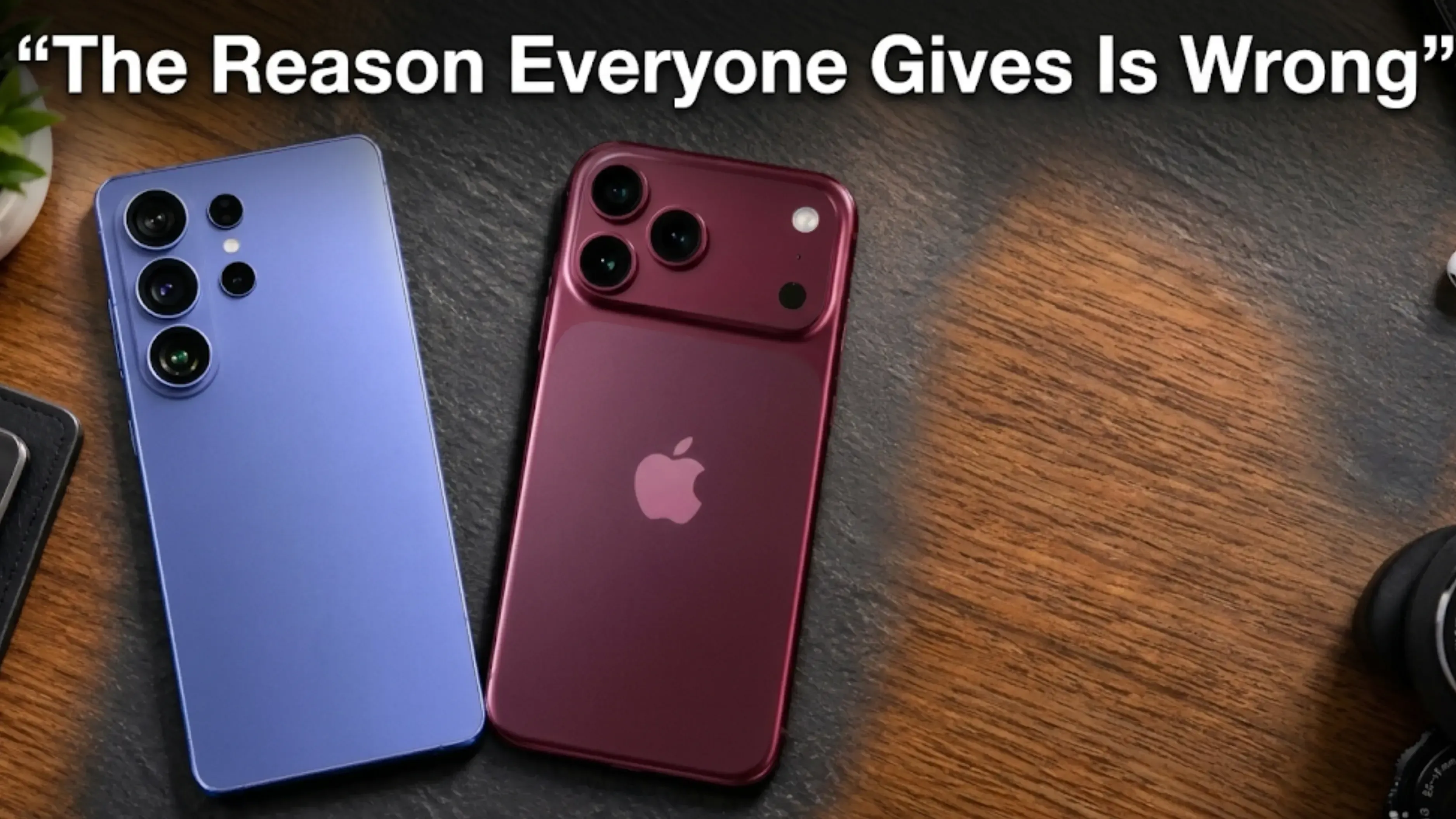
The Reason Everyone Gives Is Wrong
When people are asked why iPhones hold their value, most say it’s because of long software support. We’ve said it too. But this reason doesn’t hold up on closer inspection.
Apple's formal commitment is a minimum of five years of security updates from a phone's first supply date. Samsung and Google both promise seven years on their recent flagships.
So, on paper, Apple offers less support than its two main competitors. The length of support isn’t the real reason for higher resale value.
To be fair, Apple’s five years is a minimum, not a prediction, and in practice, Apple often supports iPhones for longer. But buyers can only count on the minimum, and Apple’s is the lowest among the three.
What really keeps iPhone prices high is strong demand. In India, many more people want a used iPhone than any single used Android model. For some buyers, buying second hand is the only way to get an iPhone.
There are two main reasons behind this.
iPhone model names are easy to understand. “iPhone 15 Pro” is clear to any buyer. Android model names are spread across many brands and variants, and if buyers can’t identify a model, they won’t pay extra for it.
Apple only releases a few models each year, so each one has a well-known used price. With hundreds of Android models, very few have a resale price people remember.
Here’s what matters: a Galaxy with seven years of updates left is better supported than an iPhone with five, but it will still sell for less. If you plan to keep your phone until updates stop, this is a point in favor of Android that resale numbers don’t show.
Where Android Competes on Value
Flagship Samsung and Pixel models keep their value fairly well for the same reasons as iPhones: strong brand, clear model names, and long update promises.
But not all flagship Android phones are the same, and this is where buyers can get tripped up.
Avoid Foldables If Resale Matters
If you take away just one thing from this article, let it be this.
Device Category
Resale Value (%)
Foldables (All Brands)
62.3% – 71.1%
Standard Flagships
49.8% – 60.7%
Within Samsung’s lineup, the Z Fold and Z Flip lost 63.7 percent of their value in six months, compared to 48.3 percent for the Galaxy S series. That’s a fifteen-point difference within the same brand.
So, foldables are expensive in two ways: they cost more upfront and lose more value. If someone recommends a flagship Android for good resale, they’re not talking about the Z Fold.
Mid-Range Android Is Where the Upfront Saving Wins
Paying less upfront, even if you get little back after three years, can still be cheaper than buying a flagship and getting more back later. This is a valid way to buy a phone, and there’s nothing wrong with it.
However, one thing changed in 2026. Indian smartphone prices went up by about 16 percent in the first half of the year. This happened because AI data centers used up memory supply, making DRAM and NAND flash more expensive. Since every phone uses memory for RAM and storage, the price increase affected all models.
The price increase hit the budget segment hardest. IDC reported that sales of phones under $100 (about Rs. 10,000) dropped 74 percent year on year in the second quarter, with their market share falling from 15.6 percent to 4.5 percent.
For buyers, this means the budget segment isn’t the bargain it used to be, and better value is now found in the mid-range. If you planned to buy at the lowest price, your money gets you less phone than before.
Below About Rs. 15,000, Ignore Resale Entirely
At this price point, resale value hardly matters. You’re buying a phone to use until it stops working, which is a sensible choice. Don’t let resale concerns make you spend more than you planned.
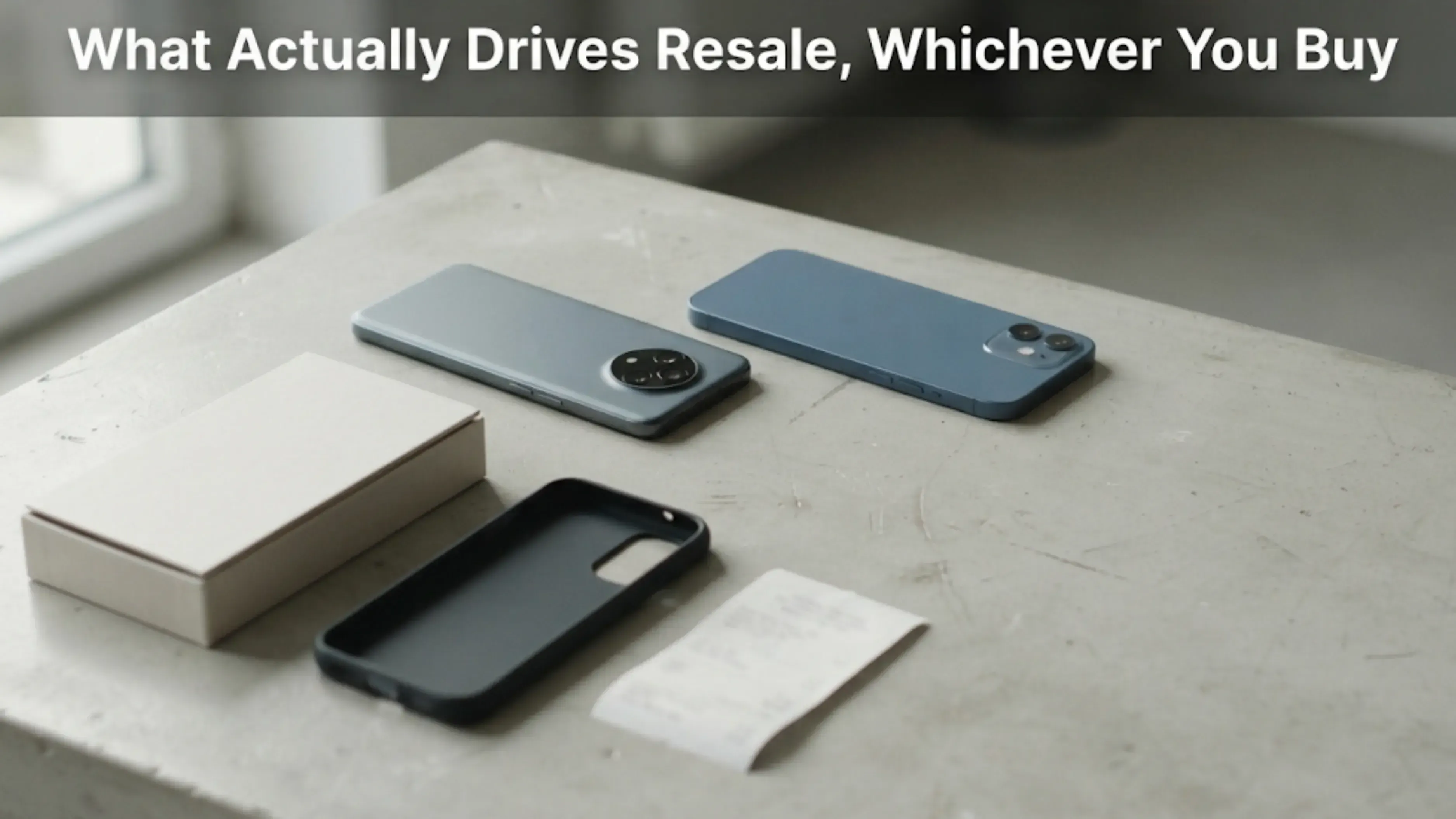
What Actually Drives Resale, Whichever You Buy
How many updates are left matters more than the brand or camera. A phone with several years of updates left is worth more because buyers can use it longer. This is the biggest factor, and you can check it before buying.
Condition is more important than specs. A well-kept two-year-old phone can sell for more than a scratched one-year-old from a higher tier. Using a case and screen protector is the easiest way to protect resale value.
Battery health is the first thing buyers check, but owners often overlook it. Heat damages batteries, so avoid gaming while fast charging and don’t leave your phone in hot places.
Storage size affects resale less than most people think. The difference between a 128GB and 256GB version of the same model is usually small, and sometimes there’s no difference at all. Our guide on what affects resale value explains the full list.
All four of these factors matter for both Android and iPhone, and they’re things you can control, unlike the brand’s resale trend. Where you sell your phone also matters, and our guide compares the different options.
Working Out Your Real Cost
There are four steps, and most people skip the second one.
One. Note the new price of the phone you are considering.
Step two: Decide how long you’ll keep the phone and write it down. Three years is a good default. For context, the average iPhone traded in was 4.03 years old in the second quarter of 2026, so three years is a safe estimate.
Three. Get a buyback quote for a similar model that is already that age. If you want to see what a phone of that age is fetching now, the calculator asks for the model, storage, age and condition.
Step four: Subtract the resale value from the original price. That’s about what it will cost you to own the phone for your chosen period.
One Thing That Has Changed About the Market
People often say upgrade cycles are getting shorter. In India, though, they’ve actually gotten longer than ever.
People used to buy a new phone every two or three years. Not any more.
Between April and June 2026, the average iPhone handed in was just over four years old. The exact figure is 4.03 years, and it is the first time it has crossed four.
Because people held on to their phones, fewer new ones sold. India’s smartphone shipments fell about 10 percent in that quarter. Across the first half of 2026, new phone sales were down about 11 percent, while second hand sales were up 13 percent.
So, the secondary market grew because new phones became more expensive, not because people were upgrading more often. If you keep your phone for four years, the number of updates left matters more than the brand’s resale value.
This changes the Android vs iPhone decision for people who keep their phones longer. Over four years, the seven-year update promise on a Samsung or Pixel flagship is more valuable than Apple’s higher resale, since you’ll still be using the phone when others would have sold theirs. No matter which you choose, our guide on selling your phone safely will help when it’s time to upgrade.
FAQs
1. Android vs iPhone: which holds its value better in India?
iPhones usually hold value better. SellCell's published figures put twelve-month depreciation at 43.8 to 48.2 percent across recent iPhones, compared with 61.1 and 66.7 percent for the Galaxy S23 and S22. Those are United States figures, so the exact numbers do not transfer to India, but the direction and the size of the gap do.
2. Is the gap between them closing?
Yes. Each recent iPhone generation holds slightly less than the one before, and Samsung's flagships are improving. The Galaxy S25 lost 46.6 percent at five months against the S22's 51.9 percent. The measured gap is down to around eleven points.
3. Do iPhones hold value because Apple supports them the longest?
No, and this is a common mistake. Apple officially commits to at least five years of security updates. Samsung and Google both promise seven years on their recent flagship phones, so Apple offers less. The main reason iPhone prices stay high is strong demand for used iPhones.
4. Which Android phones hold value best?
Flagship Samsung and Pixel models hold value best for the same reasons as iPhones: they have well-known brands, clear model names, and long update support. If you care about resale, avoid foldables.
5. Why are foldables bad for resale?
They lose more value. Foldables dropped 62.3 percent in value after six months and 71.1 percent after eighteen months. In comparison, standard flagships lost 49.8 and 60.7 percent. Within Samsung's lineup, the Z series lost fifteen percentage points more than the Galaxy S series after six months.
Sources
Apple's published commitment to a minimum of five years of security updates from a device's first supply date, and Samsung's and Google's seven-year commitments on recent flagships
Counterpoint Research, September 2026, for Indian refurbished volumes up 13 percent year on year against new volumes down about 11 percent
IDC, for sub-100-dollar phone sales down 74 percent year on year in the second quarter of 2026 and segment share falling from 15.6 percent to 4.5 percent
Assurant, for the average age of an iPhone traded in, passed 4.03 years in the second quarter of 2026
Reported H1 2026 Indian smartphone price rise of around 16 percent, attributed to DRAM and NAND cost increases


 Rabina KhadkaPublished at: Nov 19, 2026·11 min read